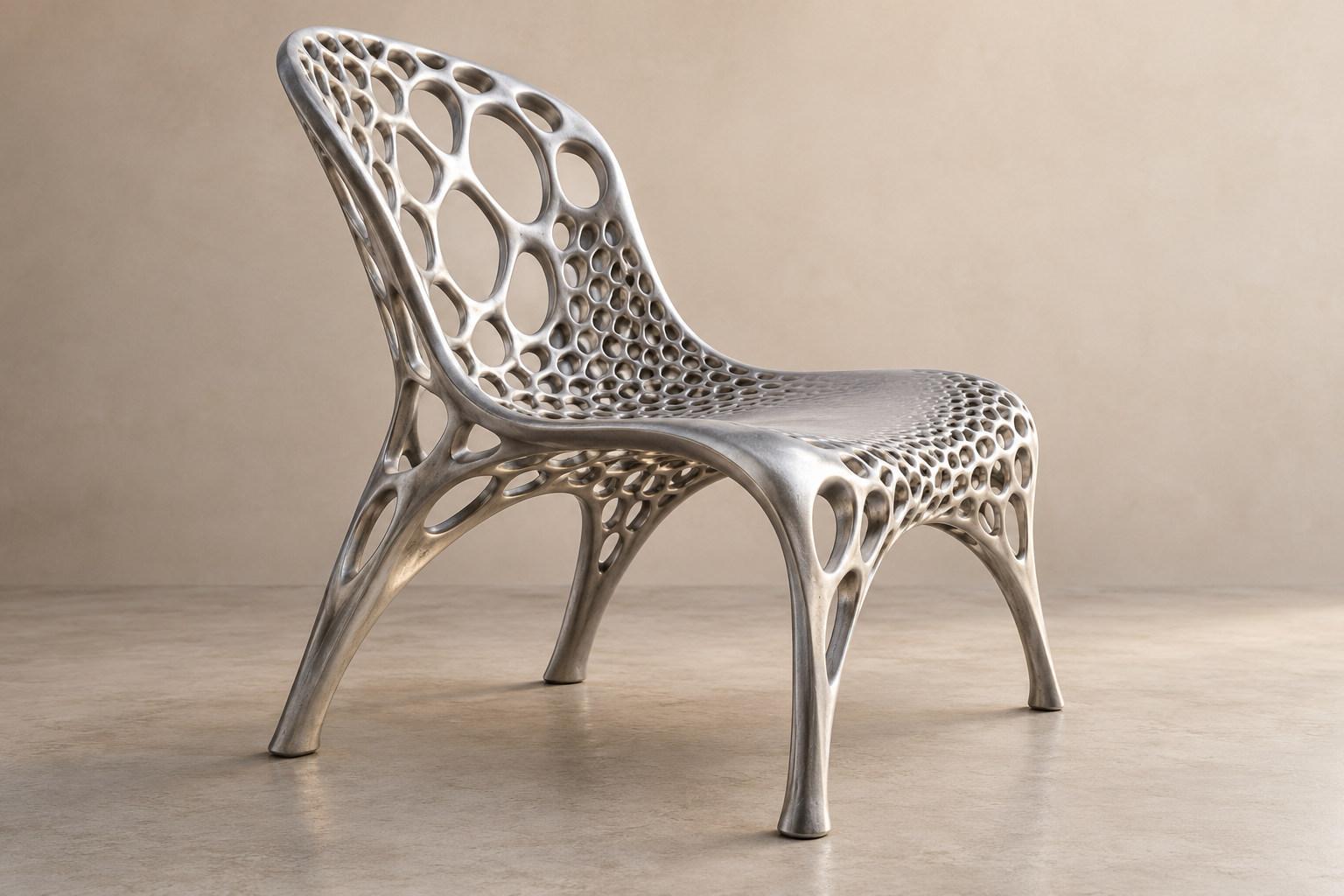
Divide the chair to suit the tools
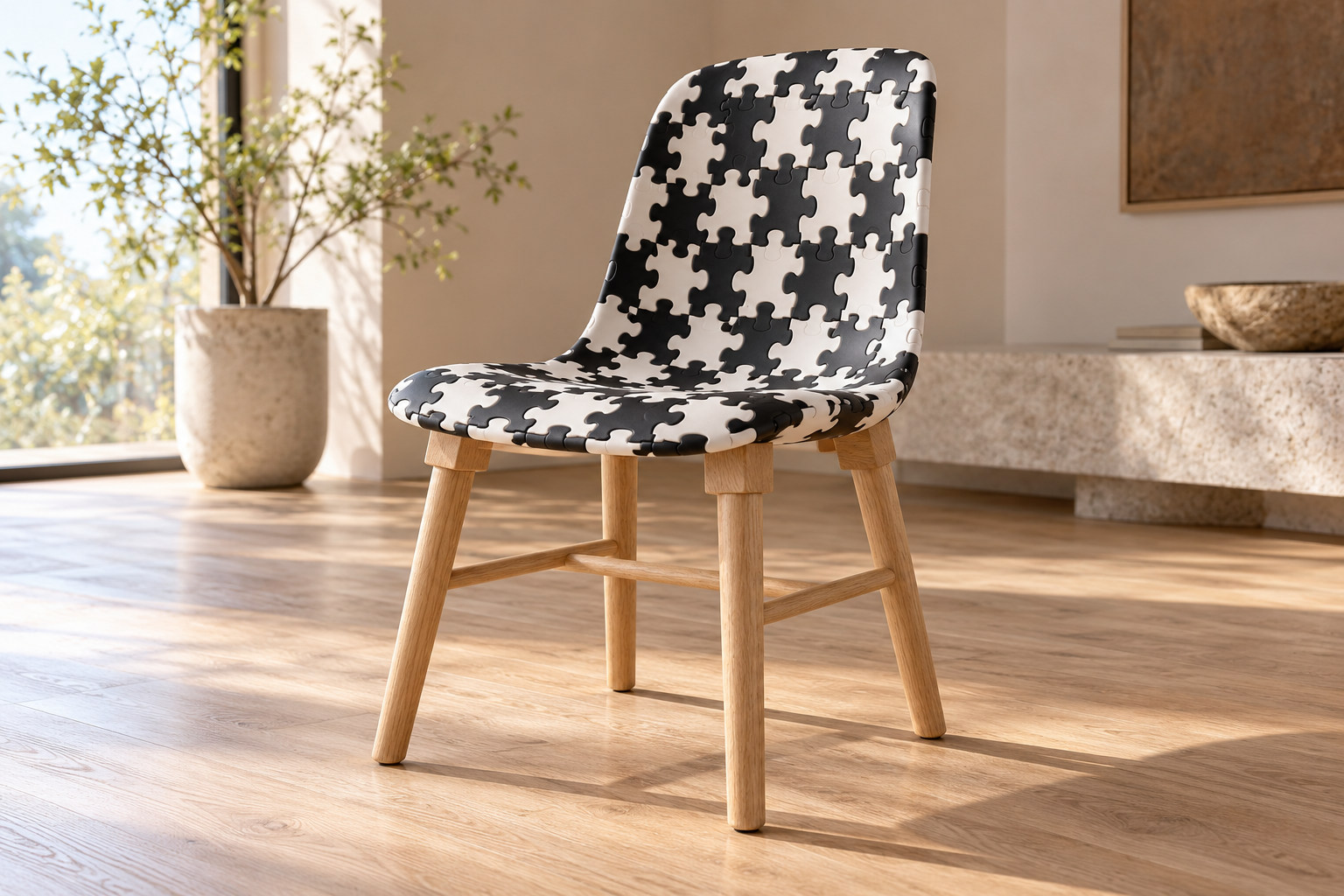
The Makerchair series asks what happens when a large, curved object is resolved into many smaller components. The meeting between parts becomes a surface pattern instead of disappearing beneath a uniform cover.
Cooper Hewitt includes several Makerchair variants in its account of Joris Laarman Lab’s work, dating the series to 2014. Puzzle and Diamond belong within a wider investigation connecting computational tools with making and assembly.1
Similar questions, different objects
The National Gallery of Victoria records its Makerchair (Puzzle) prototype in ABS and oak. It separately records a Makerchair (Diamond) prototype in painted maple and ash. Both date to 2014; they are not interchangeable descriptions of one physical chair.23
That difference matters to the visual argument. A component system is an approach rather than one compulsory material recipe. Different patterns and materials can explore how smaller units negotiate a larger continuous form.
The seam becomes something to read
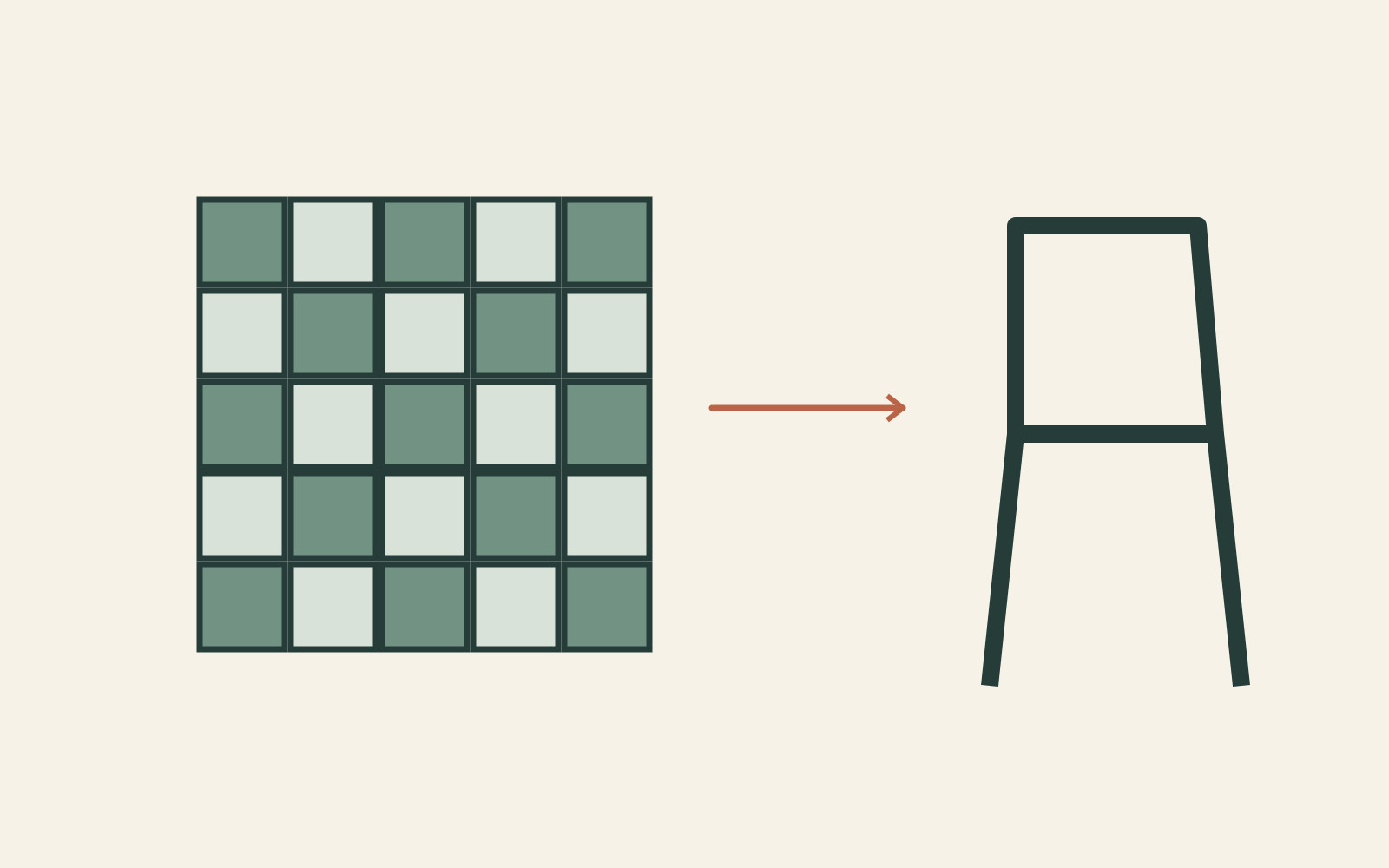
On an ordinary chair, attention may pass straight over the places where parts join. Here the recurring boundaries invite the eye to move across the surface, noticing how a curve is shared between components.
NGV’s account also discusses the historical availability of design files for modification.2 That context opens a conversation about participation without making every published file a present-day instruction or licence. The furniture’s immediate lesson is visible: assembly can give an object character as well as bring its pieces together.