Colour happens between things
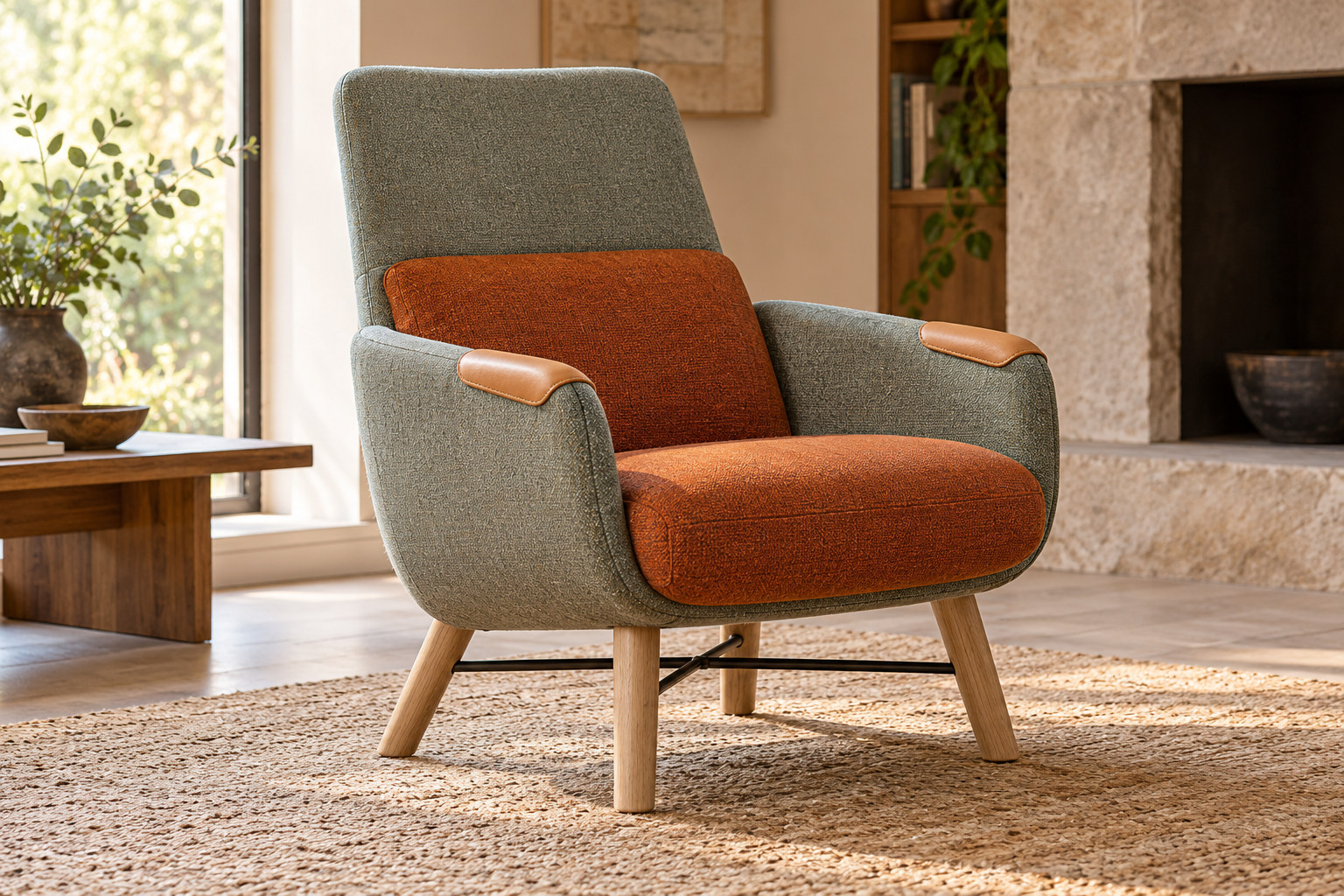
For Hella Jongerius, choosing a colour is also choosing a relationship. The same hue can meet a woven surface, a glossy finish or a different colour beside it. Her work asks how those differences can remain present within industrially produced things, rather than being removed in pursuit of perfect sameness.
Design Museum describes a practice joining contemporary production with craft and material experiment. It emphasises the traces of making and the sense that a finished object can remain part of a continuing investigation.1
The laboratory enters the room
Jongeriuslab's account of Colour Lab describes experiments for Vitra across plastics, textiles, leather, wood and metal finishes. Colour was considered on different surfaces and in relation to other colours, rather than as a set of isolated samples. 2
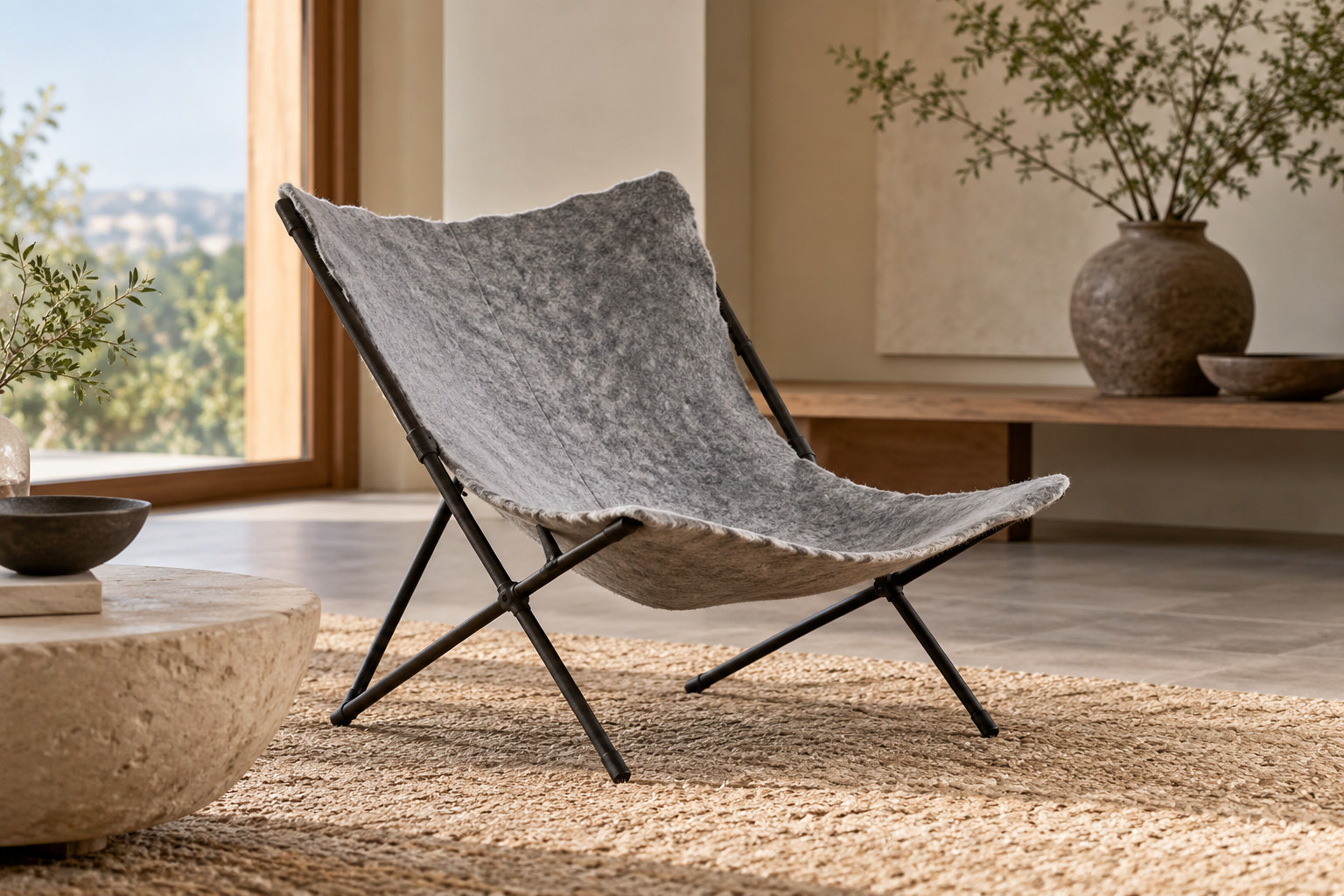
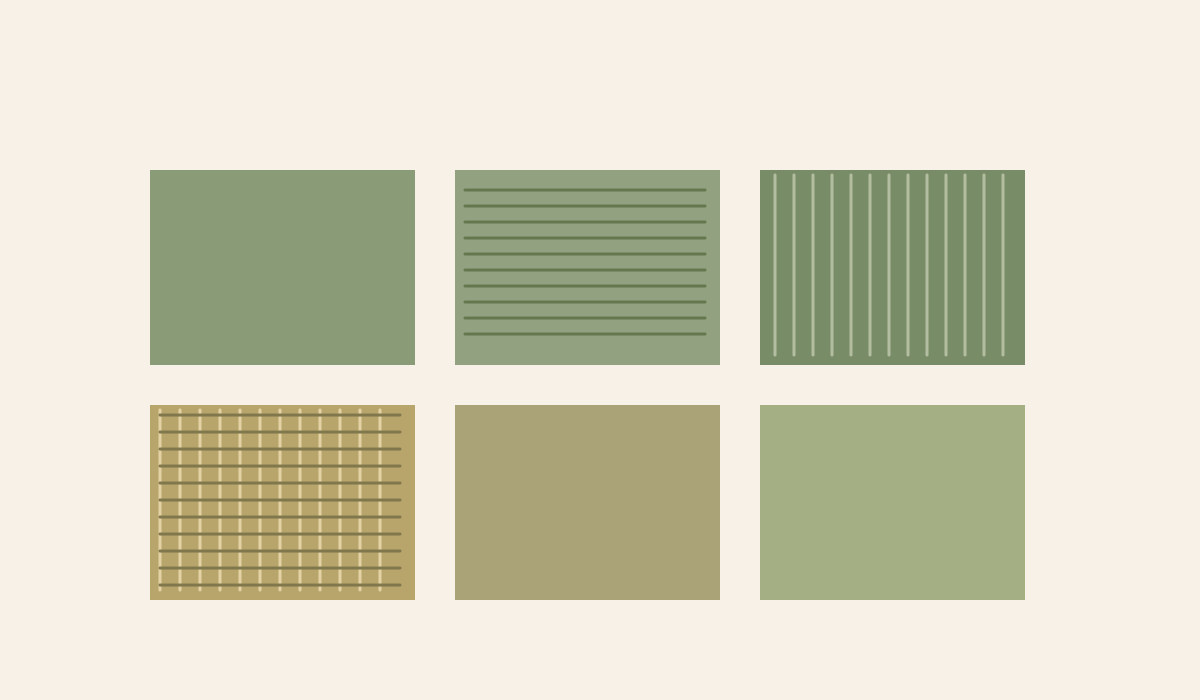
This is a useful distinction in an ordinary room. A smooth component and a coarse weave can catch light differently. Their apparent relationship may shift as a person moves or daylight changes. The furniture is encountered through those conditions, not under one permanently fixed viewing light.
The investigation therefore reaches beyond selecting a pleasing swatch. It concerns the material carrying the colour and the neighbours that change its effect.
Repetition can contain differences
Industrial production offers repeatability. Jongerius's work explores how a repeated product can retain material character, variation and visible decisions about making. Design Museum presents those questions across the studio's collaborations and independent work. 1
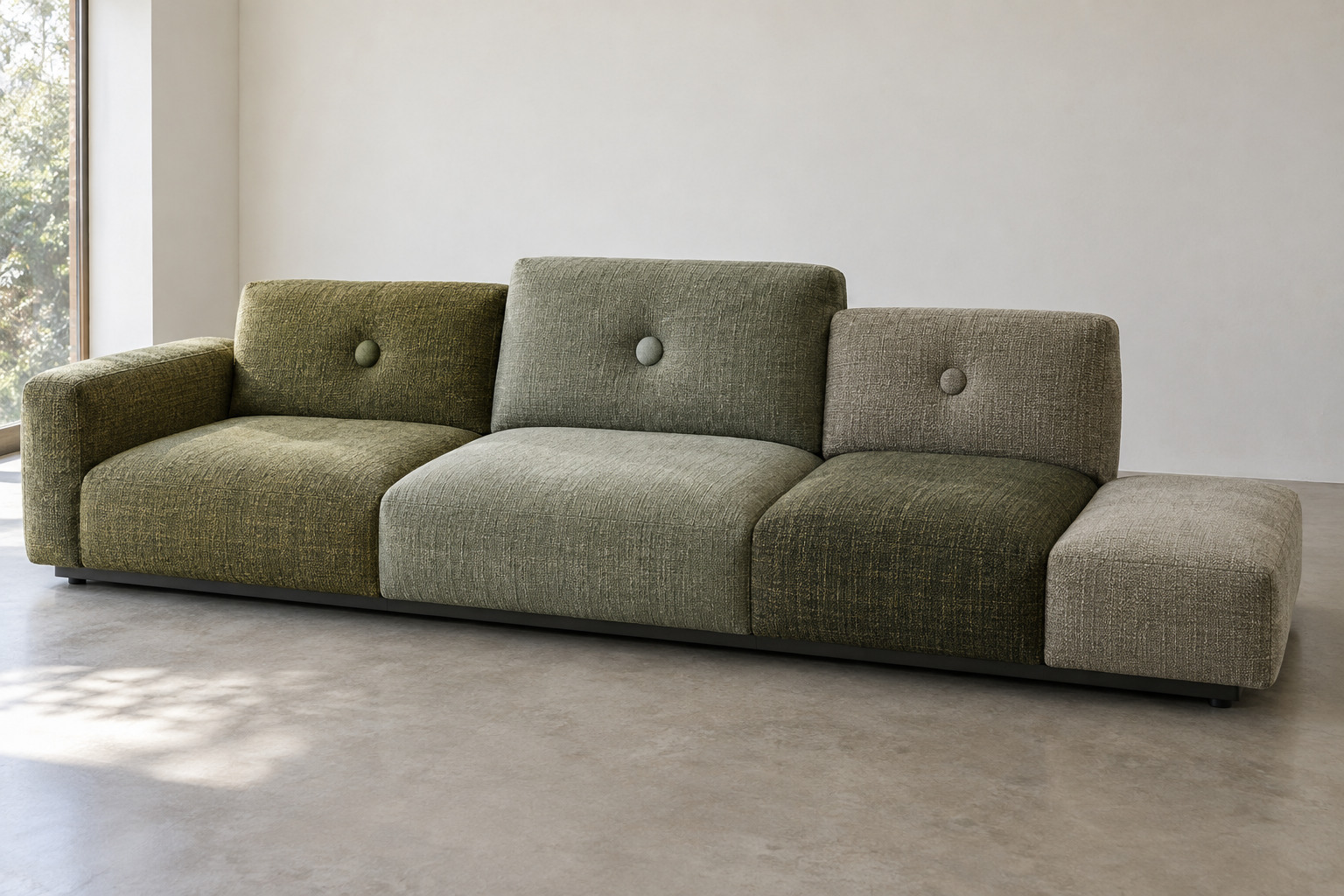
A furniture example such as Polder gives the eye several distances to work at: the whole sofa, neighbouring fields of upholstery and small details. It is one route into the practice, not a substitute for the work in textiles, ceramics and other media.
A finished object can keep a question open
Vitra Design Museum's retrospective places prototypes, sketches, furniture and material experiments in the same broad account of Jongerius's career. Its interpretation connects making with the ways objects are used and cared for.3
The question is close to hand. Notice the next pair of surfaces in a room: where they meet, how each receives light, and what changes when they are considered together. Jongerius's work gives those small differences enough attention to become the beginning of a design, rather than the noise left after it.