Artefact story

Kasese Sheep Chair: a light frame meets a felted surface

A soft felt surface and a slender dark frame make very different promises to the eye. Hella Jongerius’s Kasese Sheep Chair places them together, carrying the memory of a wooden stool into a light folding chair. The interest lies in how that translation changes the object, rather than simply changing its material.

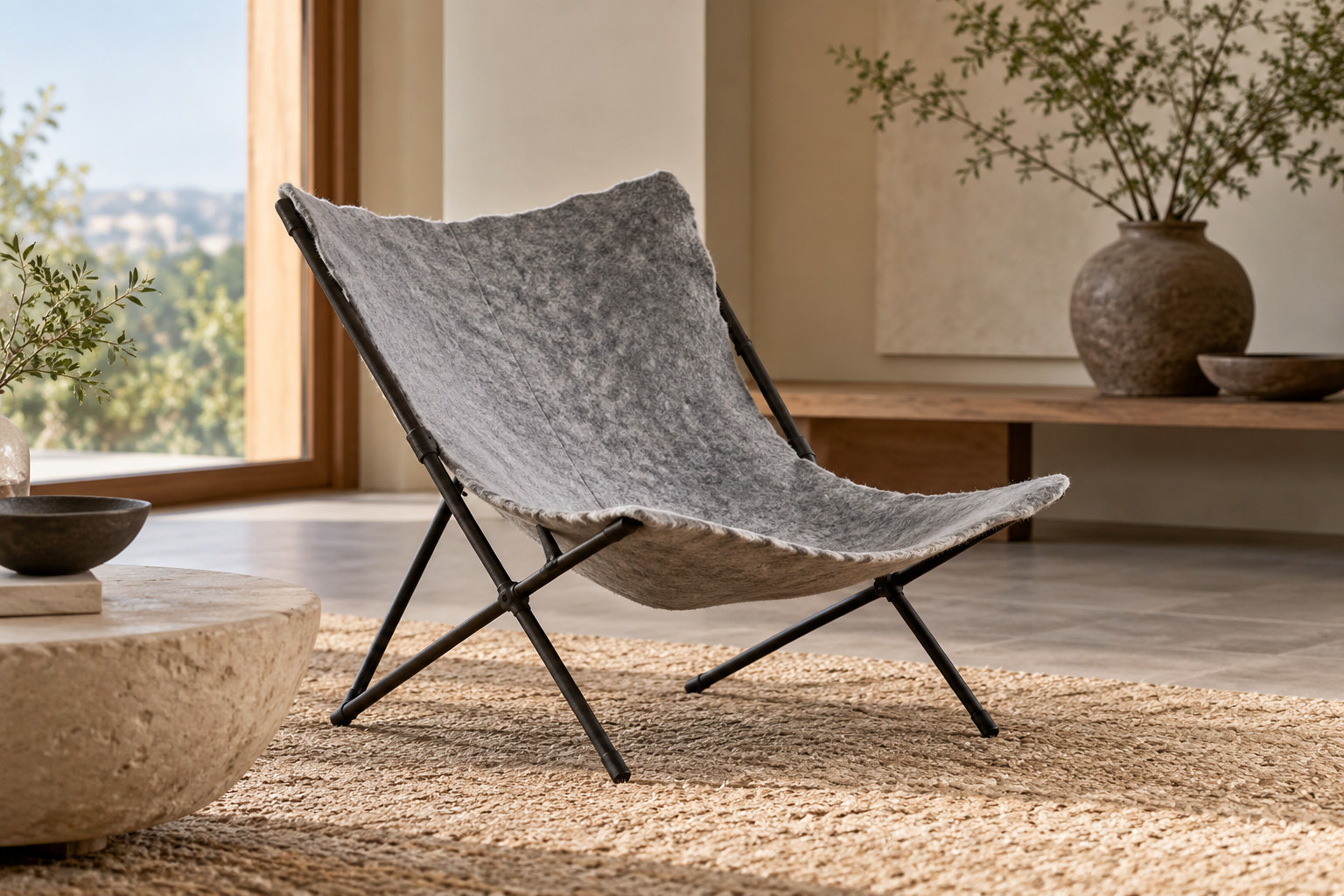
Soft grey felt-like seating surface held within a slender dark folding frame.
PatinaHall editorial reconstruction. It is not a documentary photograph. A soft textile field keeps its character against a light, dark frame.
On this page
Key facts & takeaways

At a glance

Subject
Kasese Sheep Chair, MoMA114.2003
Entry
Artefact story
Last reviewed
26 October 2026
Object dated
1999documented

Three things to remember

  1. MoMA’s object combines carbon fibre, fibreglass and felt.
  2. The museum label acknowledges a stool made by a carpenter in Kasese.
  3. Other museums’ chairs and prototypes have their own credits and dimensions.

A familiar source takes a new direction

MoMA’s account of Kasese begins with an encounter. Its gallery label says Jongerius saw a three-legged stool made by a carpenter in Kasese, Uganda, and developed a new folding chair in light, high-technology materials.1

That description acknowledges a source without making the source object identical to the finished design. A stool and a folding chair organise support and the body differently. Changing the material also changes the visual relationship between surface, frame and space.

The carpenter remains unnamed in MoMA’s label. Keeping that absence visible prevents a neat design story from quietly turning a documented encounter into a claim of invention.

Two materials stay visibly different

MoMA dates its chair to 1999 and records carbon fibre, fibreglass and felt. It names Cappellini as manufacturer and identifies the object as 114.2003, a gift of the designer.1

The material combination gives the eye two different tasks. The frame reads as a light line through space; the felt reads as a soft field for the body. Neither needs to imitate the other. Their difference helps explain the chair.

A continuous upholstered shell can hide a frame’s work. Here the contrast allows the surface and support to keep separate characters. One can imagine the textile’s softness while still following the chair’s outline around it.
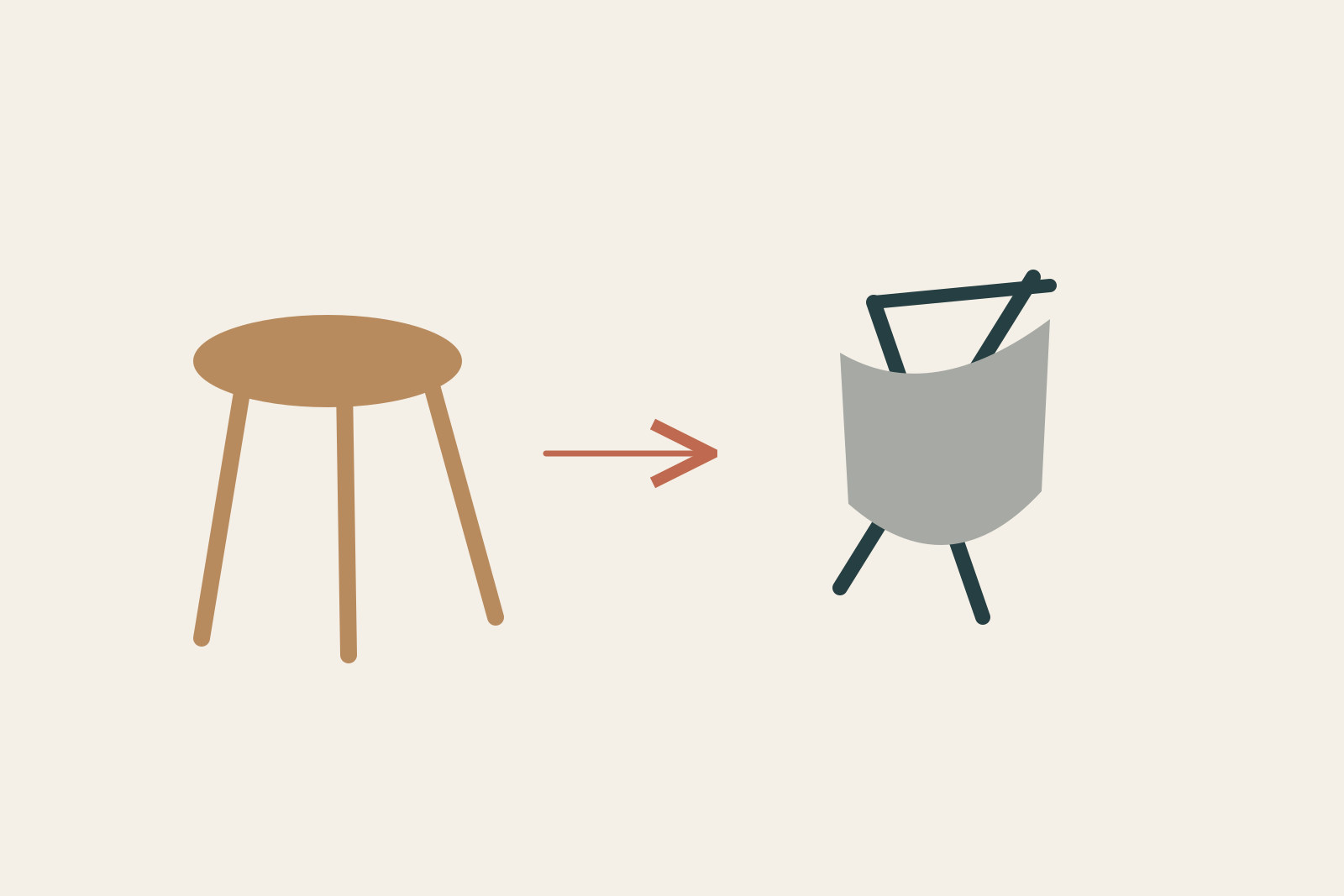
A generic three-legged stool and a generic textile/frame chair show a change of material and furniture type.
A generic three-legged stool and a generic textile/frame chair show a change of material and furniture type. Original PatinaHall schematic, not to scale.

A prototype is another object

SFMOMA lists a 1999 Kasese chair prototype with both Hella Jongerius and Claudy Jongstra in its credits. Centraal Museum’s Kasese sheep chair 28628 has its own maker fields, materials and measurements.23

Those records show why a familiar design name is only the beginning of identification. The prototype, the Centraal Museum chair and MoMA’s specimen belong to a connected history, but their documentary details are not interchangeable.

The distinction also keeps collaboration readable. A credit established for one prototype should be retained there, rather than casually attached to every later museum entry or lost from the account altogether.

A translation one can see

The broad folding idea adds another contrast: furniture with a defined place for the sitter can also have a different relationship with the room when put away. The museum label establishes that change of type without providing an exact hinge drawing.

Kasese rewards attention to these translations. A carpenter’s stool becomes a source for a new design; a light frame carries a soft textile; a recognisable name leads to several separately documented objects. The material surprise is strongest when those differences remain visible.
Research notesEvidence, connections and limits

MoMA 114.2003 anchors this account. Its label does not name the Ugandan carpenter, and separate SFMOMA or Centraal Museum credits and measurements are not transferred to this chair.

Evidence map

Connected subjects and evidence

Reviewed facts

  • Object dated 1999documented

    MoMA dates Kasese Sheep Chair 114.2003 to 1999. The accession number is a museum identifier, not the object’s manufacture year. The Centraal Museum chair and SFMOMA prototype are separate records with different measurements or credits.

    Reviewed 26 October 2026 by PatinaHall editorial.
    • Source 1MoMA object 114.2003: title, 1999 date, carbon fibre, fibreglass, felt, manufacturer and Rough Cut gallery label.
    • Source 2SFMOMA artist page, Works in the Collection: Kasese chair prototype 1999 jointly credited to Hella Jongerius and Claudy Jongstra
    • Source 3Centraal Museum object 28628: maker fields, 1999 date, 75 x 65 x 50 cm dimensions and acquisition 2000

Reviewed connections

  • Kasese Sheep Chair, MoMA114.2003attributed toHella Jongeriusattributed

    MoMA credits Hella Jongerius with this Kasese Sheep Chair. Its gallery label describes inspiration from a stool made by an unnamed carpenter in Kasese, Uganda. That source relationship does not make Jongerius the inventor of the earlier stool or identify its maker.

    Reviewed 26 October 2026 by PatinaHall editorial.
    • Source 1MoMA object 114.2003: title, 1999 date, carbon fibre, fibreglass, felt, manufacturer and Rough Cut gallery label.
  • Kasese Sheep Chair, MoMA114.2003uses techniqueFolding fibre-frame construction in Kasese Sheep Chairdocumented

    MoMA’s label describes a folding chair made with lightweight high-technology materials; its record lists carbon fibre, fibreglass and felt. This supports the broad folding-frame argument, not an exact reconstruction of hinges or a tested engineering specification.

    Reviewed 26 October 2026 by PatinaHall editorial.
    • Source 1MoMA object 114.2003: title, 1999 date, carbon fibre, fibreglass, felt, manufacturer and Rough Cut gallery label.

Research trail

Sources and further reading

  1. Hella Jongerius: Kasese Sheep Chair, 1999The Museum of Modern ArtAccessed 26 October 2026
  2. Hella Jongerius: artist and Kasese prototype listingSan Francisco Museum of Modern ArtAccessed 26 October 2026
  3. Kasese sheep chair, 28628Centraal Museum UtrechtAccessed 26 October 2026

Last reviewed 26 October 2026. Found an error or a stronger primary source? Contact PatinaHall.