A corner made by a curve
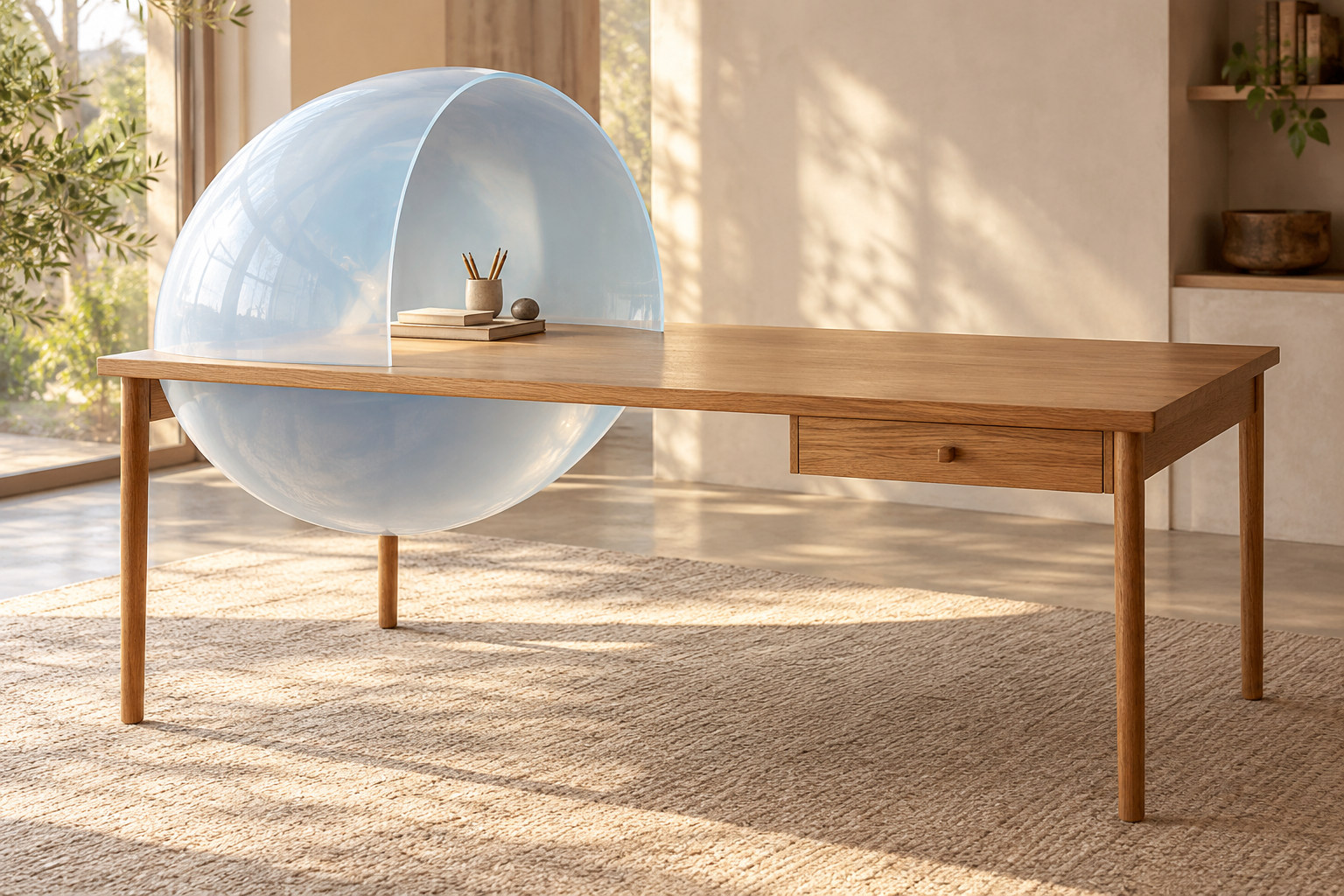
Sphere Table gives a work surface a distinct inside and outside. The oak tabletop continues into a curved acrylic shell, so the furniture begins suggesting an individual place before another wall has been built.
Jongeriuslab records natural oiled oak, dyed-through acrylic glass and powder-coated steel in the design. The half-sphere introduces a different material character from the solid table beneath it: light can register through the shell while the curve remains visible.1
Keep the larger room continuous
The studio explains the design through the North Delegates’ Lounge at the United Nations. Fixed walls were not permitted there, according to its account, while privacy remained part of the brief. The table answered at furniture scale.1
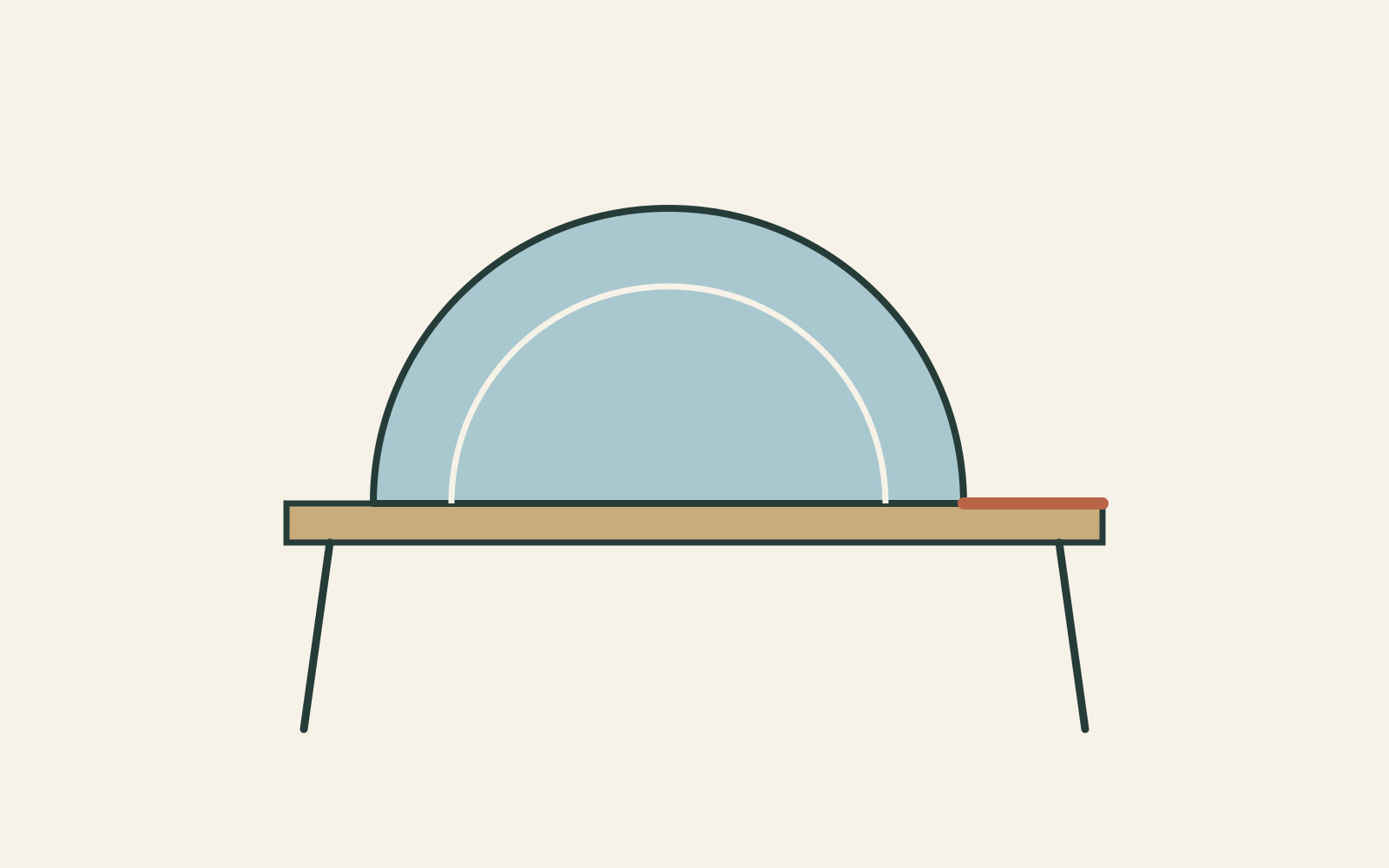
That is the useful idea to notice. A shared room need not consist only of completely open territory or fully divided rooms. A small curved boundary can help distinguish a place within it, leaving the wider space readable around the furniture.
One object in a collective interior
Jongeriuslab dates the commission to 2013 and names Vitra as producer. Its lounge account identifies the Sphere Table among new pieces introduced into an interior containing retained furniture.2 Jongeriuslab’s project record preserves the wider collaborative commission.2
The table’s curve therefore belongs to a room with other voices in it. Its strongest gesture is partial: it offers a corner of attention without trying to become the entire room.