Three ways to be smaller
A familiar lounge chair can become an unhelpful starting point when every alternative is judged by how closely it resembles that one object. Instead, decide what you want from the seat: a light frame, a high back, broad arms or a place to sit across from the sofa. That gives another design room to make sense on its own.
The dimensions below are manufacturer references for the specified versions. They are useful for a first floor plan, not a guarantee about an older, repaired or differently configured chair. The room studies show broad seating arrangements; use the linked maker records to compare the exact designs.[2][5][7]
| Reference | Width × depth | Overall / seat height |
|---|---|---|
| Artek 406 (2022) | 60 × 72 | 87 / 41 |
| Lamino 23001 | 70 × 78 | 101 / 41 |
| CH22 reissue | 69.5 × 61.5 | 72.6 / 36.8 |
Read across the table rather than choosing the smallest number. The 406 is narrower in these references; CH22 is shallower. Lamino’s taller back makes a different shape in the room. Add a separate footstool to the drawing if you intend to use one, then leave space for the ordinary route past the chair.
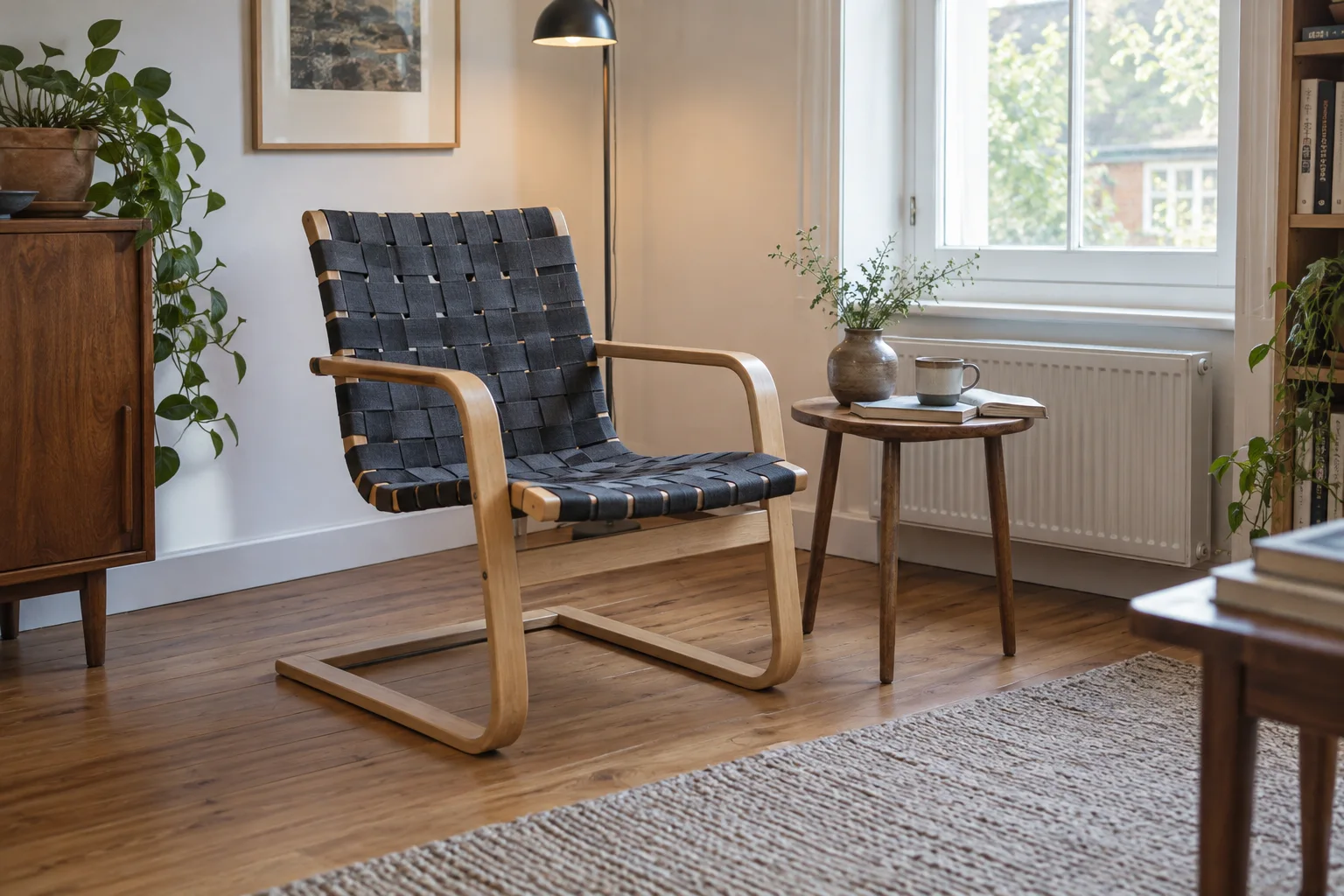
Artek 406: a light frame with a seat to inspect
Artek identifies Alvar Aalto’s 406 with 1939, a birch frame and linen webbing. The open construction is worth trying where you want a reading chair without a large upholstered body. Sit back and notice the support of both the seat and back rather than judging the chair from its small width alone.[1]
On a used example, ask about the webbing, its attachment and any frame repairs. A new seat surface does not settle the condition of the bentwood beneath. If the frame or attachments raise concern, have them assessed before treating rewebbing as the whole restoration job.
There is a useful warning in Artek’s own second-hand record: its #111 chair, described as circa 1970s with replacement quilted leather, lists a 36 cm seat height. The 2022 catalogue reference above lists 41 cm. Those records do not establish why the figures differ, but they show why a catalogue number cannot replace measuring and trying the offered chair.[3][2]
Choose it because you like the actual seat and the open frame in your room. If you are considering replacement webbing or another covering, ask what the work would change about the support, feel and appearance before you compare the finished cost.
Lamino: more back within an open frame
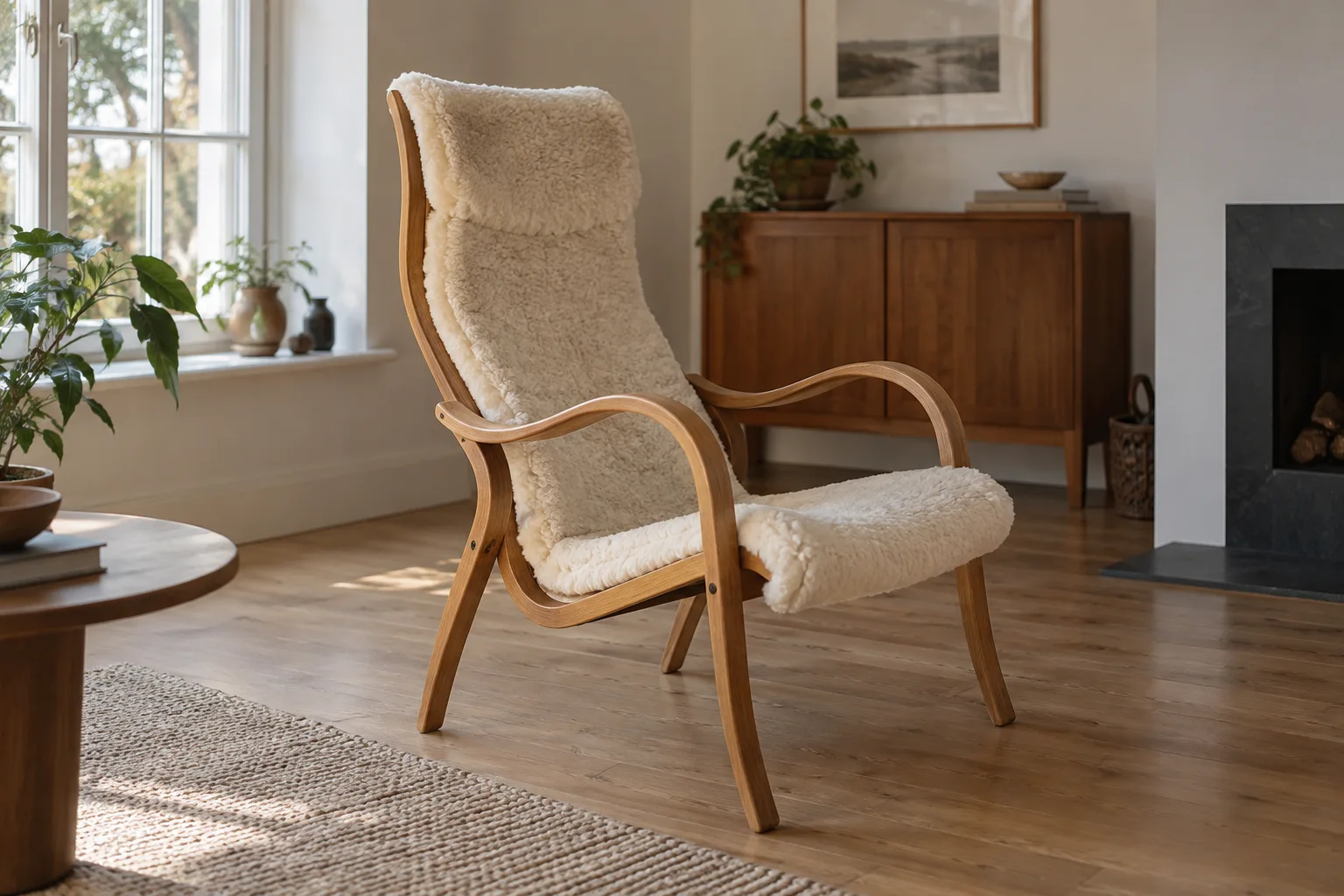
Swedese dates Yngve Ekström’s Lamino to 1956 and describes a laminated wooden frame with a supporting fabric beneath the upholstery. The tall back makes it a different proposition from a low conversation chair. Try where the curve meets your shoulders and head, without assuming that height alone means support in the right place.[4]
The standard 23001 reference in Swedese’s Care Collection is the one used in our table; that publication also lists other leg configurations. Confirm which version you are offered. A higher or altered-looking chair should prompt a question about its actual configuration rather than a guess from one measurement.[5]
Look beyond the visible sheepskin, fabric or leather to ask about the supporting layer and the frame. A cover that looks tired and a support that has lost its intended shape are different jobs. Ask the repairer to price what the actual chair needs and identify what will be retained.
If you want a footstool, test the pair and draw both footprints in use. Then decide where the stool will go when you need to walk through the space. Buying a compact-looking chair and leaving its stool permanently across the passage defeats the reason for choosing it.
CH22: a lower outline and a visible wooden back
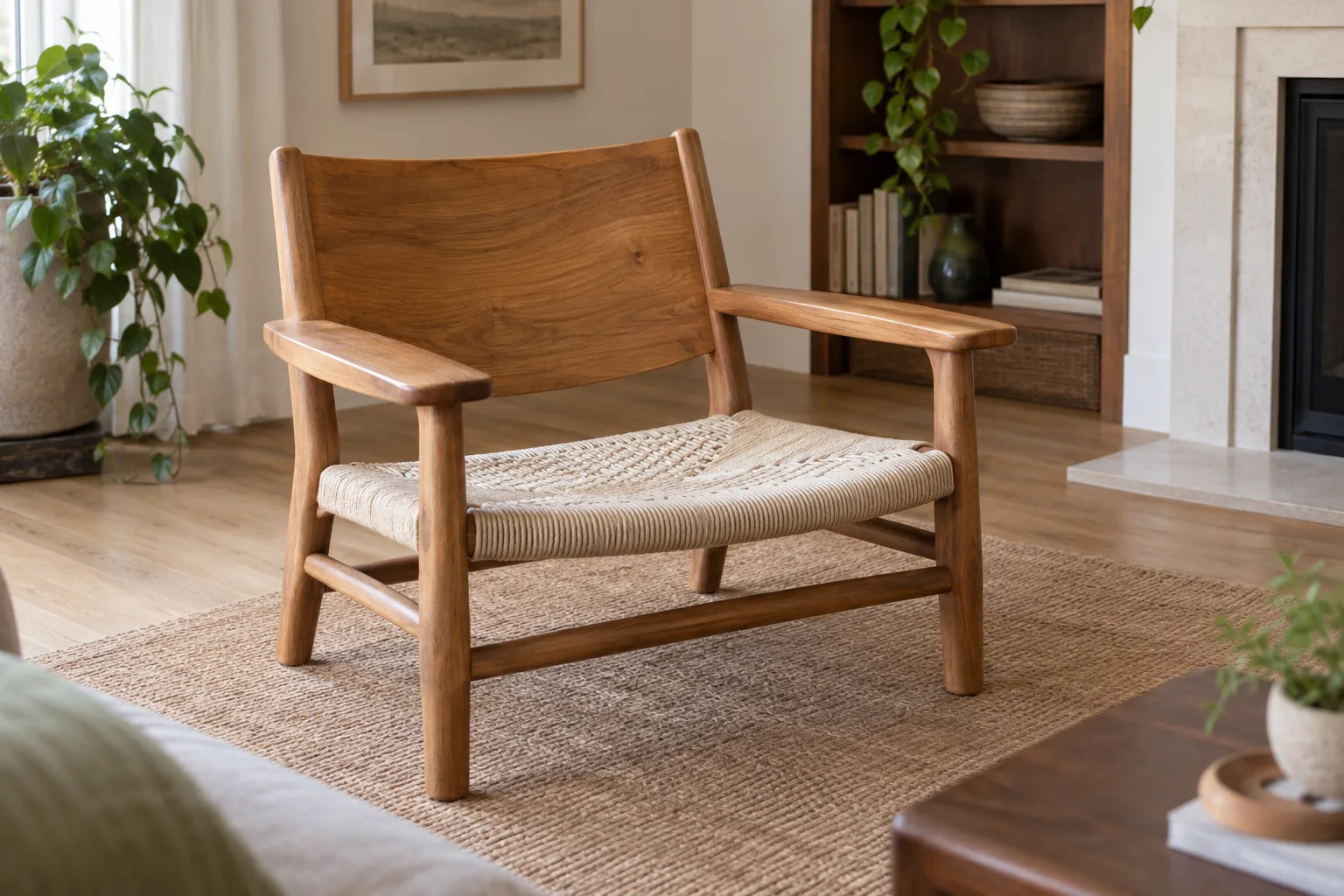
Carl Hansen & Søn identifies CH22 as part of Wegner’s 1950 debut collection and records its return to production in 2016. A large shaped wooden back, arms and paper-cord seat give it a different contact with the body from a padded high-back chair. An advert saying “1950 design” still needs separate evidence if it claims an early production.[6]
Try the usable seat and the back together. The relatively shallow overall reference does not tell you whether the shaped back meets you comfortably or whether the seat feels too low. Sit for the kind of visit, reading session or conversation you expect to have in it.
Ask about frame repairs, replaced cord and any changes to the back or arms. Look at the whole chair before getting absorbed in one attractive joint. If weaving is needed, have the frame assessed first and ask the specialist to quote for the correct construction of the identified example.
Choose this direction when you enjoy the wooden back as part of the room and want a lower silhouette. It need not play the role of a reclining, head-supporting lounge chair. Let the design offer the kind of seat it actually is.
Make the shortlist real
Mark the candidate footprints on the floor with loose paper or another method that will not harm the surface. Place a chair of known comfort nearby as a reference, then try walking past, reaching the side table and opening the nearest door. Repeat with the footstool if there is one.
Take this to the viewing
I am choosing a chair for this space and this use. Please give the actual overall and seat dimensions, identify the version and known frame or seat work, and let me try the chair in its normal configuration. I would like to compare its delivered, usable cost, including any agreed restoration.
For the sitting trial itself, use our guide to a chair that is easy to sit in and get up from. A useful smaller chair saves the space you need while remaining a place you choose to sit.