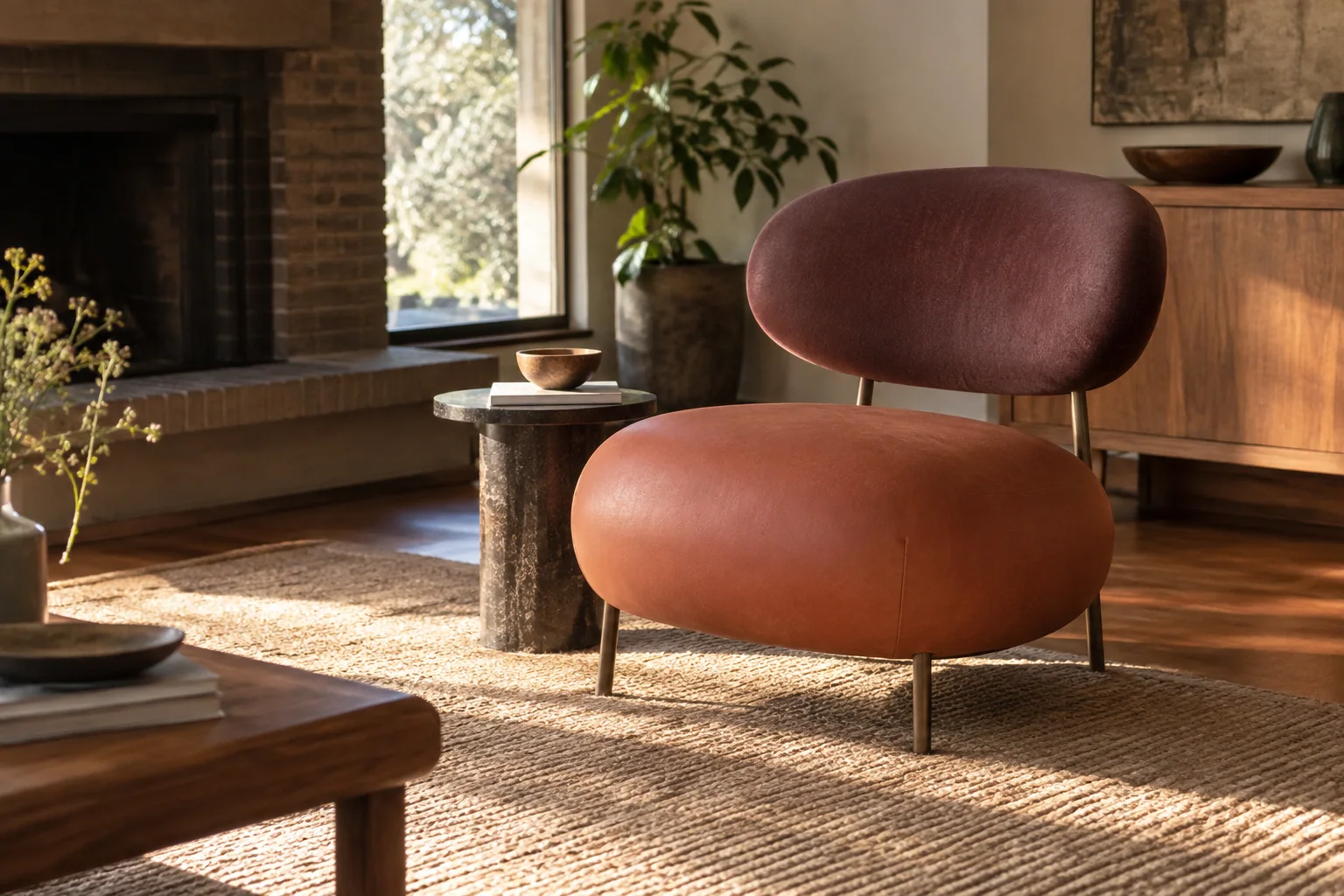
A chair with a reason to look different
Roy de Scheemaker designed the Pallone in 1989 for the House of the Future in Rosmalen, according to Leolux. That origin explains its optimistic, unfamiliar silhouette. At home, the useful question is more ordinary: do you want a chair for a long novel, a short conversation, or an occasional extra seat?[1]
For conversation, check whether you can turn towards someone beside you without perching awkwardly. For reading, hold a book where you normally do and notice your shoulders and lower back. A few seconds of sitting squarely for the seller may miss the position you will actually use for an evening.
The largest measurement may not be the useful one
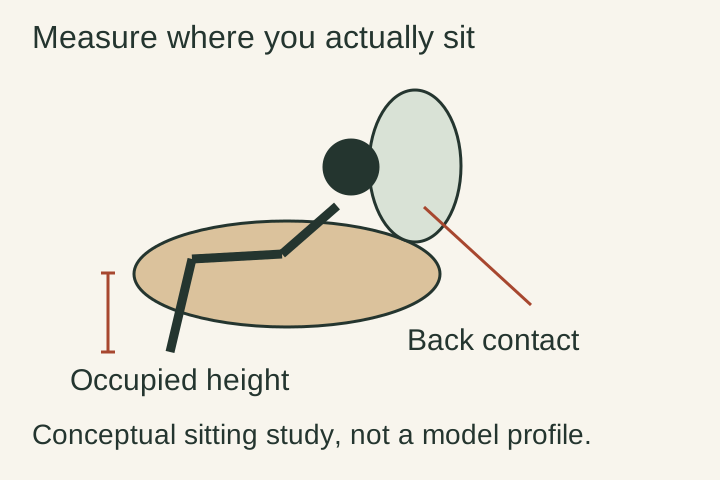
Measure the whole chair for the room, then the occupied sitting position for yourself. The widest part of the rounded body is not necessarily usable seat width. Nor does overall depth tell you how far back you can sit before meeting the backrest. Different members of the Pallone family also need to be distinguished before comparing dimensions.
| Try this | Notice this |
|---|---|
| Settle with your feet where they feel natural | Whether the front of the seat crowds the back of your knees. |
| Read for several minutes | Where the backrest actually meets you and whether you keep shifting forward. |
| Stand up normally | Whether the low position and available hand support suit you. |
Try it beside a table at the height you intend to use. A drink placed well above your elbow or just beyond comfortable reach can make the arrangement irritating even when the chair itself feels good. Tape out its footprint at home with the side table included.
One cover colour can conceal several upholstery decisions
Leolux’s current specification distinguishes the inner and outer seat surfaces from the back. It lists leather restrictions for the seat areas, with fabric options for the back and a stretch-fabric exception for an all-fabric chair. This is a current reference, not a rule for identifying every older cover. It does show why “recover it in any fabric” needs checking with a specialist.[1]
Ask the upholsterer to assess the actual model and proposed material before you order metres of cloth. Curved areas, stretch, seams and the thickness of the padding all affect the result. A material that looks attractive on a flat sample may not behave as required around this seat.
If an older chair has already been recovered, ask what changed beneath the cover. More filling can alter both the rounded outline and where you sit relative to the back. A smooth new surface is not evidence that the intended support has been restored.
Compare the chair you can use with the project you want
Consider two hypothetical examples: one has a colour you like less but feels right; the other has worn leather and an unusually soft, low seat. Recolouring your room around the first might be simpler than rebuilding the second. If the project is the one you want, obtain a quote covering the padding as well as the visible cover.
Have looseness between the back, seat or supports assessed before a sitting trial. Ask for underside photographs, identification information and any repair invoices, keeping those separate from a seller’s recollection of the purchase date. The model’s 1989 introduction does not date the individual chair.
Before agreeing a price
Confirm the exact Pallone model, its dimensions, previous upholstery work and any looseness. Then compare the purchase, collection, upholstery and return delivery with the price of a sound example you would happily use as it is.
The best reason to bring one home is that the unusual shape becomes a familiar pleasure. Make sure its sitting position earns that place before committing to its next colour.