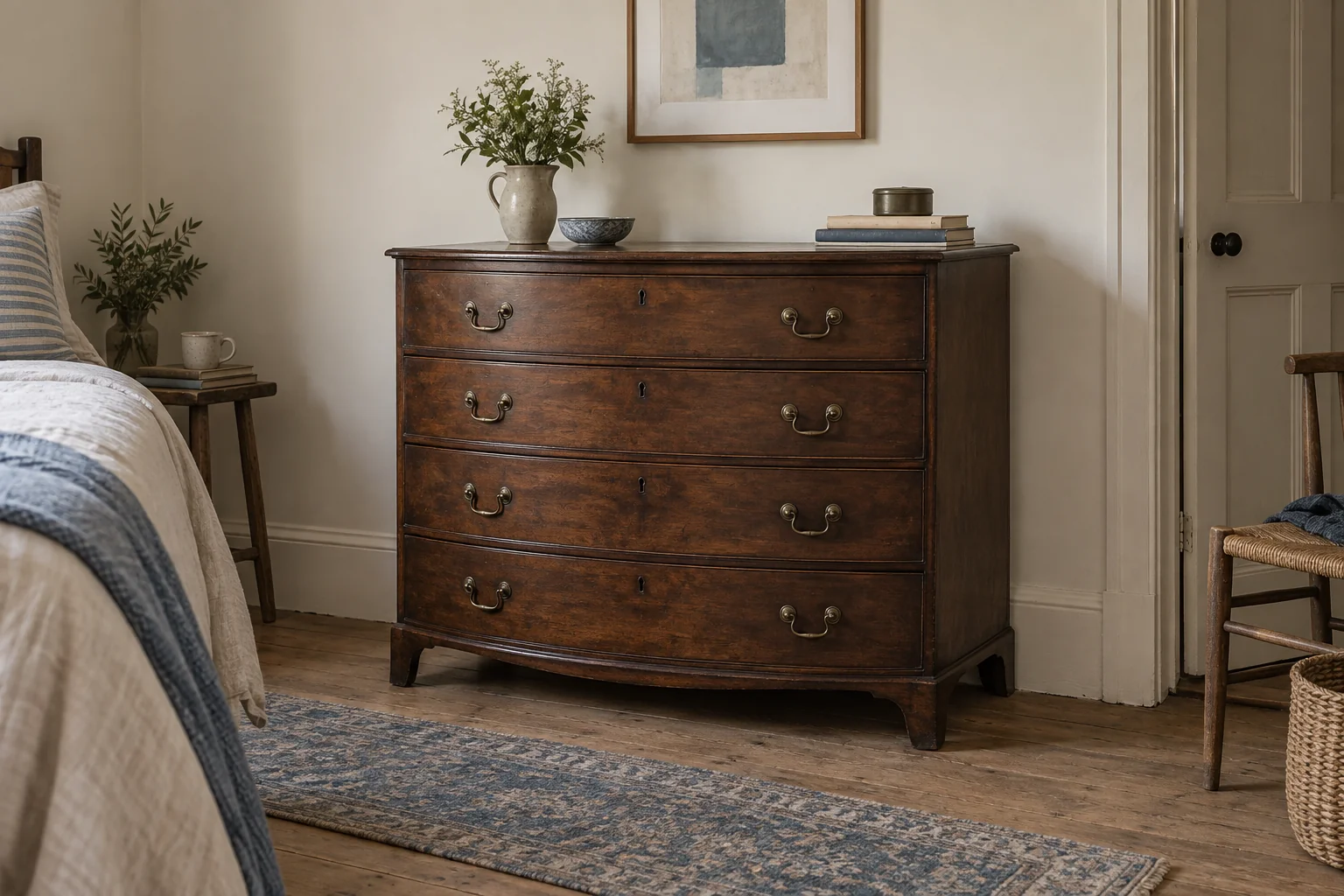
Is the wood the problem, or the whole corner?
Picture a mahogany-coloured chest inherited from a relative. It looked elegant in their house; in your bedroom, between a wardrobe and a dark bed, it feels cumbersome. You could dislike the chest itself. But you might instead be seeing three large, similar blocks competing along one wall. Buying pale paint before separating those possibilities makes the decision unnecessarily permanent.
Stand at the entrance and describe what bothers you without using the word “dated”. Perhaps the top is crowded with small objects. Perhaps the furniture all reaches the same height. Perhaps a chair blocks the drawers, or an overhead light leaves the whole wall in shadow. A useful diagnosis is something you can test: “I cannot see the shape of the chest” is more actionable than “brown furniture does not work here”.
There is a practical reason to give the setting a fair trial. The Canadian Conservation Institute treats a furniture finish as part of the object’s historic material: an original surface cannot simply be put back after stripping. Its advice supports care of the object, rather than any particular decorating style.[1]
If the surface is sticky, flaking or damaged, treat that as a separate condition question. Decorating around the piece does not diagnose the finish, and a restorer’s assessment does not oblige you to make it paler.
A dark chest can be the clear shape in a light room
For a chest with curved feet, a shaped front or attractive handles, a relatively light wall can give those details room to show. Start with what you already have: pale bedding, a curtain or a large artwork with a light mount. You do not need to match all the whites. The aim is to carry some lightness beyond the small patch immediately above the furniture.
Clear the top completely before putting anything back. Try one object with enough height to relate to the wall above it, and leave part of the wood visible. A cluster of six small brown ornaments may repeat the very heaviness you are trying to change. Protect the finish beneath vessels and keep water away from it; a styled surface still has to survive ordinary use.
Look at the handles and legs next. A small repetition of their tone elsewhere, such as a dark frame or the wooden arms of a chair, can make the chest feel connected. This is an option, not a rule requiring matching metalwork or another large brown purchase. Stop once the room feels coherent to you.
A useful trial is to photograph the cleared chest from the same position before and after adding the textile or artwork. Keep the camera exposure similar. Otherwise an automatically brightened phone image can make a decorating change seem more dramatic than it was.
A tall cabinet can sit comfortably against a deeper wall
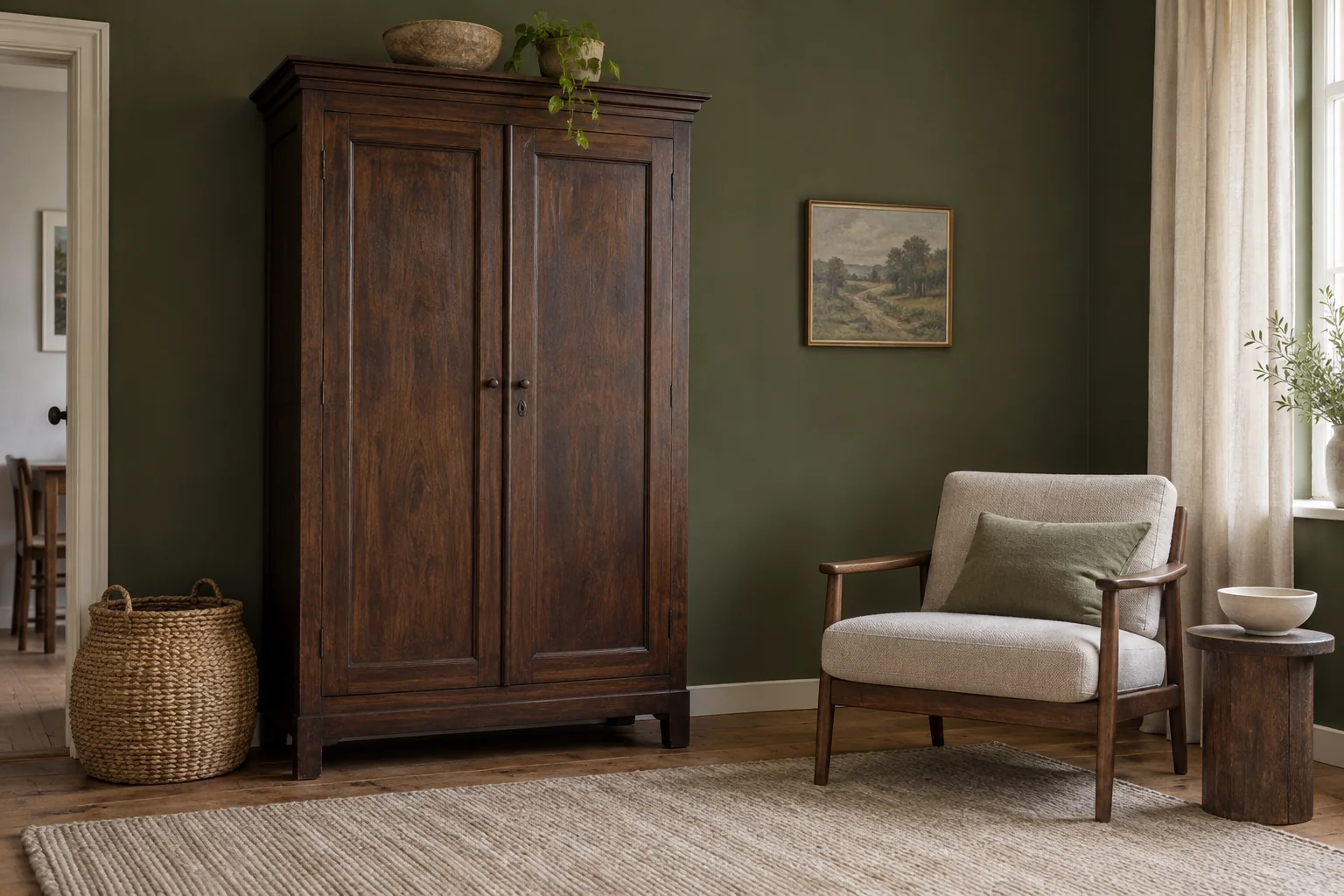
A pale background is not the only approach. If a tall cabinet feels like an isolated black rectangle, a deeper muted wall can bring the background and furniture closer in tone. It may make the composition calmer while making the room darker overall. Decide which effect you want; do not choose a dark wall on the assumption that it will brighten the space.
Try a large painted sample board behind or beside the cabinet, in daylight and with the lamps you normally use. A little colour chip held over a phone photograph cannot show how your wall, floor and wood interact. Green, blue and warm neutral samples are starting points to compare, not universally correct colours for antique wood.
The neighbouring shapes matter as much as colour. A lower chair with exposed legs leaves a different outline from a second tall cupboard. Move a floor-standing pile of baskets or a bulky side table temporarily and see whether a little more visible wall and floor solves the problem. Leave enough room to open the cabinet normally; the most attractive position is no use if a door hits the chair.
If the fixed wooden floor is the part you cannot reconcile, use the separate guide to mixing vintage wood furniture with your floor. It deals with that specific relationship before you commit to a wall colour.
Let the dining table be dark; vary what touches it
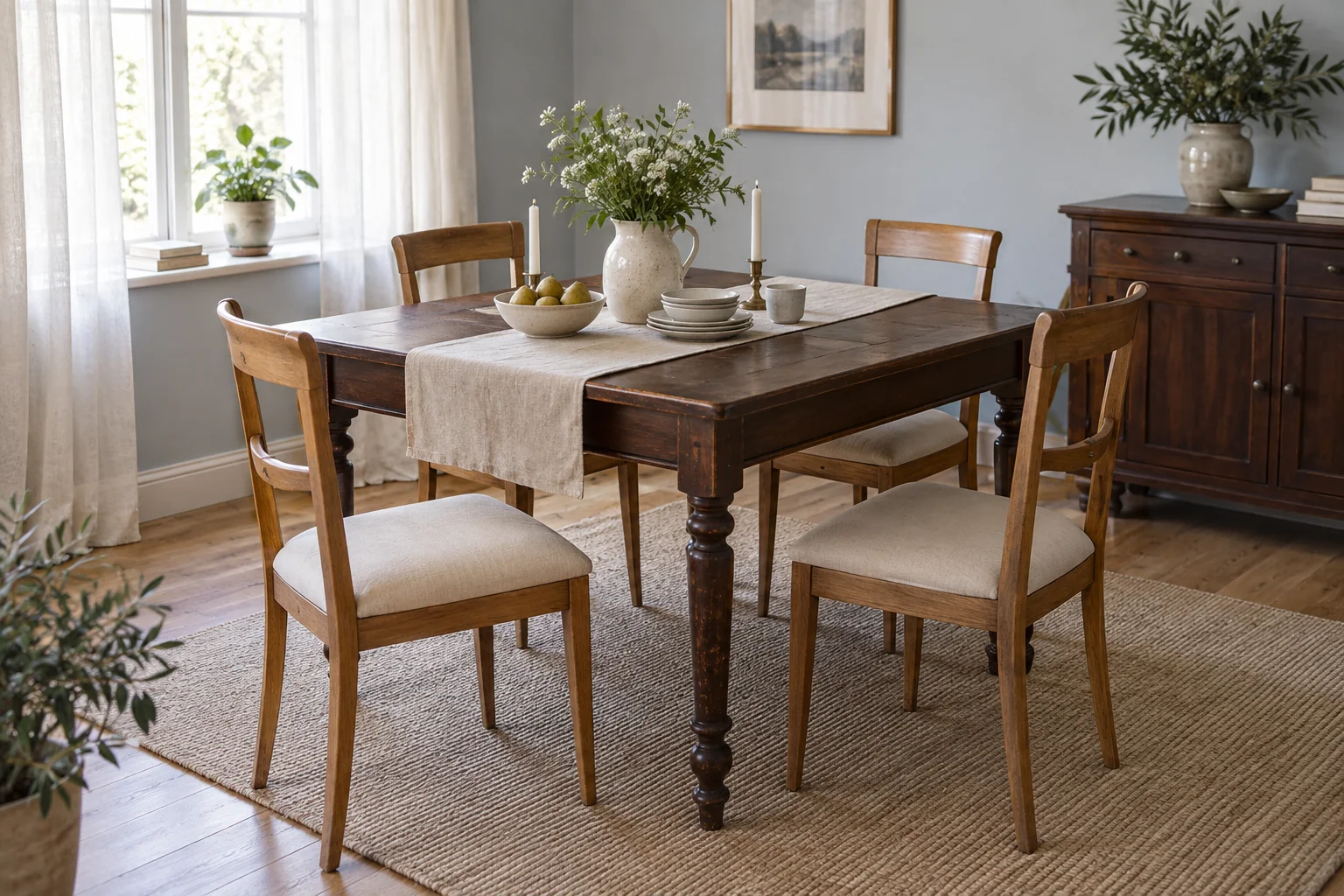
A dark table surrounded by dark upholstered chairs, a dark rug and a matching sideboard can make a dining area feel dense. You need not replace the entire set. Try the table with a lighter cloth or runner first. Then, if possible, borrow one lighter chair to judge the relationship before buying six.
Look below the tabletop as well as above it. Open chair backs and visible legs give a different sense of space from full upholstered backs and skirted seats. Choose for the people who eat there: comfort, seat height and room beneath the table’s apron still decide whether a promising combination works. A pale chair that forces your knees against the apron is the wrong chair.
Use the table as you normally would during the trial. Pull a chair out, carry plates past it and put the everyday place settings down. A runner that looks right with a vase in the centre may be awkward at dinner. A rug can help divide the dining area from the rest of a room, but it needs to accommodate the chairs in use; the dining-table rug guide covers that measurement.
You can also remove one matching piece from the immediate view. A sideboard may work better on another wall, while the table remains exactly where it is. Treat that as a room arrangement experiment, rather than evidence that coordinated furniture is inherently wrong.
Run a small trial before making a permanent decision
Choose the easiest change that addresses your diagnosis. For a crowded chest, clear the top. For a heavy dining group, try a textile. For a cabinet that disappears into a dull corner, change its immediate neighbour or the background sample. Make that one change, then use the room for an evening. Buying several new things at once makes it harder to tell which helped.
Check your preferred arrangement under ordinary light. Do not move the furniture into direct sun to reveal more grain: light damage to wood and finishes is cumulative and irreversible. CCI also advises avoiding positions near radiators and heating vents. Better room lighting and a damaging location are different decisions.[1]
A decision you can make tonight
Choose one piece to keep as the room’s dark anchor, one surrounding element to change, and one practical test: open its doors, use the drawer or eat at the table. If the arrangement works in use as well as from the doorway, you have a good reason to keep the finish.
After the trial, you may still find the cabinet too large or the table wrong for your room. That is a useful result too. Changing a finish will not reduce the cabinet’s width or give you more knee room. If another position or another owner would suit the piece better, you can make that decision having tested the setting rather than assuming its colour was the problem.