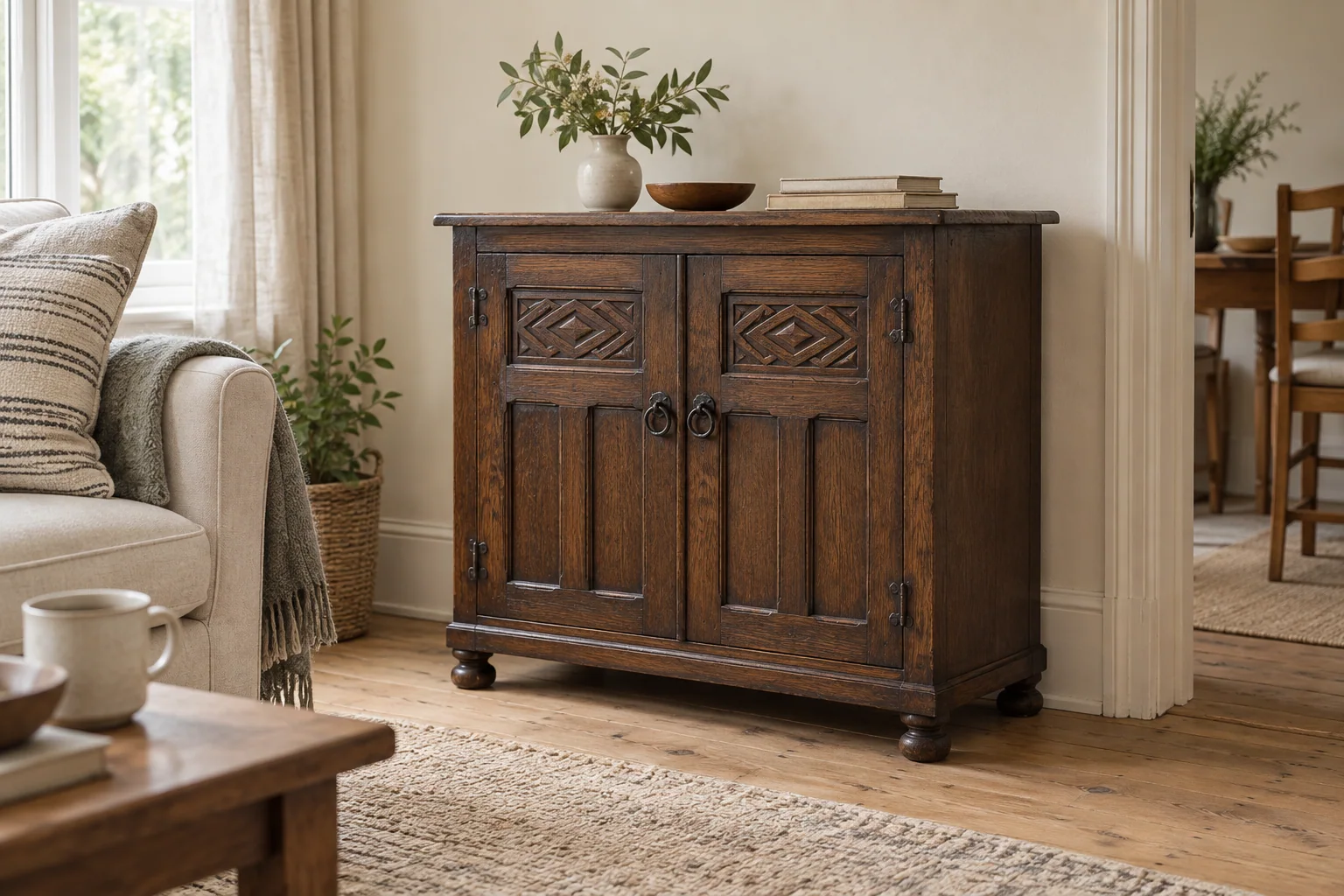
Traditional-looking furniture with a modern working life
Wood Bros dates its business to 1924 and describes Old Charm as an oak collection with decorative carving. That is a manufacturer account of the company and collection, not the production date of a cabinet you find for sale. The traditional design language should be kept separate from the object’s age.[1]
Ask for the Wood Bros or Old Charm marks in context, a model number if present and any original paperwork. Keep the claimed production period separate from the style description. Similar dark oak and ring handles are not enough to attribute an unmarked cabinet confidently.
Later examples and current products can look familiar. A current catalogue may help research a model, but use the dimensions and component descriptions only when the offered item matches. Do not transfer a modern storage arrangement to an older piece merely because the front looks related.
Let the interior choose the room
Photograph every shelf, drawer and door open. Compare the clear openings with your plates, books or equipment. For a media unit, include plugs, cable bends and the equipment maker’s ventilation requirements; an old compartment may be less useful than its broad exterior suggests.
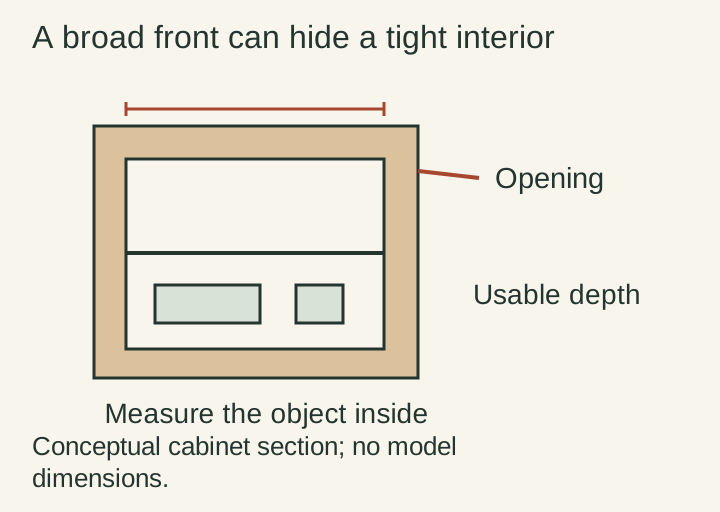
Wood Bros’s current OC3198 television cabinet, for example, has an up-and-over door and a specific internal arrangement. That is useful evidence that function can be model-specific. It is not a specification for an older Old Charm cabinet offered under a general name.[2]
| You want to store | Measure or confirm |
|---|---|
| Crockery | Door opening, shelf depth and adjustable positions. |
| Books | Clear height and depth, with supports intact. |
| Media equipment | Device and connector space, access and suitable ventilation. |
| Linen or board games | Usable drawer or cupboard dimensions, not just exterior width. |
If the piece needs major cutting to hold modern electronics, compare a different cabinet first. An ordinary cupboard can be a better purchase when it does its job without sacrificing a sound back or shelf.
Pay attention where hands meet the furniture
Check pulls, hinges and catches in normal use. Ask whether the distinctive fittings are complete and what has been replaced. A dark finish can make a mismatched repair less obvious in a small photograph; side lighting and an open-door view help explain the work.
Look around projecting mouldings, feet and carved panel edges for knocks or repairs. Distinguish expected surface wear from movement at joints or doors that no longer hang correctly. A repairer should assess those functional faults before you decide the cabinet only needs polish.
Try the dark wood against your room’s existing textiles and light. One cabinet with plain surroundings can give the carving room to breathe. Buying an entire matching suite is optional; you can enjoy the furniture without reconstructing the showroom it originally came from.
Compare the price of the actual usable piece
Use comparable cabinets with similar size, condition, included shelves and delivery. An original retail invoice explains what was bought then; it does not establish today’s resale price. A sold shop listing may still show an asking price rather than the final transaction.
Before making an offer
Please show the maker and model evidence, all compartments and the hinges and pulls. What are the clear internal dimensions, which parts have been replaced, and what will delivery and any functional repairs cost?
A useful older Old Charm cabinet does not need an investment story. If the proportions work, the interior holds your things and you enjoy the wood, it already has a good reason to stay in use.