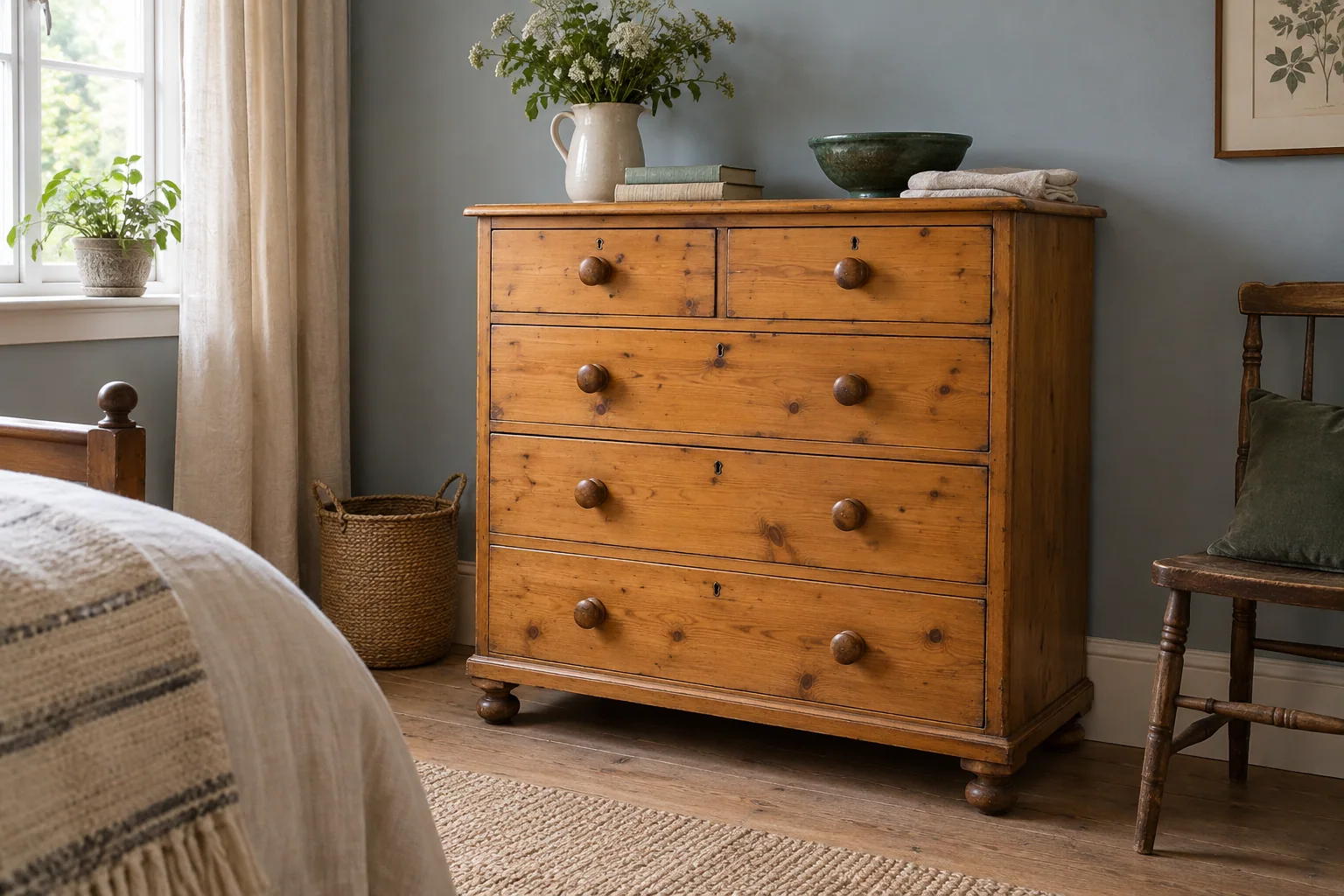
The orange is not necessarily all in the varnish
Look at the same face in daylight and under the lamp you use at night. A warm light, nearby colour and camera processing can make a listing look different from the piece at home. Start with direct observation, rather than trying to match two photographs taken under unknown conditions.
The wood itself and a coloured or ambered coating may both contribute. Ask a furniture professional what can be established about the existing finish and any earlier stain. A hidden unfinished area may be informative, but it is not a promise that the visible surfaces will become the same colour after treatment.
The Canadian Conservation Institute advises treating finishes as part of the furniture and taking care with cleaning and alteration. If the piece has an important or uncertain early finish, identification and conservation advice should come before a cosmetic experiment.[1]
Run a room trial that costs very little
Put a large sample of the proposed wall colour or fabric beside the chest without attaching it to the finish. Try a lighter textile on the nearby bed or chair, and simplify the objects on top. Look from the place where you normally enter the room, not only from a close photograph.
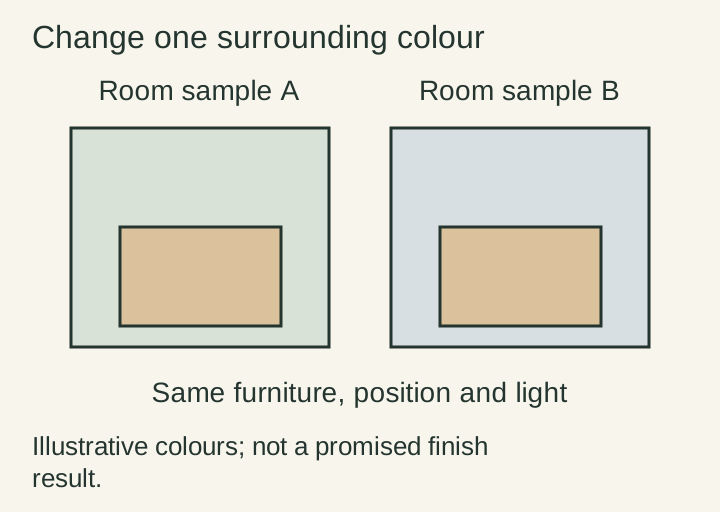
| Trial | Keep constant |
|---|---|
| Different wall-colour sample | Same chest face, daylight and surrounding objects. |
| Different textile nearby | Same lighting and wall background. |
| Evening lamp choice | Same position and furnishings. |
| Professional finish sample | Prepared substrate, full finish system and viewing light. |
The question is whether the warmth becomes enjoyable, not whether a particular blue or green mathematically cancels orange. A successful room trial lets the furniture keep its history while changing how it feels in your home. If it still bothers you, the trial has clarified what you want the finish work to achieve.
Why a clear or raw finish still needs a sample
Osmo explains that its Raw formulation uses light pigment to counter the wet appearance of certain pale woods. Its guidance also notes situations in which white becomes visible, including darker wood, coarse pores or over-application. That is product-specific guidance, not a recipe for neutralising an unknown old pine finish.[2]
Ask the finisher to show the proposed preparation and complete coating on a representative sample. Confirm whether the sample uses comparable pine and whether colour already in the wood will remain. A bare sanded patch is an intermediate stage, not the finished result you are buying.
Discuss sheen as well as colour. A paler result with a very different gloss may feel less like the chest you liked. Keep notes of the sample, products, preparation and accepted appearance so the final job is judged against something concrete.
Make the amount of intervention a choice
Compare keeping the existing finish, making a limited professional repair, and full refinishing. Ask what happens at mouldings, drawer edges, veneer where present and earlier repairs. The labour to achieve an even result across a detailed chest may matter more than the price of the finishing product.
A useful brief
I want this chest to feel less orange while retaining ___. Please identify the existing finish, explain what colour may remain in the wood and show a sample of the complete proposed result before quoting the full job.
Choose the smallest change that gives you a room you enjoy. If a textile or better setting does enough, stop there. If refinishing is worthwhile, buy a defined result rather than a bottle with an appealing colour name.