Define the chair's job, user and floor
Decide whether the chair is for daily reading, feeding a child, conversation, occasional use or primarily display. Name the intended adult users, how they normally sit and stand, and whether comfort must be confirmed before purchase. A tall upright rocker, low lounge rocker and small decorative example can share a furniture name while serving very different bodies and tasks.
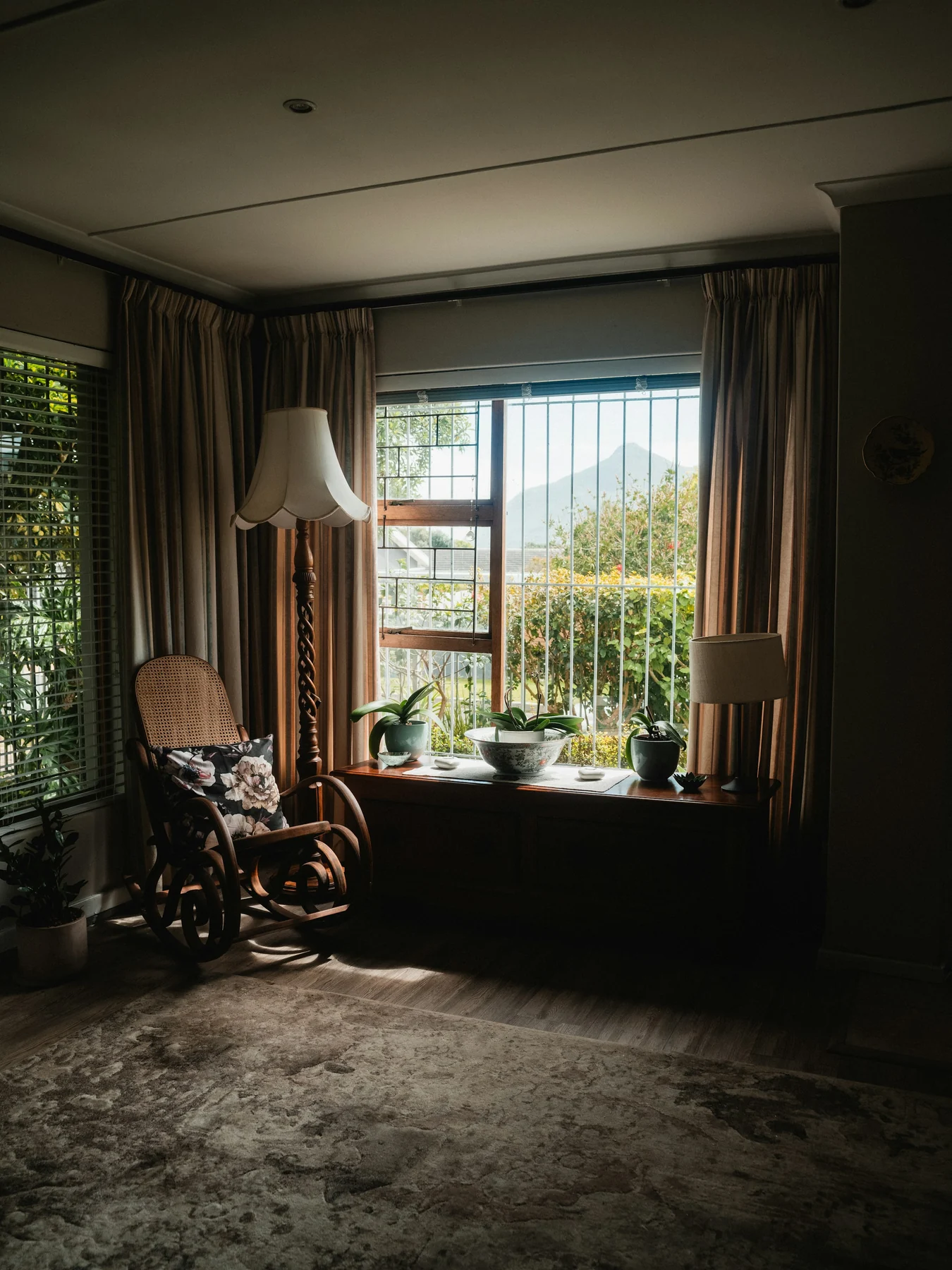
Record the exact floor and room position. Hard floor, rug, rug edge, threshold and uneven boards can change contact, noise and movement. Add the wall, side table, lamp, curtains, radiator or other heat source, door and walking route. Do not buy from an empty studio photograph when the chair will work in an occupied corner.
Write the use brief
- User and frequencyWho will sit, how often, and whether trying the exact chair is essential to the decision.
- Sitting taskUpright conversation, reading, resting or another real use with its normal duration.
- FloorExact surface, rug or mat, transitions and anything that can meet a runner.
- RoomFront/rear space, side furniture, heat, curtains, door movement and circulation.
- Tolerance for workReady for ordinary use or acceptable only with a reviewed furniture, seat or finish work plan.
Record the exact chair, not a model average
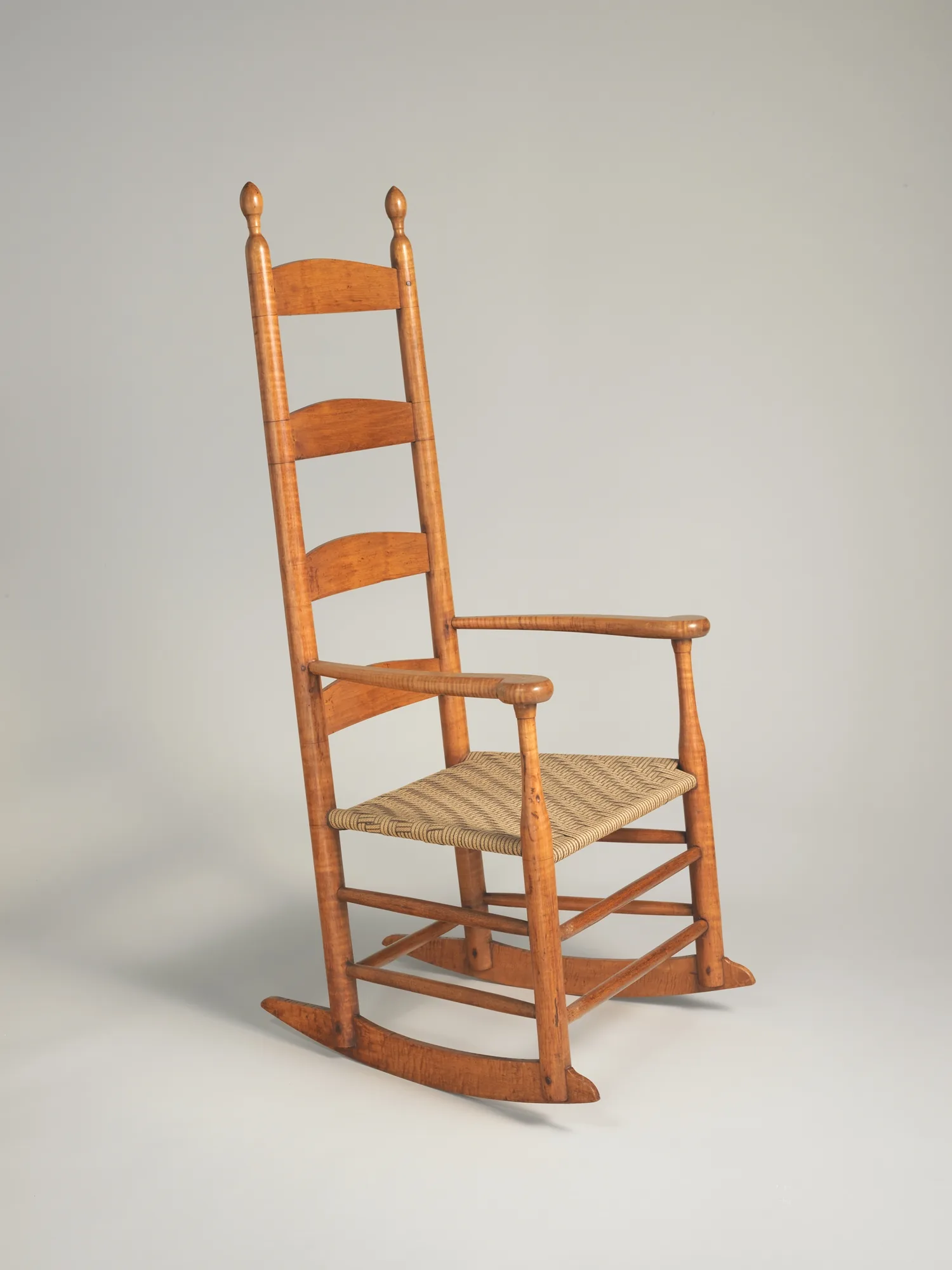
The Met records Rocking Chair 66.10.23 as maple and birch, 97.2 cm high, 57.5 cm wide and 71.1 cm deep. Those dimensions and the public-domain whole view belong to that museum object. The record does not supply its occupied rocking envelope, comfort or current fitness, which is exactly why a marketplace listing needs separate object and use fields.[1]
| Decision | Measure on the exact chair | Clarify |
|---|---|---|
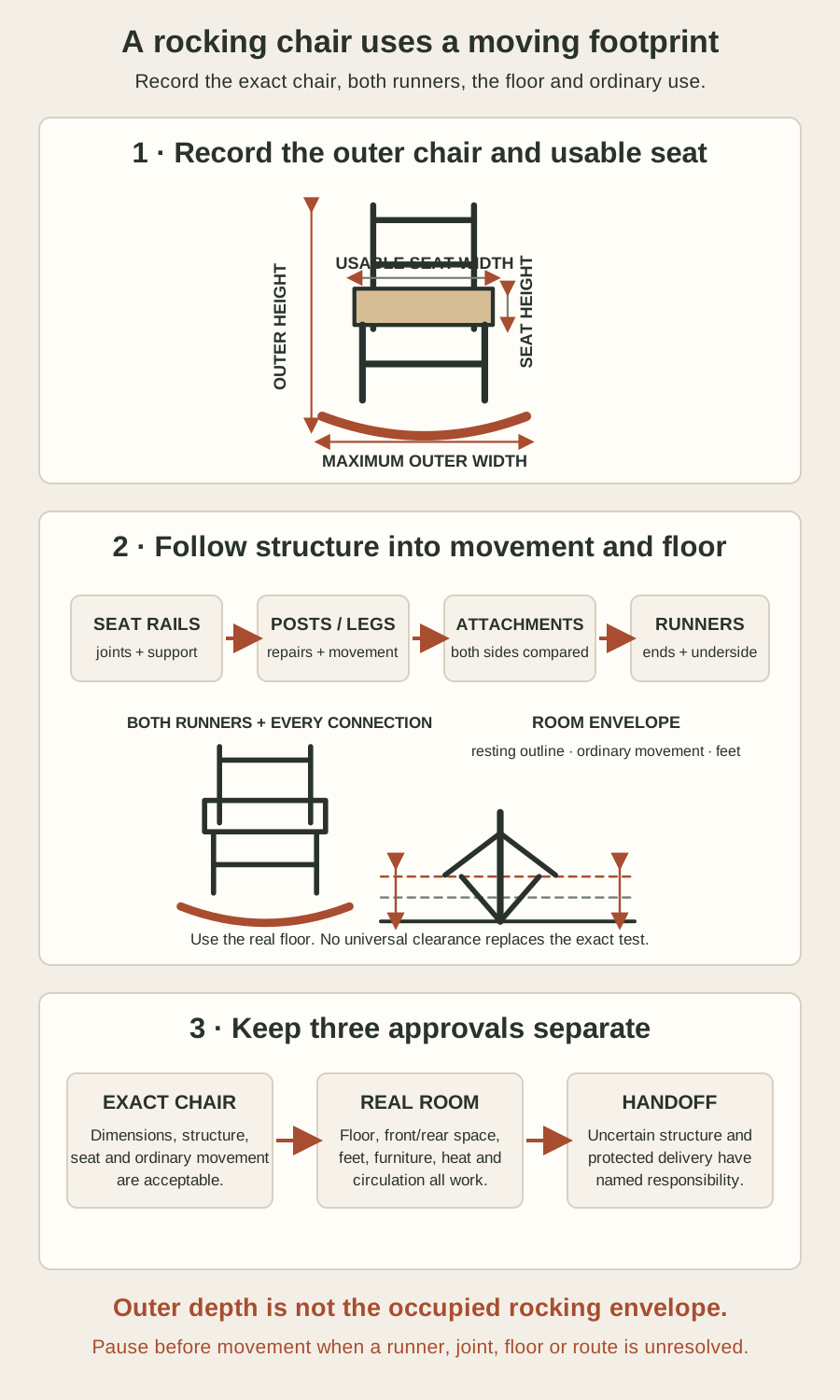
| Static room outline | Maximum width, depth and height at the outermost arms, posts and runner ends | Splayed runners, finials, removable cushion and meaningful asymmetry |
| Usable seat | Seat height at rest, usable width and usable depth | Woven or upholstered compression and where the back begins |
| Body relationship | Back height above seat and arm height above seat | Back angle, loose cushion and usable arm surface |
| Runner record | Overall runner length, widest runner spacing and front/rear projection beyond the frame | Different sides, repairs, missing material and where points were taken |
| Occupied movement | Maximum ordinary front and rear reach observed on the intended floor | Sitter, feet, floor and exact test conditions |
Ask the seller to show where the tape begins and ends. Use the largest relevant outer number for room and route planning, but keep side-to-side variation visible. An old catalogue, maker label or dimension from another chair can help formulate questions; it cannot replace the current exact-piece record.
Follow the frame into every runner attachment
A rocker is one structural chain. Begin at the seat rails and back posts, follow the legs or posts down to every connection with the runners, then follow each runner from front end across its floor-bearing curve to the rear end and underside. Compare left and right in the same views; one strong side cannot answer for the other.
Inspect the complete load path
- Seat rails and cornersOpen joints, splits, failed glue, added blocks, screws, plates, repairs and seller-reported movement.
- Back, arms and postsLoose rails or spindles, cracks around joints, altered arms and areas used to enter or leave the chair.
- Seat supportWoven field, upholstery, board, webbing or other support as visible and reported, with hidden layers unknown.
- Runner attachmentsEvery socket, dowel, screw, bracket, notch or repair only as safely visible on both sides.
- RunnersCracks, splits, laminations, worn flats, chips, shortened ends, replacement sections and underside condition.
- Difference between sidesAlignment, curve, height, repair, wear and floor contact recorded rather than averaged.
If the seat is cane, rush, splint or paper cord, use the woven-seat Guide. If it is upholstered, use the upholstery Guide. A sound-looking seat surface does not settle the rocker attachments beneath it.
Structural boundary
Do not make movement prove what photographs could not settle
If a runner, attachment, seat rail or post is cracked, loose, altered or uncertain, stop before anyone sits or rocks for the inspection. A suitably experienced furniture professional owns the structural assessment and any test beyond ordinary accepted use.
Establish the floor and still starting state
Ask the seller to place the unloaded chair on a clean, clear, stable floor appropriate for inspection. Photograph it square-on from the front and rear, from both sides and at floor level along each runner. Record the floor surface, any packing or felt, where the runners contact and whether one side sits, twists or shifts differently before a person enters the chair.
A rocking chair is meant to move front to back, so ordinary fore-and-aft motion is not the same observation as loose lateral movement at a joint or one runner leaving the floor unexpectedly. Describe what happens and where; do not diagnose the cause from a sound or a single gap. Floor variation, runner wear, frame distortion and repairs can produce similar symptoms. Do not wedge, sand, wet, wax or add a new pad to make the chair appear even.
Observe ordinary movement without turning it into a stress test
Only after the seller regards the chair fit for ordinary use and no visible or reported concern requires a stop, ask for one calm trial by an appropriate adult on the recorded floor. Observe entry, settling, a small ordinary rock, return to rest and standing. Record noise, hesitation, lateral shift, abrupt contact, runner travel and whether the sitter needs to brace against nearby furniture.
A short uncut side-view video can preserve the relationship between chair, floor and sitter. It should not hide the runner ends or cut from an empty chair to a different position. Keep the result narrow: the video shows what occurred in that trial, with that person and floor. It does not certify hidden joints, capacity, safety for another user or future performance.
| Observation | Ask next | Do not conclude |
|---|---|---|
| Smooth quiet motion in one trial | Whether any movement, noise or repair is known at other times or floors | That hidden structure is sound or the chair will suit another user |
| Click or opening gap | Exact location, corresponding close views and whether load changes it | Which joint or repair will solve it |
| One runner lifts or shifts laterally | Floor, side-to-side geometry, attachments and professional assessment | That a shim, felt or runner adjustment is appropriate |
| Abrupt stop or very short travel | Runner ends, altered curve, nearby contact and whether this is seller-known | That force or a different sitter should extend it |
| Chair moves across the floor | Surface, runner condition and intended-room test | That an unreviewed mat or coating is a safe fix |
Trial boundary
Ordinary use is enough
Do not stand, bounce, overload, twist, pull on the back, drive the chair to its runner ends or use a child as the test. Stop at opening joints, sharp noise, lateral instability, runner damage or seller concern.
Map the occupied rocking envelope in the room
Mark the static outer outline first. Then use the observed ordinary trial to add the furthest front and rear reach of the chair, the sitter's knees and feet, and the space needed to sit down and stand. Record this as one exact configuration with its person and floor; do not infer a universal arc from runner length or copy a clearance from another chair.
Test the occupied corner
- Front and rearWall, furniture, sockets, skirting, curtains and anything the chair or sitter can meet.
- User spaceFeet, knees, hands, entry, standing and any side support used in ordinary life.
- Floor transitionsRug edges, thresholds, gaps and changes in level across the complete runner travel.
- Heat and lightRadiator, fireplace, vent, lamp, window and direct sun in every ordinary position.
- CirculationDoor swings and the route people use beside and behind the occupied chair.
Leave a route only if it works while the chair is occupied and moving ordinarily. If the runner enters the route, meets a rug edge or requires the user to rock into a wall, the proposed position has failed even when the empty chair fits neatly.
Compare comfort with a chair you already know
Measure a familiar chair that feels comfortable and one that clearly does not. Compare seat height, usable depth and width, back angle and height, arm position and the ease of sitting and standing. Then add what changes while rocking: where the head and back feel supported, whether feet can initiate and stop ordinary movement, and whether the sitter feels controlled rather than surprised.
If a personal trial is impossible, keep comfort and movement control as unresolved and decide whether return terms, price and likely work make that uncertainty acceptable. A seller's experience is useful as their report; it is not a fit promise for another body.
Comfort boundary
Geometry narrows the comparison; it does not fit a body
This Guide does not provide medical seating advice or certify suitability for mobility, balance, pregnancy, recovery or another individual need. Use the appropriate clinical or professional assessment where the consequence matters.
Read wear and repair without demanding an untouched chair
A rounded runner edge, replaced woven seat or disclosed old joint repair may be compatible with useful life. The buyer's question is whether the present assembly is coherent for the intended use and what work is likely—not whether every component appears untouched. Keep later parts and repairs visible because they can change dimensions, movement and handling.
Broadly even wear on both runners needs complete underside views and the current floor report. A flat, shortened or repaired area needs its exact location and side comparison. Added screws, brackets or blocks need a known purpose; an opening crack or loose joint ends the use trial; and a replacement seat needs current dimensions and support evidence. Leave cause, remaining strength and treatment with an appropriate professional.
CCI furniture guidance advises checking for damage and loose joints before movement, lifting rather than dragging, and referring extensive repair or cleaning to a conservator. That conservative boundary is more useful than treating shine, age or one smooth rock as proof of condition.[2]
Use the condition Guide to keep observed, seller-reported, inferred, professionally assessed and unknown states separate. Save the chair-specific movement record alongside it.
Give transport its own supported plan
The U.S. National Park Service's wooden-object guidance says to plan the route, never slide furniture and lift a chair at strong side seat rails rather than the back or arms. For an exact vintage rocker, the carrier must still confirm safe handholds, people, support, packaging and orientation after reviewing the runner and frame condition.[3]
Send maximum outer dimensions, actual or documented weight if known, runner condition, vulnerable projections, loose cushion or seat components and the complete collection and destination routes to the carrier. Use the delivery-route Guide for the protected envelope, turns, stairs, lifts and responsibility for any approved removal or reassembly.
Do not assume runners, arms, back or seat detach because screws are visible or another chair was shipped that way. Dragging a rocker by its runners or lifting it by the back converts working parts into handles. The carrier owns the exact method and must stop if a loose joint, damaged runner or changed route appears at collection.
Send one complete rocking-chair request
Message to copy
Ask for the exact chair, floor and ordinary movement
Hello—I'm considering this rocking chair for [daily/occasional] use on [floor or rug]. Could you show the complete chair from the front, rear, both sides, underside and floor level along both runners; then show the seat rails, posts or legs, every runner attachment, runner ends, seat support and any crack, movement, repair, replacement or added fastener? Please measure the maximum outer width, depth and height; seat height, usable width and depth; back and arm heights; runner length and widest spacing. If you regard it fit for ordinary use and no concern requires a stop, could you provide one uncut side view of an appropriate adult sitting, making a small ordinary rock, returning to rest and standing on the recorded floor? Please note noise, hesitation, lateral shift, abrupt contact or any untested state. Please do not wedge, lubricate, adjust, force, overload, dismantle or stress-test it. I will confirm the room and protected route separately. Thank you.
Keep each structural close-up located with the photograph-request Guide. Ask the seller to retain the original video and written condition report rather than summarising them as “rocks well”.
Buy when the exact seat suits the intended person, the complete frame and runners are understood enough, ordinary movement works on the real floor, visible age and likely work are acceptable, and the occupied room and delivery plans agree. Pause when sitting would be the first structural test, one side is missing from the evidence, comfort cannot be accepted as uncertain, or a runner, joint, floor or route needs a responsible assessment. Decline when condition, movement, room conflict or total work makes the chair wrong for its intended job.