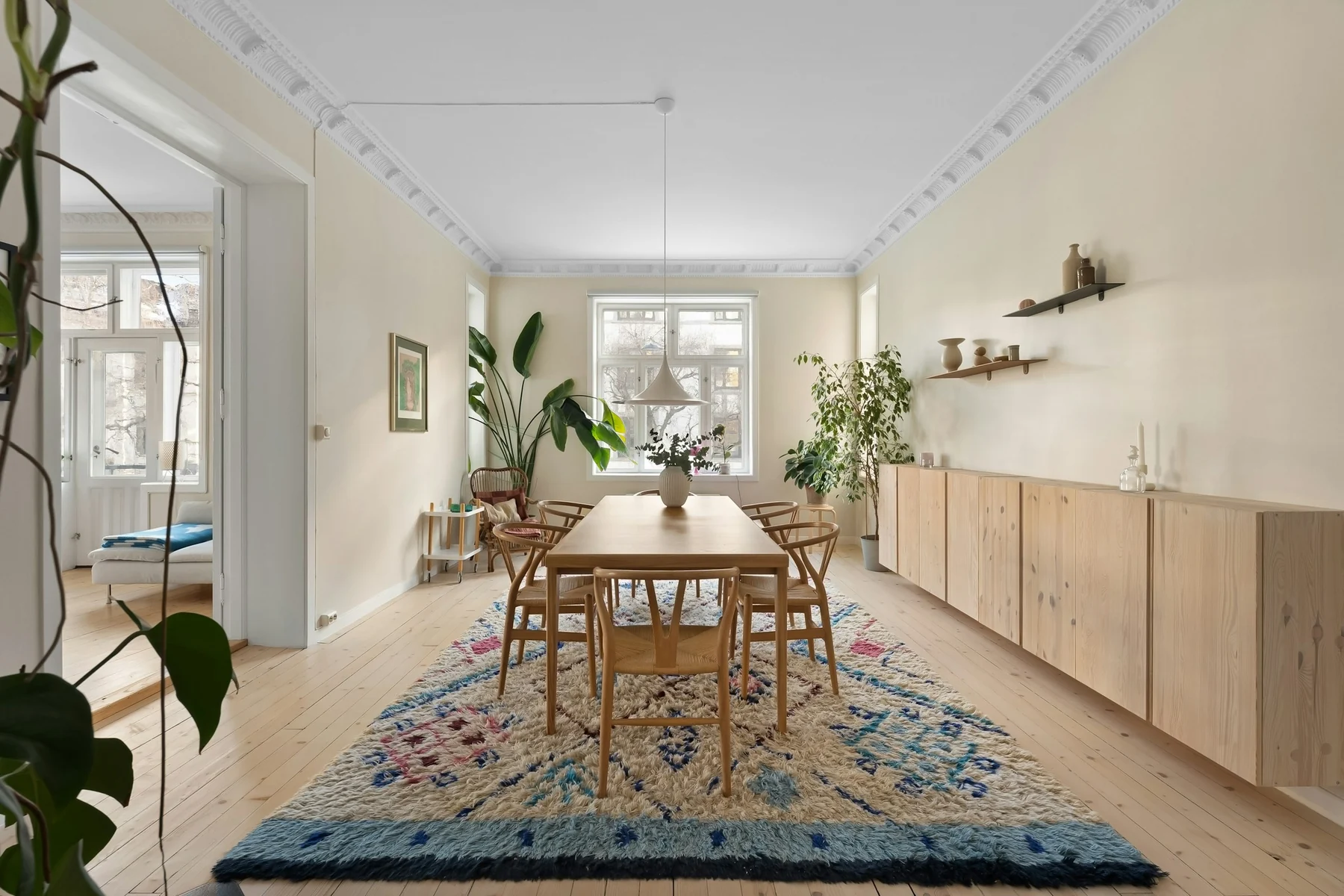
Buy the everyday table first
A table that opens for ten can still be awkward for two every morning. Write down the closed dimensions, ordinary seat positions and where the unused leaves will live. Then decide which larger arrangement you need: an occasional extra pair of guests is a different task from opening the full table each weekend.
Make a paper plan with the legs included. Some bases stay in place while the top expands; other designs move their legs or introduce additional supports. That changes which seats have useful knee room. Ask for under-table photographs in the closed and open states.
Count everything that makes it extend
Ask for an inventory photograph
- LeavesShow both faces, edges, locating pins and any numbering.
- MechanismInclude runners, catches, folding parts and any separate support.
- Loose accessoriesCount winding handles, clips, storage bags or the leaf cabinet if included.
- Permitted arrangementsAsk which leaf combinations the seller has actually assembled.
A matching colour is not enough to show that a leaf belongs. Its thickness, edge profile, locating details and fit all matter. A replacement can be perfectly acceptable if disclosed and properly fitted; the question is what you are buying and whether it works.
Watch one complete opening sequence
Ask the seller to demonstrate the table empty, using its intended method. A short continuous video is more useful than unrelated photographs of the start and finish. It should show where hands go, what is released, how the leaves are supported and how the top closes again.
Do not force a runner or improvise a missing handle. If the top needs a shove or a leaf will not seat, stop and ask for an assessment. Repeatedly operating a troublesome mechanism can change the condition you are trying to understand.
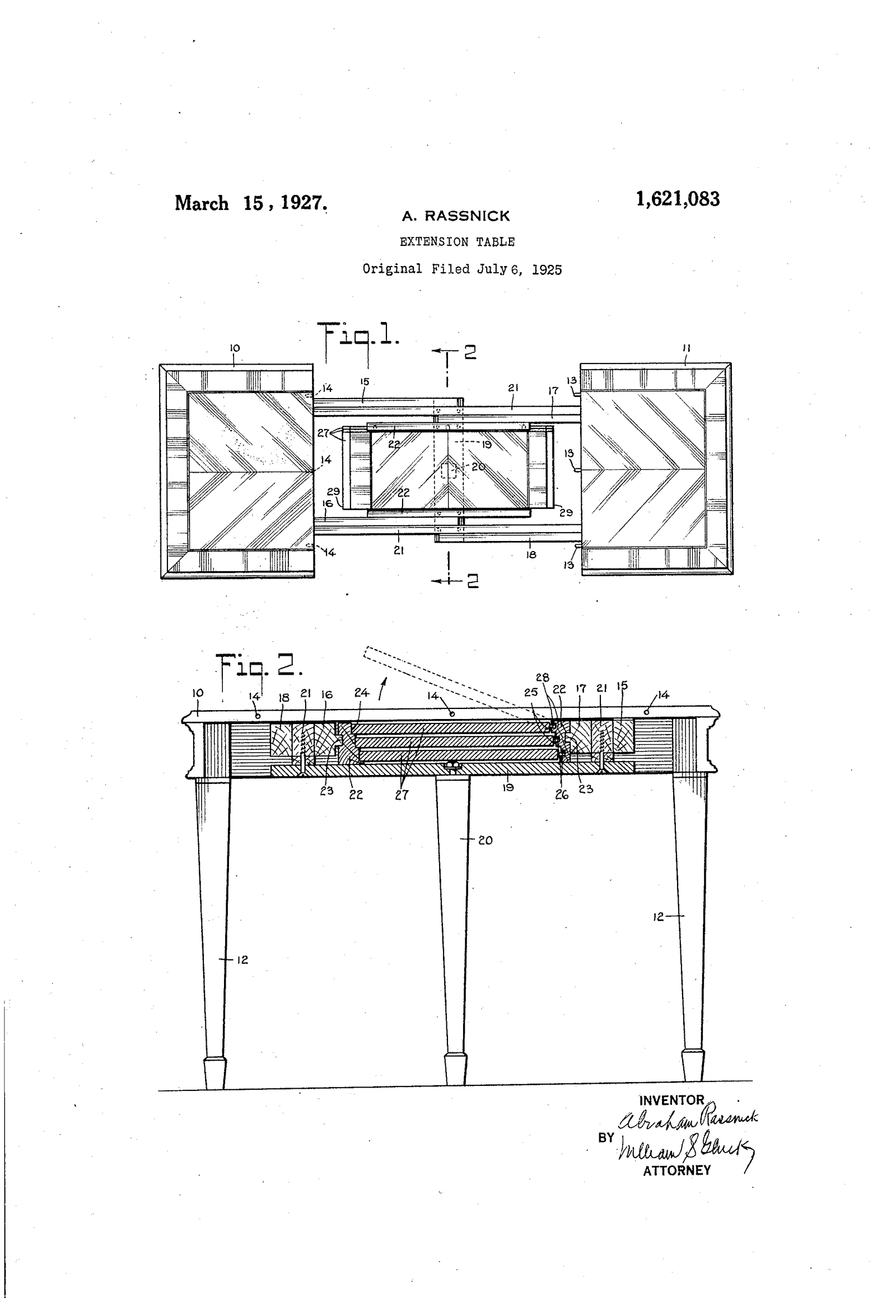
U.S. Patent 1,621,083 documents a particular extension mechanism. Use such drawings only when the object’s construction can be compared with them; a patent image alone cannot establish a table’s maker, date or correct operating method.[1]
Calculate the arrangement you will really use
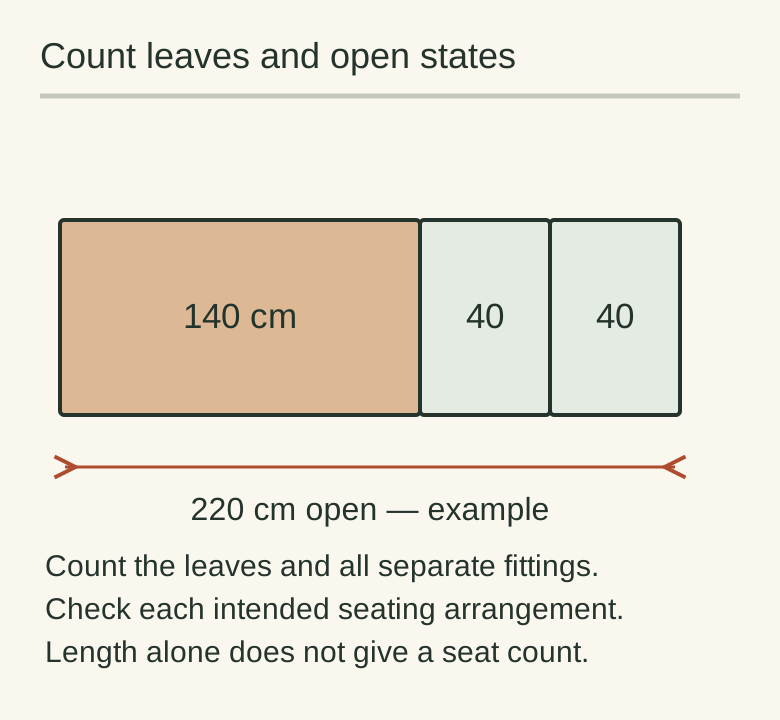
For an illustrative table measuring 140 cm closed with two 40 cm leaves, simple length addition gives 220 cm when both leaves are fitted. That calculation says nothing about seating capacity. Mark the 220 cm footprint, the base positions and your actual chairs, then test the route around occupied seats.
Inspect the joins from a low angle. Note gaps, height differences and whether edges align without pressure. Leaves stored away from the table can show a different colour or wear pattern. Decide whether that difference appeals to you rather than assuming refinishing is compulsory.
Check that the unused leaves have a dry, suitable storage position. A table that saves floor space but leaves you balancing large panels behind a sofa may be less convenient than a smaller fixed table.
Agree what arrives and in which state
Ask the seller
Please show the table opening and closing, the underside in each intended arrangement, and every leaf and accessory together. What are the closed and open dimensions, which configurations have you used, and are any leaves, supports or mechanism parts replacements?
Keep the inventory with the delivery brief. Agree which parts travel separately, who handles dismantling and reassembly, and how each leaf is protected. At arrival, compare the parts with that record before the packaging and people disperse.