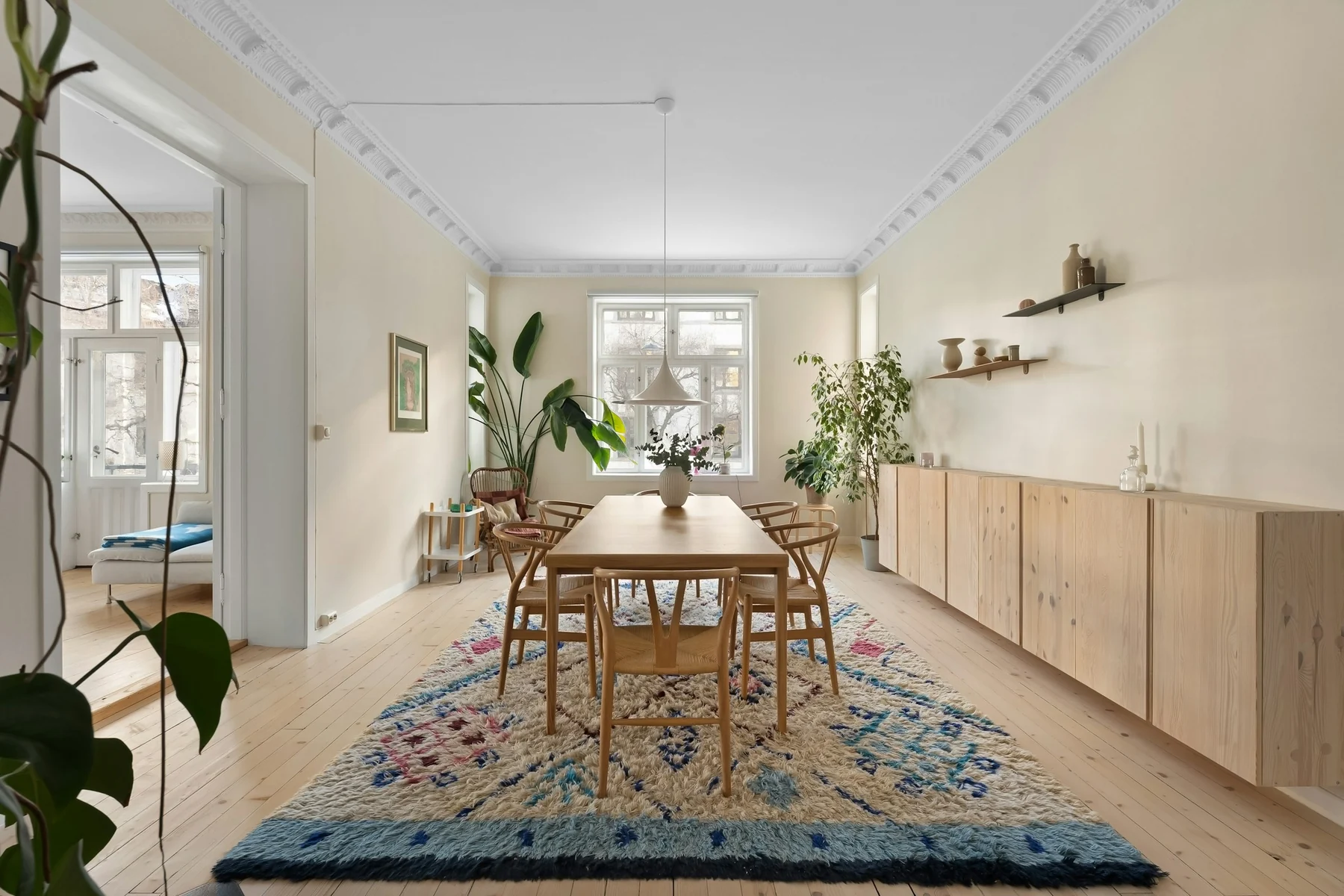
A loose centre leaf is the easier question
Open the seller’s photographs in the table’s closed and extended positions. Is the missing piece a separate panel placed between two halves, a folding butterfly stored inside, or a draw-leaf carried on runners beneath the top? A custom panel is not a substitute for missing hinges, runners or a complete folding mechanism.
First establish that the table itself closes properly and that the extension system is complete enough to assess. Ask the seller to demonstrate ordinary operation without forcing it. A gap caused by damaged slides is a different job from a sound table whose owner lost the spare leaf.
If a maker still services that exact model, ask about a matching part before commissioning one. Otherwise, compare specialist restoration and a donor leaf. Two leaves from the same manufacturer are not necessarily interchangeable; dimensions and fittings need checking just as carefully as a new piece.
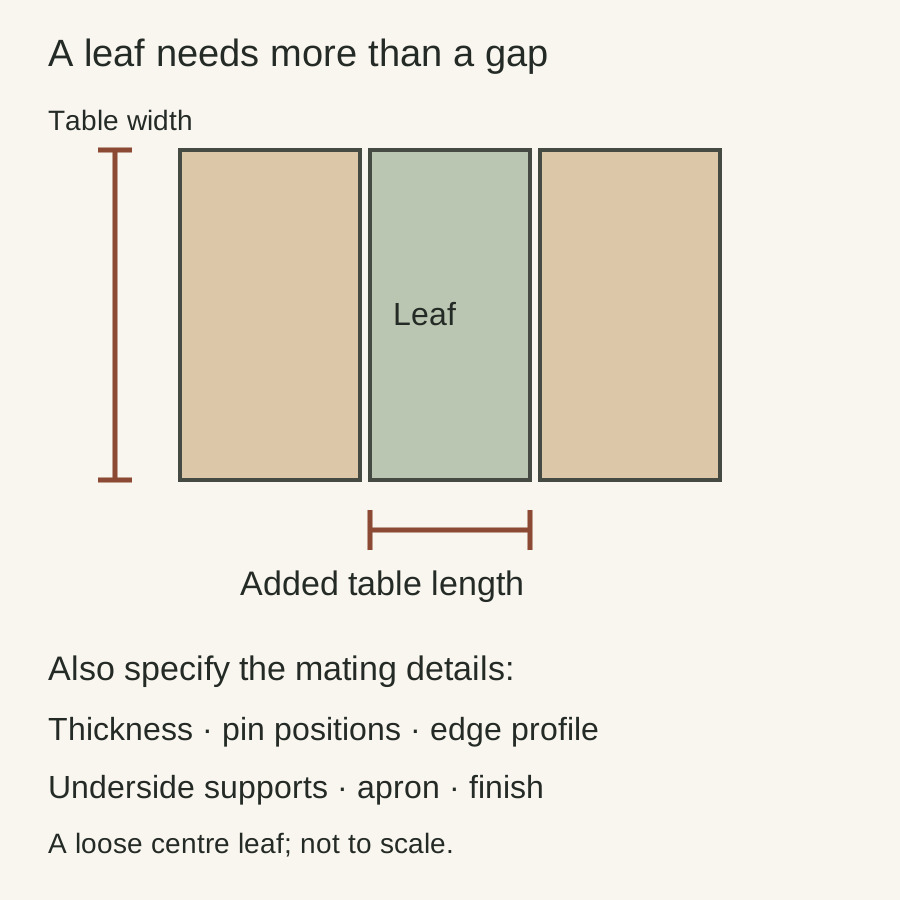
Give the maker six kinds of information
| Record | Why it changes the job |
|---|---|
| Opening and width | The leaf’s insertion length and the table width are different dimensions. |
| Thickness and underside | The visible edge may be thicker than the panel; record how it sits on the support. |
| Locating pins and holes | Show both mating edges and mark orientation on the drawing. |
| Edge moulding and apron | The outer profile and any skirt need to meet the existing table. |
| Slides and extra supports | The maker must assess how the extended arrangement is carried. |
| Grain, construction and finish | Colour alone cannot specify a panel or predict how it will age. |
Include a ruler beside the relevant feature and show its position in a wider view. For an irregular profile, ask whether the maker needs a tracing, sample or access to the table itself. Agree the measuring method before cutting. Do not drill new holes into the old table simply because a donor leaf almost fits.
Commercial leaf blanks illustrate the gap between raw material and a finished replacement: Van Dyke’s lists unfinished blanks which still require further sanding and fitting. Its dimensions are stock specifications, not a standard for vintage tables.[1]
You can match the use without hiding the new work
There are two legitimate briefs: a leaf that blends into the exposed tabletop, or a deliberately practical leaf used beneath a cloth for occasional larger meals. Say which you want. The second can simplify the appearance requirement, but it does not relax the need for correct fit, support and suitable construction.
The old tabletop may have faded in use while a surviving leaf stayed darker in storage. A new panel may take a finish differently from either. Ask to approve a sample against the actual table in ordinary light; a seller’s phone photograph is a weak colour reference.
CCI notes that wood responds to changes in moisture and that coatings and past treatments affect care. Let the maker specify the replacement’s construction and finish with those conditions in mind. A matching wood name is not an engineering specification.[2]
Set a ceiling before buying the incomplete table
Suppose an incomplete table is €350 and delivery is €90. Your maker quotes €480 for measuring, manufacture, fitting and finishing the replacement: the usable result is €920 before any other repairs. If a comparable complete table delivered is €850, the incomplete one needs some additional attraction to justify it. These figures are an illustrative calculation, not restoration quotes.
Ask whether the actual quote includes a visit or transport to the workshop, pin fitting, an apron if needed, colour sampling and final assembly. Clarify what happens if the inspection finds the slides also need repair. Avoid committing to the purchase on the strength of a price for the wooden blank alone.
Brief to send the maker
I am considering this table with a missing [loose centre leaf / other mechanism]. I want [occasional covered use / an exposed matching top]. Here are the closed and extended views, both mating edges, underside supports and measurements. Can you assess whether a replacement is feasible, what you need to measure yourself, the likely visible differences and the complete fitted cost?
Plan where the spare piece lives
A new leaf also needs a place to stay when the table is closed. Measure its complete shape including an apron or projecting fittings, and ask for suitable supported storage and protection. Do not assume it will fit beneath the top unless that storage was designed into the table.
Keep the replacement clearly recorded with the table’s paperwork. A well-made later leaf can give an old table a useful next chapter without becoming an original part. Buy the project when its finished use and full cost make sense to you.
If the mechanism itself is uncertain, begin with checking an extending dining table.