Add something that changes the reading
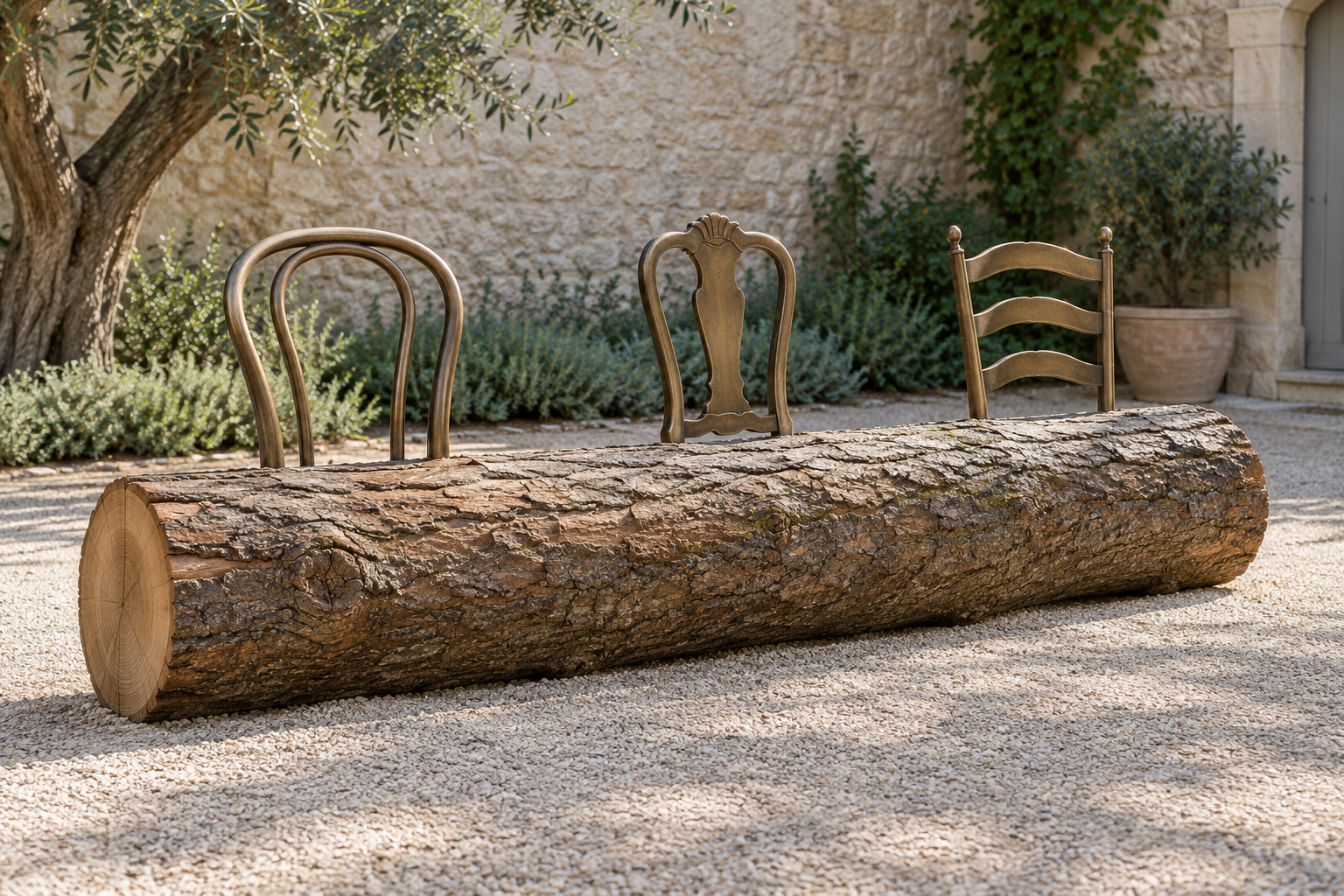
Tree Trunk Bench does not begin by manufacturing an entire bench-shaped object. Bronze chair backs meet a trunk, giving the found length a recognisable invitation to sit. CID Grand-Hornu records the design under Jurgen Bey.2
The intervention is small compared with the material already present, yet it changes the interpretation. A backrest signals a sitting place. Repeating that signal along a trunk lets the existing object acquire another social role without losing its character as a trunk.
Move between the object and its setting
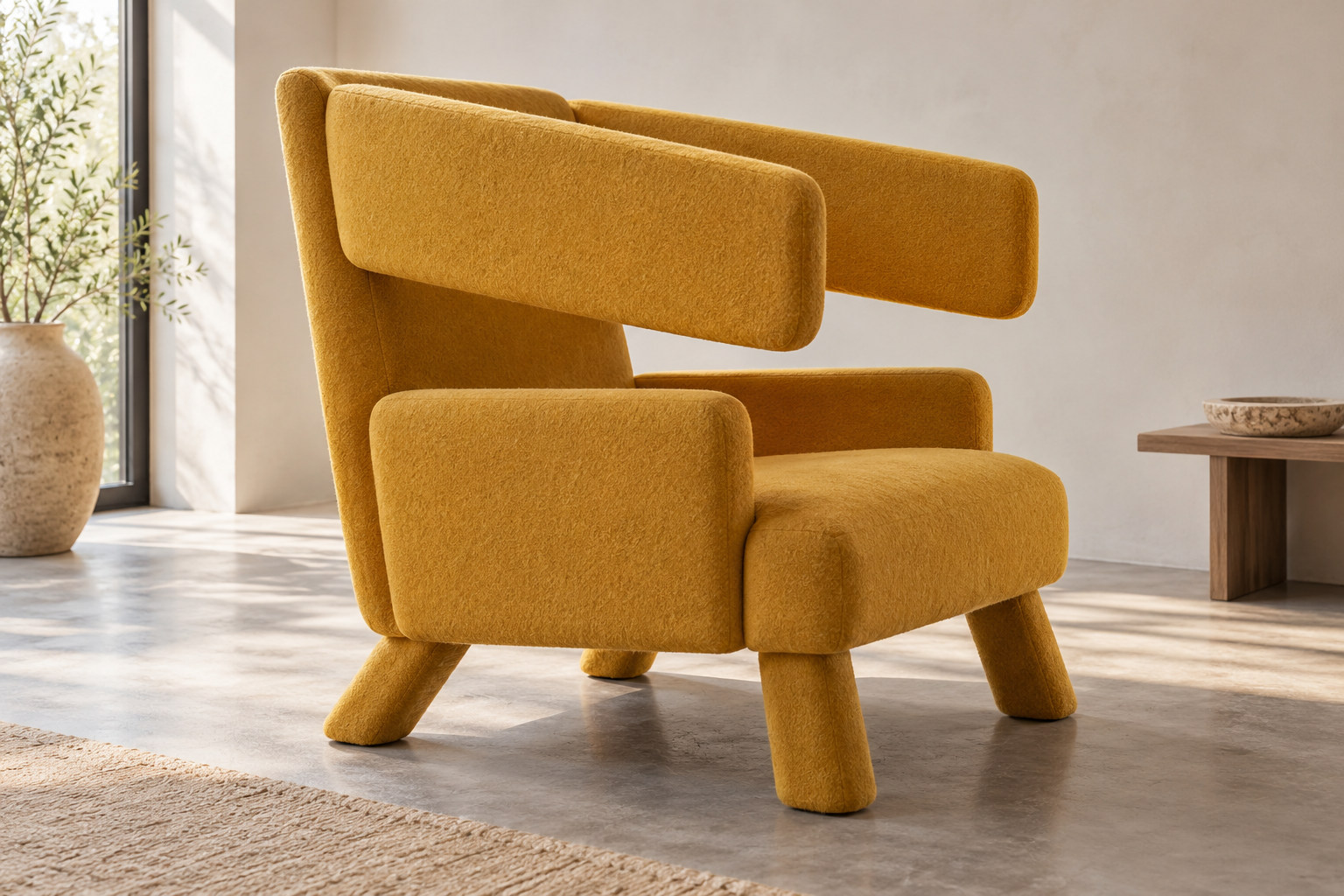
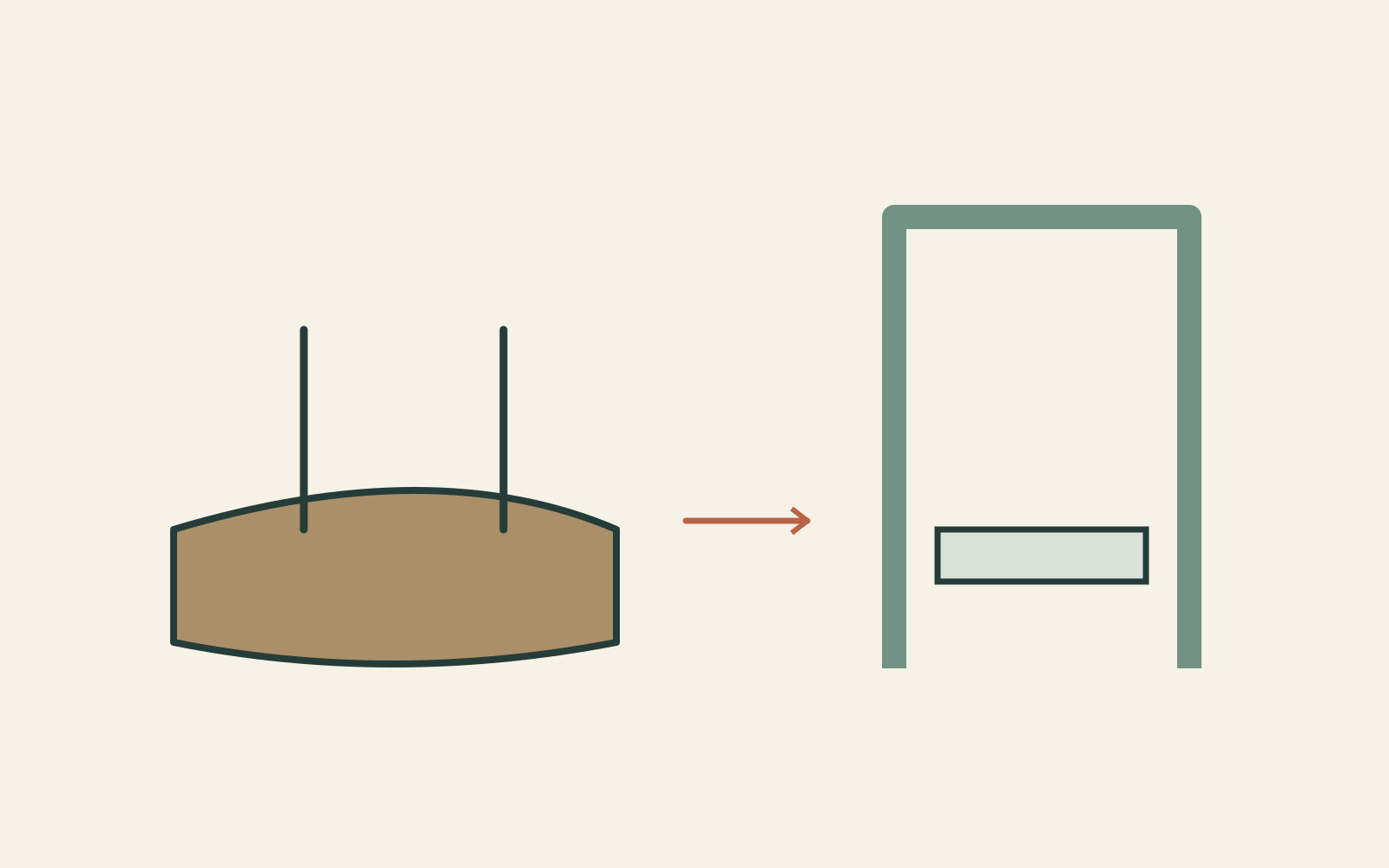
EarChair approaches the relationship from another direction. Rather than finding a seat in an existing length, its large sides help give an individual chair a small surrounding territory. Prooff’s launch account names Bey’s design.3
The two works make an interesting pair. One uses what a place provides; the other adds a stronger boundary within a place. Both invite attention to the encounter between furniture and surroundings rather than to an isolated silhouette alone.
Keep the shared practice visible
Studio Makkink & Bey describes a practice led by architect Rianne Makkink and designer Jurgen Bey, working with an interdisciplinary team since 2002. Its account emphasises reusing what is already present in the context of a commission and moving between product and architectural scales.1
That method makes a generous reader’s question possible: before adding a new thing, what has the setting already given us? Sometimes the beginning of the furniture is already in the room—or lying just outside it.