Design story

Tree Trunk Bench: the seat was already there

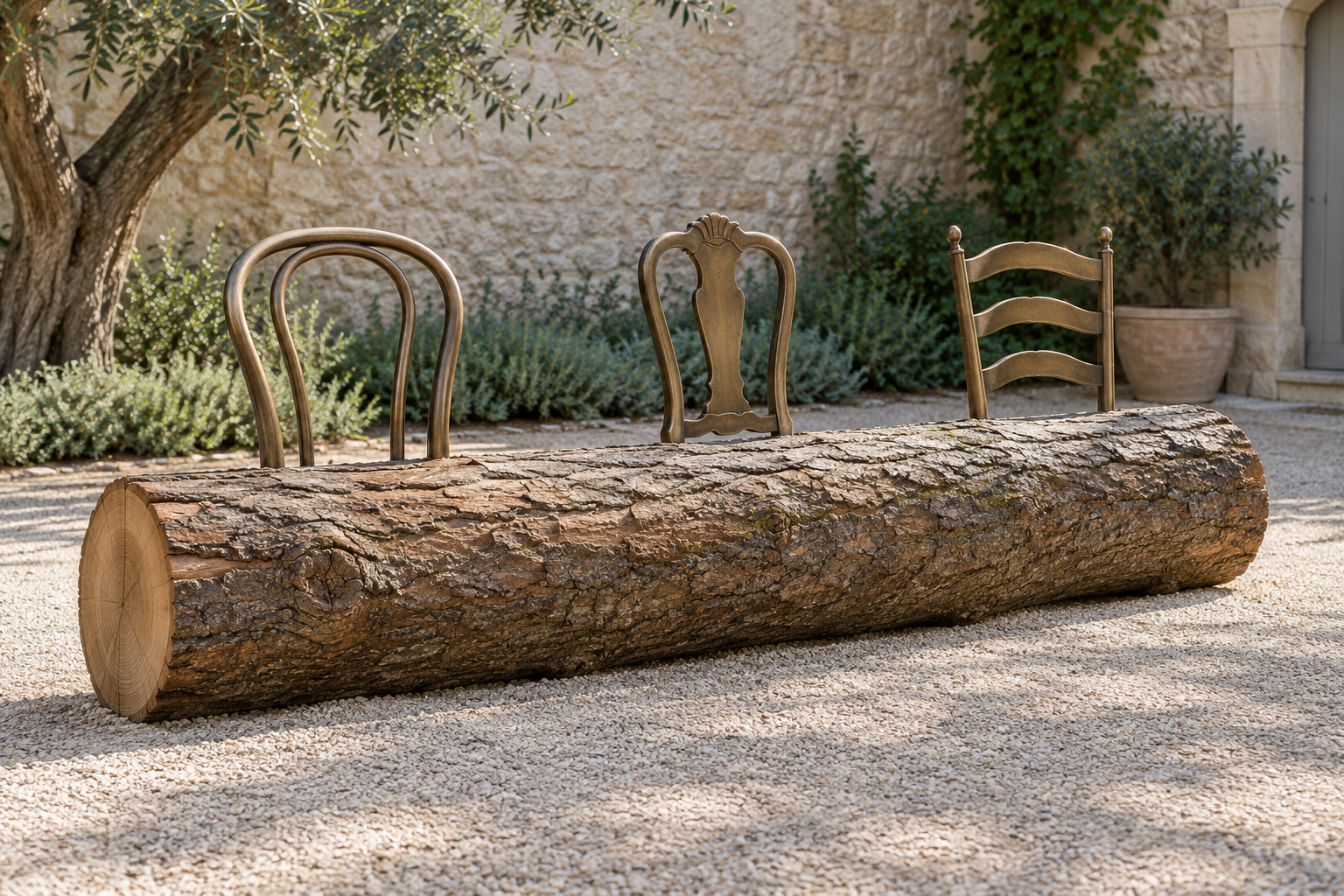
A tree trunk can be almost a bench already. Jurgen Bey’s addition of bronze chair backs makes that possibility legible, letting the largest part belong to the place where people gather.

Three differently shaped bronze chair backs stand along a large horizontal tree trunk in a simple outdoor setting.
PatinaHall editorial reconstruction. It is not a documentary photograph. An imagined installation explains the relationship between a local trunk and bronze chair backs. It is not a photograph of an original installation or evidence of outdoor stability or condition.
On this page
Key facts & takeaways

At a glance

Subject
Tree Trunk Bench
Entry
Design story
Last reviewed
23 October 2026

Three things to remember

  1. The project combines a trunk with separate bronze chair backs.
  2. Droog supplies the backs rather than transporting a tree.
  3. A locally chosen trunk makes each installation different.

The largest part can stay where it is

Jurgen Bey’s Tree Trunk Bench begins with an object that already offers somewhere to perch. A tree trunk supplies the length and mass; separate bronze chair backs make places along it read as seating. Droog’s account explains that the backs are supplied while a trunk can be chosen locally.2

That changes what needs to travel. The largest part of the bench can belong to its setting, and the smaller additions bring the furniture idea. A piece of wood becomes easier to recognise as a shared place without being planed into a conventional row of identical seats.

A backrest changes how we read a trunk

The bronze forms borrow the recognisable language of chair backs. Their presence makes an invitation visible: here is a place for a person, then another place beside it. The Museum of Arts and Design’s educational account draws attention to the combination of familiar furniture forms and the existing tree.3

Look at the mismatch between them. The trunk carries its own irregular outline, while the backs suggest objects from furnished rooms. Neither entirely absorbs the other. The pleasure comes from seeing both at once, as if the habits of a sitting room had found a place outdoors without bringing the whole room along.
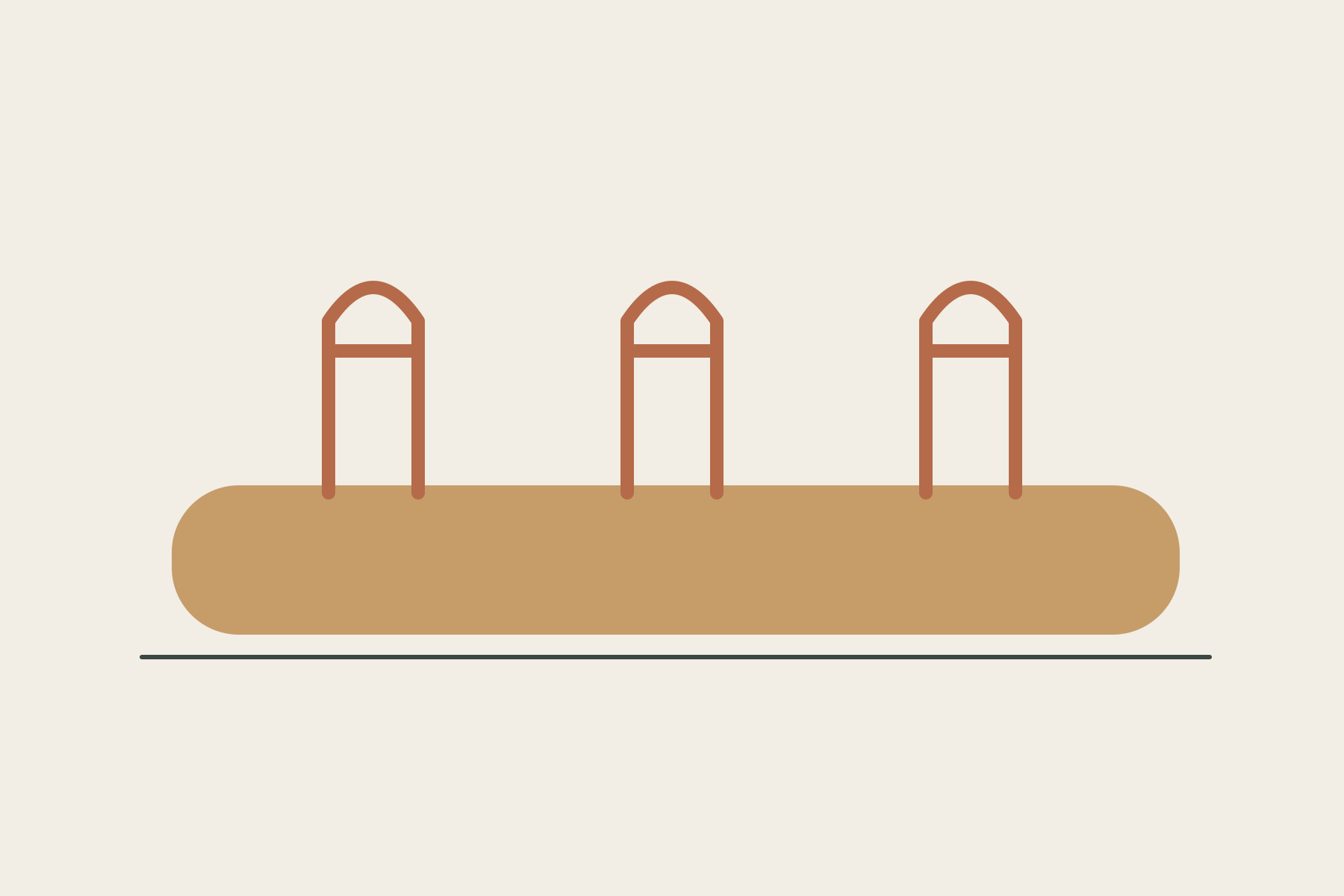
A long rounded timber form rests on a ground line beneath three differently placed backrest symbols.
Original PatinaHall schematic, not to scale. The long local element and three added backs are shown as different contributions to a shared seat. The simple trunk and backs are conceptual and do not specify attachment, dimensions or safe installation.

A shared idea, different local results

CID records the work with a 1999 creation date; Droog’s project page lists 1998.1 The difference remains part of the evidence rather than becoming a confident first-year claim. More consistent across the accounts is the relationship between a chosen trunk and the added backs.

Each installation therefore has room for a particular piece of timber. The design’s identity depends less on making every bench identical than on repeating an intelligible invitation. Someone has noticed that a useful seat was almost there already, and supplied the part that helps others notice too.

Research notesEvidence, connections and limits

CID records 1999, while Droog’s project page lists 1998. The article keeps that dating difference visible and treats the bench as a project family, not one universal trunk, installation size or outdoor-safety specification.

Evidence map

Connected subjects and evidence

Reviewed connections

  • Tree Trunk Benchdesigned byJurgen Beydocumented

    The cited record explicitly identifies this designer for the repeatable design or coherent project family.

    Reviewed 23 October 2026 by PatinaHall editorial.
    • Source 1Tree Trunk Bench, creation and edition 1999
  • Tree Trunk Benchmanufactured byDroogdocumented

    This production relationship is scoped to the source record. Later manufacture, current specifications and the date of the original design remain distinct.

    Reviewed 23 October 2026 by PatinaHall editorial.
    • Source 1Tree Trunk Bench, creation and edition 1999

Research trail

Sources and further reading

  1. Tree Trunk Bench, creation and edition 1999CID at Grand-HornuAccessed 23 October 2026
  2. Tree-Trunk Bench by Jurgen BeyDroogAccessed 23 October 2026
  3. Simply Droog education resource: TreeTrunk BenchMuseum of Arts and DesignAccessed 23 October 2026

Last reviewed 23 October 2026. Found an error or a stronger primary source? Contact PatinaHall.