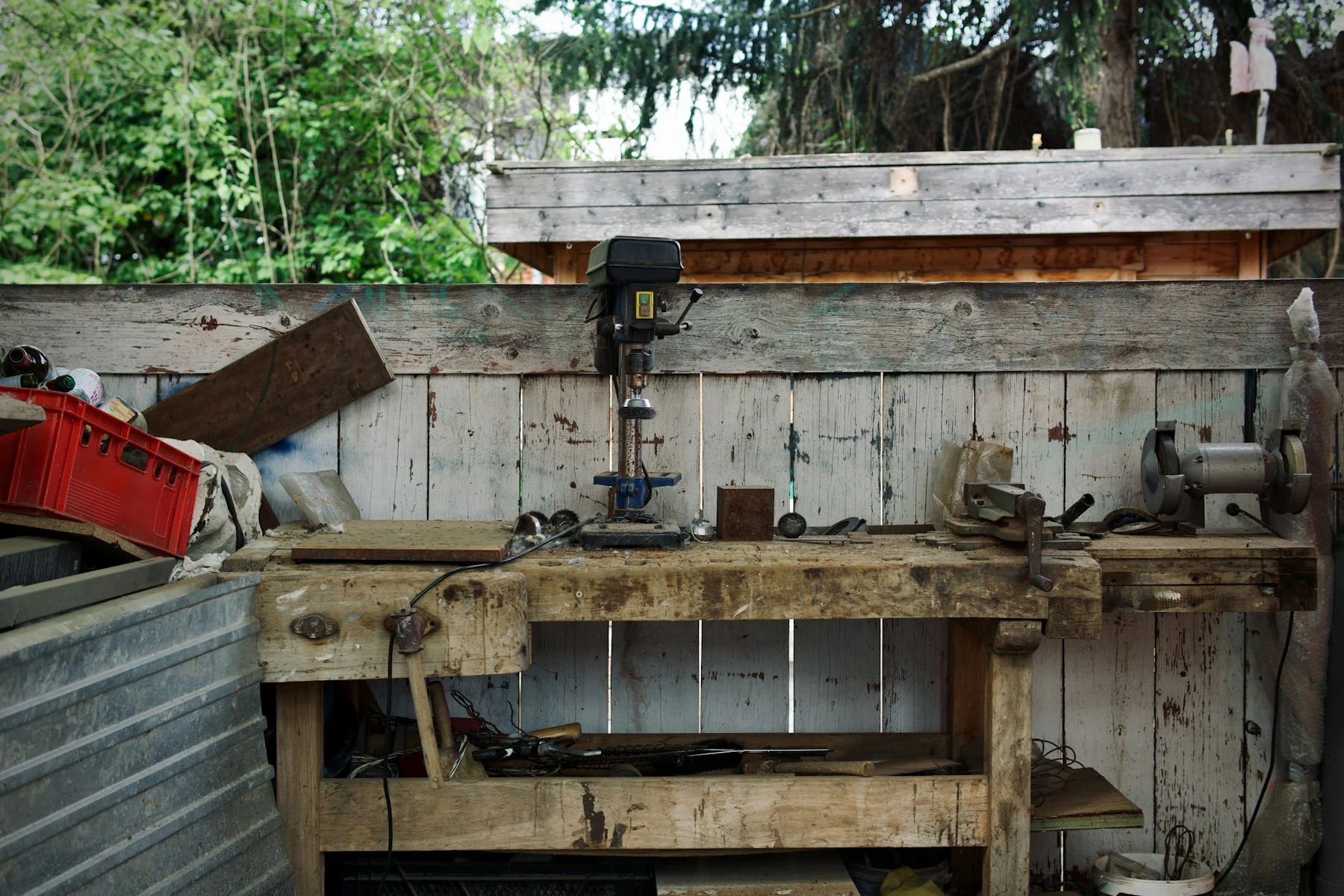
A console asks less of the top than a desk
Think about how you will actually touch and use the bench. A hallway console may need a steady place for a tray and a lamp. A desk needs a comfortable sitting position and a surface on which small objects stay put. A kitchen worktop introduces a separate food-contact question that a pleasing worn finish cannot answer.
List the items you want to place on it and where you will stand or sit. Include drawers, if present, and the vice handle’s path. If the conversion depends on cutting off substantial parts of the bench, compare the result and cost with a piece already suited to the job.
Keep any machine shown in a seller’s photograph outside the furniture decision unless it is explicitly included and separately assessed. A workshop photograph records context, not a promise that the equipment or bench is ready for domestic use.
The stains are a question about use
Ask what the bench was used for, where it was stored and whether it has been stripped, coated or treated since. Woodworking, metalwork and general repair can leave very different residues. “From a workshop” is a beginning, not a full history.
Inspect in good light without scraping or sanding unknown material. Look for oily patches, powder, flaking coatings, embedded metal and rough edges where hands or clothing would pass. Record what you can see and what the seller reports separately.
An unidentified stain does not prove contamination, but it does not establish a clean surface either. Where the history or residue remains consequential for your intended use, get competent assessment before bringing it into that role. Do not assume sanding, varnish or a sheet of glass makes an unknown surface suitable for food preparation.
Include everything that sticks out
Sjöbergs’ Original 1100 product sheet distinguishes the bench dimensions from dimensions including its vices. It is a concrete example of the measurement problem: the fixed wooden top and the complete working footprint are different things.[1]
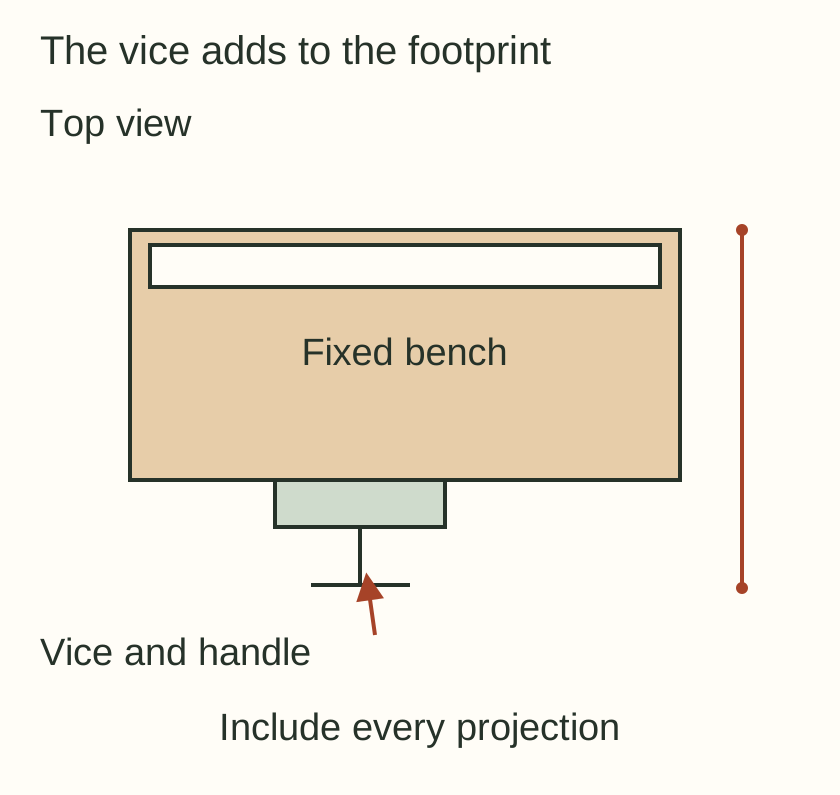
Record maximum length and depth with handles in their ordinary resting position, and the additional space needed if you will operate the vices. Measure the usable flat area separately from tool wells, holes and projecting fittings.
In a hypothetical hallway, a 50 cm-deep bench with a vice projecting another 15 cm occupies 65 cm at that point before anyone uses it. Mark that outline on the floor. A handle at hip height may matter more to the walking route than the legs below it.
For a desk, measure clear height below the front rail and the distance to the stretcher behind your feet. Sit in position with the seller’s agreement. Overall top height is not enough to establish knee room.
Look below the impressive top
A thick top can draw attention away from the base. Ask to see the leg joints, stretchers, top attachment and any bolts or wedges, without dismantling an unfamiliar structure. Identify later braces, cut legs and repairs, and ask why they were made.
Notice a leaning base, movement at a connection, split timber around a vice or a top that has separated from its support. These need assessment, not an improvised loading test. Scratches and old tool holes may suit a domestic piece; uncertain support beneath a heavy top is a different matter.
If the seller can demonstrate a vice operating normally, observe it empty and keep clear of the moving parts. A seized or damaged vice may be an acceptable display detail only if the intended arrangement remains suitable and you have accounted for the fault.
The moving plan can decide the purchase
Ask for a reliable weight where available and photographs of every section that is designed to separate. A top may be far heavier than it looks, while an apparently solid bench may dismantle by a particular method. Let a competent carrier establish the handling plan from the actual evidence.
Include stairs, turns, floor protection and the final position in the quote. Do not assume decorative vices or rails are carrying handles. Agree how loose parts will be labelled and protected if dismantling is appropriate.
Compare the asking price plus delivery and required work with a bench already ready for your chosen use. Keeping a worn surface can be the point of the purchase; paying to remove all the features you liked deserves a second thought.
Ask with the new job attached
Message to the seller
I would use the bench as [console / desk / studio table]. What work and treatments are known from its history? Could you show the top, underside, leg joints and vice attachments, and measure the full footprint including handles, clear knee space and transport sections? Please flag residues, structural repairs and seized parts.
Buy when you can explain both what the bench has been and what it can reasonably become. If the surface history, legroom or move prevents the new use, another workbench may preserve the same character with fewer compromises.