The industrial history is part of the decision
Jieldé’s published history describes Jean-Louis Domecq’s effort to create an adjustable workshop lamp and the contact arrangement that allowed its joints to turn without ordinary wiring passing through each articulation. Later domestic collections continued the recognisable outline. That history helps explain both the appeal and the need for model-aware servicing.[1]
An advertisement calling every jointed Jieldé “1950s factory original” goes beyond what the outline proves. Ask for the whole lamp, identification plate and the history of its mounting and repairs. Distinguish an older Standard, a later domestic model and a composite assembled from parts before paying for a particular story.
For the design’s story, read Jieldé Standard: the workshop lamp with clever elbows in the Furniture Library.
A machine foot is not automatically a desk base
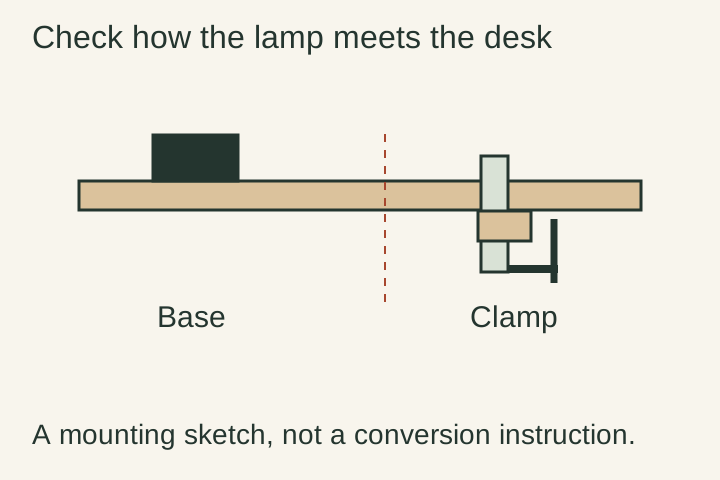
Look at what actually supports the lamp. Was the foot intended to be bolted to a machine, is there a suitable clamp, or has a heavy freestanding base been added? Ask who made any conversion and how its compatibility and stability were assessed.
A broad base may occupy valuable desk space; a clamp needs a suitable edge and room beneath it. Measure the desk thickness, apron and any drawer that would obstruct the attachment. Do not assume a clamp that opens wide enough will safely grip every hollow, fragile or veneered desktop.
| Arrangement | Resolve before purchase |
|---|---|
| Original workshop mounting | How it will be installed for the intended home use. |
| Added freestanding base | Compatibility, secure attachment and stability through the intended movement. |
| Clamp mounting | Correct clamp and adapter, suitable desk edge and underside clearance. |
| Wall mounting | Appropriate model, wall fixing specification and useful reach to the work. |
More arms do not always make a better desk lamp
Mark the intended support position and the place where you need the light. Then watch the seller move the lamp through its normal useful positions. Check whether the arms cross your monitor, the shade blocks a shelf or the joints require more room than the listing photograph suggests.
A long, many-armed lamp can be spectacular but awkward on a small desk. A shorter complete assembly may keep the light in the right place with less metal in your working area. Do not add or remove arms casually to solve the fit: the electrical and mechanical assembly needs a coherent service plan.
Record drifting joints, distorted sections, a loose shade or improvised fasteners. Normal adjustment should not require forcing the lamp or propping the head against a book. If it does, resolve the repair before treating it as ready to use.
Ask what was serviced inside the joints
Because the design uses its own contact system, a fresh external cable is only part of the electrical story. Ask a qualified repairer experienced with older Jieldé lamps what was inspected, renewed or retained in the joints, switches, lampholder and supply assembly. Have suitability for the intended electrical supply confirmed.[1]
Do not open the joints to explore the contacts or bypass them with an improvised wire. If the seller reports flickering during movement, describe that symptom to the repairer without repeating an energised test at home. A lamp lighting in one position does not establish that its service work is complete.
Compare the cost of the actual support, any joint or electrical work, finish work you genuinely want and delivery. Keep an old surface if it suits you and is stable; avoid paying for immaculate repainting while the conversion itself remains unexplained.
Request the conversion history
Message to adapt
Please show the support from above and below, the full arm arrangement and identification plate. Was this lamp converted from a workshop mounting, and by whom? Please include the electrical service scope, especially the joint contacts, and demonstrate normal movement without forcing the arms.
Choose the assembly that works over your own notebook. The pleasure of a workshop lamp at home is useful movement and directed light, with a little of its working past still visible.