Small does not mean light, or counter height
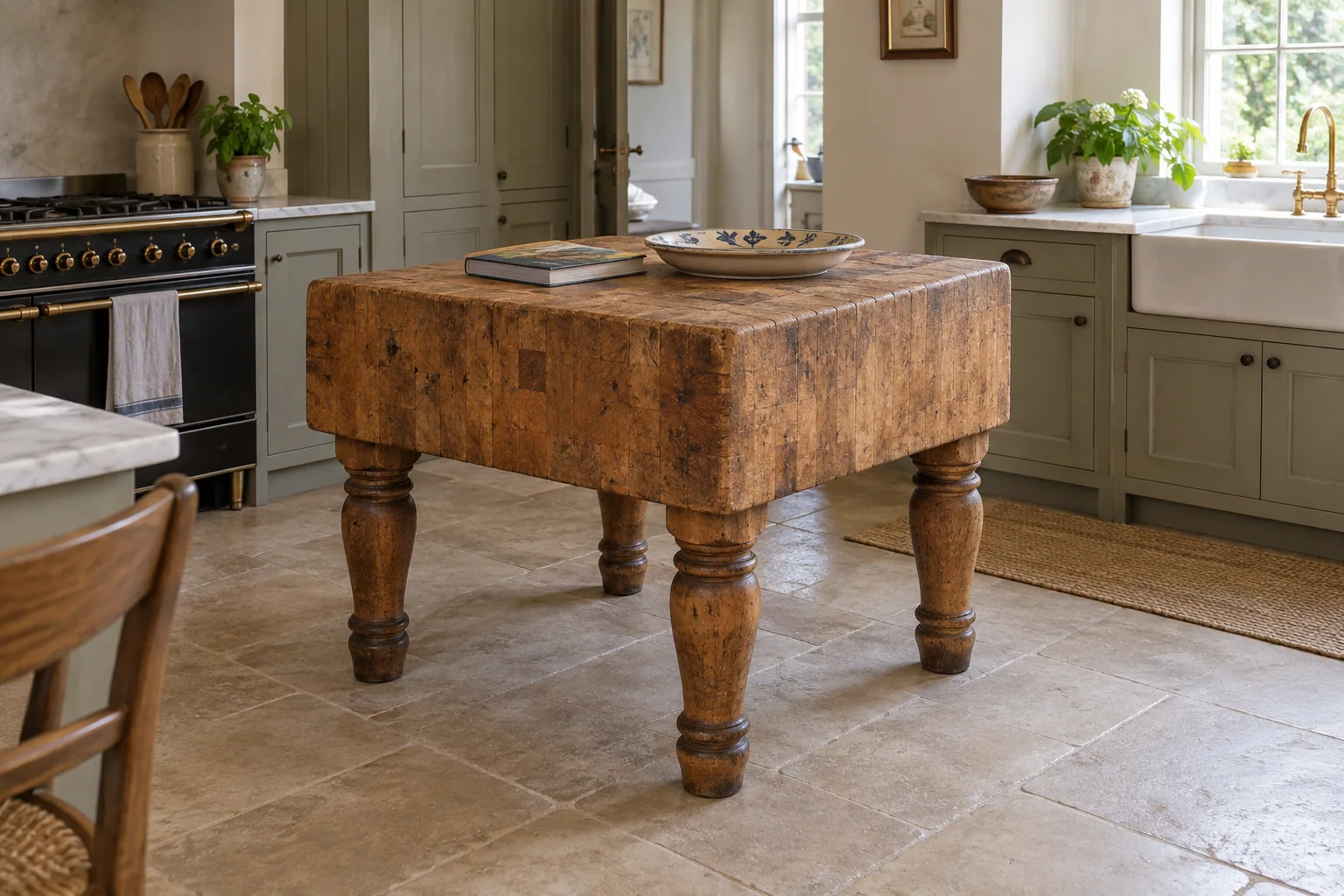
Harp Gallery records one old block at 24 × 24.5 × 33 inches, with a maple top and pine legs. The seller discloses significant shrinkage separations. That is a useful buying example because the condition is visible in the description before you are carried away by the silhouette.[1]
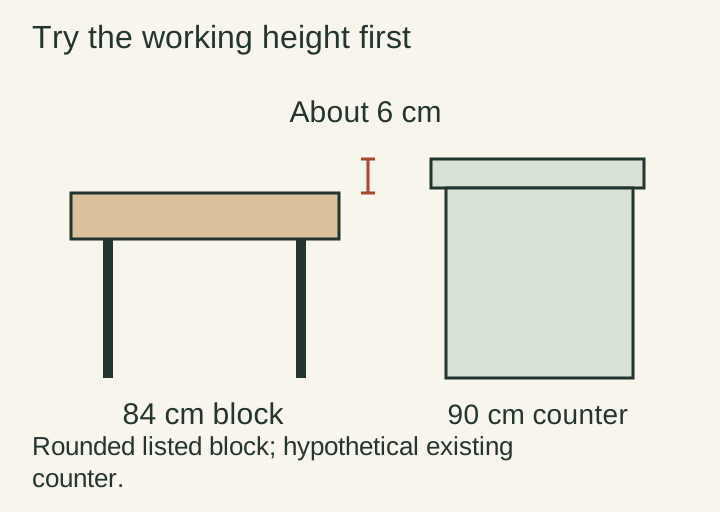
Converted, the recorded footprint is about 61 × 62 cm and the height about 84 cm. If your own counter is 90 cm high, this example would be roughly 6 cm lower. The 90 cm is an illustrative comparison, not a universal kitchen standard: measure the surface at which you already work comfortably.
Try the proposed height using an existing stable surface or a safe showroom example. A lower block might suit setting down shopping or serving; it may be uncomfortable for the task you imagined doing there every day. Do not buy first and assume castors or loose risers will safely solve the difference.
The end grain is only the beginning
Ask for the complete top, its edges, the underside and all leg connections. Record open separations, loose blocks, uneven wear and previous repairs. A heavily worn hollow can be part of the history while making a large board or tray awkward to support.
Find out what is known about its former use, storage and later treatments. Harp’s separate listing for another block mentions a food-safe oil finish. That is the seller’s statement about the finish on that example; it does not certify every older joint, contaminant or repair in an unrelated block.[2]
| Proposed use | Resolve |
|---|---|
| Kitchen furniture or display | Stability, cleanable condition and a useful height. |
| Serving with suitable trays or boards | Secure support and a manageable surface around them. |
| Direct cutting or food preparation | A qualified assessment of condition, materials, repairs and appropriate treatment. |
If the history and condition cannot support the food task, choose a different working surface. Avoid trying to erase every uncertainty by deep sanding or soaking an assembled old block. A furniture conservator and a specialist in food-contact wooden equipment may answer different parts of the enquiry.
Draw the island with the cupboards open
Mark the full block footprint on the floor, including any projecting handles or hardware. Open the dishwasher, oven and nearby drawers. Stand where you would work while another person passes. A square block can be a clever small island, but it still occupies the route through the kitchen.
Consider whether you need seating. A thick top on closely placed legs often offers little knee space. Do not buy a chopping block as a breakfast bar solely because a stool looks attractive beside it in a photograph.
Establish stability and the condition of leg attachments before use. If a different base or height is proposed, have the whole conversion designed and priced by a suitable professional. Retain the original components where practical and record changes.
Agree how it gets into the kitchen
Ask for a reliable weight or a mover’s assessment, the route from its present room and the route into yours. Confirm thresholds, stairs, floor protection and who supplies handling equipment. Whether the top can be separated from the base must be established from this object, not guessed from another block online.
Before buying
Please give the exact height and footprint, show separations and leg fixings, and describe known uses, treatments and repairs. Can a mover assess the weight and access? I intend to use it for ___, rather than assuming it is ready for direct chopping.
Buy the block when its everyday role is clear. It can bring a kitchen a great deal of character while doing a modest, useful job; it does not have to become a modern worktop to earn its place.