Decide what you want from the curve
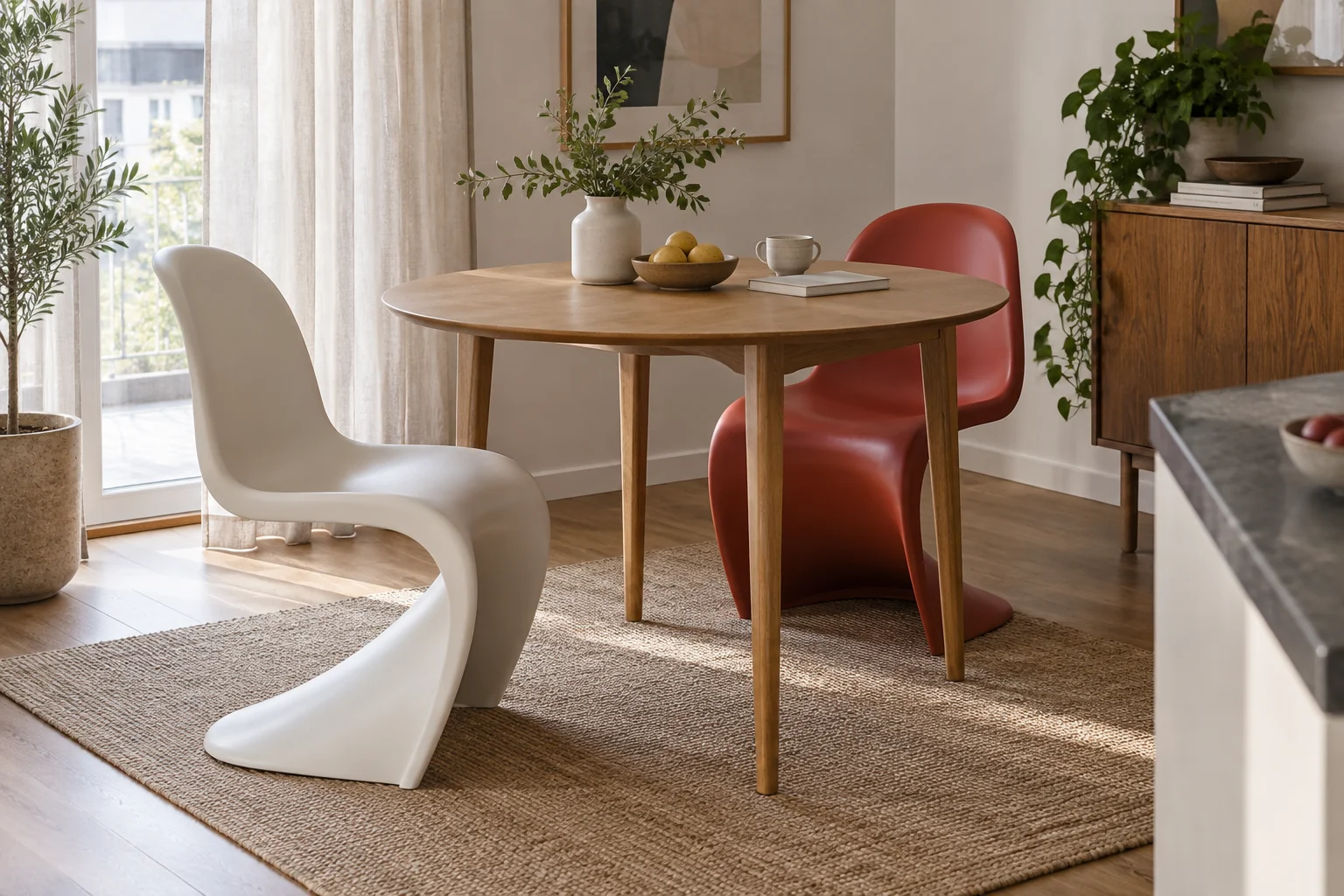
The Panton Chair is unusually easy to recognise from across a room. Its back flows into the seat and down to the base, with no separate legs to interrupt the outline. That recognisable shape is also why two very different offers can seem interchangeable in a search result: a carefully preserved older example and a later chair used every day may look similar in a small photograph.
Before comparing them, choose a priority. For dining, you need a sound chair that suits your table and your body, with care requirements you can live with. For a production-history collection, a documented early material or finish may matter more, even when ordinary seating is inappropriate. Neither priority makes an unexplained date or a structural repair disappear.
Look at the full chair first, from front, side and back. Ask for the underside and all markings on the actual item. Keep those photographs together with the seller’s account of purchase and previous repairs. The Library story of the Panton Chair explains the design’s development; the buying task is to connect that history to this particular chair.
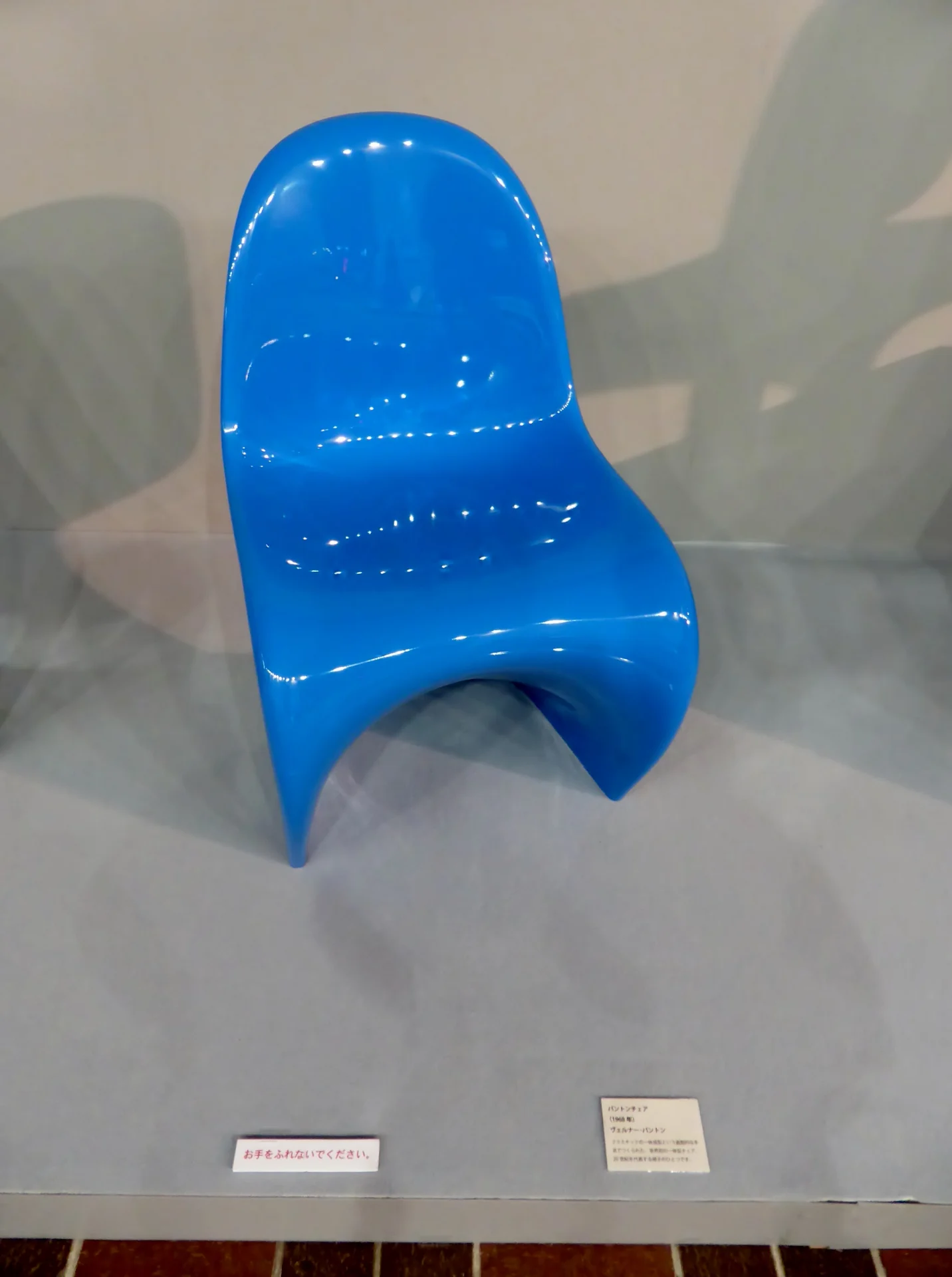
The photograph’s creator and CC0 dedication are recorded on its linked source page.[4]
Why the material changes the conversation
Vitra’s production account describes a 1967 pilot in glass-fibre-reinforced polyester, followed by rigid polyurethane foam in 1968. A later thermoplastic version developed durability problems and production stopped in 1979. Polyurethane production resumed in 1990; the polypropylene version arrived in 1999. These are production milestones, not a method for dating an unknown chair by colour.[1]
That history makes “old plastic chair” an inadequate condition description. Ask the seller what supports the stated material: a record, an identified production reference, or only appearance. If the answer is a guess, keep it as a guess. A name in a listing should not quietly become the basis for a treatment, a price premium or an assurance about strength.
| Listing claim | What to clarify before comparing prices |
|---|---|
| “1960s original” | Which production is proposed, and what connects this chair to it? Request records and complete photographs. |
| “Panton Chair Classic” | Is that the documented Vitra model, and is there separate evidence of when this example was made? |
| “Outdoor chair” | Which version and care instructions apply to this actual chair, and what exposure has it already had? |
| “Restored” | Which surface or structural work was done, by whom, and is the result intended for seating? |
Do not scratch, heat, burn or deliberately bend a chair to identify its plastic. If production matters enough to justify a premium, obtain an assessment from someone familiar with that version. A seller unable to supply the information may simply have an unidentified chair; the sensible next step is more evidence or a different offer.
Panton Chair and Panton Chair Classic are different current references
Vitra currently specifies the Panton Chair in through-coloured polypropylene with a matt surface. Its Panton Chair Classic uses rigid polyurethane foam and a glossy lacquer finish. Both names belong in a present-day product comparison; the word “Classic” is not proof that an individual chair is old.[2][3]
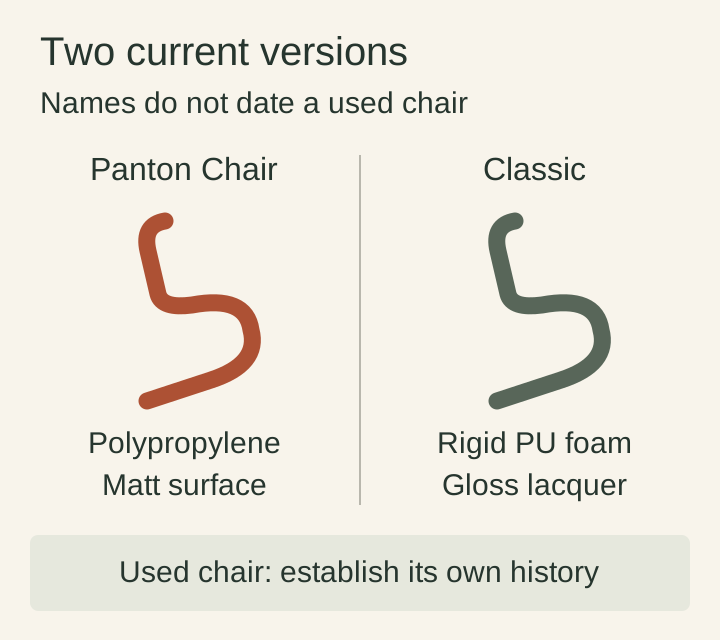
For a hypothetical listing headed “1970s Vitra Panton, polypropylene”, the first useful response is to question the combination. A documented Vitra polypropylene chair would not fit a 1970s production claim, given the 1999 introduction. But if the material was also guessed, you have two uncertain statements, not proof of a counterfeit. Ask the seller to correct or substantiate them before paying a period premium.[1]
The same discipline helps with a glossy chair. It could be described as Classic, early, repainted or simply shiny, but those words answer different questions. Find out whether the visible coating is identified and whether the seller knows it to be original to that example. Do not turn a finish resemblance into an exact production attribution.
Inspect the continuous structure as a whole
The flowing shape makes a small defect easy to lose in a dramatic photograph. Ask for even light across the back-to-seat curve, the underside, the lower bend and the base edges. Look for cracks, distortion, pronounced abrasion and areas of different texture or sheen that warrant an explanation. Those observations identify questions; they do not measure remaining strength.
If there is a crack, unexplained deformation or a structural repair, pause seating use until a suitable specialist has assessed it. A photograph of somebody sitting on the chair is not a load assessment. Nor should a seller demonstrate the material by bouncing, rocking or flexing it for the camera. The guide to inspecting vintage plastic furniture covers deterioration and the limits of inspection in more detail.
For a set, review every chair. Matching colour in the group photograph does not establish matching production, repair history or wear. Ask for individually numbered images so that the underside and defect photographs can be connected to the correct chair. Decide whether a mixed set is acceptable to you before treating it as a uniform purchase.
Outdoor use also needs an exact reference. Vitra’s current polypropylene guidance permits temporary or seasonal outdoor use with care, followed by cleaning and dry, sheltered storage after prolonged exposure. That statement should not be transferred to a much older or unidentified example.[2]
Compare a complete explanation, then try the seating
Once a chair’s condition permits ordinary use, try it at a table close to yours in height and apron depth. Notice where the seat places your body, whether your feet rest comfortably and how much space the curved back occupies when you get up. A striking outline in an empty room does not tell you whether six examples will suit your dining area.
Write down what each asking price actually buys: proposed production, supporting records, condition, previous work and delivery. A later chair with a clear history may be the more useful daily purchase. An early example may justify more research and a preservation plan. An unresolved chair does not become a better deal simply because the seller compares it with expensive documented examples.
A useful message to the seller
Could you send full side and underside photographs, all marks, and the evidence for the material and production date? Please describe any repainting or structural work and identify which chair each photograph shows. I am considering it for daily dining use.
Commit when the explanation, condition and intended use agree. If the remaining attraction is mainly a claimed date that nobody can support, keep looking. The curve is worth enjoying, but the purchase should come with a history and a level of uncertainty you knowingly accept.