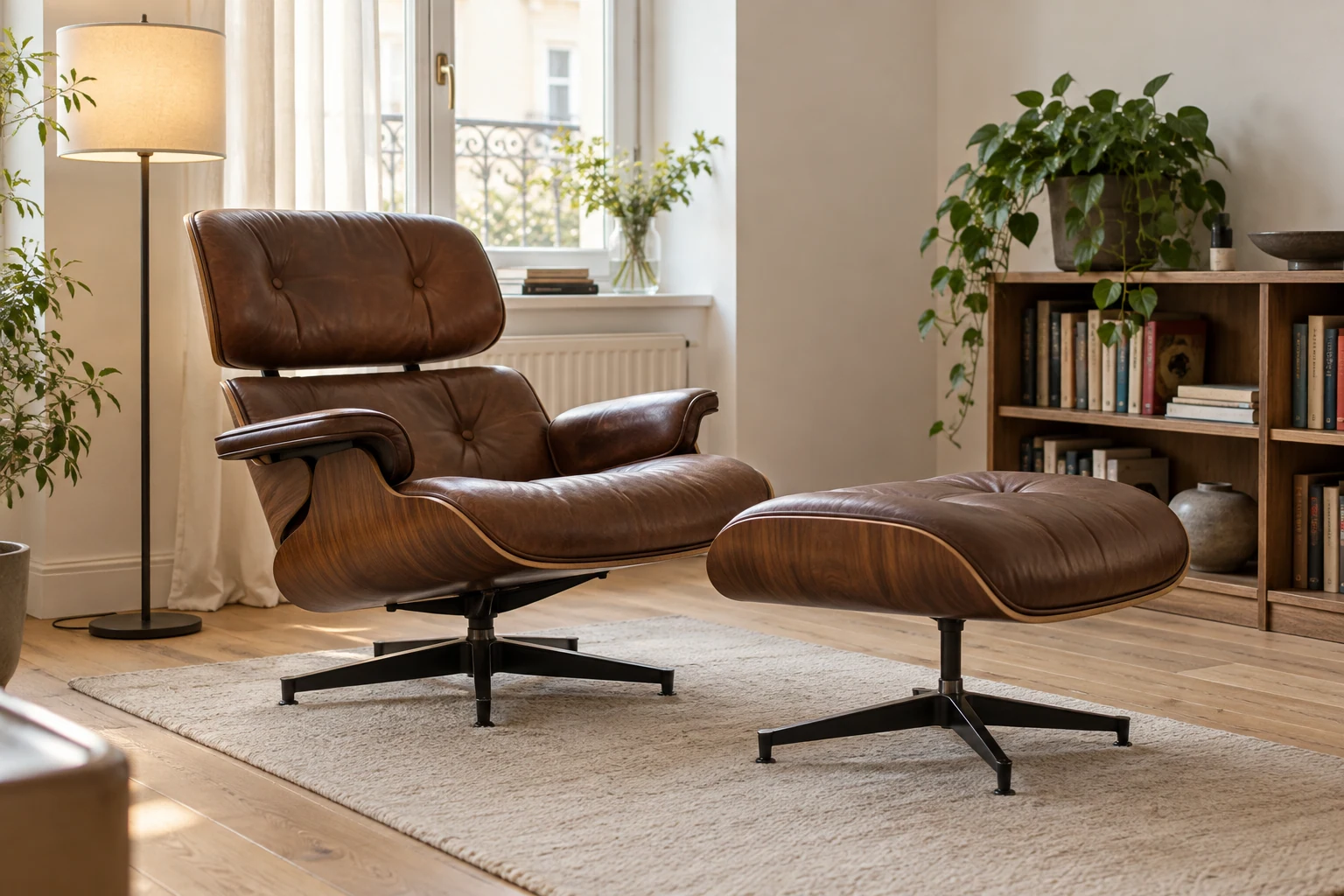
Which Eames Lounge Chair is in the listing?
The familiar upholstered design with curved plywood shells and a separate ottoman was introduced in 1956. Save the seller’s exact description of both pieces, rather than treating every listing headed “Eames lounge” as the same offer.[1]
Eames Office identifies Herman Miller and Vitra as the authorised furniture manufacturers. Ask which producer is claimed and what connects the label, invoice or other record to this chair. A photograph of a familiar outline starts the comparison; the documentation must belong to the object being sold.[2]
Keep three dates separate: when the design appeared, when this chair was made and when work was carried out. “1956 design” is not evidence of 1956 manufacture. A later authorised example may be exactly what you want for everyday use, while an older chair needs a stronger production record if its age is part of the price.
For unclear wording, use the listing-claims Guide. Ask for a whole underside view with any label in place as well as a readable close-up, and compare the chair and ottoman records separately.
Size is part of the version
Herman Miller’s current product sheet lists Classic and Tall chair sizes with one ottoman size. It also describes individually upholstered, replaceable cushions and seven-ply shells. Those details describe the current product sheet; they are not a test that every vintage chair must pass.[1]
Vitra also offers two sizes and lists combinations of wood shells with leather or fabric covers. Current legitimate variety is a useful reminder that black leather is not the whole story. It does not establish whether a particular material combination existed in the decade a seller claims.[3]
| Part of the offer | Useful evidence |
|---|---|
| Chair size | The producer’s size name if known, plus measured overall height, width, depth and seat height. |
| Ottoman | Its own maker/production record, dimensions and any separate purchase or replacement history. |
| Shells and upholstery | Known materials and finish, with invoices for replacement shells, cushions or covers. |
A base, upholstery kit or cushion offered online may look close while belonging to another producer or production period. Ask the relevant manufacturer or service provider to confirm the part for the exact chair before counting a missing component as an inexpensive fix.
What a real refurbishment involved
Herman Miller’s “Heirloom Apparent” follows Marianne Rohrlich’s family chair as it passes to her daughter. It identifies the historical model numbers 670 and 671 for chair and ottoman. Ageing shock mounts and upholstery stitching needed attention; the documented work included replacement mounts, work on the original cushions and new leather for the ottoman. Preserving a valued chair can involve selective replacement.[4]
Use that example to make “restored” specific. Ask what stayed and what changed, who did the work and whether there are before-work photographs and a dated invoice. A new cover is one intervention; work on the connections between the shells and their supports is another. Neither tells you automatically what happened to the other components.
For a collector, original upholstery or a particular early component may be part of the attraction. For a daily reading chair, a documented compatible replacement may be welcome. Decide what you value, then compare offers described on the same basis. Avoid paying an untouched-original premium for a chair whose substantial changes have only emerged in conversation.
Give the mounts and shells their own question
The shock mounts are resilient connections used in the assembly. In the manufacturer’s refurbishment, they needed skilled replacement. When a seller reports movement, a failed connection, improvised glue or an added fixing, get that issue assessed before using the chair or ordering parts. Pulling on the back is not a useful buyer’s strength test.[4]
Ask for clear views of the wood shells, their edges, the back connections and the accessible underside. Locate a crack or added screw in a wider view. Look separately at surface wear, edge loss, splits and previous changes; a glossy refinished shell can conceal the reason it was worked on.
Then inspect the cushions as upholstery: seams, zips where accessible, button areas, piping, leather or fabric and the way each cushion sits. Ask whether the inner cushions, covers or both were replaced. Removable does not mean you should detach an unfamiliar assembly during a viewing.
Herman Miller directs customers to authorised dealers for quotes on Eames Lounge replacement parts, including shock mounts, cushions and shells. That gives you a concrete service enquiry to make before purchase; it does not guarantee that every old or altered chair qualifies for a particular repair.[5]
A reading chair needs a reading trial
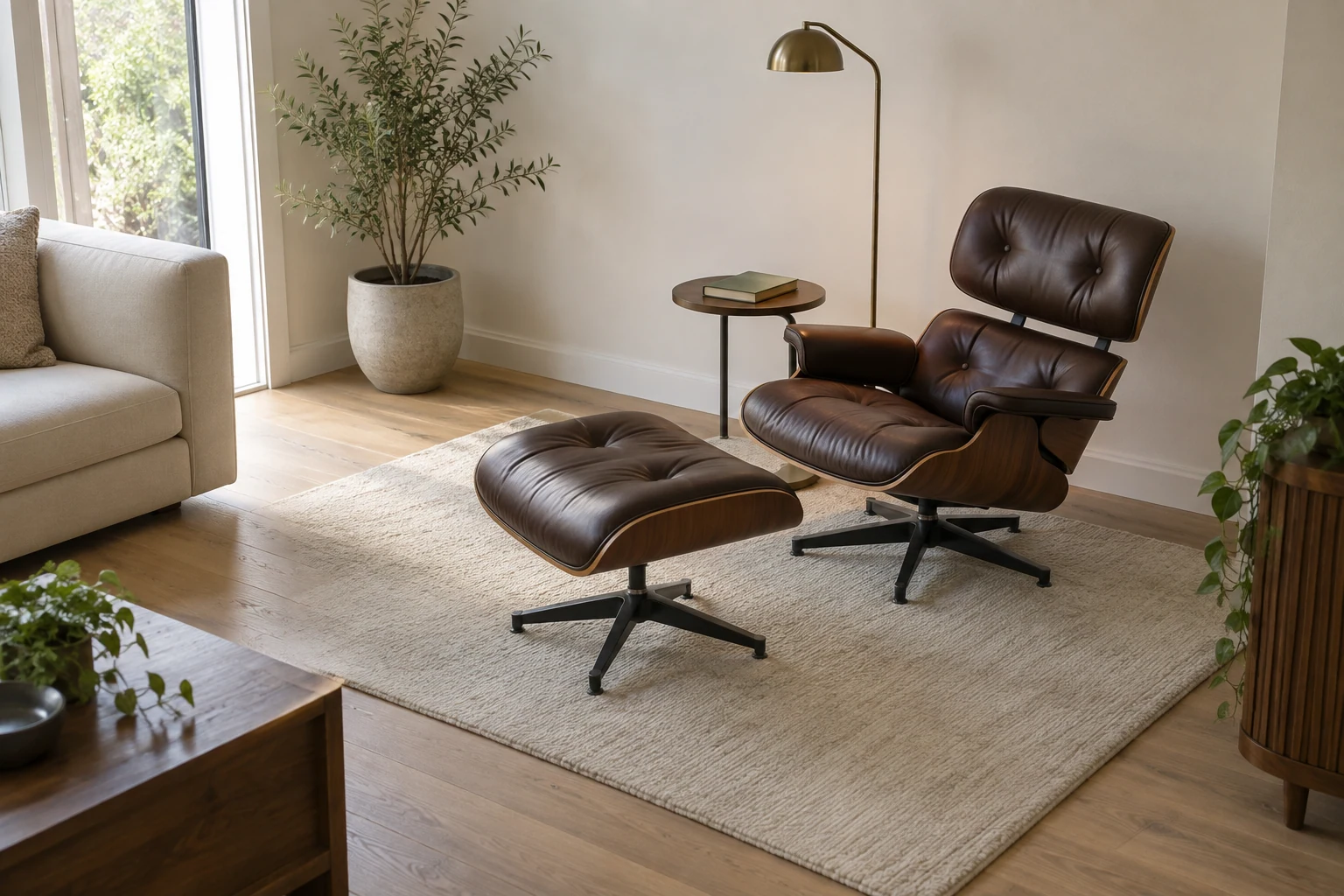
Arrange a seated trial once the chair’s condition allows normal use. Bring the posture you actually want: reading a book, talking to someone across the room or resting with your feet supported. Notice where the head cushion meets you, whether the seat depth feels right and whether the ottoman encourages a position you enjoy.
Getting out matters too. Try the ordinary movement with the shoes you normally wear at home. A chair can feel luxurious for a minute and still be awkward every time you stand up. If several people will use it, let each person try the actual size.
The family story above is revealing here: Rohrlich’s own preference had shifted towards a higher, firmer and more upright seat. Saving the Eames for her daughter did not mean it was still the right chair for her. Repair condition and personal comfort deserve separate decisions.[4]
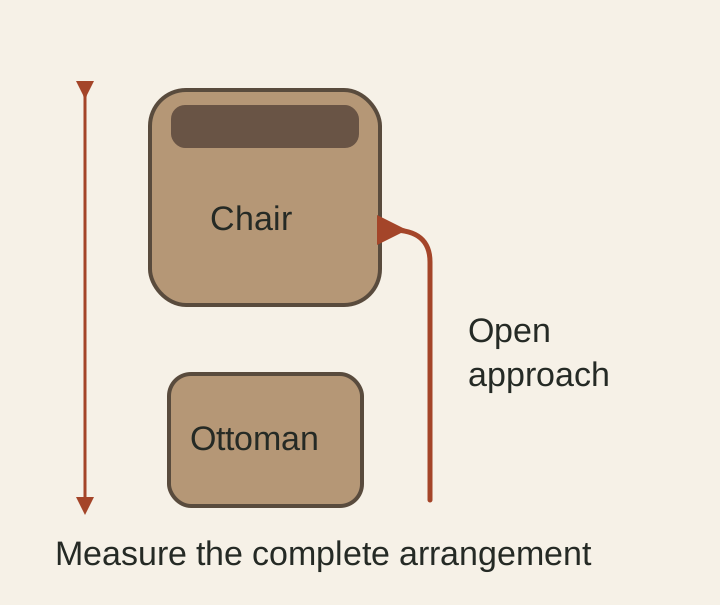
Mark the whole arrangement in your room, then check chair and room measurements and the delivery route. An ottoman that blocks the way to the chair can turn a generous-looking corner into an awkward one.
Compare the pair after required work
Put each offer on one short sheet: documented producer and period, chair size, included ottoman, known replacements, unresolved repairs and delivered cost. Add only work that has a supported scope or quote. A lower asking price with an unknown shell repair is not yet a cheaper finished chair.
A maker mark, a service invoice and the actual present condition answer different questions. Keep all three. If production evidence remains unresolved, compare the offer on that basis rather than borrowing certainty from a similar-looking museum or manufacturer photograph.
A message to copy
Which producer, production period and size are you claiming for the chair and ottoman, and what records support each? Please identify any replaced shells, mounts, bases, inner cushions or covers, with the repair invoice if available. Could you send whole front/back/underside views, marks in place and close-ups of any connection or shell damage? I would also like to arrange a normal seated trial once any structural concern is resolved.