Designer profile

Chris Kabel: an object begins with its surroundings

A design can begin with what a material will do or with the situation an object will create. Chris Kabel’s work makes those starting points speak to one another. Mesh Chair explores a shaped surface; Wood Ring asks what people can share around an open centre.

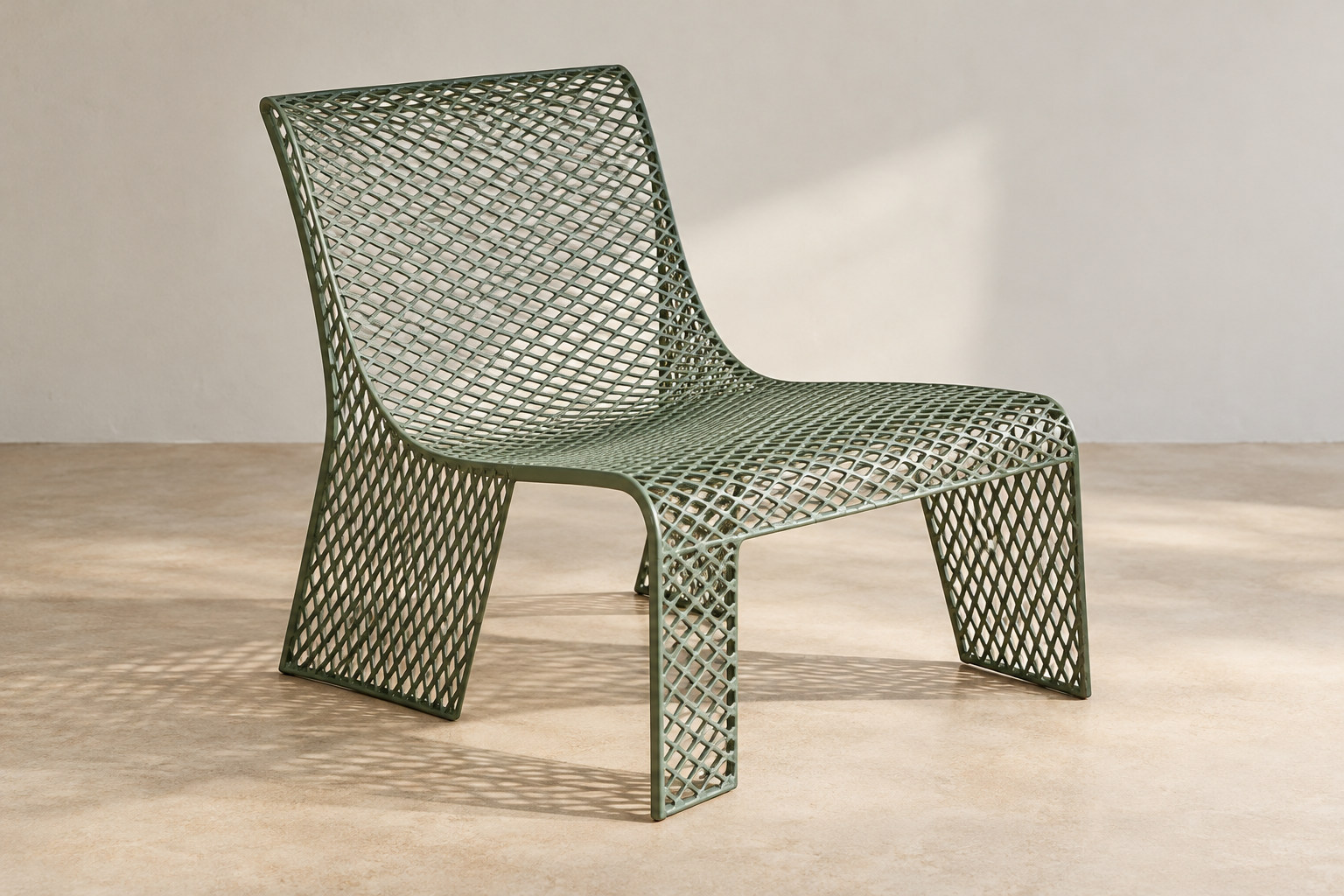
Open diamond-patterned metal-like planes form a chair’s seat, back and supports.
PatinaHall editorial reconstruction. It is not a documentary photograph. This interpretation of Mesh Chair follows the open patterned surface into three dimensions. The view illustrates the expanded-mesh idea, without reproducing MoMA’s exact panel geometry, seams or dimensions.
On this page
Key facts & takeaways

At a glance

Subject
Chris Kabel
Entry
Designer profile
Last reviewed
26 October 2026

Three things to remember

  1. Material behaviour and a room’s situation can both generate design questions.
  2. Mesh’s clothing analogy concerns formed panels and seams.
  3. Wood Ring’s circular arrangement offers inward and outward orientations.

Letting the starting point shape the result

Kabel’s studio describes materials, natural phenomena and context as active guides in the design process. Its account places his practice in Rotterdam after studies at Design Academy Eindhoven.1

That gives a useful route into the work. Instead of beginning with a fixed family resemblance, look for the question that each situation makes available. A material may suggest a method; a room or a group of users may suggest an arrangement.

The finished objects can look different while sharing that way of paying attention. Their connection lies partly in how the problem was found.

Context can be a material to work with

Mesh Chair offers a compact material example. In MoMA’s account of its 2005 chair, Kabel compares cut expanded-metal panels and welded seams with the making of clothing. Joined surfaces acquire a three-dimensional role.2

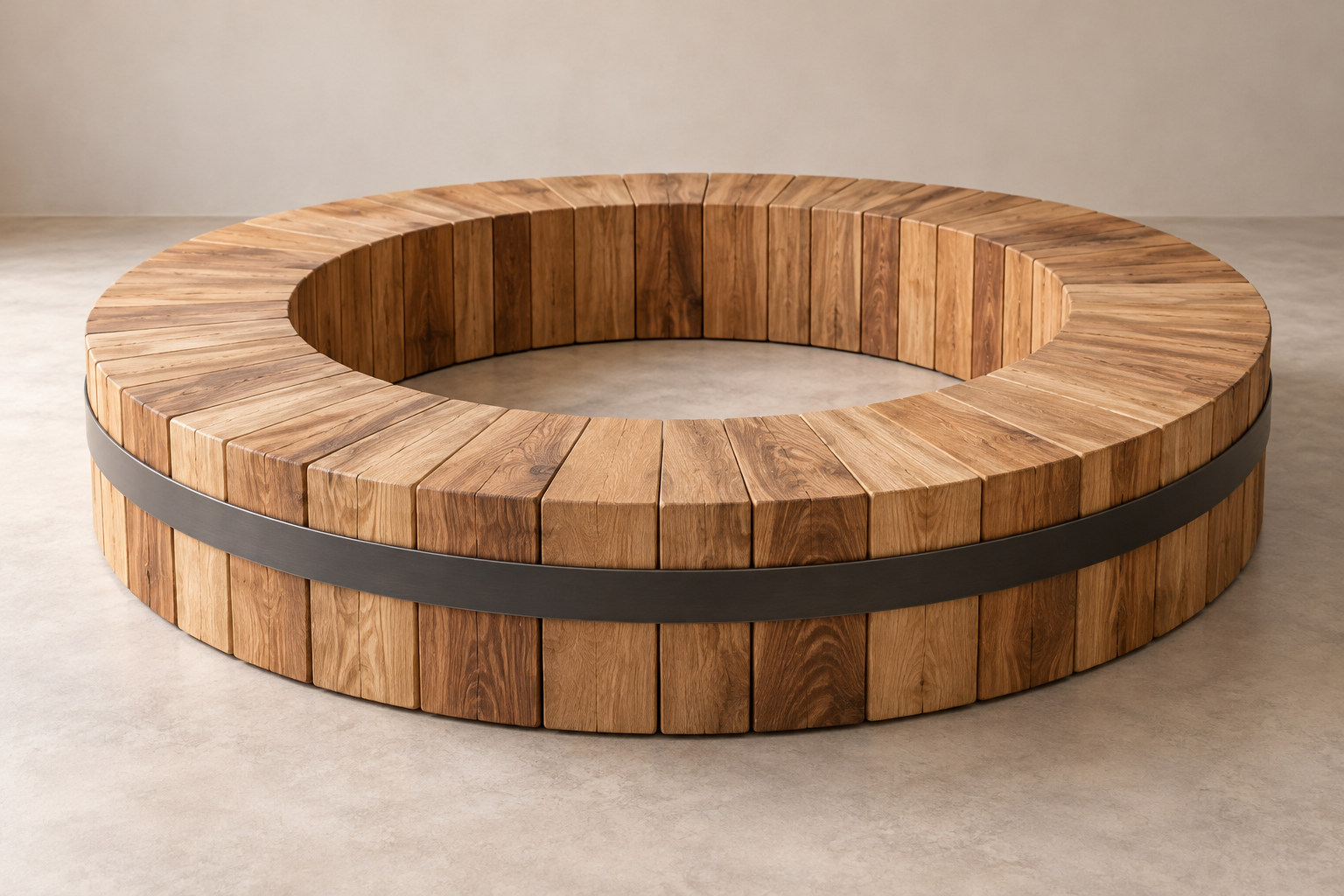
Wood Ring changes the scale of attention. Galerie kreo’s 2012 presentation describes a circular bench as both public and intimate, with a choice between facing into the shared centre and facing out towards the room.3

The two examples involve different kinds of relationship. Mesh brings pieces of material into a volume. Wood Ring brings possible occupants into a shared spatial arrangement.

In both cases, what lies around an element matters. A panel meets another panel; a seat faces a centre or an exterior. The surrounding conditions help give the object its meaning.
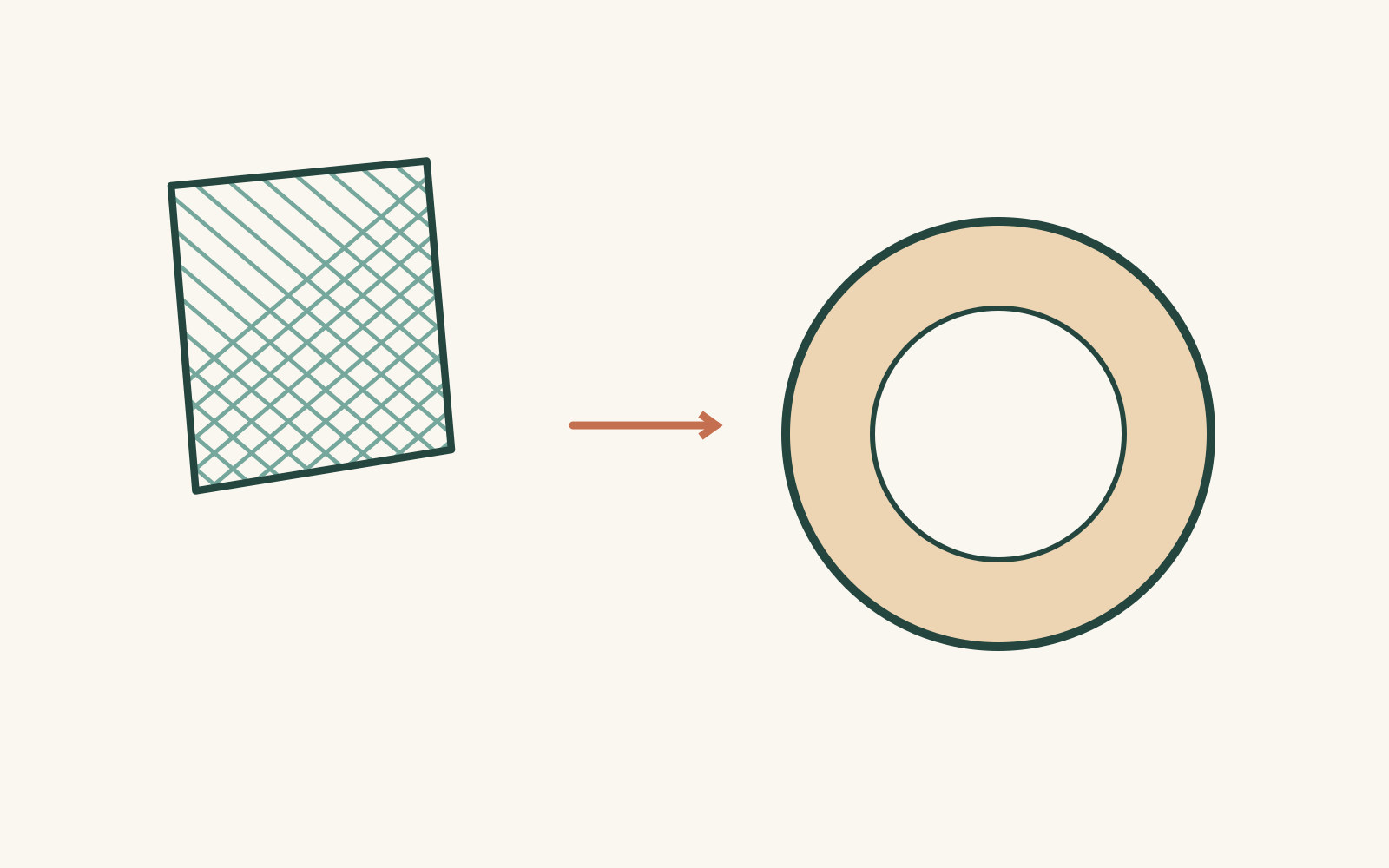
A patterned plane is linked to a ring surrounding an open centre.
Material relationships and spatial relationships can both guide an object. The paired studies connect two kinds of question, without claiming identical processes or tested social behaviour. Original PatinaHall schematic, not to scale.

A way to look across unlike objects

A viewer can ask what was allowed to guide the design. Was it the behaviour of a cut surface, the line of a seam, the grain of timber or the direction in which a person might face? Each question leads attention towards a different part of the furniture.

That is the pleasure of following Kabel across objects. The method creates room for a new situation to produce a new result. A chair begins with a sheet; a bench begins with a centre; both make their relationships worth noticing.
Research notesEvidence, connections and limits

Mesh is MoMA’s object 128.2010, dated 2005. The 2012 date belongs to Wood Ring’s gallery presentation. Facing inward or outward describes a spatial possibility, not a measured social outcome.

Evidence map

Connected subjects and evidence

Reviewed connections

  • Mesh Chair, MoMA 128.2010attributed toChris Kabelattributed

    MoMA credits Chris Kabel; its gallery label attributes the cut-pattern/welded-seam explanation to him. The powder-coated expanded mesh is structural material, not a separate textile cover.

    Reviewed 26 October 2026 by PatinaHall editorial.
    • Source 2Title/date; gallery label 79–83; manufacturer 87; object number 94
    • Source 4Mesh Chair description 12–17
  • Wood Ring benchdesigned byChris Kabeldocumented

    Galerie kreo credits Chris Kabel and documents its8 March–2 May 2012 presentation. The exhibition date is not promoted to first design or manufacture.

    Reviewed 26 October 2026 by PatinaHall editorial.
    • Source 5Description; edition details; Dimensions and Materials
    • Source 3Exhibition dates; circular wooden bench; inward/outward social-space description

Research trail

Sources and further reading

  1. About Chris KabelStudio Chris KabelAccessed 26 October 2026
  2. Mesh Chair 2005, 128.2010The Museum of Modern ArtAccessed 26 October 2026
  3. Wood Ring exhibition, 8 March–2 May 2012Galerie kreoAccessed 26 October 2026
  4. Mesh ChairStudio Chris KabelAccessed 26 October 2026
  5. Wood RingGalerie kreoAccessed 26 October 2026

Last reviewed 26 October 2026. Found an error or a stronger primary source? Contact PatinaHall.