A long piece of wood becomes a circle
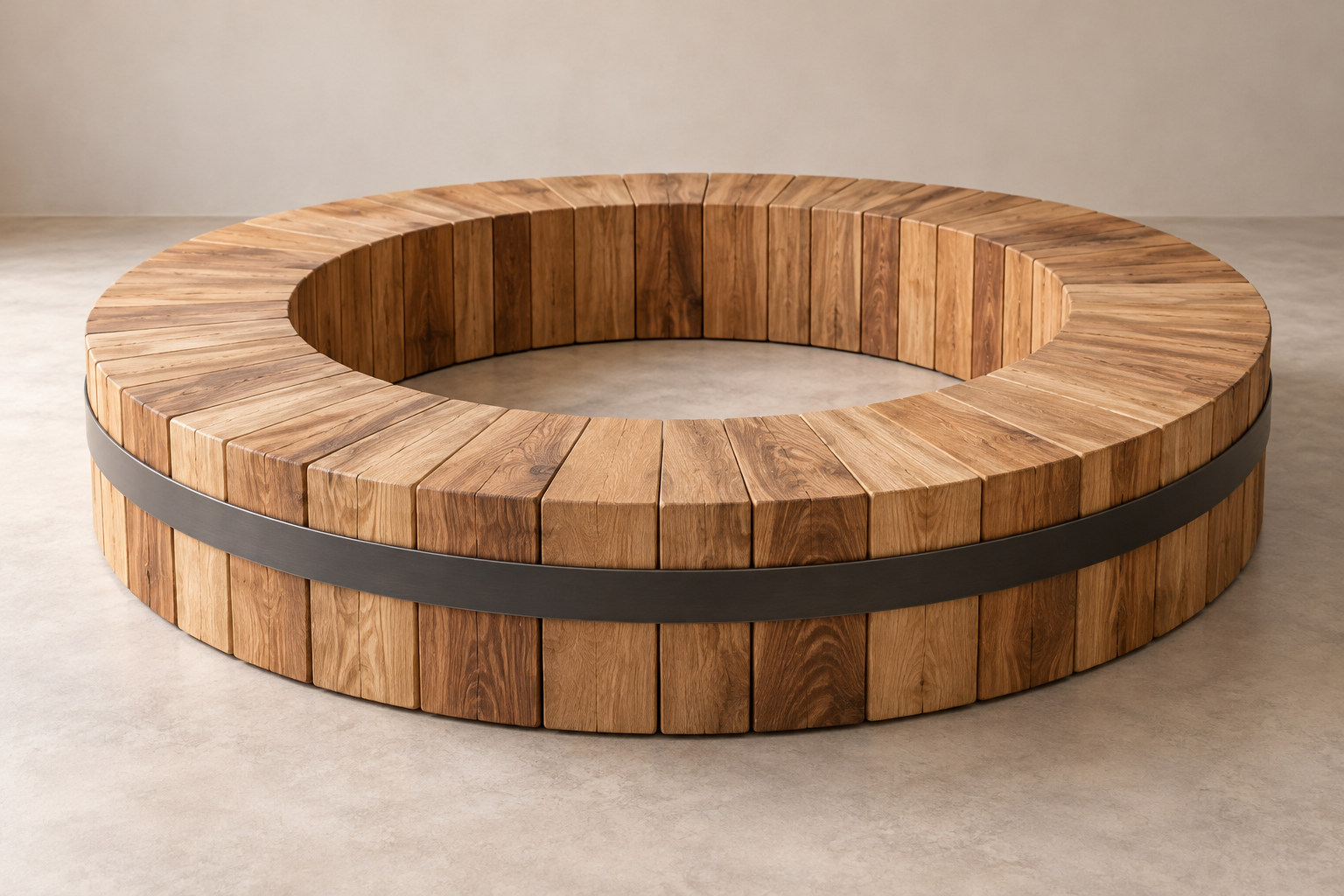
Wood Ring begins with a change in direction. Galerie kreo describes timber from one long beam cut into repeated units and arranged side by side as a circular bench. A metal belt retains the ring.1
That sequence gives the material a particular visual interest. Grain that travelled along a beam can be followed around a new perimeter. The wood’s lines become a way of reading the relationship between the neighbouring units.
The gallery describes its ring without glue or screws, using the encircling belt to hold the arrangement together. This is the documented material logic of that edition, which the visible belt helps make understandable.1
The empty centre does some of the work
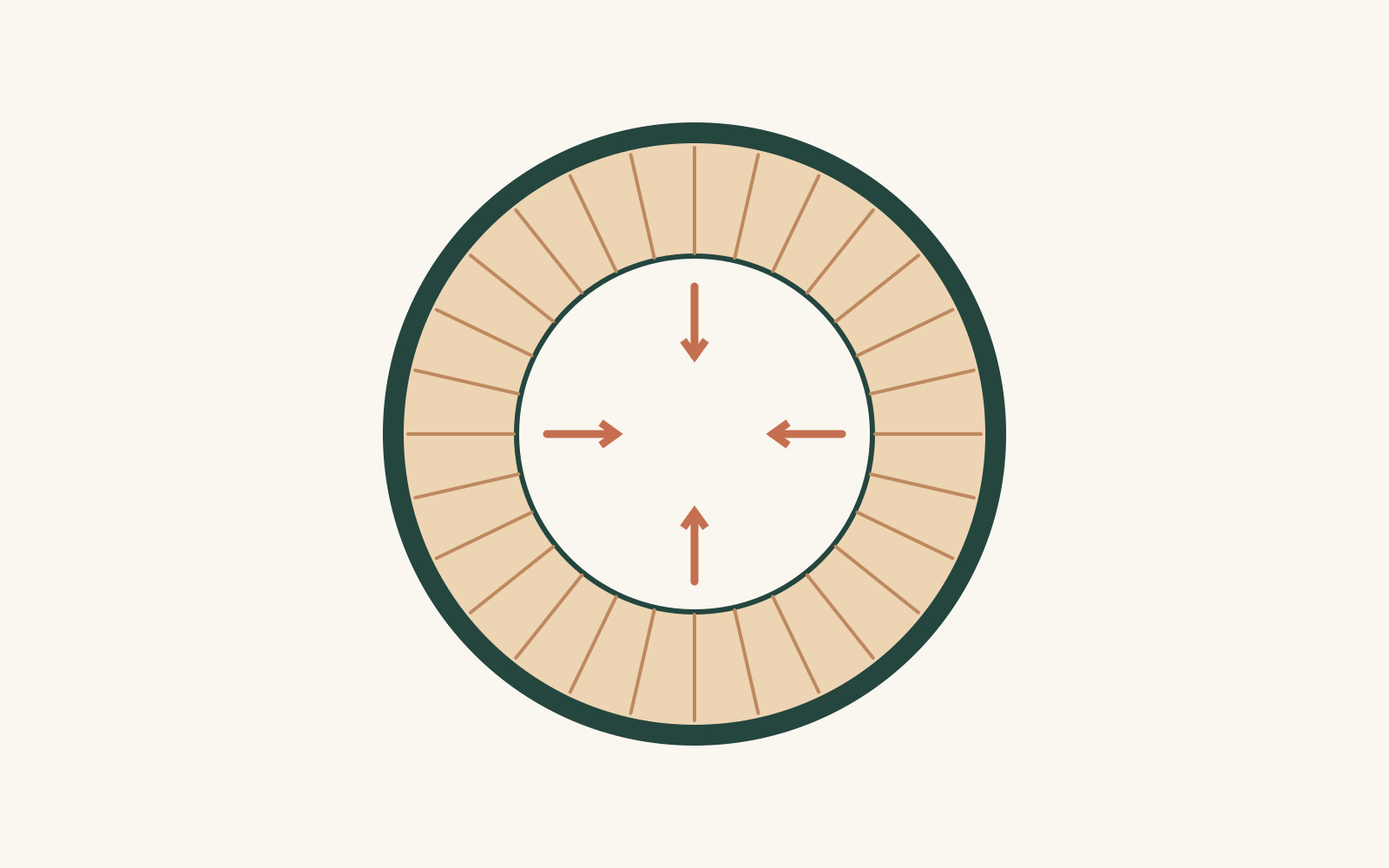
The seat surrounds a space that belongs to the arrangement even though nobody has filled it with another object. Facing inwards means looking towards that centre and the other possible occupants around it.
Galerie kreo’s 2012 exhibition account explicitly develops this social reading. It presents the bench as a setting that can be public and intimate, while allowing someone facing outwards to choose a more separate relationship with the surrounding room.2
The furniture offers those orientations through its shape. It cannot guarantee a conversation, but it can make the choice between looking in and looking out unusually apparent.
This gives the centre a role comparable to the tabletop between chairs: a shared reference point. Here it remains open, leaving the circle itself to define the gathering.
Following the ring in two ways
The 2012 exhibition ran from 8 March to 2 May at Galerie kreo. Its account brings the material sequence and the social possibility into the same work.2
One way to follow the bench is with the eye, tracing the grain and the retaining belt. Another is imaginatively, choosing where to sit and which way to face.
Those two readings meet in the circle. The repeated timber units make a continuous seat, while the continuous seat makes a place around an absence. Wood Ring gives the room a centre without putting a wall around it.