
Set it up for the way you actually live
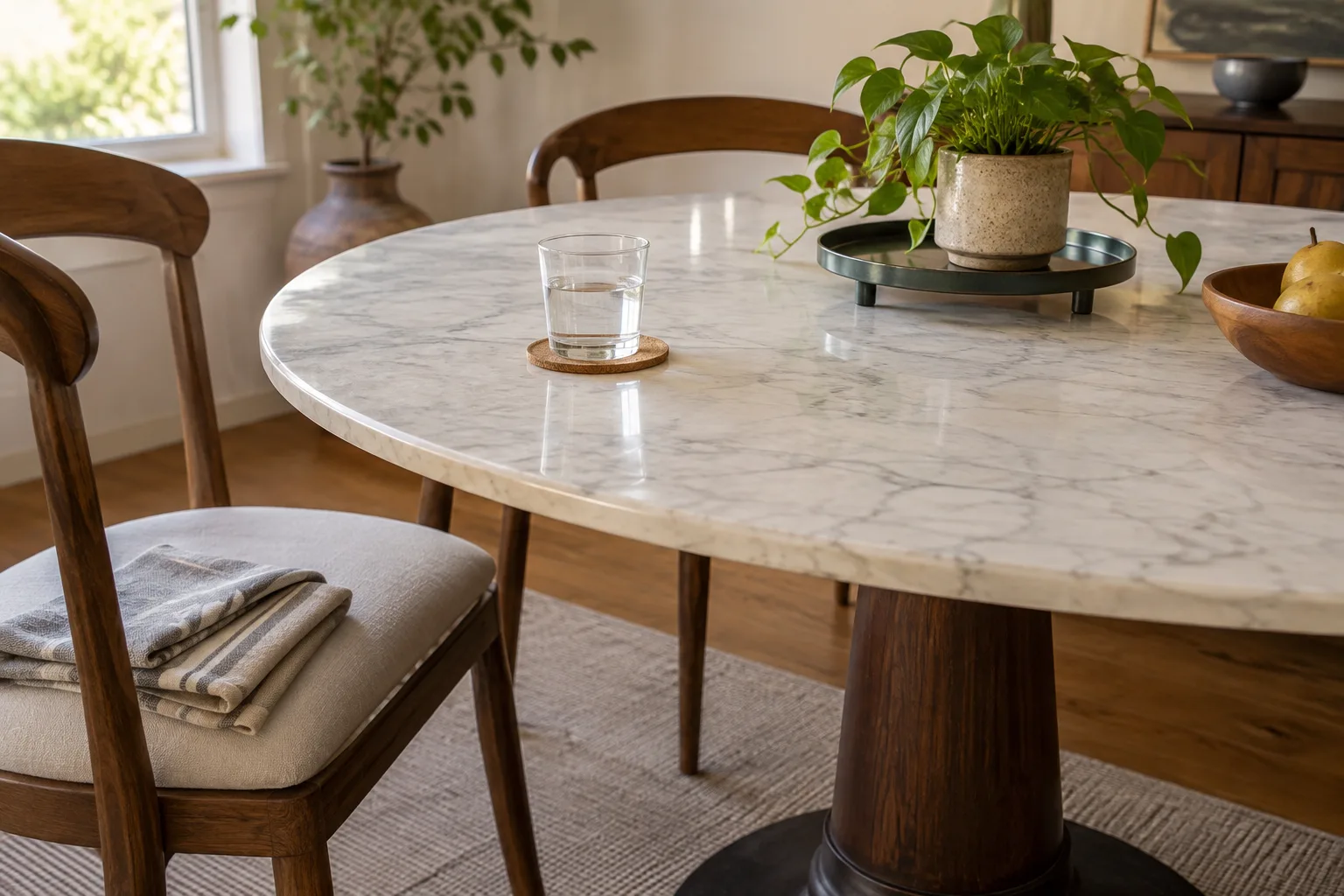
A stone coffee table should not make every cup of tea feel like a conservation exercise. The useful work happens before the cup arrives: a coaster within reach, a tray that is easy to lift and a clear place for a plant. Build protection into ordinary use rather than relying on everyone remembering an unfamiliar rule.
Check the underside of the things that sit on the table. A tray can collect moisture or grit beneath it, and a plant container can leak where nobody notices. Choose supports that suit the surface and lift them periodically to check that the contact area is clean and dry. Do not drag rough ceramic or metal across the top.
Keep hot cookware on a suitable separate support, and use coasters for drinks. Think about the repeated small events in your home: a mug beside the favourite seat, a watering can on Sunday or a serving dish placed down while someone opens a door. Those are better starting points for a care plan than an idealised photograph of an empty table.
If a glass protector is proposed, treat it as another component that needs compatible supports and an agreed fit. It should not trap moisture, adhere to an old coating or bear on fragile edges. The glass-replacement Guide explains the information a glazier needs; a loose sheet chosen only by length and width is not a complete specification.
Know what is on the stone before cleaning it
Ask for the stone name, surface finish, known coatings, sealing products and repairs. A filled travertine surface, a resin repair and a later coating may need consideration beyond the stone itself. Keep uncertain information uncertain. Colour and holes seen in a photograph are not enough to prescribe treatment.
The Natural Stone Institute advises using compatible stone-care products and warns that lemon, vinegar and other acids can etch calcareous stones. Abrasive powders can also damage a surface. For routine care, use the supplier-approved mild method for the actual finish, clear any cleaner residue as directed and dry the surface. Avoid turning an internet stain recipe into a general-purpose cleaner.[1]
Keep one simple record of the approved product and method with the table. If the earlier treatment is unknown, ask a stone specialist before adding a polish, acid cleaner or sealer. A bottle described as suitable for stone may still be unsuitable for the coating, filled areas or repair in front of you.
A sound-looking top is not a reason to lean or stand on it during cleaning. Follow the actual structure and support limitations. If you discover a moving joint, an unstable base or a crack that changes, return to the stone-inspection Guide and arrange an assessment before carrying on with normal use.
When something spills, start with the event
Remove the source and blot the liquid promptly with a clean absorbent cloth, without spreading it across more of the surface. Follow the established compatible cleaning method for the table. Do not reach for a stronger chemical because the first mark looks dramatic.
| Record | Why it helps |
|---|---|
| What spilled | Coffee, wine, oil, plant water and an unknown cleaner lead to different questions. |
| Where it reached | Include a joint, edge, filled area or underside if affected. |
| What remains when dry | Describe darkening, changed sheen, a pale area or a rough feel without assuming the cause. |
| What has been applied | Name the product and sequence; further treatment depends on what is already present. |
Etching changes the surface; staining and etching can occur together. The Natural Stone Institute distinguishes them and directs etched areas to a stone professional for refinishing or repolishing. Repeated cleaning does not answer a surface-finish problem. Leave a persistent mark for assessment rather than escalating through a shelf of remedies.[1]
Photograph the area in ordinary even light and with light falling across it, including a wider view that shows its position. Keep the table’s previous care record nearby. The aim is to help the specialist distinguish the event and affected surface, not to diagnose the mark from one reflective close-up.
What sealing can and cannot do
The Natural Stone Institute describes penetrating sealers as repellents that can improve stain resistance, not make stone stain-proof. Not every stone needs the same treatment or schedule. Ask the supplier or specialist whether the actual surface needs sealing, which product is compatible and how it should be maintained.[1]
Do not confuse that question with protection from acids. If your daily routine includes citrus drinks, wine or food preparation, convenient coasters and prompt spill handling still matter. A seller’s “recently sealed” description should include the product and date, not a promise that the table can no longer be marked.
Ask for one practical care plan
Please confirm the stone and visible surface treatment, including filled or repaired areas. I need the suitable everyday cleaner, spill response, whether sealing is appropriate and any contact materials to avoid. Please separate a proposal for the existing mark from ordinary future maintenance.
Then enjoy the table with that plan in place. Some visible wear may be acceptable to you; active structural movement is a different matter. Decide which cosmetic changes you can live with, and reserve professional treatment for a defined result rather than continually chasing a showroom surface.