Make a small research record first
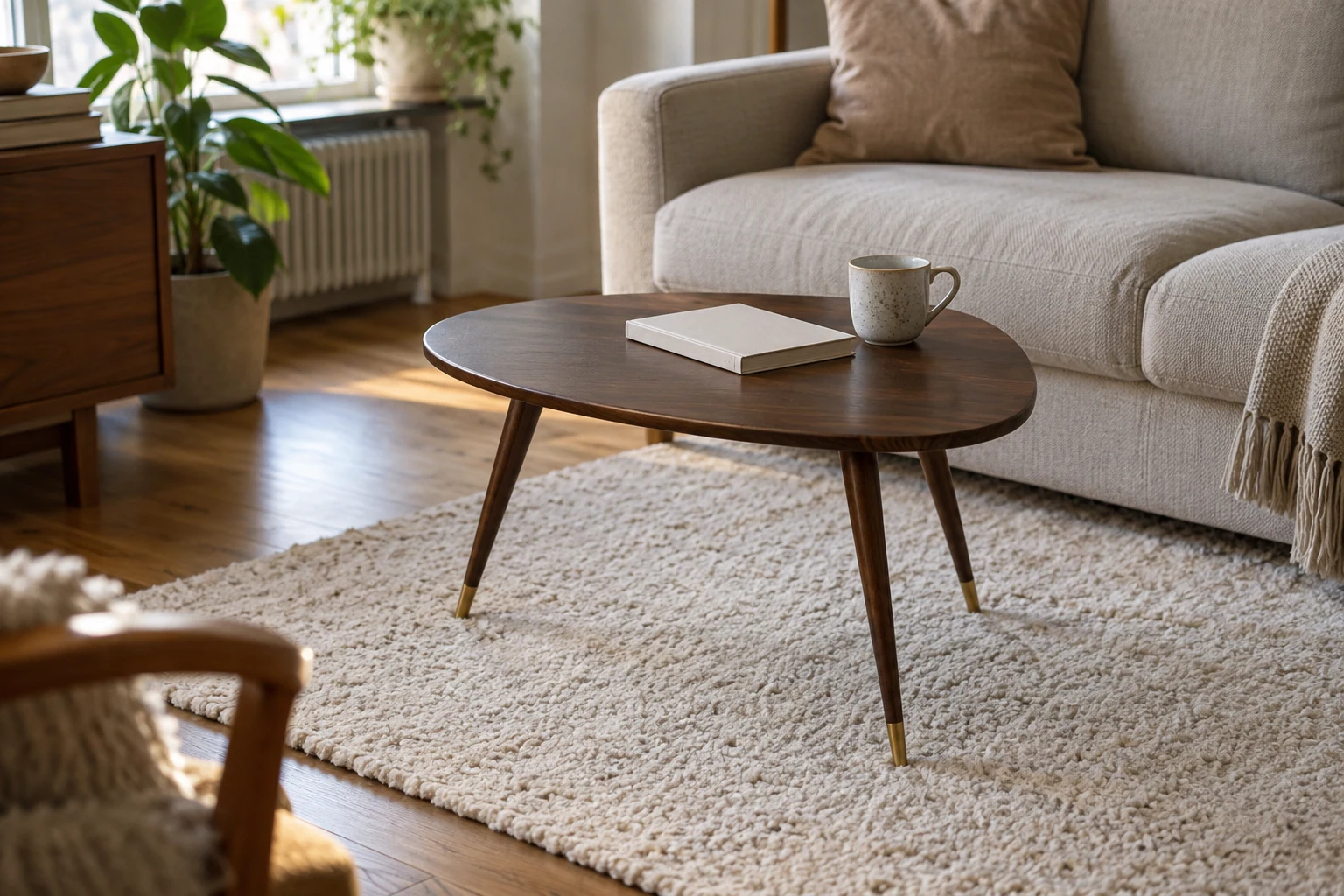
A marketplace title such as “rare 1950s IKEA table” gives you several claims at once. Begin with the table itself: a whole view, the outline and edges of the top, the legs and how they meet it, dimensions, underside and any labels photographed in place. Record later changes the seller knows about.
Keep the seller’s name for the model as a search lead. If there is no name, describe the construction as well as the silhouette: three removable legs and a shaped veneered top are more useful than “Scandinavian”. The general unmarked-furniture Guide can help you prepare that observation.
Open IKEA Museum’s catalogue archive and choose a likely year. Its search tools let you look for a product name or type; within an opened catalogue, Search this publication narrows the search to that issue.
Try the original spelling when you have it, including Å, Ä and Ö. If the result is empty, try a shorter name fragment or the product type and browse neighbouring years. An unsuccessful search can be a search problem before it is evidence against the attribution.
LÖVET: an old form with a later return
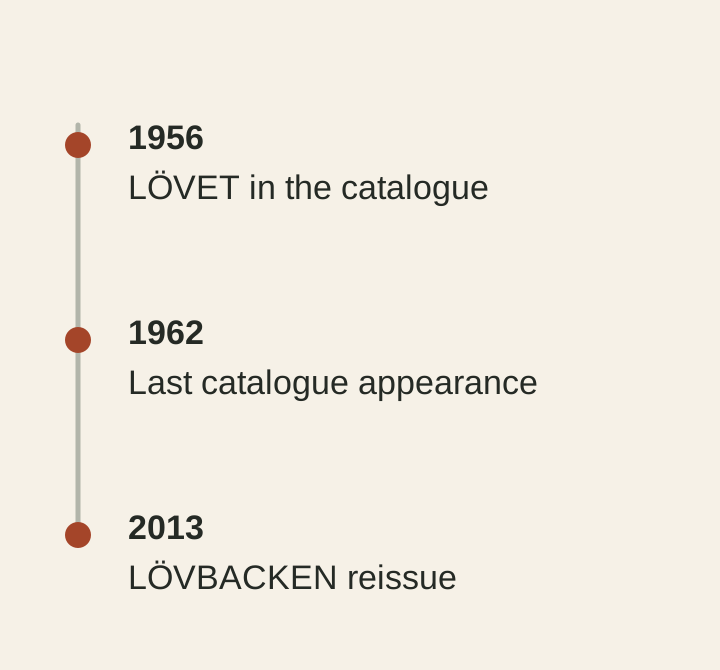
The museum’s LÖVET story records the table under 1955 and says it first appeared in the 1956 catalogue. It describes a jacaranda top and brass-covered feet, and records catalogue appearances through 1962. Those are useful historical details, but the same story also explains a later return: IKEA recreated the table in 2013 as LÖVBACKEN using different woods.[1]
To repeat the catalogue search, open the Swedish 1956 catalogue and search LÖVET. In our check, the viewer returned a result labelled Page 85. Record the viewer location and check the printed page number when you open the scan; they need not be the same.
Now return to the offer. A similar leaf outline and three legs are not enough to choose between an older table and a later reissue. Compare the documented dimensions, construction, surface description and identifying details with what the seller can show. Ask about refinishing and replaced legs rather than reading every difference as a different model.
Keep the conclusion proportionate: “the museum documents this design in the 1956 catalogue” is supported. “This particular table was made in 1956” requires a connection to the individual object. A seller’s use of the earlier name does not supply that connection.
JÄRPEN: two recorded dates and another name
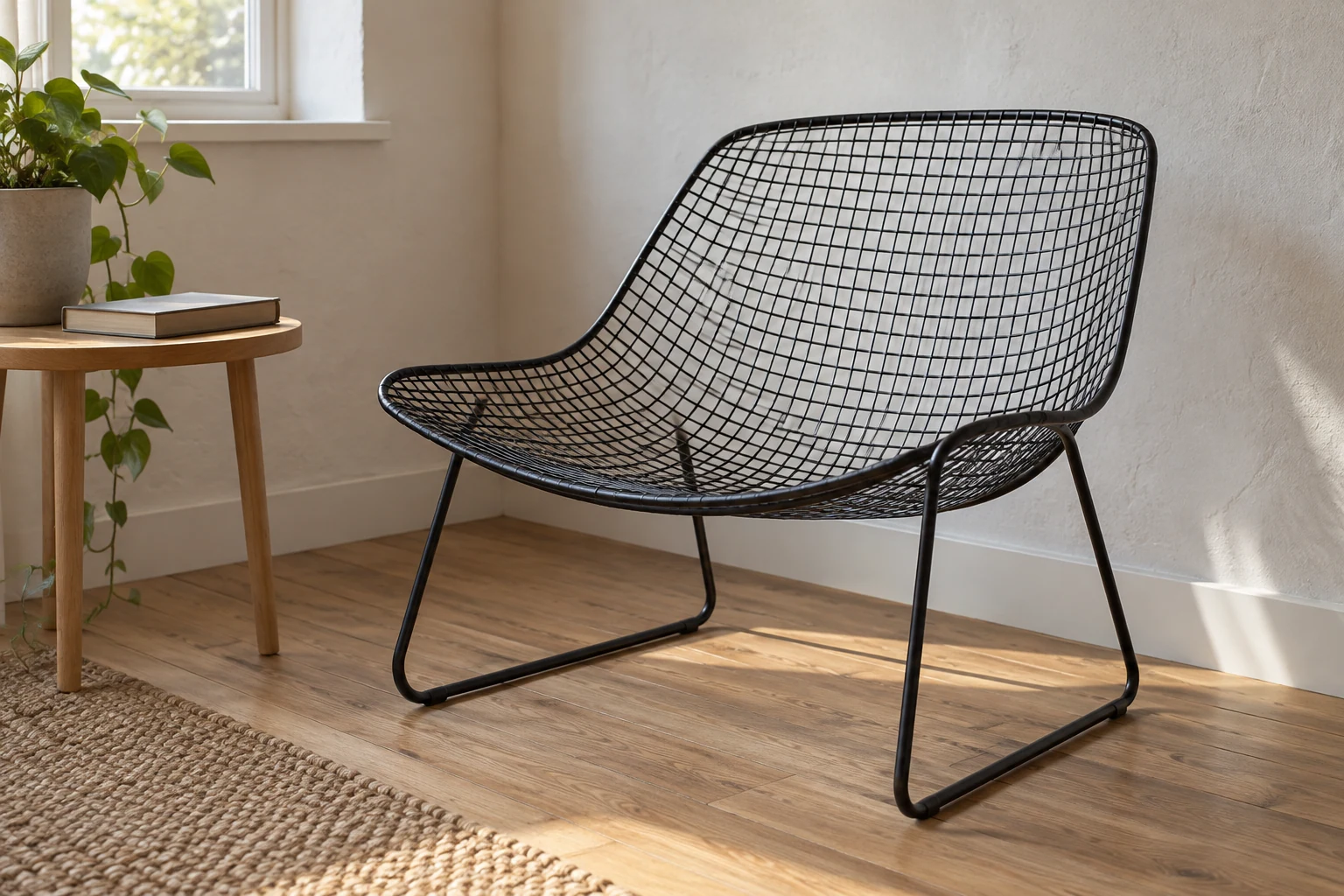
The JÄRPEN product story records 1982, credits Niels Gammelgaard and describes the chair’s introduction in the 1983 catalogue. It explains the pressed and welded steel mesh and an assembly of three parts. The record date and the catalogue year are different pieces of information, not dates to collapse into one confident listing claim.[2]
Open the Swedish 1983 catalogue and search JÄRPEN. Our check returned a result labelled Page 54 in the viewer. Use the named record to narrow the search, then compare the candidate chair’s full shell, base and connections with the actual catalogue entry.
There is a later name to check here too. IKEA’s current SKÅLBODA record identifies its relationship to the earlier JÄRPEN design as part of the Nytillverkad collection. A mesh chair can therefore resemble a documented 1980s design without being an object produced in the 1980s.[3]
Ask for labels, measurements and known purchase history. If the age is unresolved, describe it as unresolved while you evaluate the chair’s usefulness and condition. You can like the design without paying a premium for a date that has not been established.
Keep observation, document and conclusion separate
A small comparison note prevents the most attractive explanation from becoming the only one you remember. Put the seller’s evidence beside the exact dated reference and record both agreements and conflicts.
| Record | Example of the right level of detail |
|---|---|
| Observation of the offered object | Measured dimensions; whole and underside photographs; exact label wording; reported replacements. |
| Document found | Model name, catalogue year and market, viewer/printed page, product-record URL and its separate dates. |
| What agrees or conflicts | Which construction or finish details correspond, which do not, and whether a later reissue could explain the form. |
| Supported conclusion | A likely model lead, a documented design history, or an item-level date supported by additional records. |
Do not treat a historical material name as a laboratory identification of the offered wood. Likewise, a designer credit attached to one archive record does not transfer to every similar-looking piece. Preserve the wording and source so another person can follow the same trail.
For labels and their limits, use the marks and labels Guide. The catalogue supplies a dated comparison; the mark still has to belong to, and make sense on, the object being offered.
A missing search result is not a verdict
IKEA Museum’s online catalogue archive covers Swedish issues from 1951 to 2021. The museum explains that catalogues show a selection of the range; from the 1970s, roughly 30–50% of products were included. A product sold in another market or omitted from an issue can therefore be missing from the catalogue you searched.[4]
Widen the search deliberately: nearby years, original spellings, a type description and the museum’s product stories. Keep a note of what you tried. Repeated marketplace listings copying the same unsupported attribution do not become independent confirmation just because they appear on several sites.
If the item remains unresolved, send the evidence to a knowledgeable dealer or archive enquiry service where available. Avoid turning “not found” into either “definitely not IKEA” or “so rare it must be valuable”. Neither follows from the search result.
Use the history to make a better purchase
A confirmed model name makes it easier to compare versions, understand a price premium and describe the object accurately when you eventually sell it. It does not settle stability, repairs, comfort or delivery. Bring those ordinary buying questions back in once the historical lead is clearer.
For an older LÖVET or JÄRPEN, the interesting result is a connection between an everyday piece and a specific design record. Preserve that history where you can, and keep the production of the actual item distinct from the story of the design.
A message for the seller
I found a museum/catalogue reference that may match this piece [link, year and page]. Could you send the actual dimensions, whole front/side/underside views and any labels in place? Please tell me what supports the production date, when it was acquired and which parts or finishes have been changed. I am also checking whether a later reissue could explain the match.