
The chair’s name does not identify a replacement seat
A pale woven seat can make a room feel lighter. It can also make the first coffee mark feel like a catastrophe. Before reaching for a brush and a bowl of water, establish what you have. The frame may be old while the seat was rewoven last summer with material from a different supplier.
Carl Hansen & Søn says its paper cord has a thin wax layer. DAN-FORM describes its own three-ply cord as unwaxed. Both publish care advice for their material. This difference is a practical reason to keep a reweaving invoice or ask who supplied the cord, rather than borrowing instructions from a chair that looks similar.[1][3]
Check the material description too. “Woven seat” can refer to cane, rush, cord or something else. Do not identify it solely from a beige colour or a familiar diagonal pattern. If the seller cannot name it, send the whole chair, seat edge and underside to a weaver before selecting a wet-cleaning method.
This is care after purchase. If strands are broken, an edge is coming away or the seat has lost support, start with the separate inspection and repair Guides. Cleaning is not the task that makes a failing seat ready to use.
Dust lightly; blot the first spill
For ordinary dust on sound cord, Fredericia recommends gentle vacuuming with a soft brush at medium suction. Keep the head moving without pressing or catching the strands. You do not need to lift the weave or push a tool through it to reach every speck.[2]
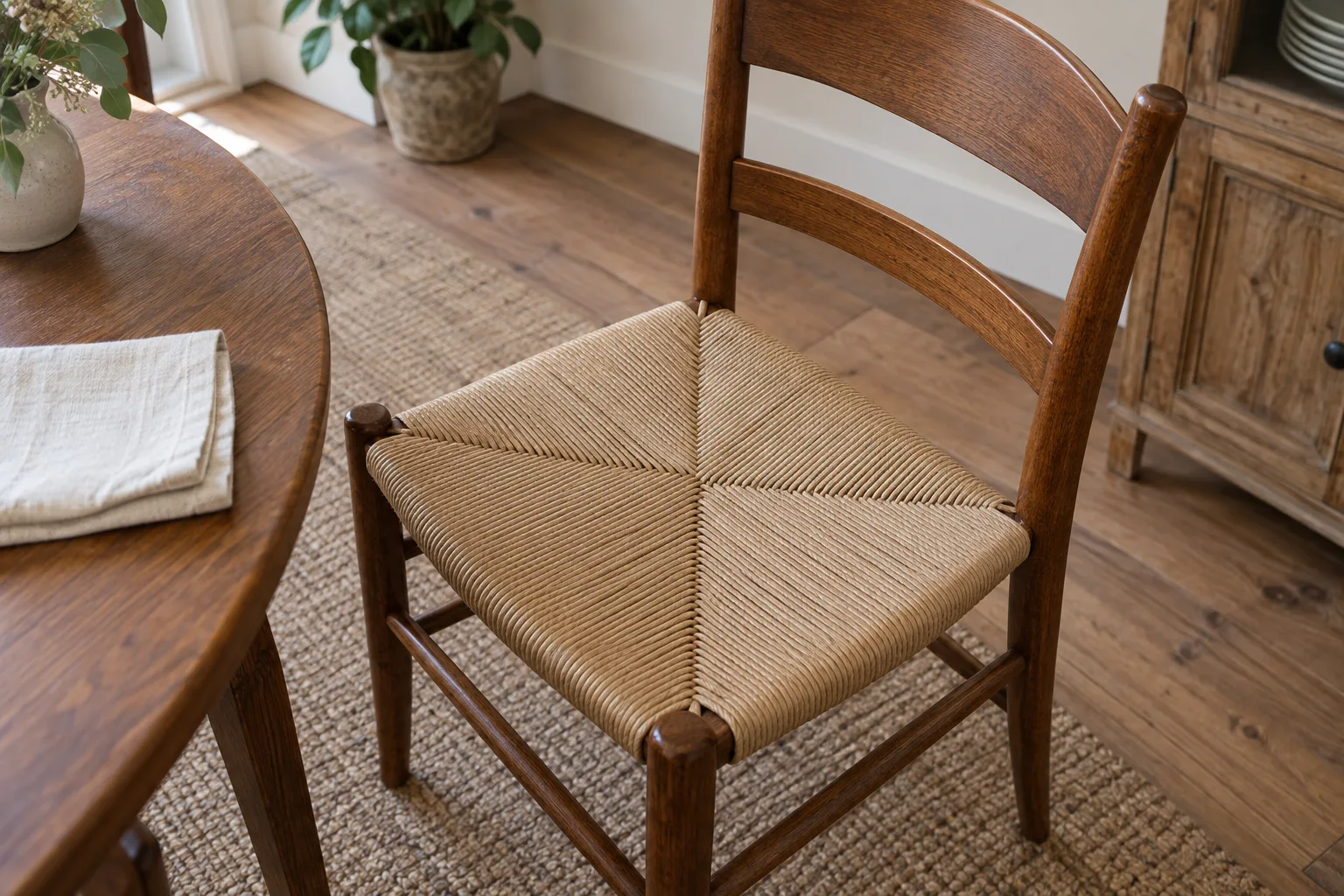
If liquid spills, use a clean, absorbent, undyed cloth or paper towel to take up what is on the surface. Dab rather than scrub. Carl Hansen’s guidance specifically warns against rubbing and notes that strongly coloured spills can leave marks. Do not pour more water over the seat in an attempt to chase the colour through it.[1]
Move the cup, note what spilled and take a quick photograph once the immediate liquid is absorbed. That keeps useful information if you later ask for help. A faint mark may be something you can live with; a seat soaked repeatedly in pursuit of a perfect colour can become a larger problem.
Keep the cleaning task separate from the frame finish. A product suitable for a known cord is not automatically suitable for painted, waxed or otherwise finished wood around it. Control where any permitted damp cloth touches and avoid wetting adjoining materials unnecessarily.
A damp cloth is a method, not an invitation to wash the chair
The reviewed maker instructions allow restrained damp cleaning with specified mild, colourless soap preparations and a firmly wrung cloth. They also caution against detergents or unnecessary repeated treatment. Follow the instructions for the identified cord, including drying, rather than combining a recipe from one maker with a technique from another.[1][2][3]
| Situation | A proportionate response |
|---|---|
| Ordinary dry dust on sound cord | Gentle routine dust removal. |
| A fresh spill | Absorb promptly without rubbing; consult the relevant care instructions. |
| An old, dry mark | Assess whether it needs changing before attempting treatment. |
| Unknown fibre, coating or previous stain remover | Ask a weaver or conservator before applying a new product. |
| Broken strands or a separating edge | Arrange an assessment of the seat and frame; cleaning will not repair them. |
Avoid turning one small spot into a weekly treatment experiment. If an appropriate first attempt does not give an acceptable result, stop and describe that attempt to a specialist. They need the product, dilution if known, amount of wetting and date—not just “I tried cleaning it”.
Do not use bleach, coloured household cleaners or a stiff scrubbing brush to seek a uniformly new colour. A complete reweave is a different decision with a different cost and appearance. It should not become an accidental consequence of overworking a cosmetic stain.
Make everyday use easier without hiding a problem
If you want to use a cushion, choose one suited to the chair and consider whether it stays in place, changes your sitting height or conceals a seat that still needs attention. Carl Hansen notes the possibility of dye transfer from strongly coloured textiles, including clothing. A cover should not introduce another source of staining.[1]
Let the set age as a set if you enjoy its variation. One renewed seat can be lighter than its neighbours without requiring every sound seat to be stripped and rewoven. Ask the weaver about the actual replacement material and retain its care sheet.
Ask before treating a persistent mark
This seat was woven or rewoven at this date, with this material if known. The mark came from this spill, and this is everything already used on it. Can you advise whether to leave it, clean it with a specific method or bring it in? Please consider the frame finish as well as the cord.
An everyday chair will acquire evidence of everyday meals. The useful distinction is between a stable mark you dislike and a material or support problem that needs work. Solve the one you actually have.