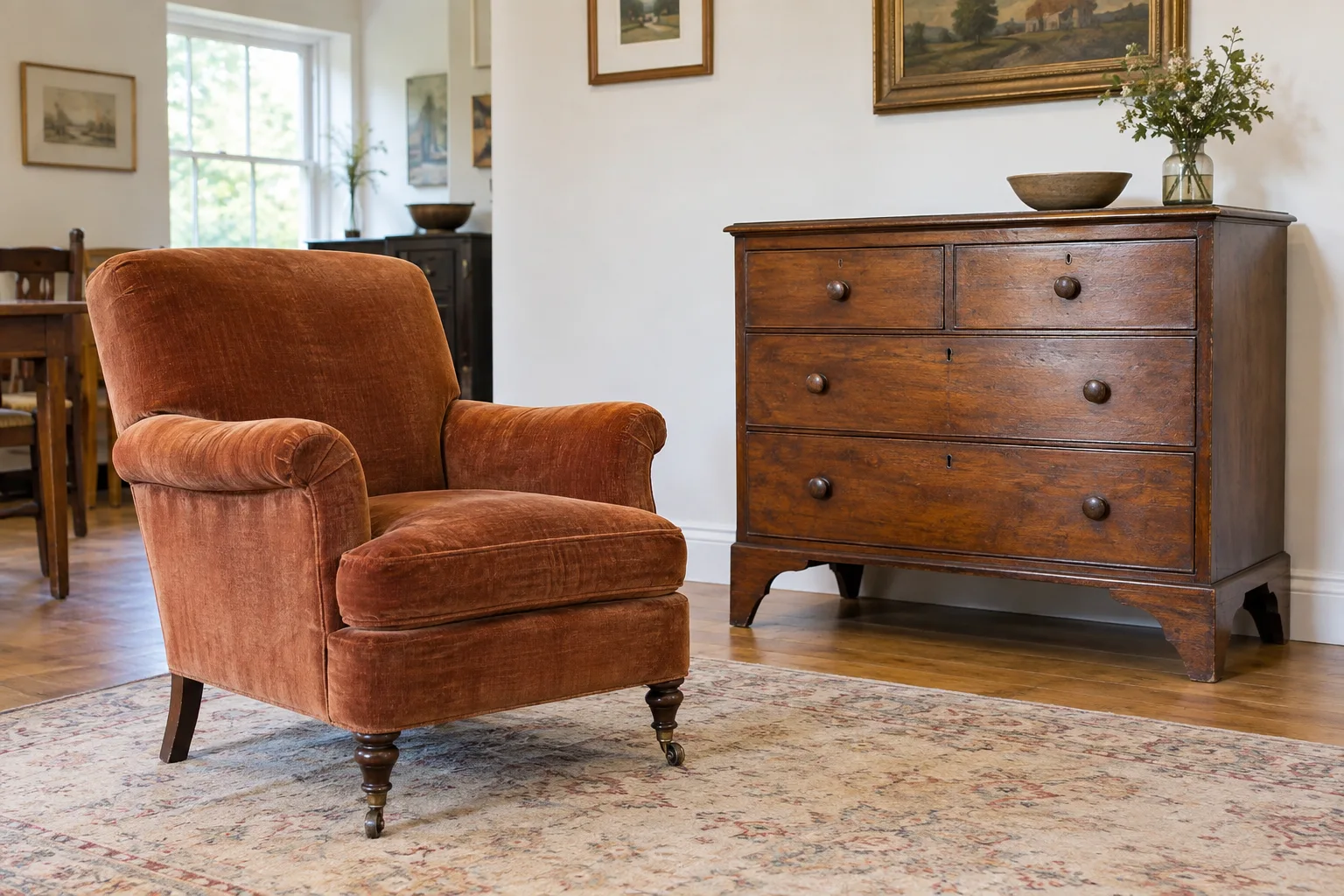
Get the history before choosing a remedy
The proportions are right, the price is tempting, and the seller has left the doors open “to freshen it up”. With tobacco odour, the useful first question is not which household product to buy. It is what you would actually be bringing home, and what you are prepared to change or replace.
Ask whether the piece lived in a smoking household, how long the seller has had it and what cleaning or deodorising has already been done. Keep “not known” as an answer. A dealer who acquired it recently may be able to describe the present smell without knowing years of earlier use.
The research term thirdhand smoke describes tobacco-related contamination that persists in materials after smoke has left the air. A Berkeley Lab research review identifies furniture among those materials and describes residues that can remain on surfaces and be released again. This is why the room smelling clearer is not the same as the piece having been assessed.[1]
Record a noticeable odour without turning it into a measurement of exposure. Smell alone cannot tell you how much residue is present or establish that a piece is cleared for your home. If the history leaves you uncomfortable with the intended use, you do not need a diagnosis to choose another item.
What would have to change to make it usable?
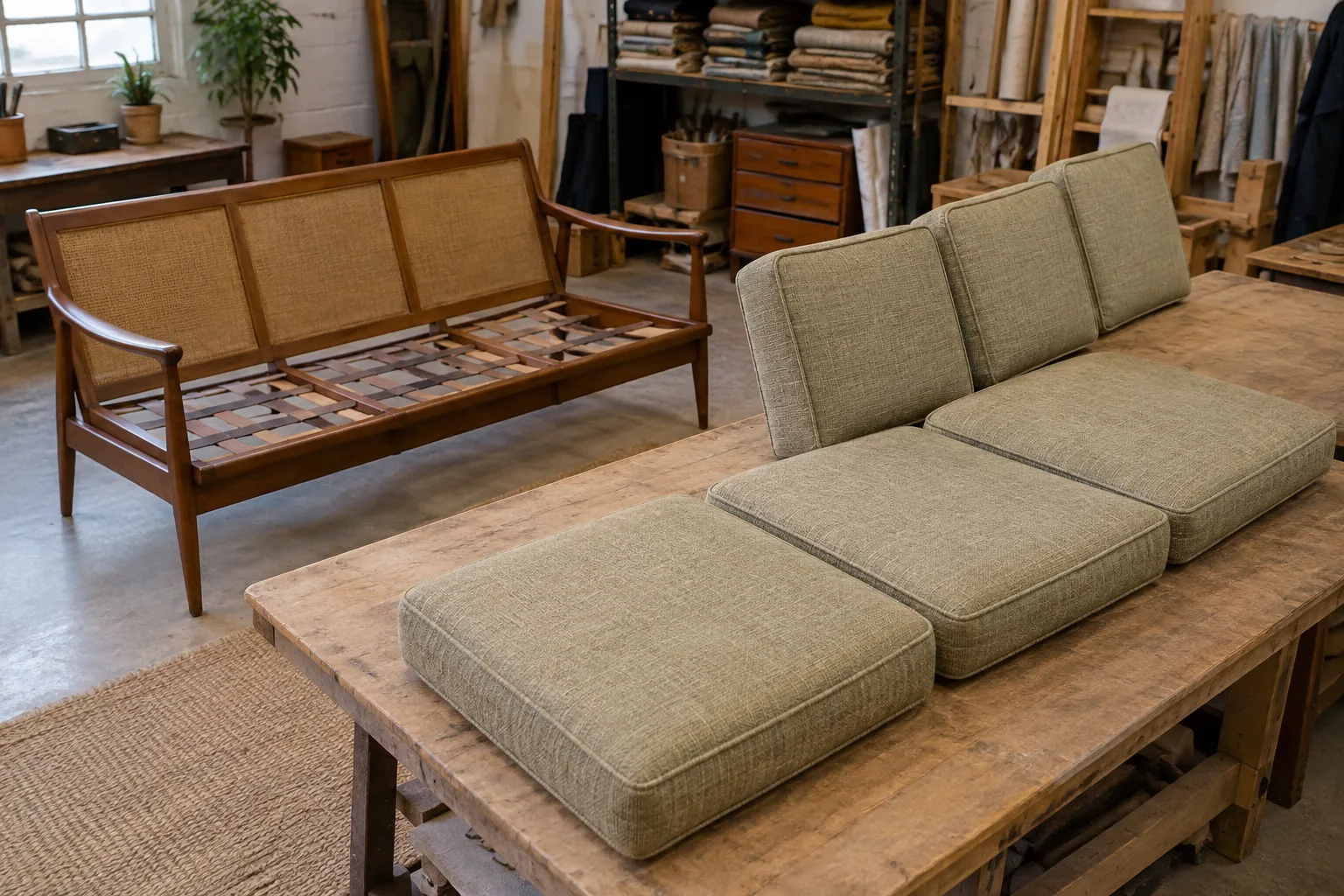
Compare two plausible purchases. An open wooden sofa has loose cushions that can be identified and quoted separately, but its frame and support still need consideration. A tightly upholstered armchair may have fabric, padding and other materials enclosed within it. A cleaning quote for the outer cloth is not a quote for everything inside.
A chest has a different set of questions: coated exterior, drawer interiors, bottoms, back panels and stored contents may not share the same treatment limits. Do not assume a glossy exterior means every part can be wiped in the same way. The existing wood-care Guide helps distinguish those surfaces; it is not a tobacco-removal protocol.
List the parts you intend to keep, the parts you could replace and the parts that cannot be inspected without professional work. Send that list to a suitable restoration or upholstery specialist. Ask what assessment they can provide, which treatments they recommend for those materials and what result they can responsibly describe.
If the appeal depends on retaining original upholstery, say so at the start. A proposed complete rebuild may remove precisely the material you wanted to preserve. Conversely, replacing loose cushions may be an acceptable choice if the rest of the piece has a suitable assessed route to use. Let the construction and your goal shape the decision.
Fresh-smelling is not a treatment record
Ask the seller to name products and services already used. “Professionally cleaned” should lead to a description of the scope: which surfaces, which removable parts and whether any filling or other material changed. Request the available record rather than relying on the strength of a new scent.
Do not turn an ozone machine into a home restoration experiment. EPA explains that ozone can harm health and, at concentrations within public-health limits, is not effective at removing many odour-causing chemicals. It can also react with indoor materials. A seller’s “ozone treated” claim therefore needs a specific professional account; it is not a clearance certificate.[2]
Likewise, bowls of coffee, fragrance sprays and a day beside an open window should not decide a purchase that depends on residue removal. They do not give you the missing construction assessment or a documented result. Avoid adding another treatment before a specialist has assessed what is already present.
For an item already at home, avoid moving it repeatedly among furnished rooms while experimenting. Arrange appropriate advice and handling for the circumstances, especially if anyone finds the odour irritating. Do not choose a treatment schedule or safe-use deadline from the strength of the smell.
Choose the project before booking collection
Write down what must be resolved before the piece suits its intended job. A drawer for bedding, an armchair used every evening and a display cabinet are different uses. This is a practical fit decision, not a reason to invent a “safe” room for an unassessed item.
A useful enquiry before purchase
Please describe known tobacco exposure and every cleaning or deodorising treatment. Identify removable covers and cushions, replaced filling and any retained material that was not treated. I need an assessment and written scope for the complete piece before collection, including the limitations of the proposed result.
Add assessment, agreed cleaning or replacement work and transport to the price. Compare that figure with a similar piece without the same unresolved history. A low asking price is only useful when the project, available help and eventual use are all acceptable to you.
For a purchase you have not made, walking away is a complete decision. For an existing piece you value, the next useful step is a qualified, material-specific assessment. Neither decision needs to begin with a shopping basket of untested remedies.