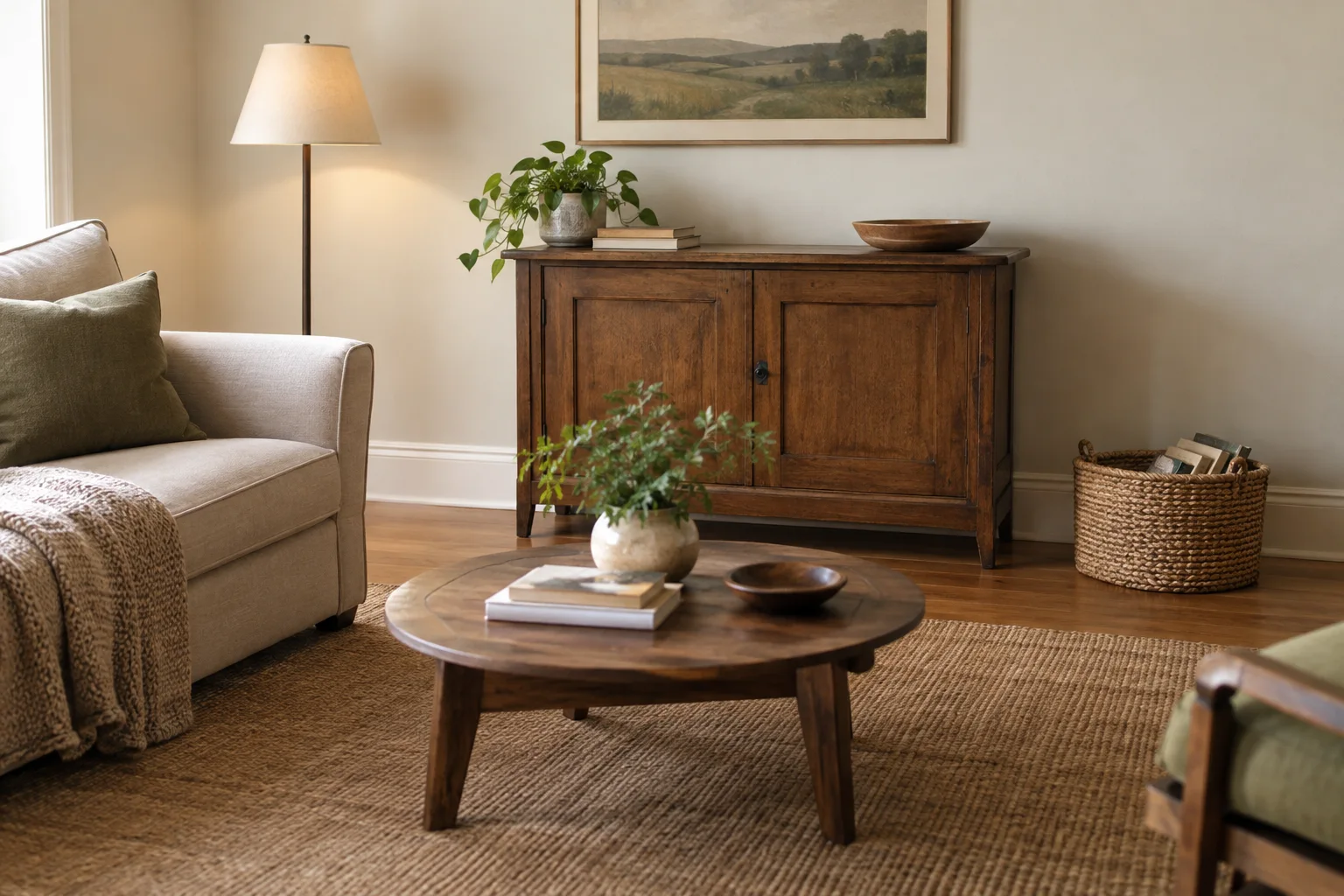
Start with what happens in the room
Picture a child looking for a book, reaching a game on a shelf or pulling up beside the sofa. Where will they go, what can they grab and which drawers will they open? Mark those activities on a simple room plan before falling in love with a particular cabinet.
You do not need to remove all character from the room. An older dining table, a sound chair or a low cabinet can still be a considered choice. The useful question is what needs to happen for this exact item, in this location, to be appropriate for the people who will use it. Include visiting children in that plan.
Treat the cabinet and its anchoring as one purchase
CPSC’s Anchor It guidance calls for securing furniture and televisions against tip-over and keeping tempting objects off their tops. It advises following the relevant instructions and using furniture intended to support a television. These prevention principles apply to the room layout; a reassuring push during a viewing is not a safety test.[1]
Before buying an older chest, wardrobe or shelving unit, ask how a competent installer would anchor that particular construction to the actual wall. A thin back panel is not automatically an adequate fixing point. The choice depends on the furniture, the wall and suitable hardware; do not copy a generic screw position from a photograph.
Tell the installer about loose joints, past repairs, removable tops and delicate finishes. If a sound anchoring solution cannot be established, choose another piece or another use. Closing drawers, placing heavy belongings low down or supervising the room does not remove the need to resolve tip-over risk.
Furniture can make another hazard reachable
A chair, chest or sofa placed below a window can give access to cords that were previously out of reach. RoSPA advises positioning furniture away from windows and addresses blind-cord risks separately from furniture stability. Include the window treatment in the room decision rather than treating the cabinet in isolation.[2]
Trace lamp and electrical cables through the room as well. A low side table may make a cable easier to pull; a decorative lamp may be a poor neighbour for a frequent play route. Have old lighting professionally assessed and arrange it so normal activity does not turn its cable or fragile shade into something to grab.
Do not improvise cord modifications or assume moving a loop slightly higher is a complete fix. Follow the current guidance for the actual product and have unsuitable window treatments addressed through the appropriate route.
Give the furniture a job that suits the household
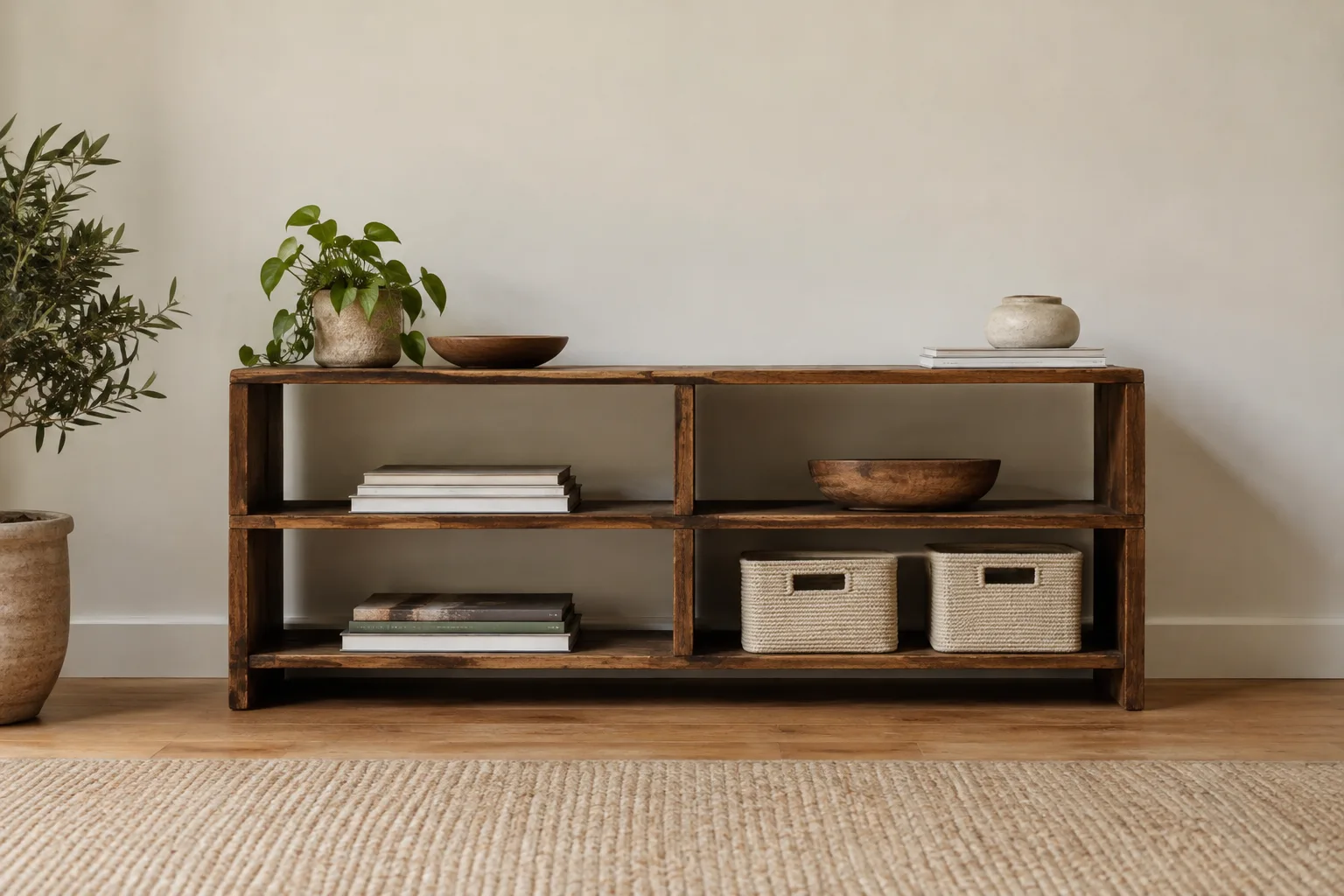
Keep regularly used books and games in suitable low storage so a high drawer does not become the route to everyday belongings. Avoid placing an attractive display on top of a cabinet that invites reaching or climbing. Low storage still needs its own stability and condition assessment; low is not a safety certification.
Choose a drawer or door arrangement that you can use comfortably while supervising ordinary activity. Ask about missing stops, loose hinges, sticking doors and sharp or damaged edges. A catch added for child resistance does not repair a failed joint or replace anchoring.
Glass, stone and loose tops deserve an explicit decision. Check chips, support and the way the top is retained; appearance cannot establish glass type or adequate strength. If you cannot resolve the material and support for the intended use, choose a different table rather than treating a padded corner as the whole answer.
An old cot is a different decision
Do not extend this room-planning advice into approval of an antique cot, cradle or other sleep product. Health Canada’s guidance for used cribs, cradles and bassinets specifically addresses age, missing or damaged parts and obtaining replacements from the manufacturer. Other destinations have their own current requirements and recall information. Use the guidance for the exact product and country.[3]
The same care applies when an ordinary cabinet is repurposed as nursery equipment. A pleasing height or old-fashioned appearance does not establish that it is suitable for a new safety-critical function. Choose the purpose-built product and current instructions for that task.
For ordinary painted vintage furniture, resolve any concern about an unknown or deteriorating coating before sanding or using it in a child’s room. The separate painted-furniture Guide covers that enquiry. Do not infer a coating’s composition from its colour or a seller’s guess.
Arrange repairs and installation before everyday use
Write the needed work into the budget: examination, accepted repairs, suitable anchoring, installation and any change to the surrounding room. Agree who will complete each item and when. Furniture waiting for those decisions should not quietly become the room’s everyday storage.
Message before buying
This [piece] is intended for a room used by children. Please confirm dimensions, construction, loose joints, past repairs, drawer stops, hinges and any glass or removable top. I need to establish suitable anchoring to my actual wall with a competent installer and complete necessary repairs before use. Please send the safely visible back and underside, and identify the model so I can check relevant instructions and recalls.
The best family-room choice is the piece whose condition, placement and installation you can actually resolve. Its age can be part of its appeal without becoming an excuse to leave those decisions for later.