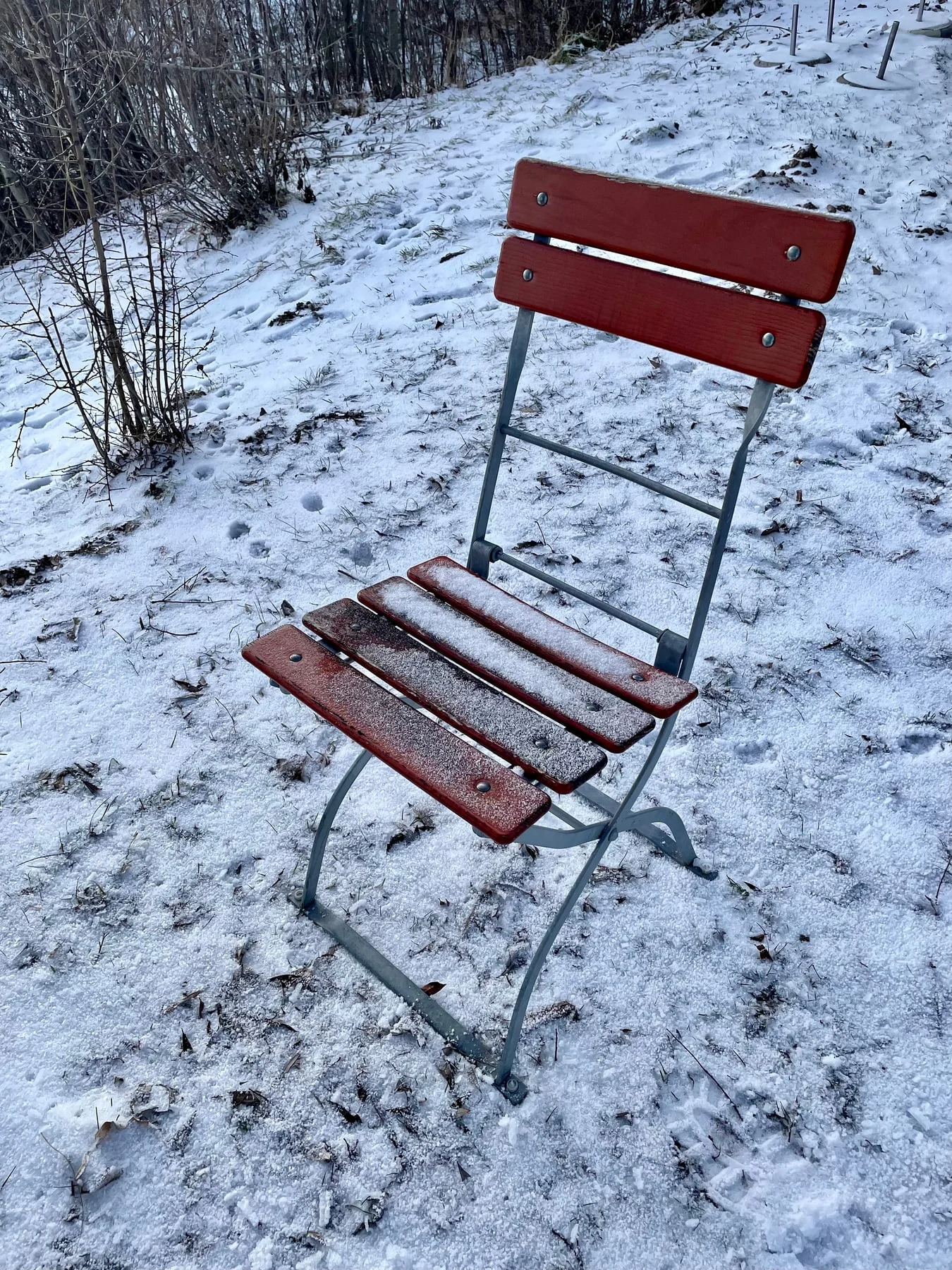
Ask to see the chair open and close
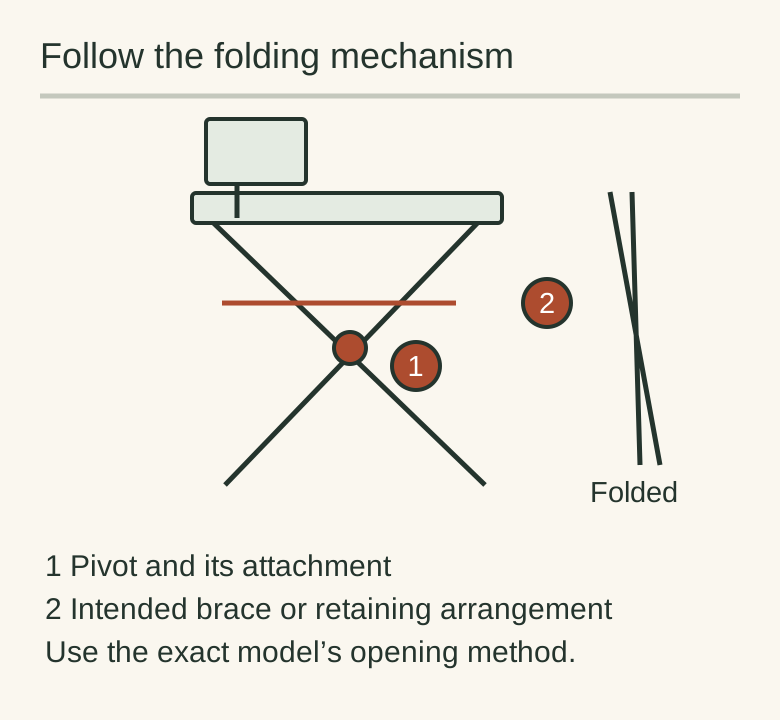
A seller’s photograph usually shows the pleasing profile or a neat folded stack. Ask for a slow demonstration with the chair empty on a firm surface. Watch how the seat, legs and any braces arrive at their intended positions, and how they are released for folding.
Keep hands away from crossing members and closing gaps. Do not ask somebody to force a stuck mechanism or sit on a chair whose support is uncertain. Some designs use a positive catch; others depend on a particular geometry. Establish the intended arrangement from the exact maker’s instructions or a competent assessment, rather than adding an improvised latch.
Inspect the moving connections
Look closely at pivots, rivets, screws, slots and stops. Photograph bent parts, enlarged holes, missing fasteners and repairs. A screw that resembles the one on the other side is not necessarily the specified replacement. Compare the complete left and right assemblies, including anything concealed by the seat.
If the seat is woven, upholstered or made from stretched fabric, its condition is another question. A sound folding frame does not establish that an old seat can carry a person. Keep both the supporting structure and the seat material in the inspection record.
Check recall information before buying
CPSC’s 21 December 2023 TJX recall of certain foldable wood-and-rope bistro chairs concerns collapse and a fall hazard. It demonstrates why a chair that looks intact can still need a model-specific recall check. The notice applies to the identified products, not to all folding chairs.[1]
Photograph labels, model information and other identifiers, then use the manufacturer and relevant national recall service for the market where the piece was sold. A visual resemblance to a recalled chair needs clarification, and failure to find a result does not establish safety.
For an affected product, follow the current recall instructions and do not proceed on the basis of an undocumented repair. For an unmarked vintage chair, ask a suitable furniture specialist what can actually be established about its mechanism and condition.
Make the folded size earn its place
Check storage as well as seating
- Folded envelopeInclude projecting feet, hinges and handles, not just the seat width.
- RetrievalCan one chair be removed without a stack falling or scraping?
- Chair-to-table fitCompare the occupied seat and underside clearance in the open state.
- Floor contactCheck the intended feet or pads and the actual surface where it will be used.
Do not assume a folding chair is intended for outdoor use. Ask about the specified environment and the treatment history. Equally, do not use a chair as a step stool simply because its frame feels stiff.
For a mixed group, number each chair. A replacement pivot or a damaged seat may occur on only one. Buying six similar-looking chairs should result in six condition decisions, not one representative photograph.
Ask for a complete demonstration record
Ask the seller
Please send the labels, folded dimensions, both sides of the mechanism and a continuous empty-chair opening and closing video. Are any pivots, braces, catches or seat materials replacements, and what instructions or recall checks are available for this exact model?
Choose folding seating when the mechanism, seat and storage routine all make sense. If the open position remains uncertain, a compact stack is not yet usable guest seating.