Test two pieces of furniture: the chair and the stack
A spare dining chair often spends more time waiting than seating a guest. That makes the stored arrangement part of the purchase. Mark a place in a cupboard, study or dining-room corner, then try the number of chairs you expect to keep there. Check whether you can lift one out without hitting a shelf or door frame.
At the table, notice the shape and height of the seat, the contact of the back and whether the frame gets in the way of your feet. If you are buying six, try more than the best-looking example. A set assembled over time can contain different shells, padding or frame versions even when the colour appears consistent.
For the design’s story, read 40/4: the chair designed for the room after the meeting in the Furniture Library.
Forty applies to a specified arrangement
HOWE’s November 2025 European product description distinguishes stack limits by configuration. For the listed veneer or polyamide side chairs it gives 40 on a dolly and 20 on the floor. Its upholstered side-chair arrangement has a different limit. Those are current manufacturer specifications for identified products, not a condition assessment or blanket permission for unidentified older chairs.[1]
| Claim | Information still needed |
|---|---|
| “Stacks 40 high” | Which version, which dolly and what manufacturer instructions apply? |
| “All 40/4 chairs” | Are these side chairs, armchairs or another size, and do the seat and frame versions match? |
| “Stackable with the others” | Are the intended contact points and protective components compatible and intact? |
| “Only a small pile at home” | Does the actual pile sit predictably, and can one chair be lifted out without forcing it? |
Use the current document to ask a better question about an older set. Send the identification details and whole-chair photographs to HOWE or a knowledgeable supplier if the edition is unclear. Do not substitute a catalogue maximum for a sensible storage plan.
Look where one chair touches the next
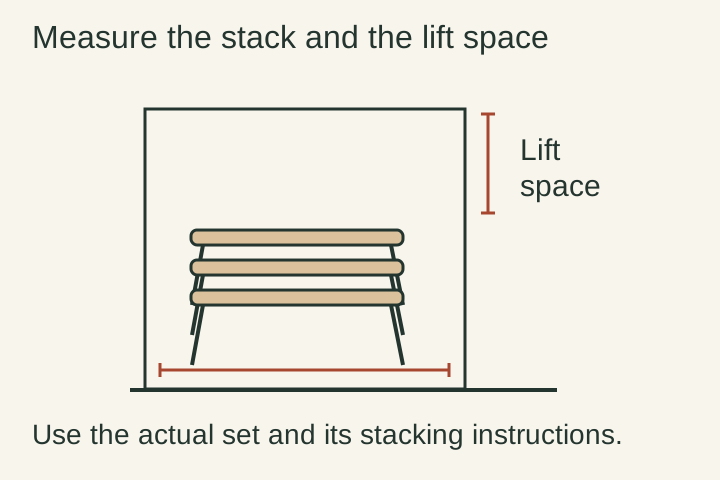
Ask the seller to show the chairs separated and in a low, correctly formed stack. Look for missing or damaged protectors and for repeated scratches at places where one chair is contacting another. A scratch is not proof of a structural fault, but a pattern may reveal incorrect stacking or missing protection.
Inspect the slender frame for distortion and earlier repairs. A chair that will not settle with its companions should not be forced into alignment. Check the seat and back attachments as well as the floor glides; a shiny frame can distract from a loose seat or a glide that will damage your floor.
With a mixed group, number the chairs and record material, dimensions and fittings. Confirm compatibility before mixing different versions in one stack. Upholstery adds bulk and can change both the contact and the stored height.
An illustrative six-chair plan
Imagine a household using two chairs daily and storing four for guests. The useful demonstration is two chairs at the actual table and a four-chair stack in its intended place. Measure the stack’s widest footprint and total height, then check the movement needed to lift the top chair free. That answers more than a photograph of forty chairs in a hall.
Include the route between storage and table. A stack that fits inside a cupboard but cannot turn through its doorway is not convenient storage. Move chairs only in a manageable way appropriate to their condition and instructions; the fact that they stack does not make the whole pile easy to carry.
Price missing glides or protectors across the entire group, plus any seat repairs. A slightly smaller matched set can be more useful than a larger cheap lot with several incompatible or damaged examples.
Ask for a short, low-stack demonstration
Message to adapt
Please show every chair separately and the intended small stack from the side, including the contact points and glides. Are all frames and seats the same version, and which protective parts are missing? I need the dimensions of a four-chair stack and confirmation of the appropriate stacking instructions.
The attraction is a dining room that can change jobs without a cupboard full of awkward folding mechanisms. Make sure the chairs work just as well while waiting for guests as they do when everyone finally sits down.