The shell is only part of the chair
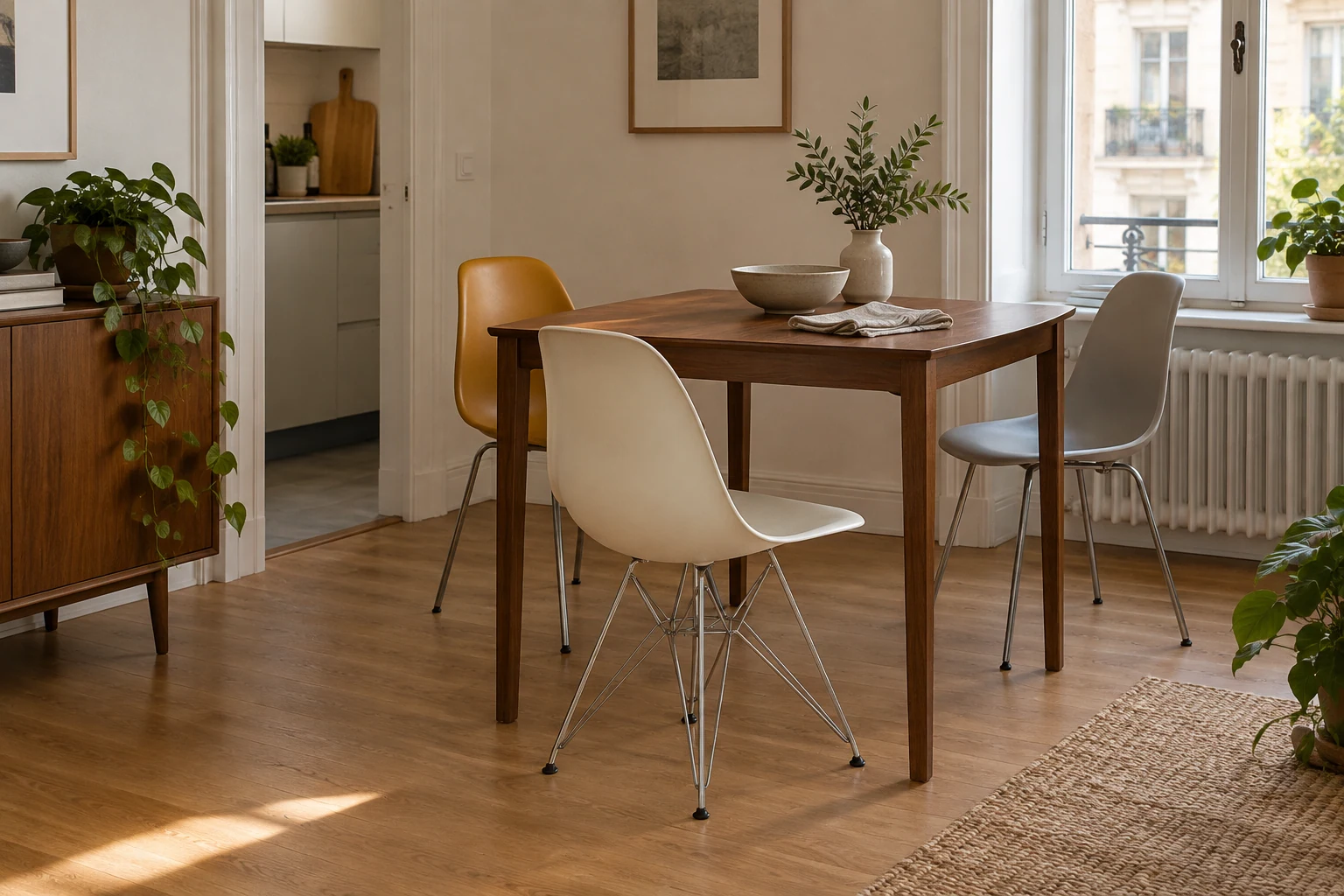
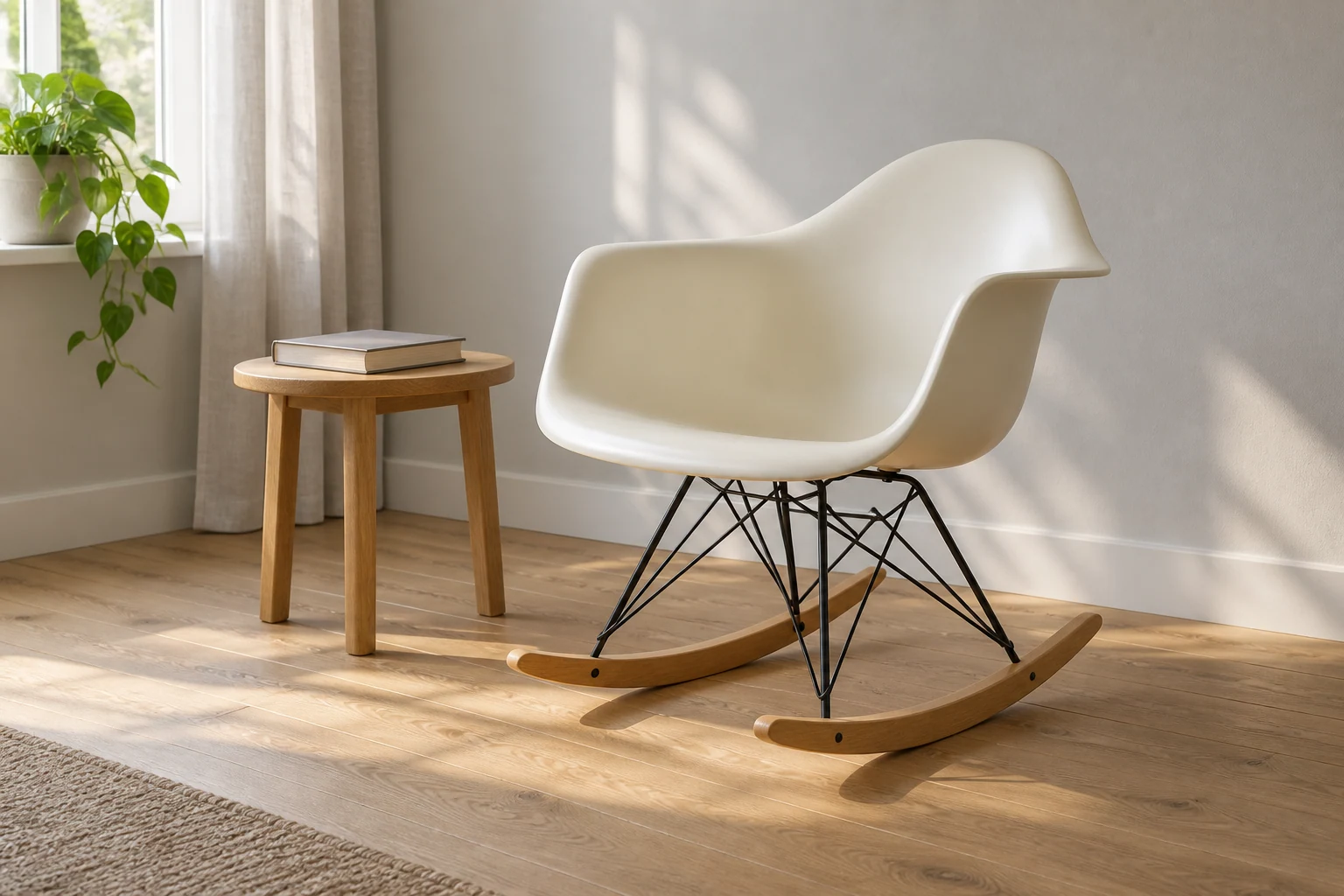
The pleasure of these chairs is how much character comes from a small change: an ochre seat around a wooden table, a wire base that almost disappears, or a rocking base in a reading corner. That variety also makes a short listing title surprisingly incomplete.
Eames Office describes a shell family developed around interchangeable base choices and rubber shock mounts. Its account also distinguishes the earlier fibreglass development from later material versions. Start by asking the seller which shell, material and base they are offering, and what supports each answer.[1]
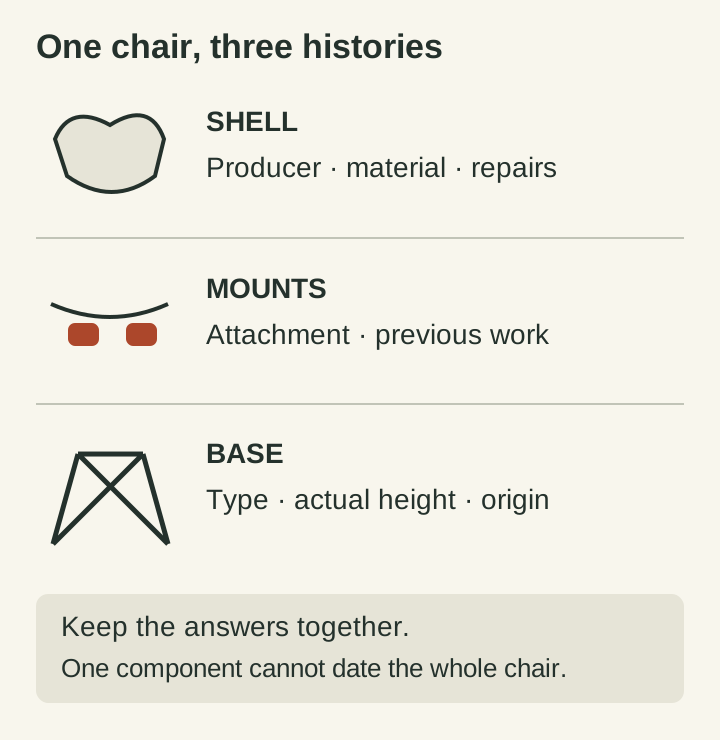
Keep three notes beside the listing: shell history, base history and attachment work. An invoice for a replacement base explains that part of the object. A mark on the shell may help research the shell. Neither record automatically explains the other component, or establishes that this combination left the factory together.
For a dining set, repeat the record for each chair. Six shells in the same colour can have different bases, repairs or seating heights. A mixed set can be an enjoyable choice; it becomes frustrating when you discover the differences after arranging it around the table.
Give the production claim a specific meaning
Eames Office names Herman Miller and Vitra as its furniture manufacturing partners. Use those producer records to begin the comparison, then look for evidence tied to the offered object: an identifiable purchase record, legible marks in context and construction that belongs with the claimed version.[2]
A useful date check comes from Vitra’s Eames Plastic Chairs RE. Vitra introduced the recycled-plastic material under that designation in January 2024. If a seller describes the same shell as both “1960s” and “Plastic Chair RE”, ask them to resolve the wording. The modern designation does not support the earlier shell date.[3]
That inconsistency is a research question, not a complete authenticity verdict. The seller may have copied a current product name, fitted a recent shell to another base or misunderstood the object. Request the evidence before assigning an age. Avoid dating a shell from colour, yellowing or apparent fibre texture alone.
For the broader design story, read the Eames shell-chair Library entry. Keep the buying enquiry attached to the particular assembly and its documented changes.
Ask what happened at the attachments
The underside deserves an unobstructed photograph. Ask for each attachment in context and for a plain account of any remounting, adhesive work, added holes or replaced fittings. A tidy top surface can coexist with a repair beneath it that deserves a specialist’s attention.
Vitra Circle’s Campus workshop explicitly lists bonding shock mounts for Eames Fiberglass Chairs among its services. That provides a real place to begin an enquiry about a suitable Vitra example. Send the workshop photographs and the production details first; the published service list is not an acceptance or a fixed quote for every chair.[4]
Ask the assessor whether the shell and attachment areas can support the intended repair, what earlier work must be addressed and how the base fits the assembly. Have them separate structural work from cosmetic cleaning. Do not use a viewing to flex a suspect shell, pull a mount free or test how much an old repair will withstand.
Choose the base for how you will sit
At a dining table, measure the floor-to-seat height on the offered chair and compare it with a chair you already find comfortable there. Try the usable space beneath the table apron. For an arm-shell chair, also check whether the arms meet the tabletop or stop it moving close enough for a meal.
For a rocker, look beyond the space occupied while it is still. Allow for the runners’ movement, the route past the chair and the surface it will stand on. A chair that looks delightful beside a low table may not give you the upright position you want for eating or long periods at a desk.
If the plan is to change the base after purchase, get compatibility and the resulting dimensions confirmed before buying either part. Include the base, suitable fittings and any necessary mount work in the cost. A cheap shell can become a more expensive project than a complete chair you already like.
Decide what you want to preserve
Choose an older assembly for the particular surface, version or history you value, and explain that priority to the repairer. Choose a documented combination of old and later parts when its appearance, fit and repair plan satisfy you. In either case, save the component record with the purchase so the next owner can understand it too.
A message for the seller
Could you identify the shell and base separately, with photographs of the whole chair, underside and marks in context? Please explain any replacement base, mount work, added holes or other repairs, and send the actual seat height. For a set, could you show each chair and identify any differences? I would also like the records supporting the production period you give.
The strongest offer gives you a chair you want to use and enough information to understand its assembly. Leave an unresolved production claim out of the premium you are willing to pay, and settle any doubtful attachment before treating the chair as ready for daily use.