Why the numbers in listings can disagree
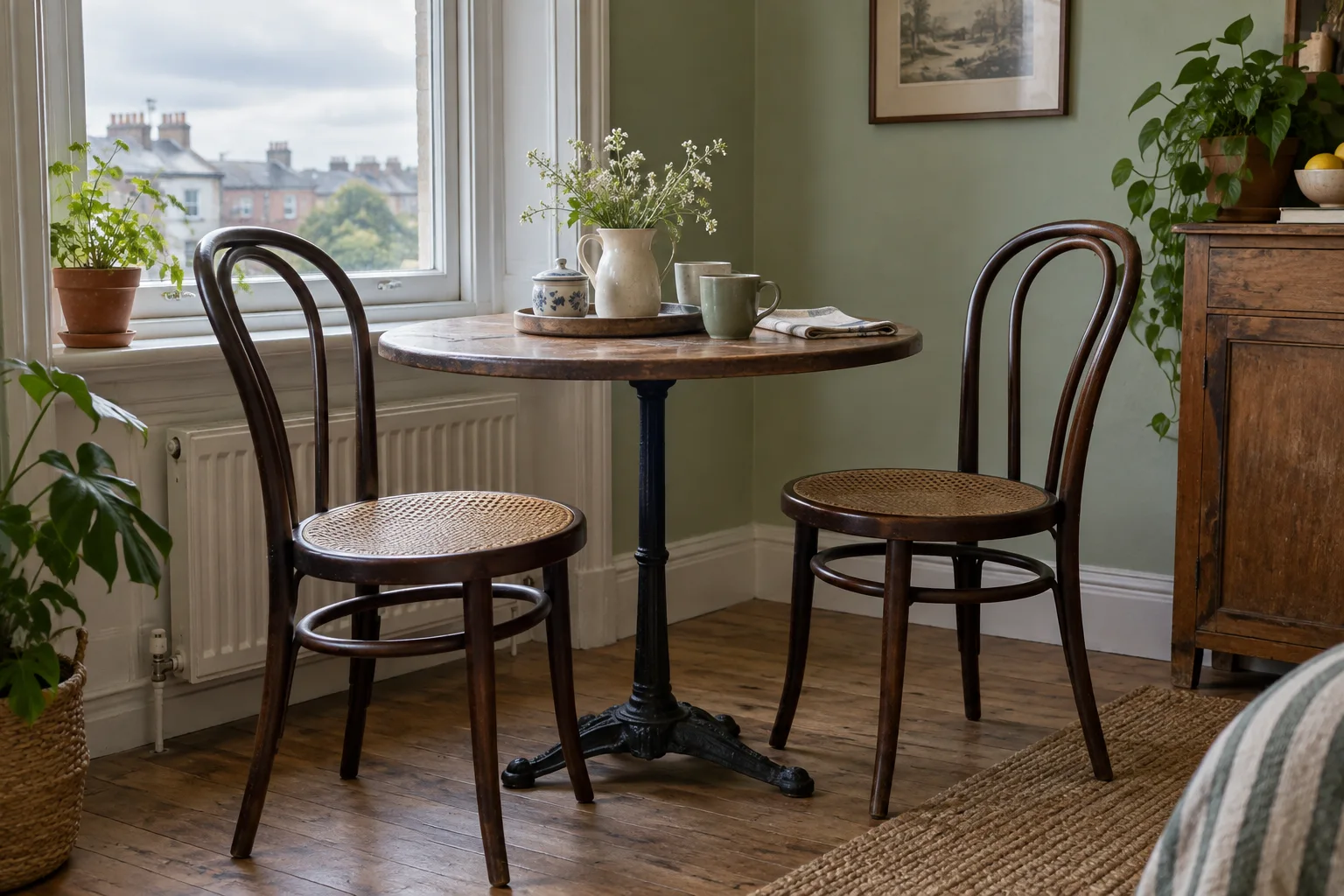
Bentwood chairs are appealingly economical: curved members do several jobs without making the chair look heavy. That familiar outline also encourages imprecise descriptions. “Vienna chair”, “bistro chair”, a model number and a manufacturer’s name may all appear in one listing, even when only the broad type has been established.
Thonet’s current reference connects the 1859 No. 14 design with model 214. Its 218 page connects the No. 18, introduced in 1876, with the distinctive inner hairpin-shaped back. Both current families include different seat options. These are manufacturer references for sorting a search, not a dating chart for every similarly curved chair.[1][2]
| Question | Evidence to look for |
|---|---|
| Which design family? | The complete back, side profile, seat ring, legs and stretchers. |
| Which producer? | Readable marks in context, purchase history and the relevant maker’s records. |
| Which period? | Documented production details or a connected receipt; a design year is not enough. |
For example, the current 214 reference gives 43 cm width and 46 cm seat height. Measure an older chair instead of assuming it has those dimensions. A replaced seat, altered legs or a different manufacturer may explain a mismatch; none should be diagnosed from a single number.[1]
Use one real chair as a reference, not a universal specimen
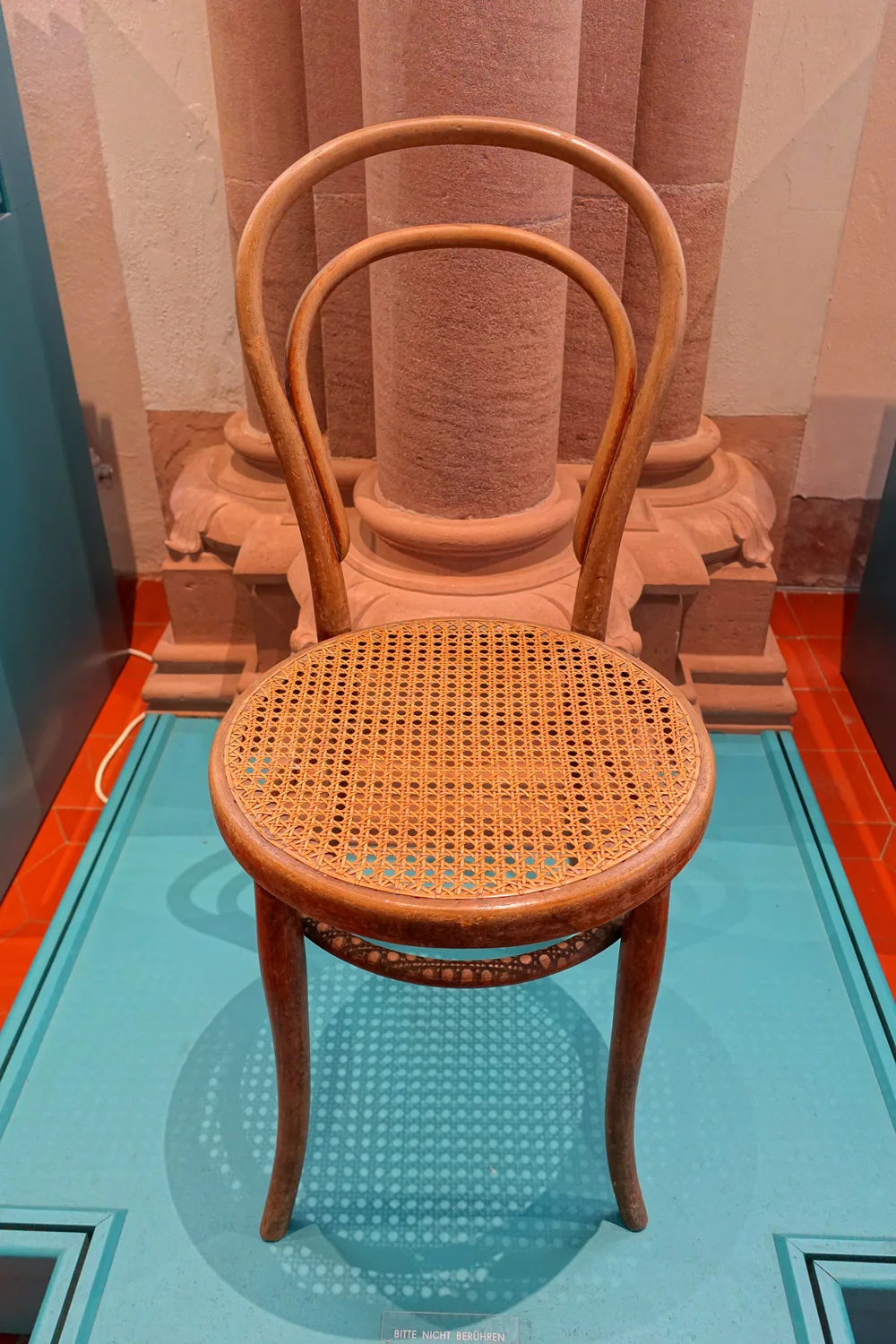
The linked Daderot photograph records a No. 14 at the Germanisches Nationalmuseum: the design is dated 1859 and the example about 1920. That gap is the lesson. A chair can be a documented later example of an older design. The photograph shows its whole outline and woven seat; it does not authenticate a chair offered elsewhere.[3]
Compare your candidate from the same sort of whole-object view. Follow the outer back into the rear legs, the inner back member, the seat outline and the lower connections. Then turn to close-ups of marks. A clear stamp on a loose seat panel answers less than a mark shown in its location on the complete chair.
Ask whether any seat, back member, stretcher or foot has been replaced. A replacement may preserve useful furniture, but it changes what the purchase contains. If the seller cannot support a factory attribution, a plainly described unconfirmed bentwood chair can still be an attractive choice at a price you accept.
Look along the curves, then underneath
Request views along each curved wooden member, particularly where it changes direction or meets another part. Note open splits, repairs, crushed areas around fittings and movement during normal handling. Do not twist the back or bounce on the seat to manufacture a test. A repairer needs the location and extent of the problem, not proof that enough force can make it worse.
The seat is a separate decision. Check whether the offer has cane, plywood or upholstery and ask if that is its documented arrangement. An upholstered pad can make a chair pleasant to sit in, but it should not hide a failed original seat or prevent an assessment of its support.
For cane, ask for the top, underside and the way it meets the seat frame. Hand-woven cane and a pre-woven panel use different attachment arrangements; ask a weaver which is present before requesting a price. A quotation for a generic “cane seat” may otherwise describe the wrong job.
Loose connections are not automatically a matter of tightening every screw. Damaged holes, split wood and missing hardware can need a different intervention. Ask what a restorer proposes to retain and repair, and whether the chair should remain unused until that work is completed.
Choose a set for your table, not a line-up photograph
Set the chairs beside each other and compare actual seat heights. Look at how each sits on a level floor and how much room its back occupies behind the table. A mixture of cane and solid seats may be intentional and useful; unexplained differences in leg length or support deserve investigation.
Try the chairs through ordinary movements: sitting down, leaning back comfortably, bringing the chair forward and standing up. If buying online, request a calm demonstration of normal use and discuss what can be assessed on collection. An attractive silhouette cannot substitute for that missing information.
Before buying the set
Please show each complete chair from front, side and underneath, plus any marks in their locations. Which seats or wooden parts have been replaced, what repairs are known, and do all chairs have the same measured seat height? Please identify any movement or work still required.
A gently mismatched group can look at home around a kitchen table. Keep the differences you enjoy and price the work you understand. Walk away from a confident maker story that is doing the job of missing photographs, measurements or an explanation of a repair.