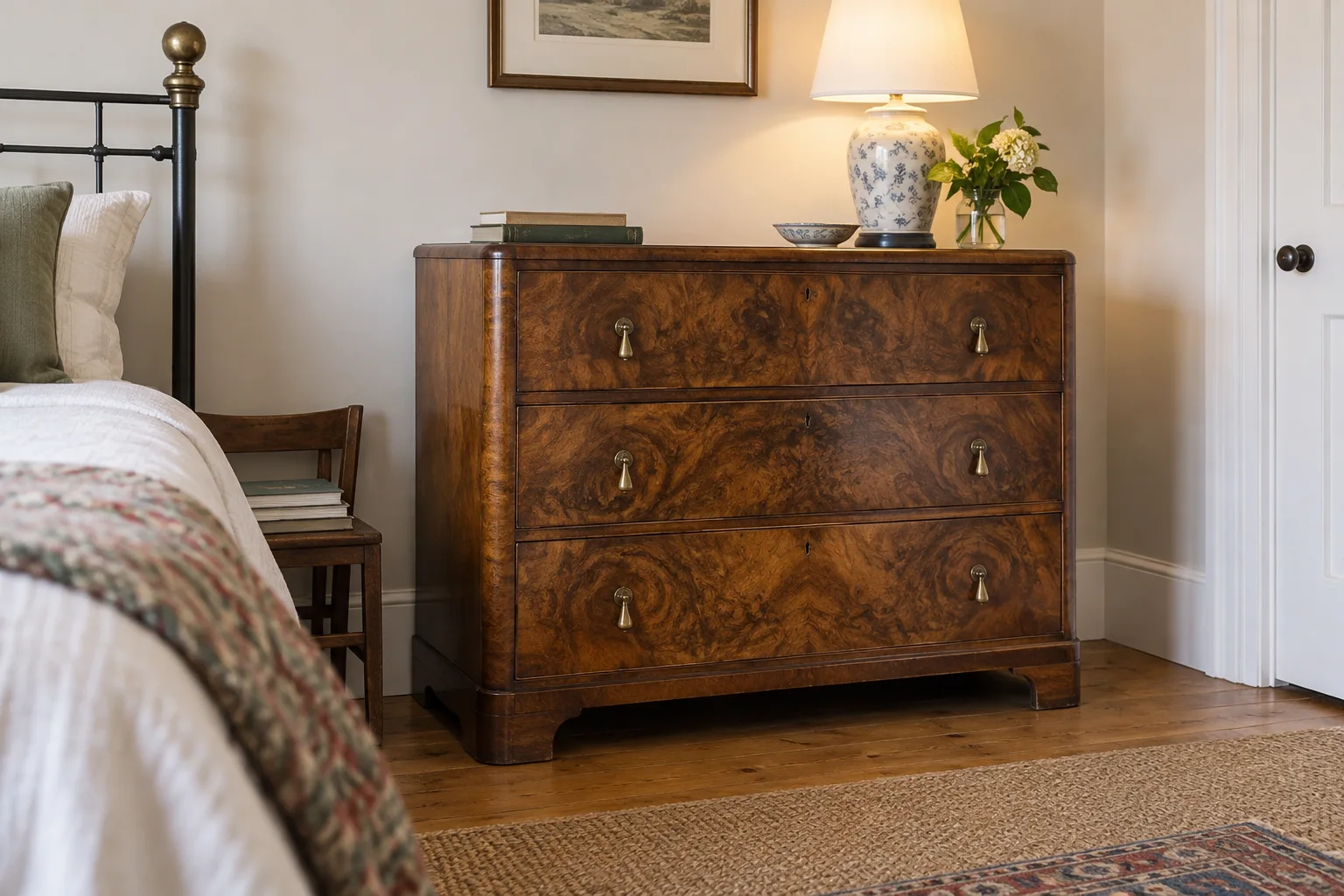
Four claims hiding inside “burl wood”
Burl can make a modest chest or coffee table the most animated thing in the room. Swirls and clusters seem to change as you walk past. That is a good reason to like a piece. It is also why a tightly cropped listing photograph can distract you from the plain sides, awkward proportions or damaged edge you will see every day.
The USDA Forest Service describes burls as unusual woody growths with disrupted grain. The word names a growth form, rather than a species. A seller who says “burl walnut” is therefore making an additional claim about the wood; “burl” alone does not establish walnut, age or origin.[1]
| Layer of the description | What to establish |
|---|---|
| Figure | Is the patterned surface described as burl, another figure or a printed effect? |
| Wood | Which species is claimed, and what supports it? |
| Construction | Which parts are solid, veneered or built on a panel core? |
| Finish | What coating or later treatment is known? |
Do not try to settle all four from a warm brown colour. Lighting, stain and a glossy finish can change the appearance. Ask for an even daylight view and an oblique view across the surface, then compare the edges, underside and any already exposed construction. Do not create a scratch or chip to make the answer easier.
Veneer can be exactly what you want
Burl’s irregular grain can make it difficult to process as large solid boards. A historical Forest Products Laboratory account discusses using figured material as veneer. A thin decorative face is therefore not evidence that the figure is fake or that a maker was cutting corners.[2]
For a documented example of layered furniture construction, the Met describes commode 25.161 as oak veneered with mahogany and North African thuya. That record identifies different materials doing different jobs. It is a useful way to read a description of an ordinary vintage cabinet too, without suggesting that your candidate has the same materials or pedigree.[3]
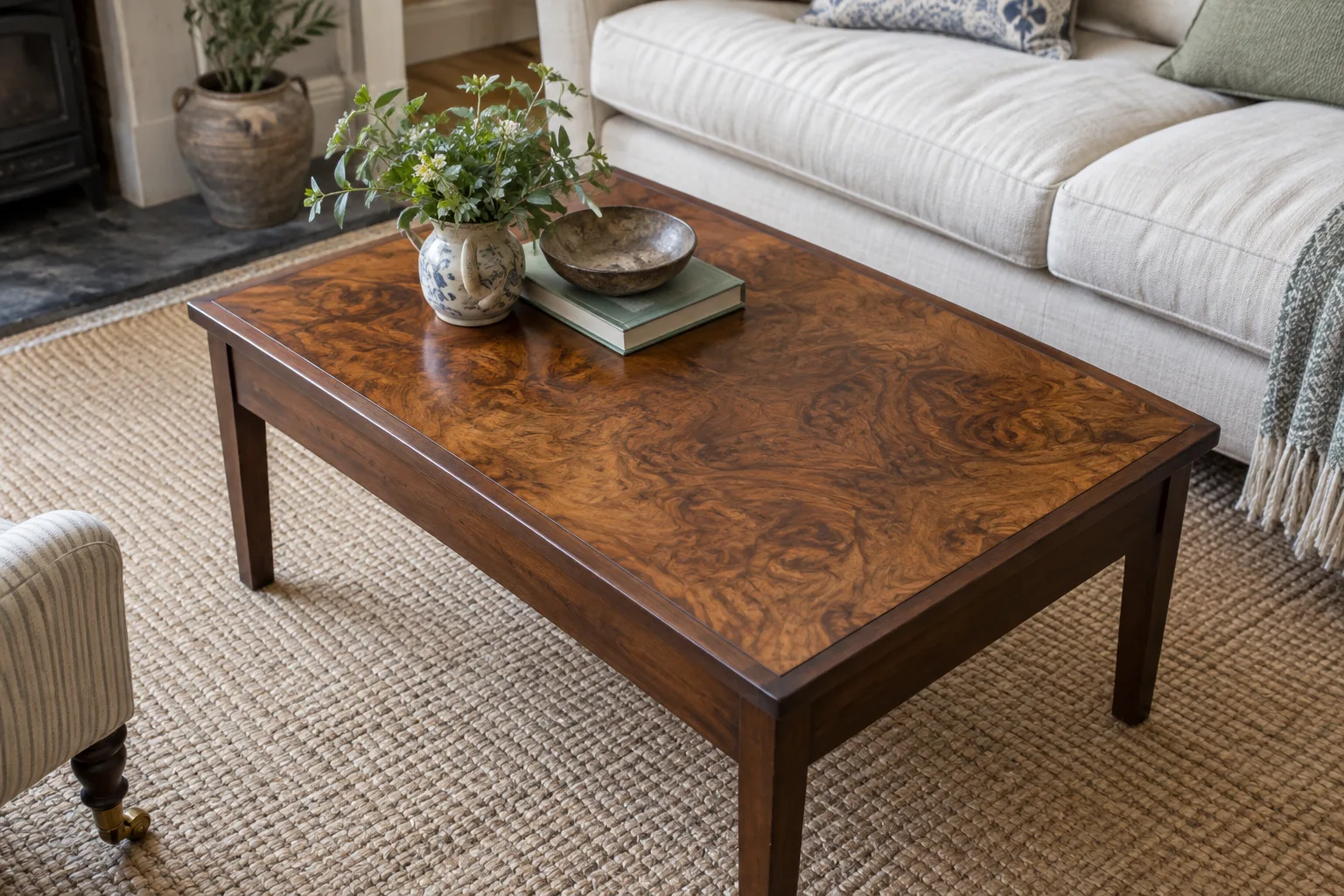
Step back and look at how the design uses the figure: one broad field, a framed panel, paired doors or repeated drawer fronts. Mirrored arrangements can be deliberate veneer matching. Ask whether the pattern continues as expected across the piece and whether the seller knows of replaced panels. A pleasing composition matters more than finding the busiest square centimetre.
Look at the plain surfaces as well. A spectacular top attached to a base you dislike is still a table you will have to live with. The proportions, knee room, handle placement and side view should earn their place alongside the decorative surface.
Let the edge and repair plan interrupt the romance
Ask for photographs of existing losses at corners and edges, raised areas, open joins and earlier patches. Keep each detail connected to a wider view so a repairer can tell where it sits. A dark line in a photograph is an observation to investigate; it is not enough to diagnose a split or a failed glue line.
Discuss the visual result of repair before its price. Matching a quiet straight-grained edge and matching a conspicuous patch inside a swirling field are different briefs. Ask for the proposed size, placement and likely visibility of the repair. “Invisible” should not be the assumption that makes the purchase affordable.
The Canadian Conservation Institute treats a furniture finish as a distinct and sometimes historically significant layer. Its appearance alone may not reveal its composition or previous treatments. Avoid buying a cloudy or scratched top on the assumption that it only needs sanding and oil. Ask a furniture conservator or experienced restorer what can be retained and what the proposed treatment would change.[4]
Send the repairer the whole question
I am considering this piece for daily use. Please look at the complete surface, these existing losses and the underside. Which construction and finish can you establish, which remain uncertain, and what would a local repair look like compared with broader work?
Give the pattern a job in your room
Try the footprint and look at the top from the positions you will actually occupy. A coffee table is seen from above when standing and at a shallow angle from a sofa. A chest is often seen from the doorway. Request those views rather than relying entirely on the seller’s most flattering angle.
If you like the figure, leave enough of it visible to enjoy. A tray can make a useful landing place for everyday objects, but a top permanently hidden beneath books and a cloth may not be where you want to spend the decorative part of your budget. Check that any protective layer is suitable for the known finish.
Compare the delivered price plus the specific work you want with an alternative you would use as it stands. An honestly described veneered piece with a small accepted repair can be a better purchase than a confidently named “solid burl” piece whose construction remains vague. Buy the surface and the furniture together.