Paper is only one part of the purchase
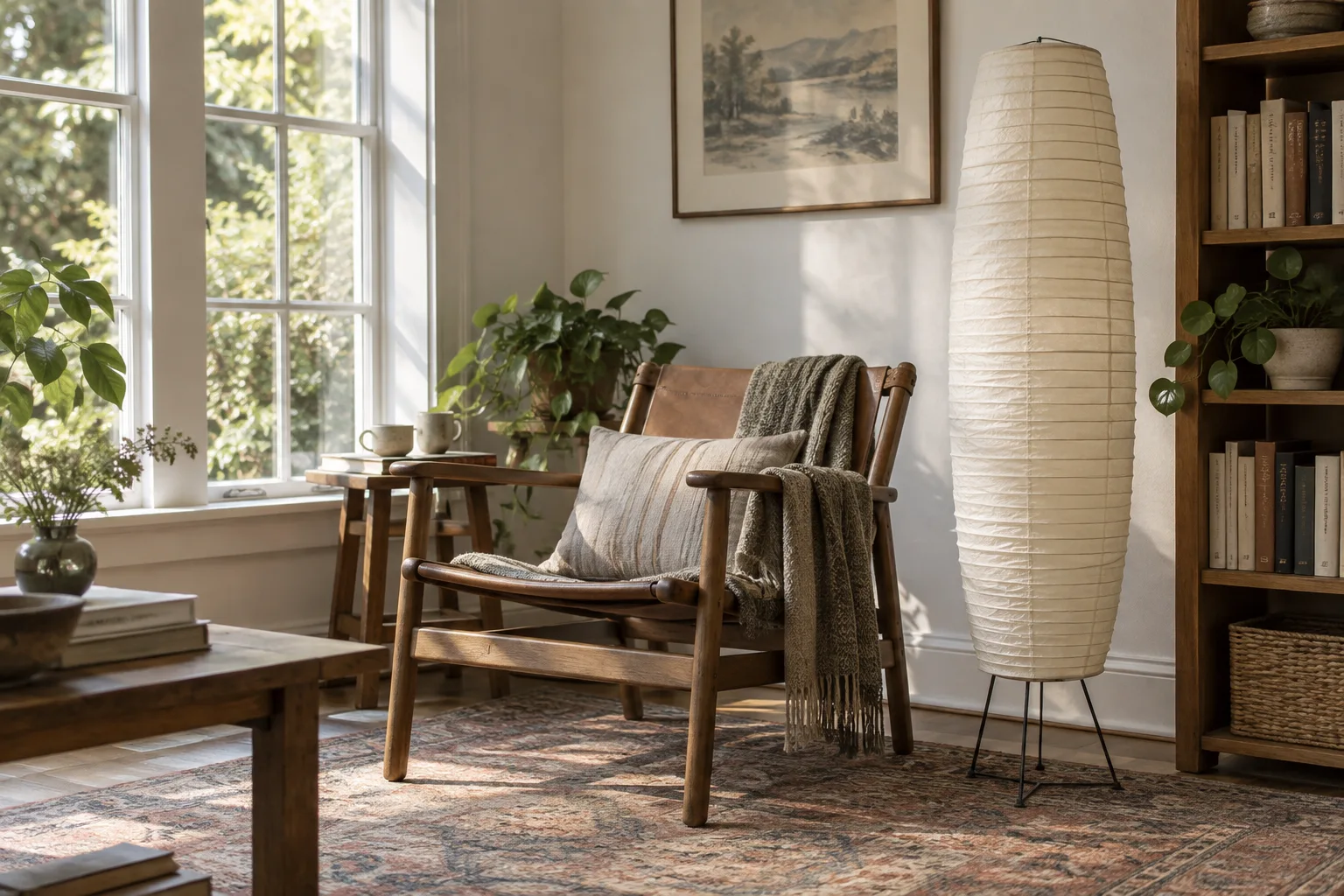
An older paper light can make a room feel settled without becoming its loudest object. The attraction may be the soft outline, the rhythm of the ribs or the way the shade occupies the space beside a wooden chair. Those qualities belong to the assembled object, not to a folded shade photographed beside a box.
The Noguchi Museum describes Akari as handmade washi paper and bamboo ribbing supported by a metal frame, with the series beginning in 1951. Its 1A page is a reference for one named table light. Use an appropriate model record to establish the intended form and supporting arrangement; a similar oval or cylinder is not enough.[1]
Ask the seller to name the model and show the complete assembled light, where it is sound enough to do so. Include its base or suspension, the upper and lower openings and any loose components. Do not ask for fragile old paper to be repeatedly collapsed and expanded as a demonstration.
Separate three claims: an authentic Akari, an older example and original paper. Receipts, ownership records and identification details can help establish them, but one claim does not automatically establish the others. A genuine frame fitted with later paper should be described that way.
Look at the paper with the light off
Start in ordinary daylight. Ask for whole views and located details of tears, open seams, flattened ribs and repairs. A warm bulb can make discoloured paper look harmonious while concealing local differences. An unlit view helps you decide whether you like the surface you will see during the day.
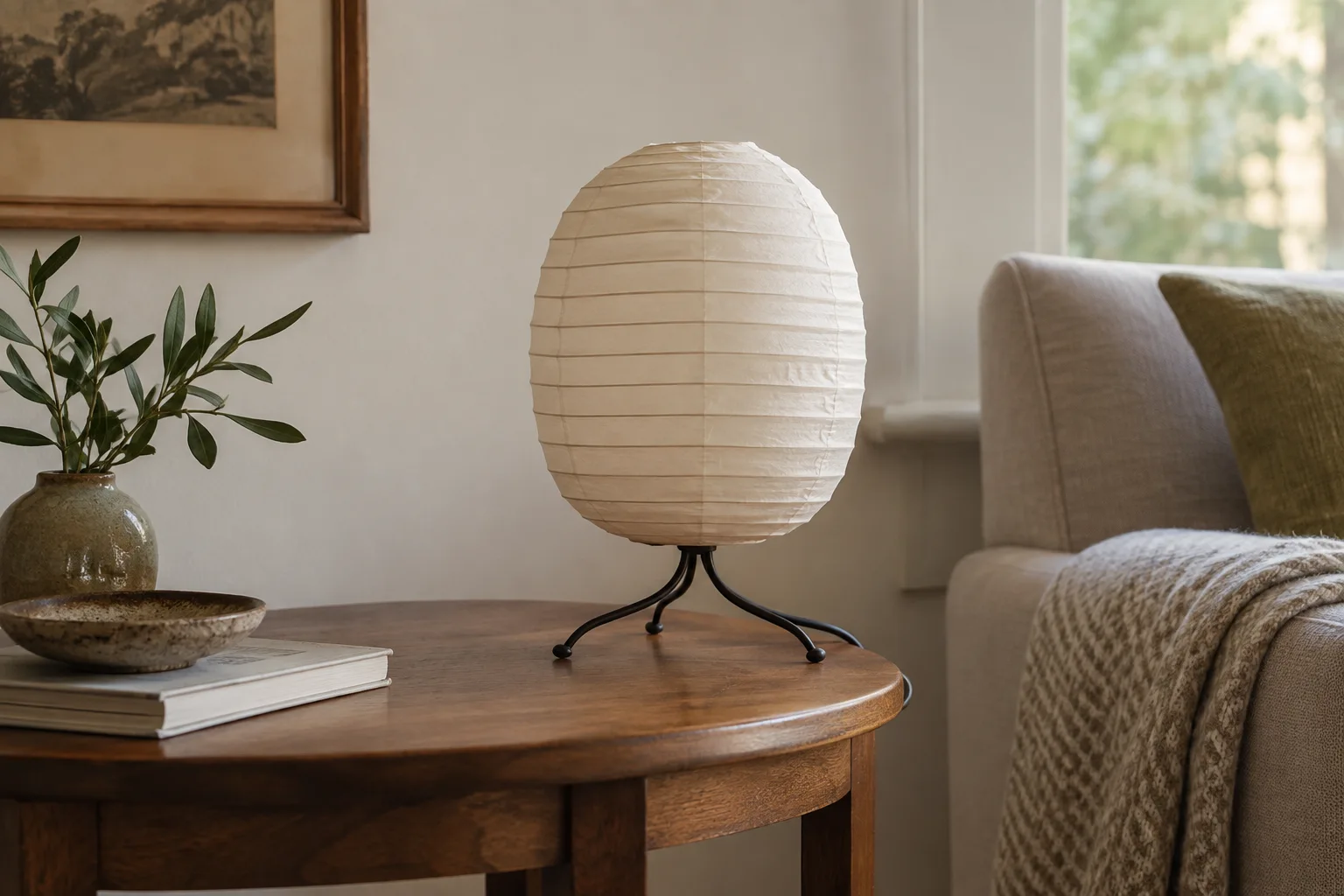
Follow a detail photograph back to the complete shade. A small repair on the side facing a wall and a broad patch in your main sightline are different visual compromises. Neither can be judged well from a close-up with no sense of scale or position.
Ask what caused known damage and who repaired it. Do not treat a yellow tone as proof of age, or a pale tone as proof of replacement. The seller may simply not know. An honest gap in the record should stay a gap rather than becoming a confident story about a particular decade.
Where paper is fragile, lifting away from its ribs or extensively repaired, ask a paper conservator or a specialist familiar with Akari to assess it before planning cleaning or repair. The question is whether it can remain usable in the place you have chosen, and what treatment would visibly change.
“I’ll just buy a new shade” needs checking
The Noguchi Museum’s FAQ states that it offers replacement shades for BB1, BB2 and BB3 only. That is the Museum’s North American service offer as checked in September 2026, not a statement that no other regional supplier can help. It does mean that replacement should be confirmed for your exact model and location before it makes a damaged purchase seem economical.[2]
| Situation | What makes the purchase concrete |
|---|---|
| Complete light, paper you like | Known condition and any service needed before ordinary use. |
| Sound frame, paper you want replaced | Written confirmation of the correct shade, supplier, cost and expected availability. |
| Shade without its supporting assembly | Confirmation of the exact model and a complete, compatible assembly you can obtain. |
| Extensive paper repairs | A specialist assessment and a result you are willing to see every day. |
Ask a supplier what their offer includes. “Shade available” may leave a missing frame, suspension or electrical part unresolved. Send photographs and dimensions of what you have, and ask them to confirm the complete route to a usable light. Do not combine approximate parts because the shade seems light enough to support itself.
When comparing two offers, count the whole job: purchase, specialist assessment, confirmed parts, electrical work and careful delivery. A complete example with paper you already like may be the less complicated purchase even when its asking price is higher.
Give the light a place where it can stay
Choose a position where bags, chair backs and passing people will not continually brush the shade. For a table version, look at the cable route and the everyday objects sharing the surface. A beautiful light on a crowded bedside table may spend its life being nudged aside.
The Museum advises keeping Akari away from heat and outdoor exposure, avoiding liquid cleaners and using gentle dry dusting. Apply that restrained approach only where the paper is sound; fragile areas deserve individual advice. This guide does not turn modern maintenance suggestions into a repair recipe for an old damaged shade.[2]
A useful seller enquiry
Which Akari model is this, and what supports the production history? Please show the complete supporting and electrical assembly, all known paper repairs and any replacements. Can it be transported without further strain, and is there a confirmed source for anything missing?
Agree the packing method with someone who understands the condition of this light. A design that was originally supplied folded does not mean every old shade should now be flattened for postage. Keep the condition photographs and records with the purchase, then enjoy the paper as part of the room rather than immediately trying to erase its age.