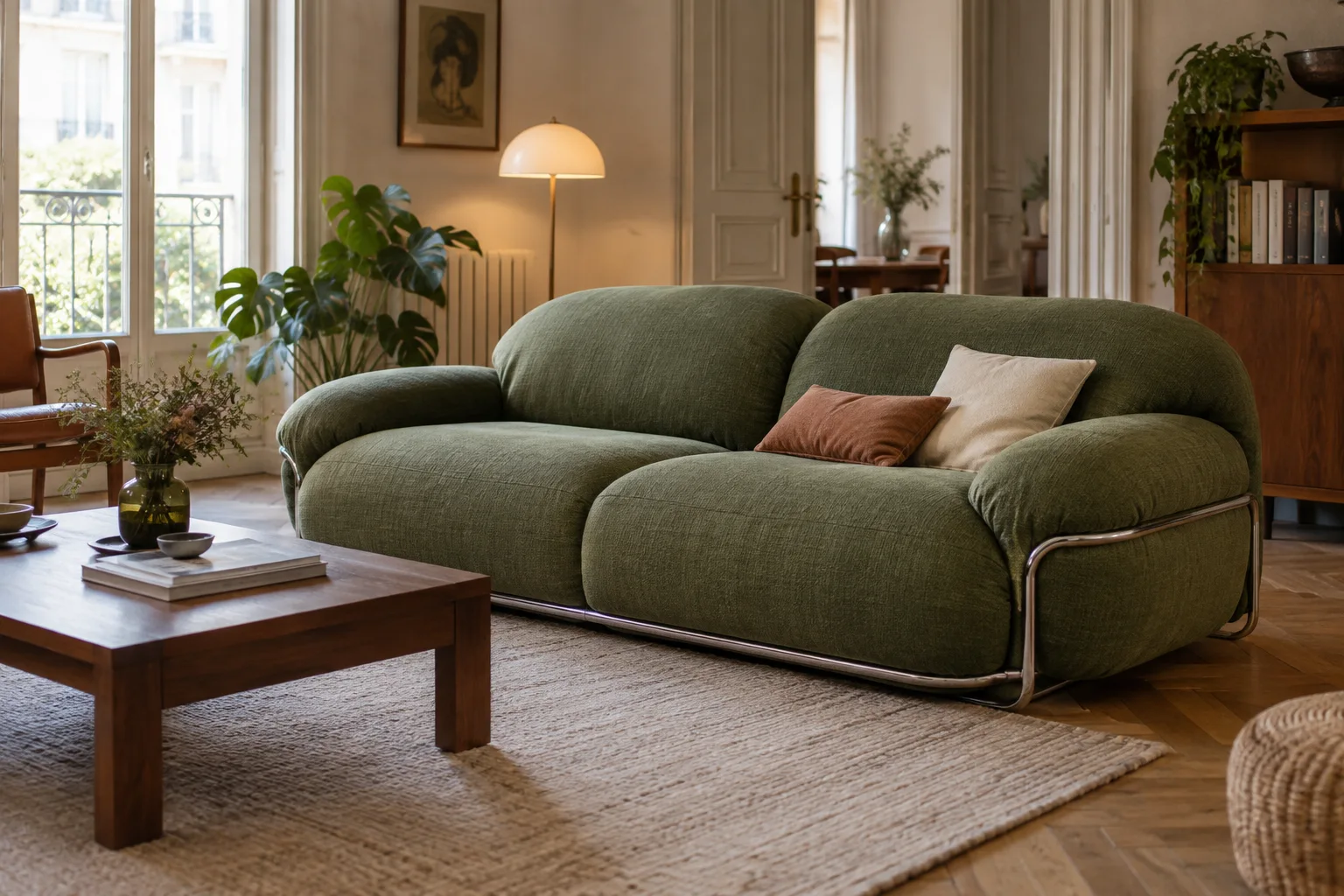
A soft bundle with a firm outline
Soriana has a useful kind of tension: it looks relaxed, almost carelessly gathered, while the metal around it makes the outline deliberate. That is its appeal in a room of straight cabinets and tables. It also makes a buying decision more demanding than choosing a fabric colour. A sofa can be freshly covered and still have proportions you do not enjoy.
Cassina identifies Afra and Tobia Scarpa’s design with a 1969/2021 production record. Its account connects the original form to moulded polyurethane and an external metal grip. The later production uses a revised filling approach. Read those dates as design and production history; they do not date the example in a seller’s photograph.[1]
Request a straight front view, both sides and the back, taken from far enough away to include the feet and complete brace. Compare the height and fullness of the arms, the seat-to-back relationship and the way the cover gathers. Use a documented reference for the relevant version, rather than expecting every Soriana-shaped listing to match one modern showroom picture.
The comparison is a way to ask better questions, not an authentication trick. A different outline might reflect perspective, a different model, wear or substantial upholstery work. Ask the seller which explanation they can support before attaching a story to it.
Ask which part of “original” is being promised
A listing might use “original” to mean an authorised Cassina product, an older production or untouched upholstery. Those are different purchases. Ask for the claimed production period, evidence linking the piece to its maker, and a separate account of replacement covers, filling, supports and metalwork.
| Claim | Evidence to request |
|---|---|
| Older production | Purchase or ownership records, identification details and references consistent with that period. |
| Original upholstery | What supports the claim, and whether filling or underlying supports have nevertheless changed. |
| Restored Soriana | Who did which work, what was retained and photographs showing the piece before and after. |
For a hypothetical example, imagine an advert headed “1969 original” whose description repeats Cassina’s present BioFoam and recycled-fibre specification. That wording could have been copied from a current product page. It does not establish the age or contents of this sofa. Ask the seller to describe the piece they have, including the work they actually know about.[2]
Keep photographs of labels or other identification in their physical context. A close-up should be accompanied by a wider view showing its position. Do not remove covers to expose a mark during a casual viewing; agree any inspection with the owner and an appropriate specialist.
Give the upholsterer a shape to preserve
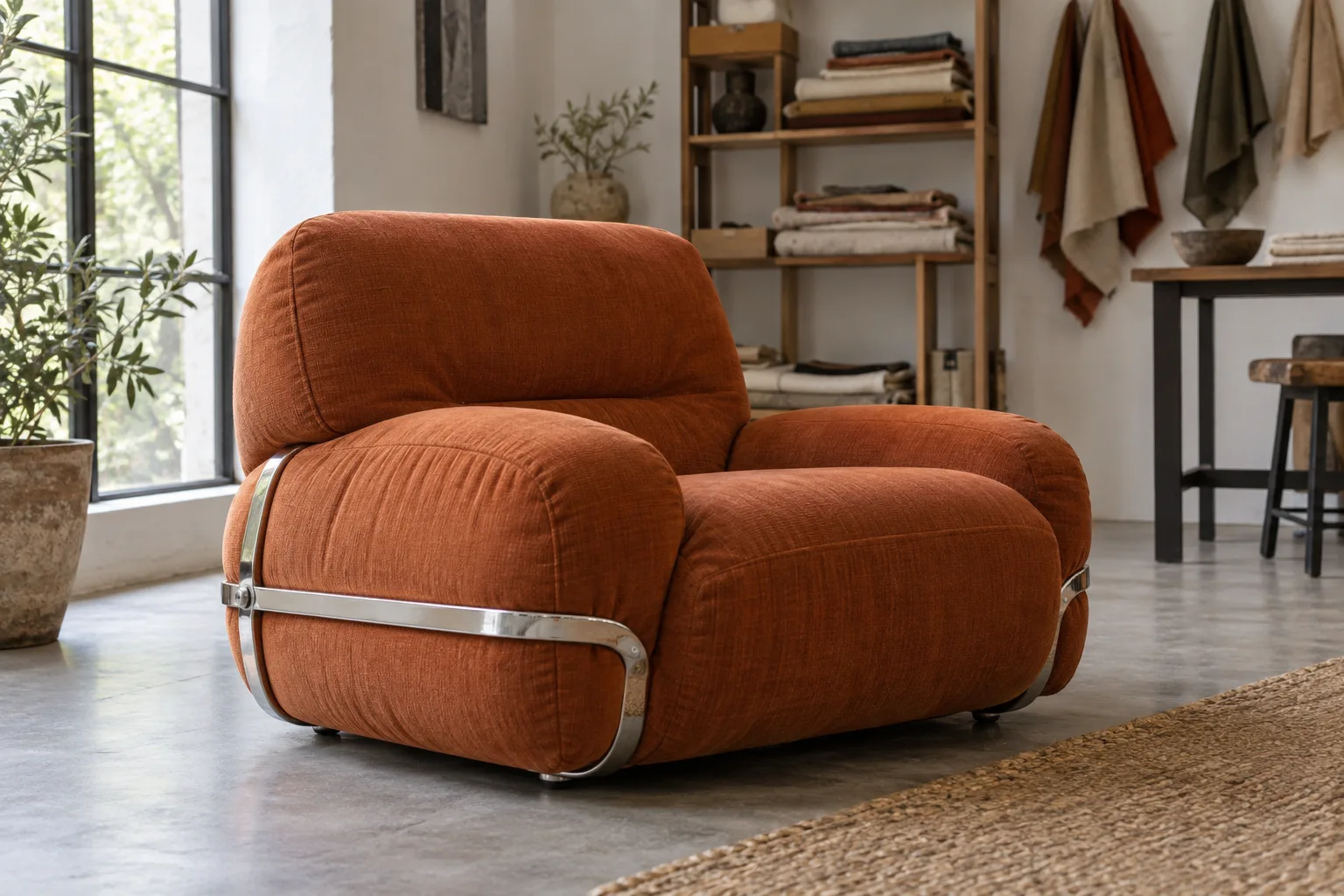
Start a restoration conversation with whole-piece photographs and the reference you like. Describe the desired volume, gathering and firmness. “Make it look new” leaves too much room for a result that is smooth, tight and unlike the seat you wanted.
Ask whether the proposed quote covers the cover alone or also the filling and supporting structure. Then ask how those choices affect the final profile. More padding is not automatically an improvement: it changes how the body sits inside the brace and how much usable seat remains. A specialist should explain the proposed result before promising an exact match.
Assess the metal as part of the composition. Note visible bends, areas of coating loss and previous work, then ask for a professional opinion where the condition is uncertain. Do not assume a brace can be straightened or refinished cheaply. Equally, decide whether sound, visible age is something you would prefer to retain.
Specify which reference photographs and existing details the repairer will work from, and ask for a written account of any changes agreed after opening the piece. Keep that record. The next owner will benefit from knowing what is inside; so will you if a later repair becomes necessary.
Spend some time in the seat
Sit in the actual chair or sofa in the way you expect to use it: reading, talking or stretching out. Notice whether the cushion supports you evenly, where your back settles and whether you keep sliding into one position. Try leaving the seat as well. A low, generous sofa can suit one person beautifully and make another feel stranded.
For a sofa, try more than the best-looking place. Differences between positions matter if two people will use it every evening. A pleasing cover does not resolve a seat that collapses towards one side. Link anything you feel to the proposed upholstery work rather than accepting “normal for the design” as a complete explanation.
A useful enquiry
Please confirm the model and claimed production period, the evidence for them, and all known cover, filling, support and brace work. Could you send complete front, side and rear views and any pre-restoration photographs? I would like to try the seat and understand what further work would change its shape.
Compare the delivered, usable result with a piece you could enjoy as it stands. If the older production matters to you, pay for supported history. If your main attraction is the shape, choose the example whose form and comfort already work, or whose restoration has a clear and credible destination.