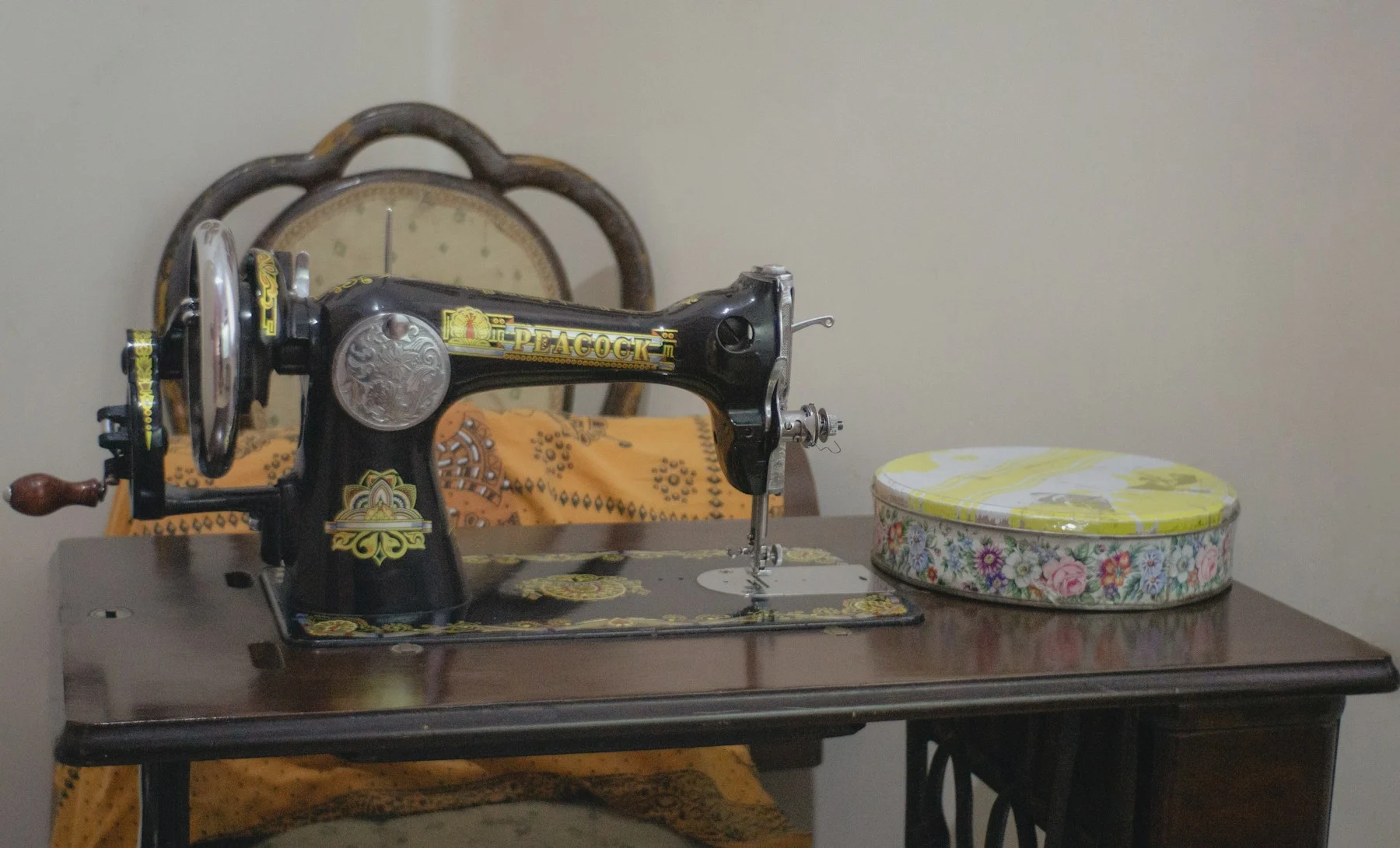
Three things sellers call a sewing table
- Hand-sewing or work table. A continuous top and useful storage; no machine fitting is implied.
- Machine cabinet. The intended machine position, opening, hinges or lift, insert and supported working top.
- Treadle stand with a top. Whether the top is original or later, how it is attached and what remains underneath.
Ask for the table both closed and set up for its intended use. A listing photograph with the machine on top may not show how it normally sits, folds away or attaches. Record the machine’s make and model separately from any label on the cabinet.
An old stand can make an appealing small table. That does not make the conversion complete: inspect the top attachment, its overhang and the space around the original mechanism before deciding where it belongs.
For a hand-sewing work table, explore the Shaker sewing table in the Furniture Library. Its furniture story gives useful context for the distinction from a machine cabinet.
Sit where the work actually happens
Bring the chair height you expect to use, or measure a comfortable existing arrangement. Sit squarely at the working position and check your thighs, knees and feet against drawers, crossbars, the treadle and any machine housing.
For sewing, think about where the fabric travels. A narrow surface on the far side of the needle can be more limiting than the total width suggests. For laptop use, check whether the closed lid is level, properly supported and suitable for normal work without leaning on an unsupported leaf.
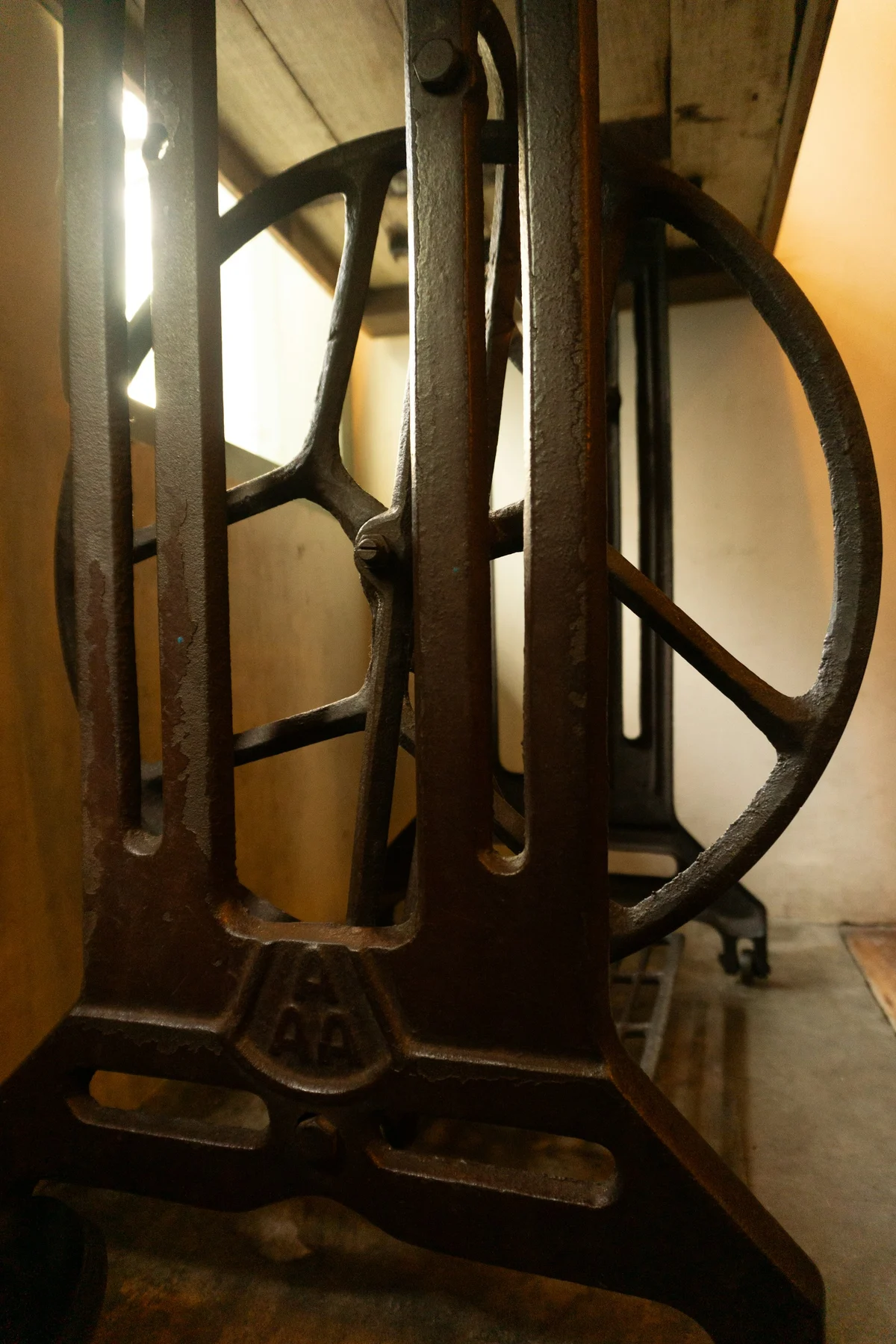
A treadle and large wheel occupy real leg space even when you do not plan to sew with them. Inspect the clearances while everything is stationary. Do not assume that removing historic parts is the simplest way to gain a few centimetres.
Will your machine fit the cabinet?
Horn explains that its flatbed inserts fill the gap between a cabinet’s rectangular opening and the sewing machine. The insert is cut for the relevant machine and cabinet arrangement. This is a useful modern example of why matching the machine name alone does not settle the fit.[1]
For a vintage cabinet, record the complete opening, support ledge, hinge locations or lift platform, and the machine base. Send photographs and measurements to the maker or a sewing-machine specialist before buying a replacement insert or assuming a modern machine will drop in.
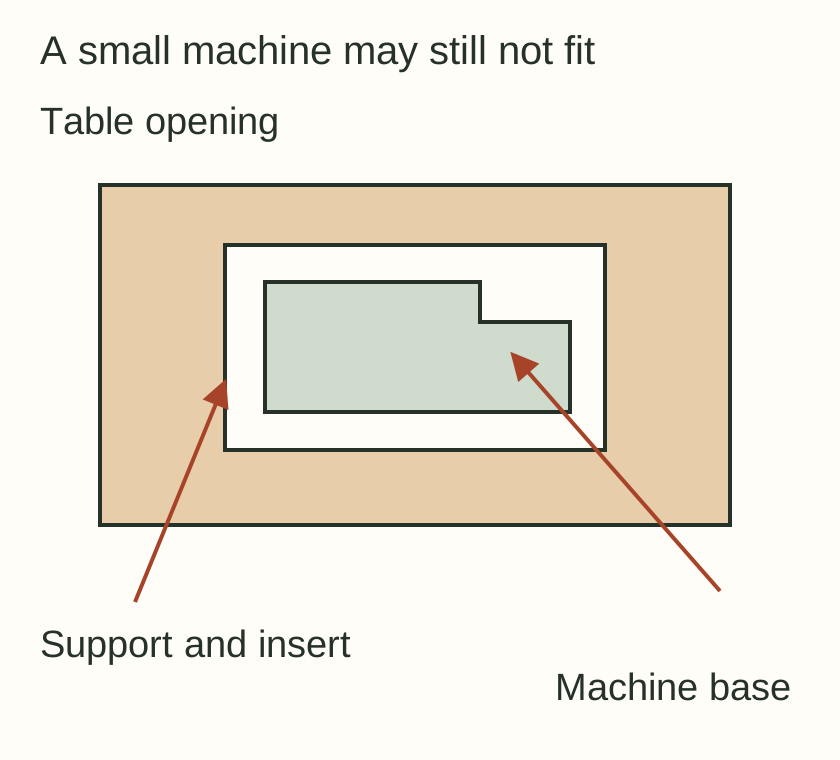
For example, a 40 × 20 cm opening and a smaller machine base do not establish compatibility. The machine still needs the intended support, a suitable working height and clearance for its body and controls. Those illustrative dimensions describe an unanswered question, not a fitting recommendation.
If you want desk use only, establish how the existing lid or insert is supported. A loose board resting across a hole needs assessment; it is not automatically a finished desktop.
Follow the supports through the movement
Ask the seller to demonstrate the normal opening sequence using the documented method. Watch where leaves, lids or doors rest in the final working position. Keep hands clear of hinges and linkages; stop if a heavy section drops, catches or needs forcing.
Look at hinge fixings, split wood near screws and the support beneath each extended surface. A missing stay or bracket matters even if the cabinet closes neatly. Do not test a questionable leaf by pressing hard on it.
The machine deserves a separate decision. Ask when it was last serviced and which accessories are included. A machine technician should assess an unknown mechanical or electrical condition before use; this furniture inspection is not an instruction to plug in an unverified machine.
Decide what you are willing to preserve
Worn finish around the working edge, old thread marks in a drawer and a replacement handle may be easy to live with. Loose veneer, damaged supports or a top altered badly around the machine opening need a clearer plan. Price that work before comparing with a complete usable table.
Ask whether the machine, drawers, belt, insert and cover are all included. A seller may want to retain the machine while showing it in every photograph. List the included pieces in writing so the collection does not begin with an argument about an accessory.
Measure the closed transport size and identify any heavy parts that can be removed by the proper method. Agree who will do that. Avoid lifting the table by its machine, folding leaf or decorative ironwork.
Request the view that answers your project
Message to the seller
I want to use this for [machine sewing / hand sewing / a desk]. Could you show it closed and fully set up, including the underside supports and knee space? Please identify the cabinet and machine separately, list the included inserts and accessories, and disclose any missing supports, alterations or machine faults.
A worthwhile sewing table should make the work easier once opened. Choose it when the sitting position, surface support and included parts make sense for your project; leave an uncertain machine conversion for a specialist to resolve first.