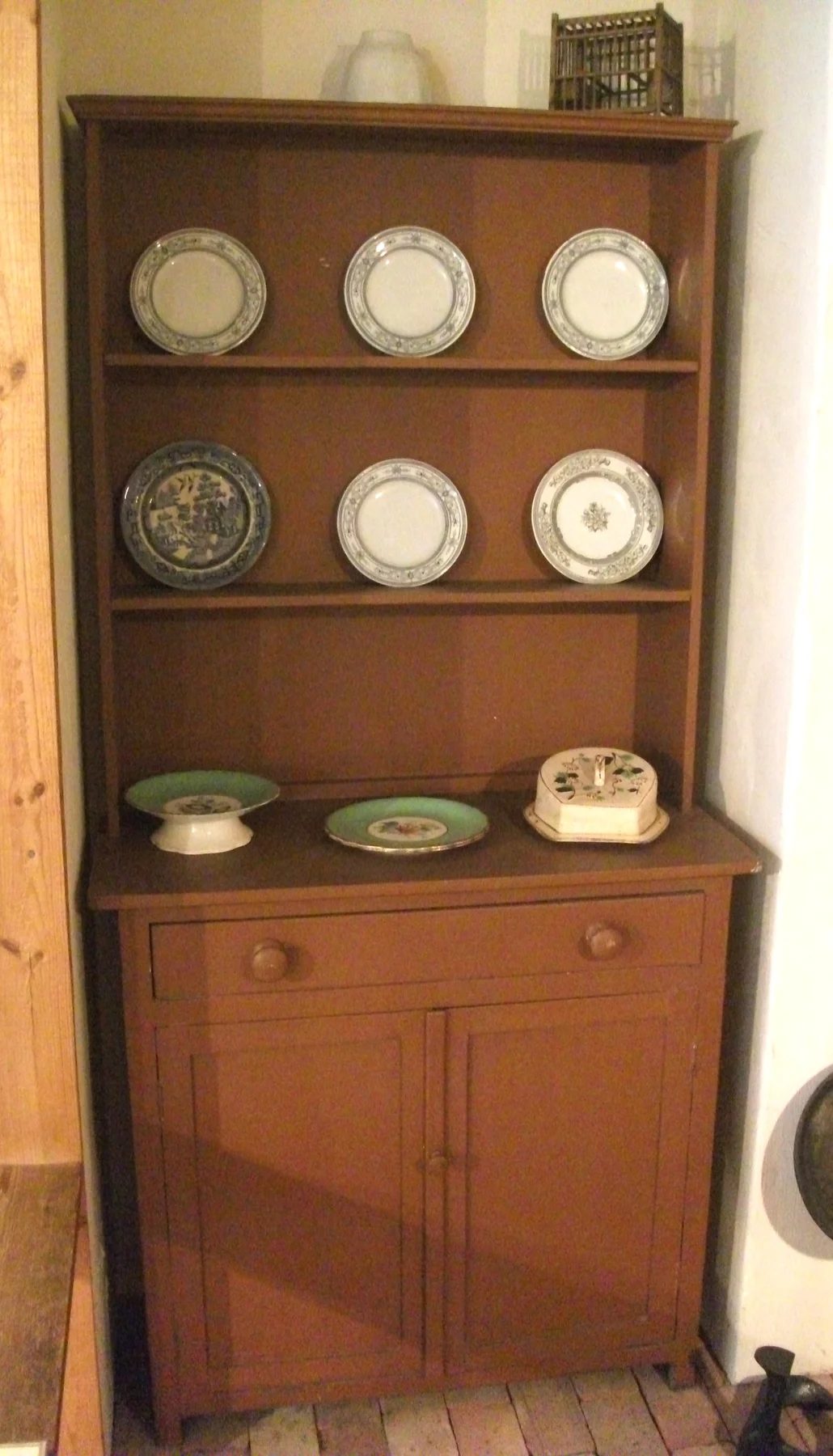
What is included in the dresser?
Ask whether the sale includes the upper rack, all shelves, retaining rails, drawers, keys and any loose trim. Photographs sometimes show a dresser base dressed with a separate wall shelf. Make sure the object you like is the object being sold.
Museum Wales records the rack and base of its Montgomeryshire dresser separately, including different depths. It is a useful reminder to measure both parts. The museum example does not establish a standard size or construction for something described as a Welsh dresser.[1]
A piece sold as a “Welsh dresser” may be an old regional example, a later reproduction or a kitchen cabinet using the familiar form. Ask what evidence supports any age or origin claim if it affects the price. You can assess its usefulness without settling every historical question.
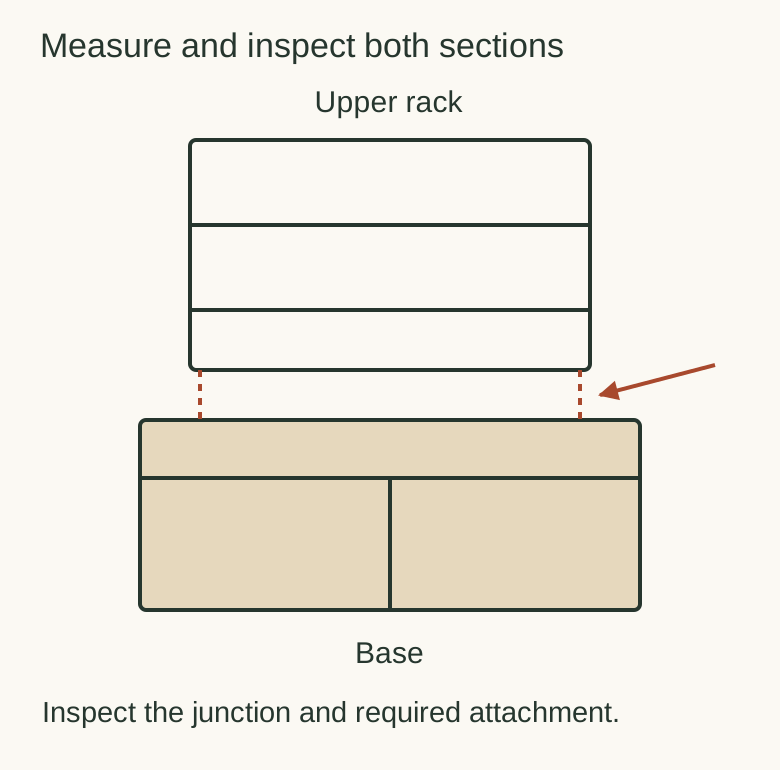
Do the top and base make a sensible pair?
Look at the widths, profiles and way the upper section sits on the lower one. Ask to see the back and existing attachment points without dismantling the dresser. Note later holes, additional brackets or an upper rack that overhangs unexpectedly.
A married dresser combines parts that did not begin together. That need not make it useless, but it should be disclosed and its assembly assessed. Matching stain or paint is not proof of a shared history; equally, different fading alone does not prove a mismatch.
Ask who assessed the present attachment and what installation is required in your home. A heavy top resting on a base is not a complete securing plan. Do not invent a bracket arrangement from a photograph; use the maker’s instructions or an appropriate furniture professional and installer.
Try the shelves with your own dishes in mind
Measure the usable shelf depth from any backboard or projecting feature to the retaining edge. Check clear height between shelves and the position of any plate groove. If plates will stand upright, their diameter and lean matter as well as the shelf depth.
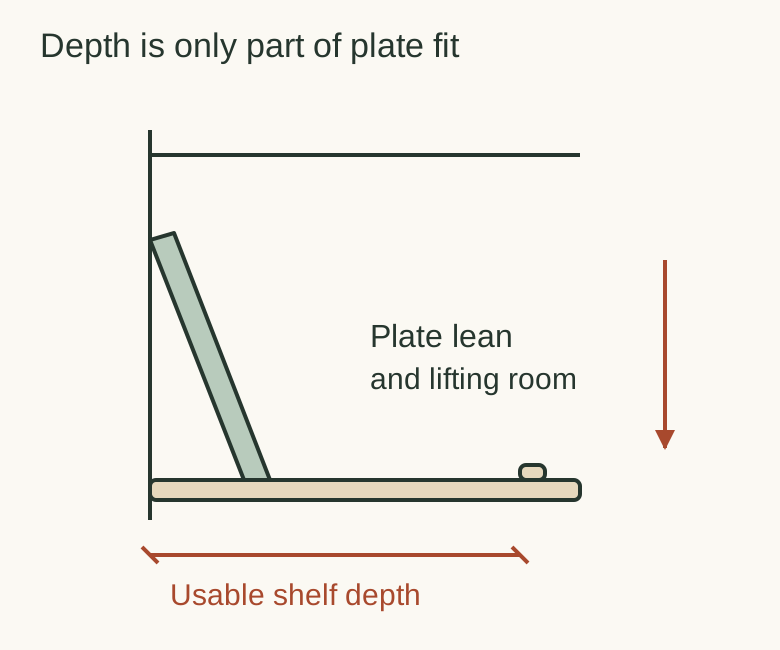
At a viewing, ask whether you can try one of your plates with the empty dresser appropriately secured. Notice whether the plate sits in its intended support and whether you can lift it out without hitting the shelf above. Do not balance a valuable plate merely to make it fit.
For everyday crockery, consider access as well as display. A deep stack may be difficult to lift from a high shelf. Record bowed shelves, loose supports and cracks where loads are carried. Do not assume an old shelf can take a whole dinner service because it once displayed a few plates.
Open the base and look near the floor
Check drawers and doors in normal use. Ask about sticking, loose handles, absent stops, replacement shelves and old repairs. Photograph the lower edges, feet, back and accessible interior; kitchen use and storage conditions may leave different wear in those areas.
A worn worktop can be attractive and practical if you accept its marks. Flaking material, loose construction or an unresolved musty interior changes the intended use. Settle those issues before planning to store linens or crockery inside.
Decide whether the top is a display surface or a kitchen work surface. An old finish should not be assumed suitable for chopping, hot pans or repeated splashes. Choose a separate preparation area if everyday kitchen work would demand treatment you do not want to make.
Measure every transport section
Record the maximum assembled height, including the cornice, and the projection of knobs and mouldings. If the top is designed to separate, get the dimensions of both transport sections and the documented method. Do not remove a fixed rack just because two pieces would be easier to carry.
Agree who handles the separation and installation. Photograph existing attachments and pack loose shelves or trim individually. A large cornice can be more awkward at a stair turn than the narrower base beneath it.
For a kitchen with limited wall space, mark the open doors and drawers too. The dresser should leave room to use the adjoining cupboards and walk past someone putting dishes away.
Ask about both halves
Message to the seller
Could you photograph the complete dresser, back, upper/base junction and shelf supports? Please confirm whether the two sections are original to each other, what is included, and any repairs or alterations. I need usable shelf depth and height, total dimensions, transport-section dimensions and the required attachment at installation.
Choose a dresser whose storage, display and assembly suit the way you live. A disclosed later top or a worn surface may be an acceptable compromise; uncertain support for a loaded rack needs an answer first.