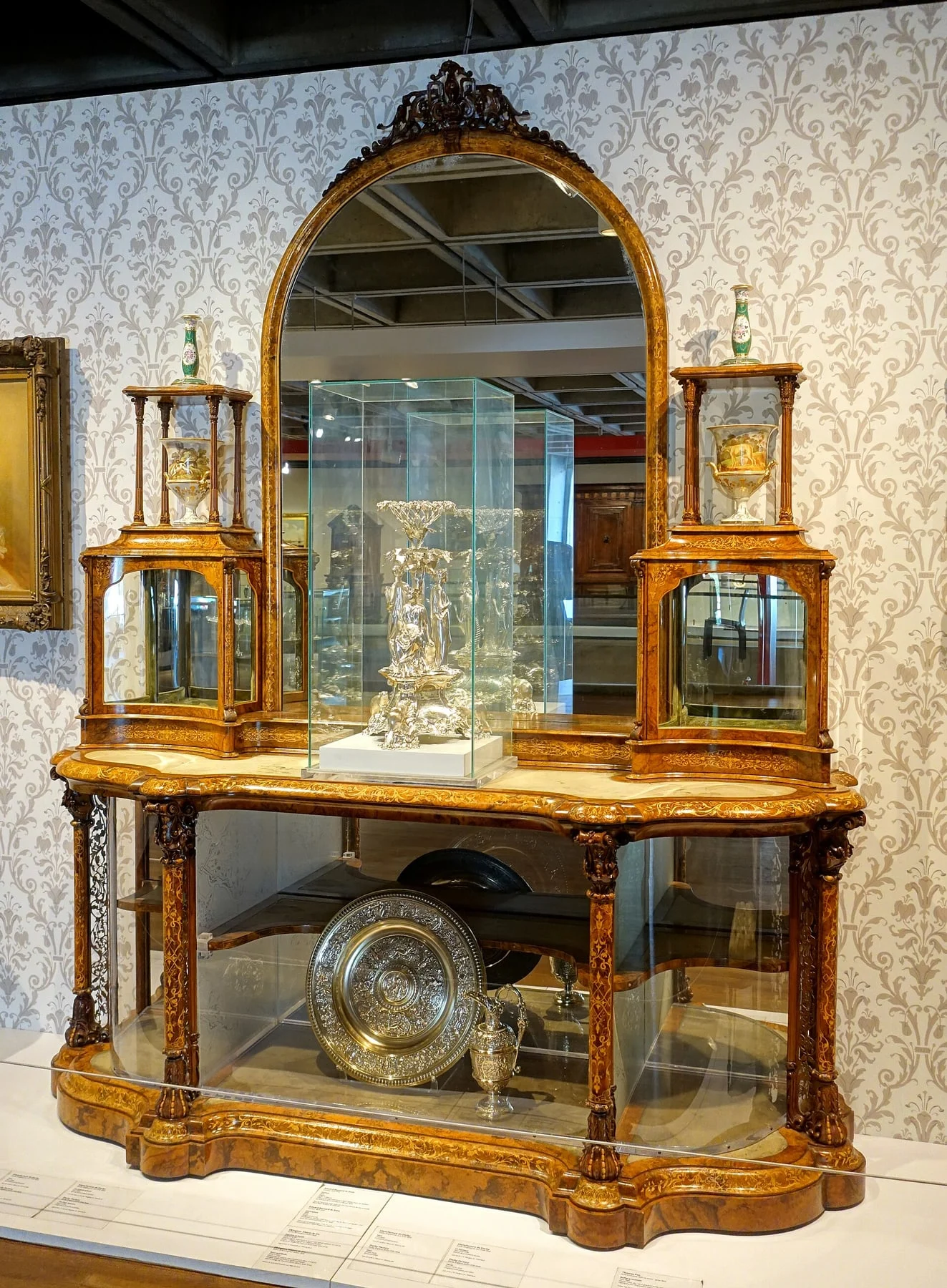
Measure the collection before the cabinet
Choose the largest objects you want to display and record their height, width, depth and weight where known. Include stands and any space needed to lift an object out. A vase may fit a shelf but fail to pass through a narrow door opening.
Decide which objects need to be reached often. A cabinet for a changing collection benefits from a different arrangement than one containing a few objects that rarely move. Draw the intended grouping on paper; avoid using the glass shelf itself as an experiment with a heavy collection.
Follow every shelf to its supports
Ask for empty interior photographs at shelf level. Count the support points and show how each pin, bracket or rail engages with the cabinet. Look for mismatched fittings, missing retainers, chipped glass edges and shelf corners that do not sit as intended.

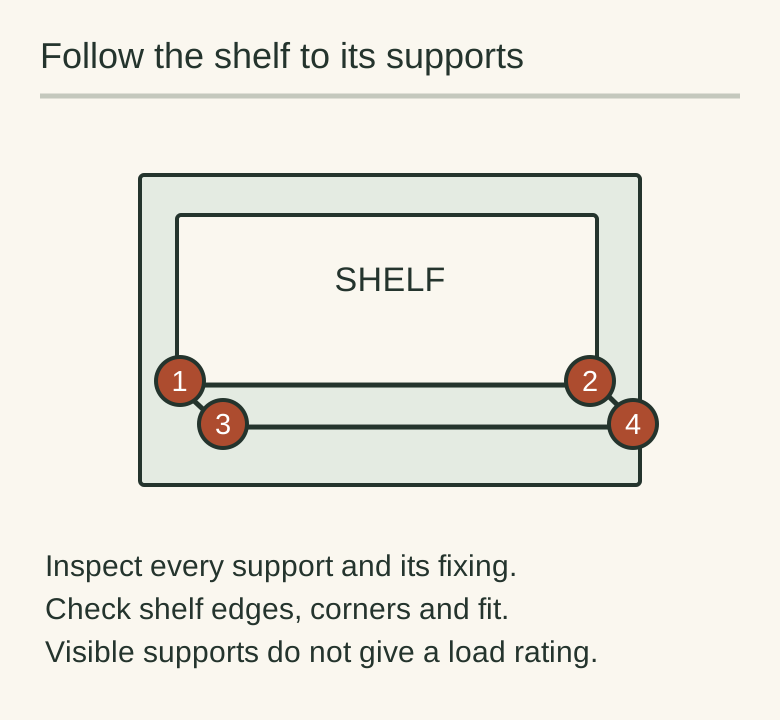
IKEA’s MILSBO documentation provides a maximum load per shelf for that specified cabinet and includes installation information. Such figures belong to the documented product and assembly. They cannot be transferred to a vintage cabinet because its glass looks similar.[1]
If the shelf loading is unknown, ask a suitable cabinet or glazing professional to assess the whole arrangement. Do not calculate a rating from glass thickness alone, and do not prove it by adding weight until something moves.
Inspect the doors in ordinary operation
Have the seller open and close each door slowly while the cabinet stands securely. Look at the hinges, catches, frame joints and clearance between moving glass and the cabinet. Binding, cracked corners or loose glazing need attention before ordinary use.
A replacement shelf or pane may be acceptable, but ask who supplied it and to what specification. Record any visible markings without assuming that unmarked glass is one particular type. A lock controls access; it does not make a fragile or unstable cabinet safe.
Photographs worth requesting
- Whole cabinet, closedShow alignment, base and all doors.
- Whole cabinet, open and emptyMake the shelf arrangement and clear opening visible.
- Shelf contactsInclude every type of support and any mismatch.
- Back and upper fixing areaShow construction and existing restraint fittings without moving the cabinet unsafely.
Place it where you can see and use it
Check reflections from windows and lamps from your normal viewing positions. A display visible in a shop may disappear behind reflections at home. Keep a separate note of environmental needs for the objects inside; a glazed cabinet is not automatically a controlled museum case.
If it has lighting, treat the wiring, transformer and fittings as a separate electrical inspection. Do not power an unknown vintage installation simply to see whether it lights up. A competent professional can advise on a suitable lighting arrangement and cable route.
Plan secure installation for the exact cabinet, wall and household. A tall narrow case should not depend on its contents for stability. Confirm the restraint method before the display is filled.
Arrange delivery around the fragile parts
Ask the seller
Please send empty interior views, all shelf supports, door hinges and the back. Which shelves or panes are replacements, what load information is documented, and which glass parts are intended to be removed for transport? Please also identify any lighting and restraint fittings.
Agree who removes, labels, packs and reinstalls loose shelves and glass. Keep your display objects out until the cabinet is installed, the doors work as intended and any unresolved shelf or glass questions have been answered.