Why the search results do not all look alike
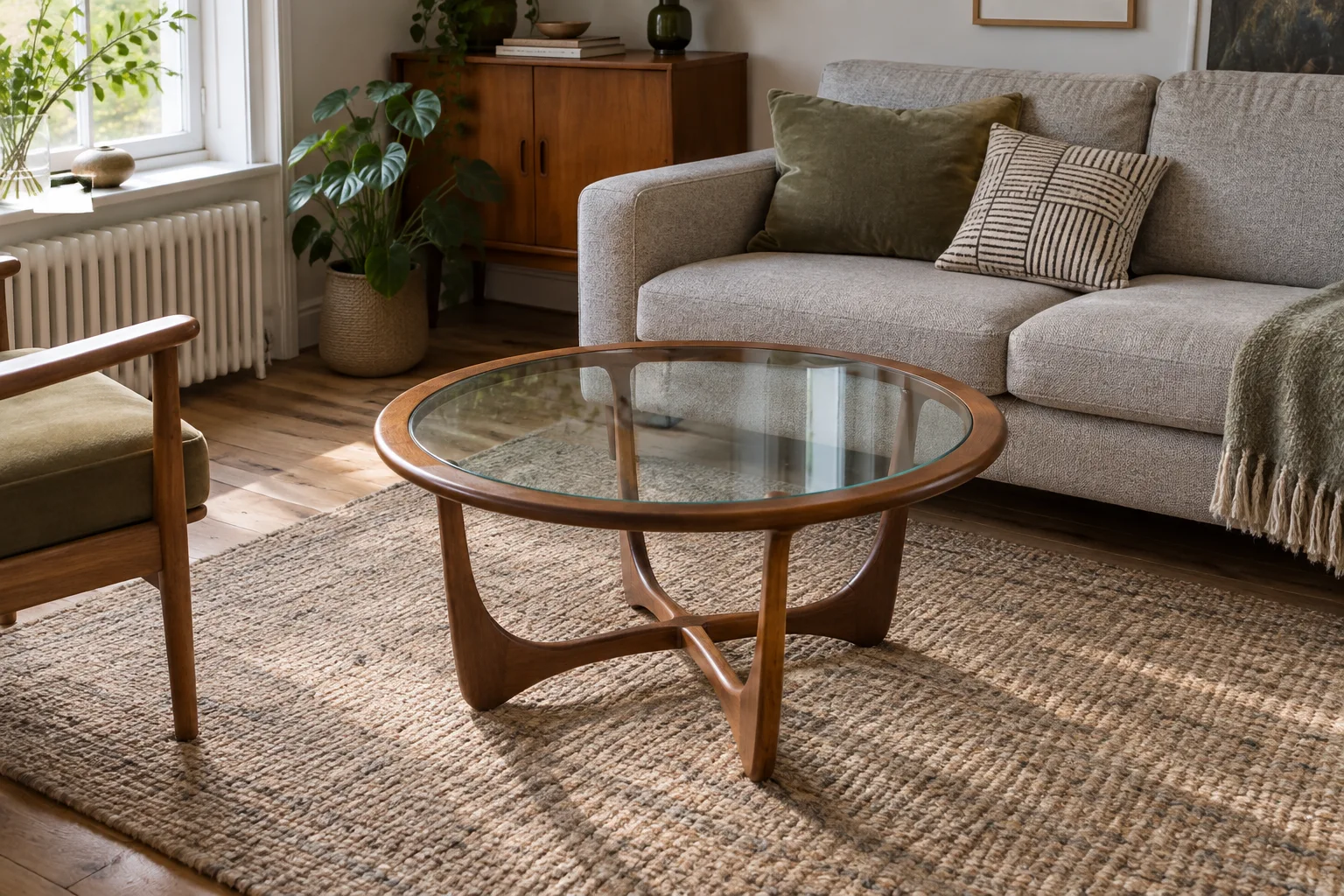
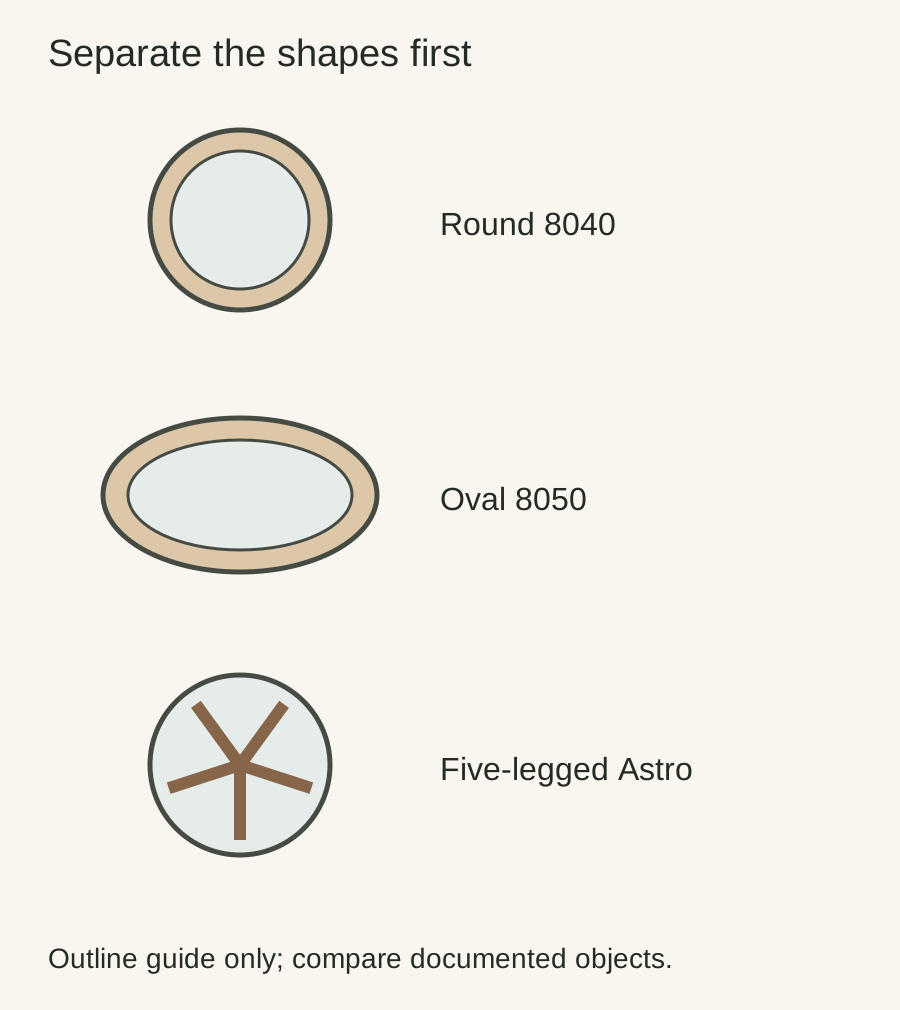
G Plan’s own retrospective separates the circular 8040, the oval 8050 and a later Astro design with five shaped legs, often nicknamed Spider. It attributes the occasional tables to V. B. Wilkins. This is a useful correction to the way listings collapse several silhouettes into one search term.[1]
| Description | Form to compare |
|---|---|
| 8040 | Circular glass centre with a wooden border and curved crossed supports. |
| 8050 | Oval form rather than the circular 8040. Compare the entire frame and top arrangement. |
| Astro / Spider | Five shaped legs. Do not treat it as another size of the crossed-base table. |
Use those descriptions to sort listings, then compare a candidate with the manufacturer’s images and the Library references. A sticker helps connect the object to a maker; it does not by itself prove that a replacement top is the right one or establish an exact production year.
The round one and the oval one do different jobs
A round table creates a centre for seats approaching from several directions. An oval outline can follow a longer sofa while leaving curved ends on the walking route. Put paper outlines of the actual candidates on your floor and check the reach from the seat you use most.
Glass makes the space beneath it visible. That can give the table a light presence, but it also puts the base, rug pattern and everything stored below on show. A table you like in a bare studio photograph may feel quite different over a busy rug.
Look at the empty support, not only the reflections
Ask for a top view and a view from near tabletop height. The first shows the outline; the second helps you see whether the glass sits evenly and how its edge meets the timber. Reflections can hide chips, scratches and improvised packing, so request another angle in ordinary light.
Have the seller describe any movement in the base, repairs to the curved members and replacement pads or fittings. If lifting the glass requires careful handling, request existing photographs or leave that task to an appropriate person. Do not turn the table upside down with unsecured glass in place.
A replacement top is not automatically bad news. The useful questions are whether it was made to suit this support, how it was specified and whether it fits properly now. Keep the purchase record for the new glass; “the previous owner had it done” leaves more to establish.
An online size is not a cutting order
For inset glass, the outer wooden diameter is not the glass diameter. For an oval, a length and width also do not completely describe the curve. Ask the glazier whether the frame, a full-size template or the intact old glass is needed to establish the final shape and clearance.
Have them specify glass type, thickness, edge treatment and support requirements for the actual table and intended use. These are connected choices. Do not copy another listing’s thickness or use the old damaged glass as proof of an appropriate safety specification.
The detailed order brief is in replacing glass on a vintage table.
Make two costs visible
Compare frame price + delivery + assessed timber work + correctly specified glass. Then compare that total with a complete example of the same design. A five-legged table’s asking price is not a useful benchmark for a crossed-base 8040.
Prefer a clear account of a later top to a vague claim of originality
For an everyday coffee table, disclosed replacement glass can be perfectly compatible with why you want the design. A good wooden frame, an appropriate top and a shape that works beside your sofa may matter more than keeping every component untouched.
If you are paying for originality, request evidence of the whole assembly and its history. Either way, a table with a chip, loose structure or unresolved glass fit needs its work settled before use. The best Astro is the specific table you can identify, afford to complete and enjoy in your room.
For documented design history, read the accompanying Furniture Library story.