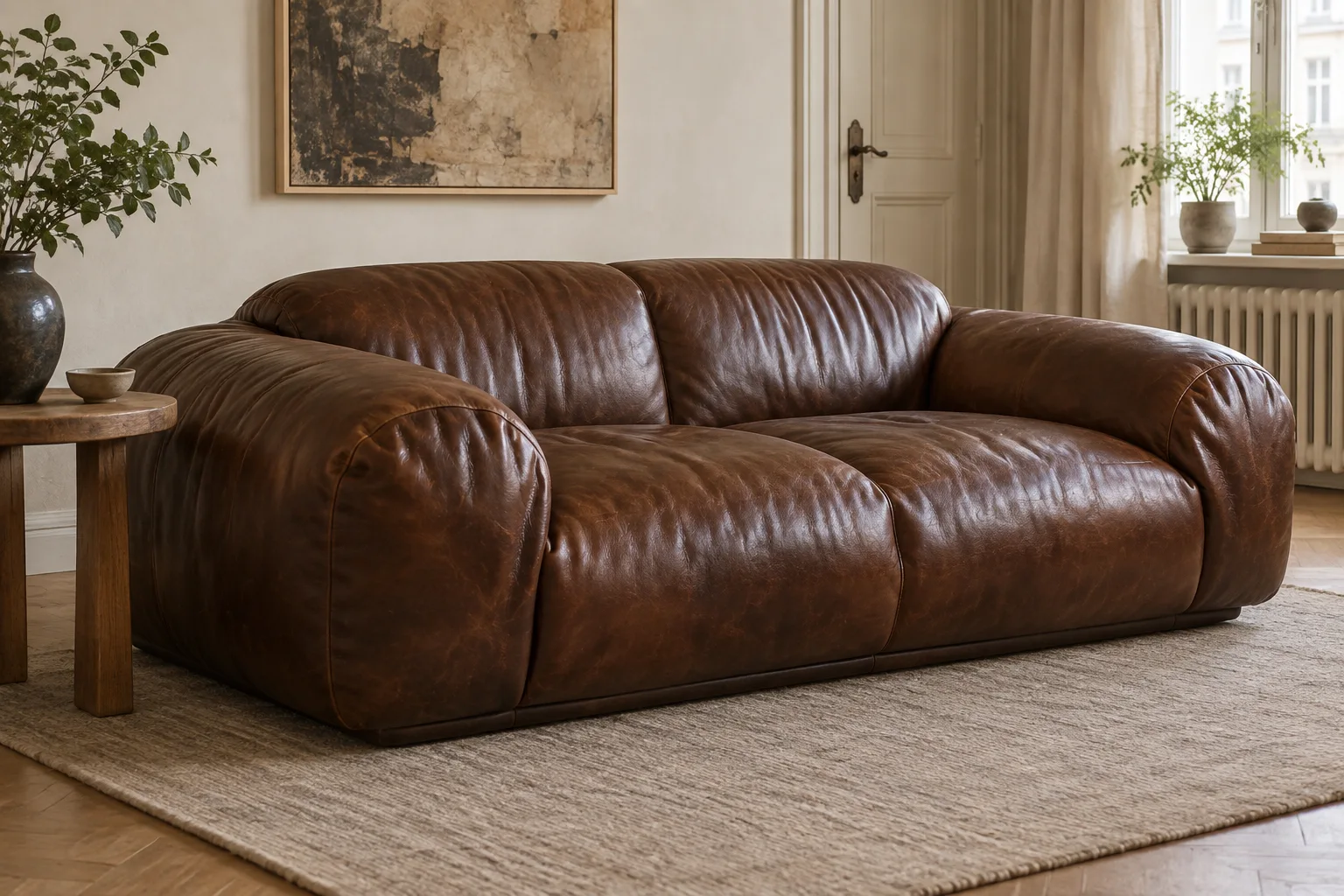
The leather carries much of the character
The DS-47 has a reassuringly substantial presence: broad arms, a low padded back and large areas of leather that catch light without needing decorative detail. In an older example, colour variation and folds can make it more appealing than a uniform new surface. Start by deciding whether you actually want that character.
de Sede describes its current NECK leather as natural nappa up to 5 mm thick, with pronounced folds and large sections used for the seat, sides and back. Those are manufacturer specifications for the named leather, not a thickness test or a guarantee about the covering on an older sofa. A recovered example may tell a different material story.[1]
Request overall views in diffuse light, then close views of the seats, front edges, arms, back corners and seams. Keep each detail attached to its place on the whole sofa. A close-up of an attractive fold can be reassuring while saying nothing about a split at the lower edge.
Distinguish a change in colour from an opening in the material. Ask which areas feel rough, brittle, tacky or unusually stiff, and whether the seller knows of fillers, colour coatings or repairs. You are gathering an account for inspection, not diagnosing leather from a screen. A fresh brown coating can change the appearance without resolving the underlying work.
Try what is underneath the handsome cover
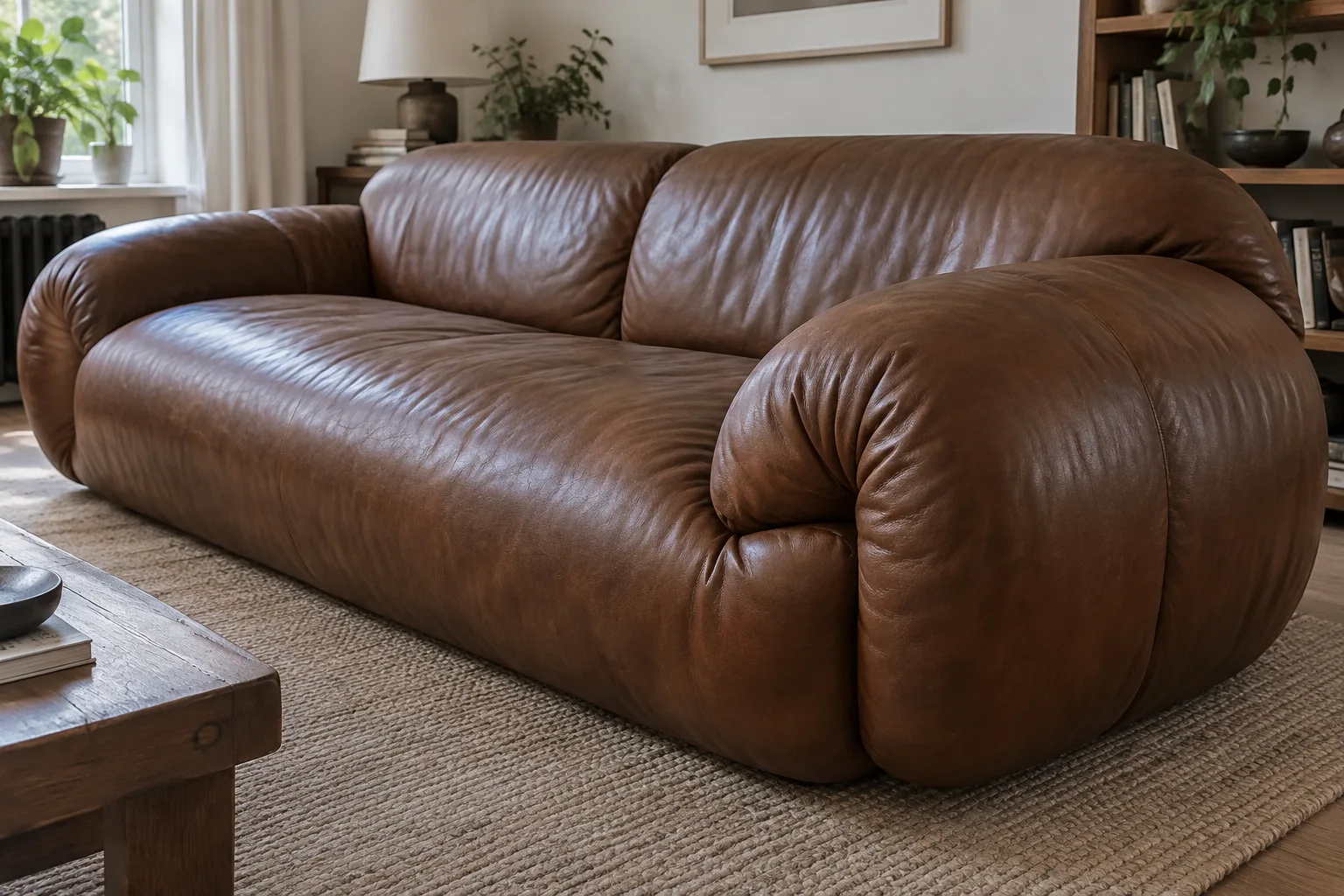
A durable cover and comfortable padding have different lifetimes. de Sede’s current DS-47/02 description specifies layered foam in the seat and back, with moulded foam arms. That helps explain why “the leather is excellent” is not a complete comfort report. It does not establish which filling survives inside a vintage example.[2]
Sit in the positions you will use, with your feet supported naturally. Notice where your back meets the cushion, whether the seat pulls you into a hollow, and how easily you rise. Compare both places in a two-seat sofa. An attractive low, deep seat can suit an evening with a book and be less comfortable for the way you prefer to sit upright.
Measure the usable width between the arms as well as the overall footprint. The broad arms occupy real room. At home, include the space for your feet and the side table you will reach. Do not assume that the number in a listing’s seat count describes a generous place for every member of your household.
If the seller describes an extending or moving seat, request the exact version and its operating information, plus the actual footprint in each intended position. Let the seller demonstrate normal operation without force. A modern product photograph or a different older listing cannot certify the mechanism in the piece you are considering.
Keeping the leather is a different project from recovering it
| Approach | What the quotation must explain |
|---|---|
| Retain the cover | Which leather and seams can remain, what local work is proposed and what variation stays visible. |
| Retain cover; rebuild comfort | How access, padding changes and refitting affect the existing cover and finished seat shape. |
| Partial or complete recovery | Which panels change, the proposed leather, seam treatment and expected match with retained areas. |
Large panels make local replacement a visual decision as well as a repair. Ask to see the proposed leather sample beside the actual retained cover. A similar colour name does not promise matching grain, thickness, sheen or folds. If the planned work removes everything you liked about the old surface, compare another sofa before committing.
de Sede directs repair enquiries through a retailer and asks for photographs and, ideally, an invoice. Its stated service range includes covering, foam and parts work. Request an assessment for your sofa rather than applying a broad online percentage to an old asking price; the scope, transport and retained material are what make a quotation useful.[3]
Describe the result you want
I like the existing leather and want to retain its colour variation where practical. Please assess the photographed panels and seams, the uneven seat support and any earlier surface coating. Quote preservation with padding work separately from recovery, identifying what would be replaced and how the finished outline would change.
Choose the sofa you will enjoy after the work
Put three numbers next to each other: purchase and delivery, the agreed necessary work, and the cost of an alternative that is already comfortable. Keep optional cosmetic work on another line. This stops a small mark from receiving the same financial weight as a seat that needs rebuilding.
Ask about recent care products before adding your own. The leather-care Guide explains why the covering and any earlier coatings should determine cleaning and conditioning. A promise that the sofa “just needs feeding” should not substitute for an account of brittle areas, repairs or missing support.
Finally, arrange the move around the actual dimensions and known condition. Protect protruding arms and avoid using them as convenient carrying handles. The seller and carrier should agree appropriate support and handling for the piece. Keep the identification, repair and care records with the sofa: they will be more useful at its next repair than a confident but unsupported decade in the listing.