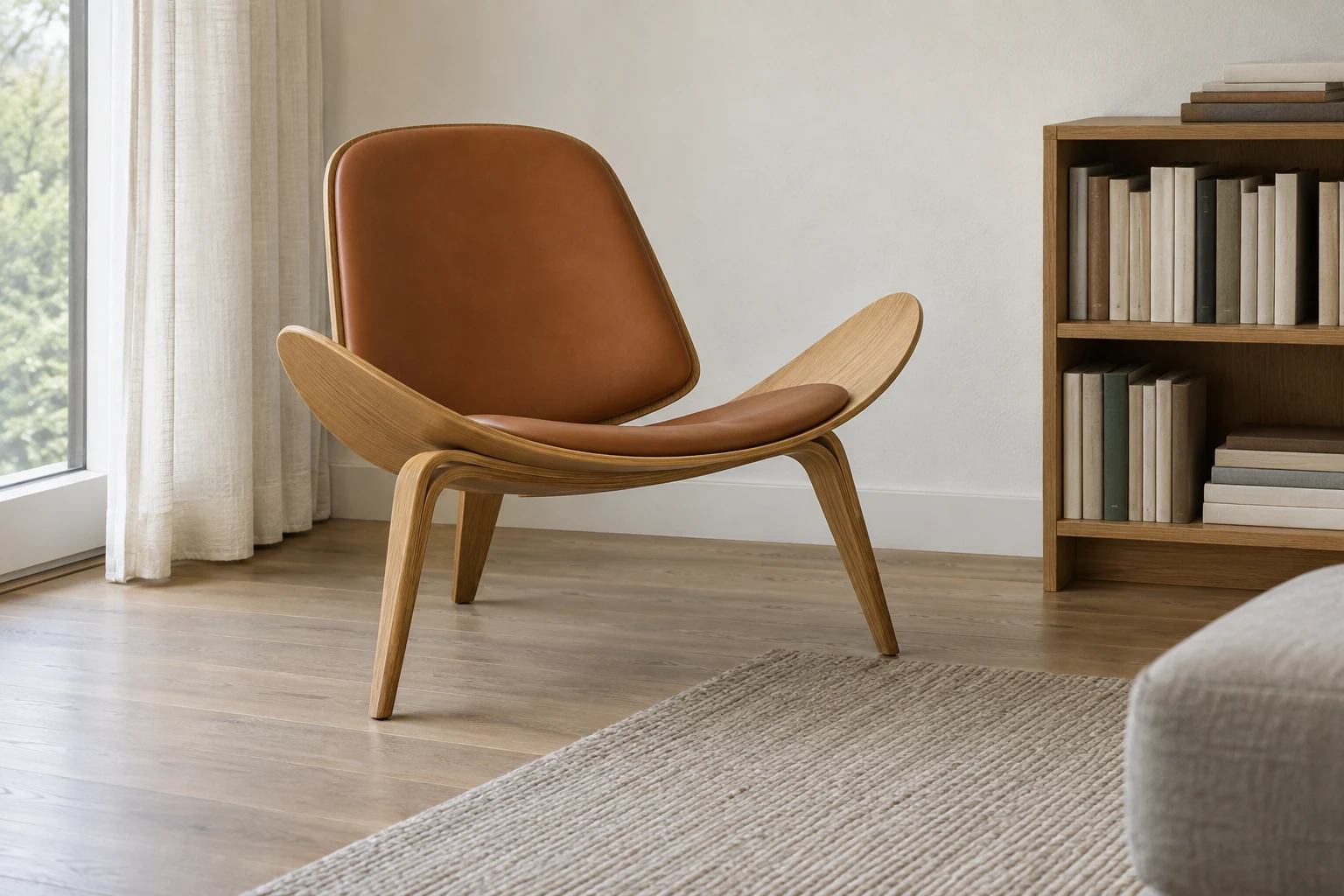
Which production period is being offered?
Hans J. Wegner designed the CH07 in 1963. Carl Hansen & Søn records a very limited early production and a successful reintroduction in 1998. The same recognisable chair can therefore appear in a listing with “1963” in the heading even when the offered example was made decades later.[1]
Before paying for an early-production claim, ask exactly what dates the chair. A design name, familiar shape or maker reference is not enough to establish a 1960s manufacturing date. Keep the seller’s wording, marks photographed in place and any invoice or ownership documents together. A later authorised example may be exactly what you want for regular use.
Use the CH07 Library story for the design’s background. In a buying comparison, put the claimed production period in its own column, alongside evidence, condition and total cost. That makes an unsupported early date harder to confuse with a documented advantage.
Mark the wings before you buy
The manufacturer’s current drawings give 92 cm overall width, 83 cm depth, 74 cm overall height and 35 cm seat height. These are planning references for the current chair; have the seller measure the offered example. The generous width and low seat explain why it behaves differently in a room from a compact upright armchair.[2][3]
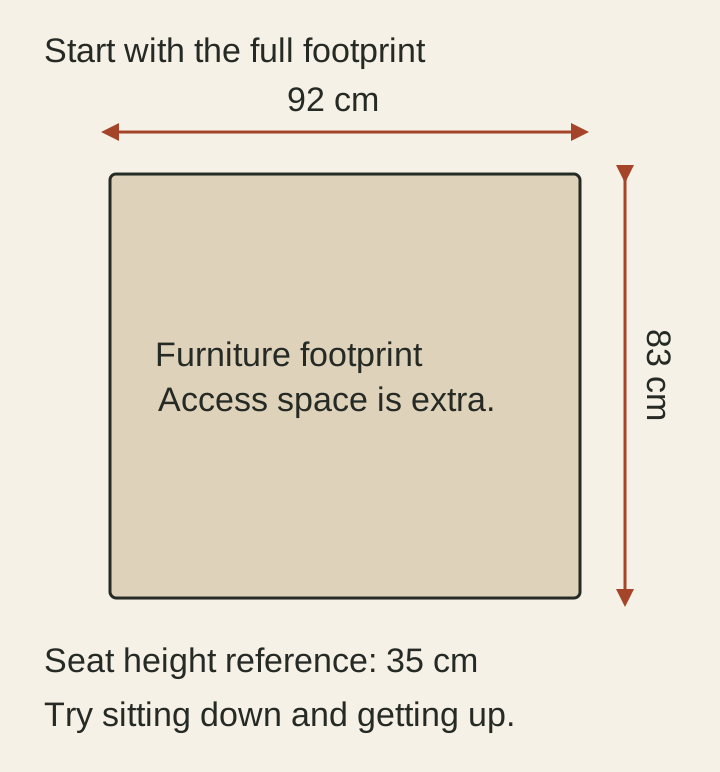
Mark that rectangle with paper or another floor-safe method in the position you have in mind. Walk past it from the doorway, then try the route with your coffee table in place. Do not measure only the distance between the feet: the seat wings occupy space above them, where a person walking past can meet them.
Now try the chair. Sit, reach for the side table and stand up without using the flared seat edges as improvised armrests. If rising from a low seat is awkward, that is useful information, even when the chair feels comfortable once you are in it. Test with the shoes and floor surface closest to normal use.
Leave room to enjoy the back
The Shell Chair can make sense as an occasional seat turned towards a sofa, with its wooden back visible from the entrance. That arrangement also needs a usable route around it. Try moving the paper footprint through a few angles before deciding that the room needs a larger chair-free corner.
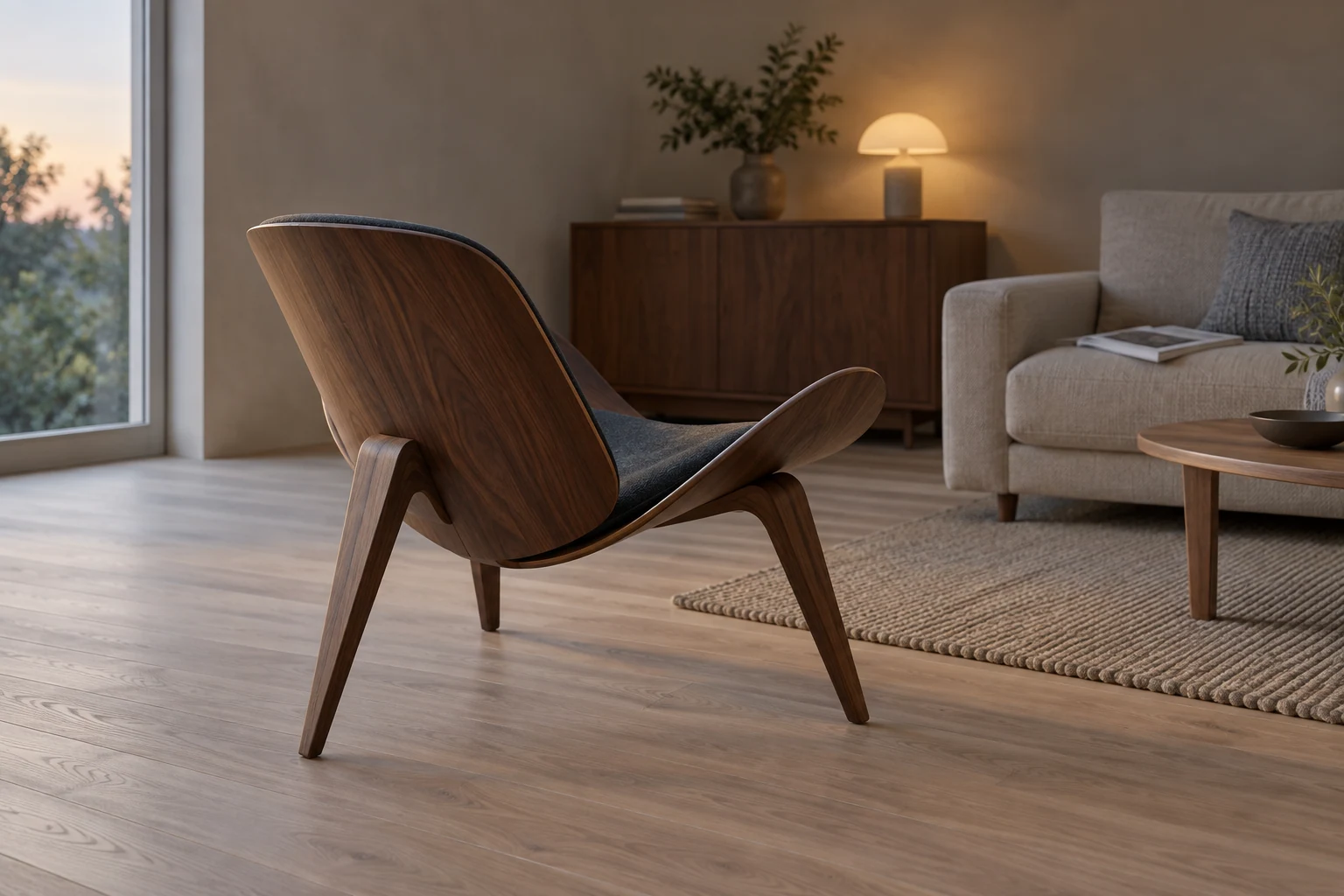
Think about how long you expect to sit there. A chair for reading all evening has a different job from one used for a short conversation. Its low, open form does not provide the same support as a high-backed padded armchair. Try the activity you are buying it for, rather than choosing from a single attractive room photograph.
Price the wood and the pads separately
The maker describes form-pressed veneer seat and back shells, upholstered pads and laminated legs. The two front legs form one continuous element, with a separate rear leg. That construction makes the whole underside and the bends of the wooden parts worth seeing before you discuss new leather or fabric.[1]
Ask for clear views along the exposed shell edges, beneath the seat and around the rear support. Open layers, splits or an unexplained repair to a loaded part call for assessment by someone familiar with laminated furniture. Do not ask a seller to load, twist or flex a questionable chair to prove that it holds.
For worn pads on an otherwise sound chair, ask a supplier or upholsterer to identify the offered version before confirming a replacement. Include front, back and underside photographs and the production evidence you have. Agree whether the quote covers covers alone, padding, attachment work or complete pads; those are different scopes.
Reupholstery can make a chair more pleasant to use without turning it into an earlier or more original example. Keep any replaced parts documented. If the price depends on a particular original fabric or early specification, get that question settled before ordering work that would remove it.
A message for the seller
What supports the production date, and have the pads or wooden parts been replaced or repaired? Please show the whole underside, shell edges, front-leg element, rear support and any marks in place. Please measure overall width, depth and seat height. I would also like a normal sitting trial if the chair is structurally sound.