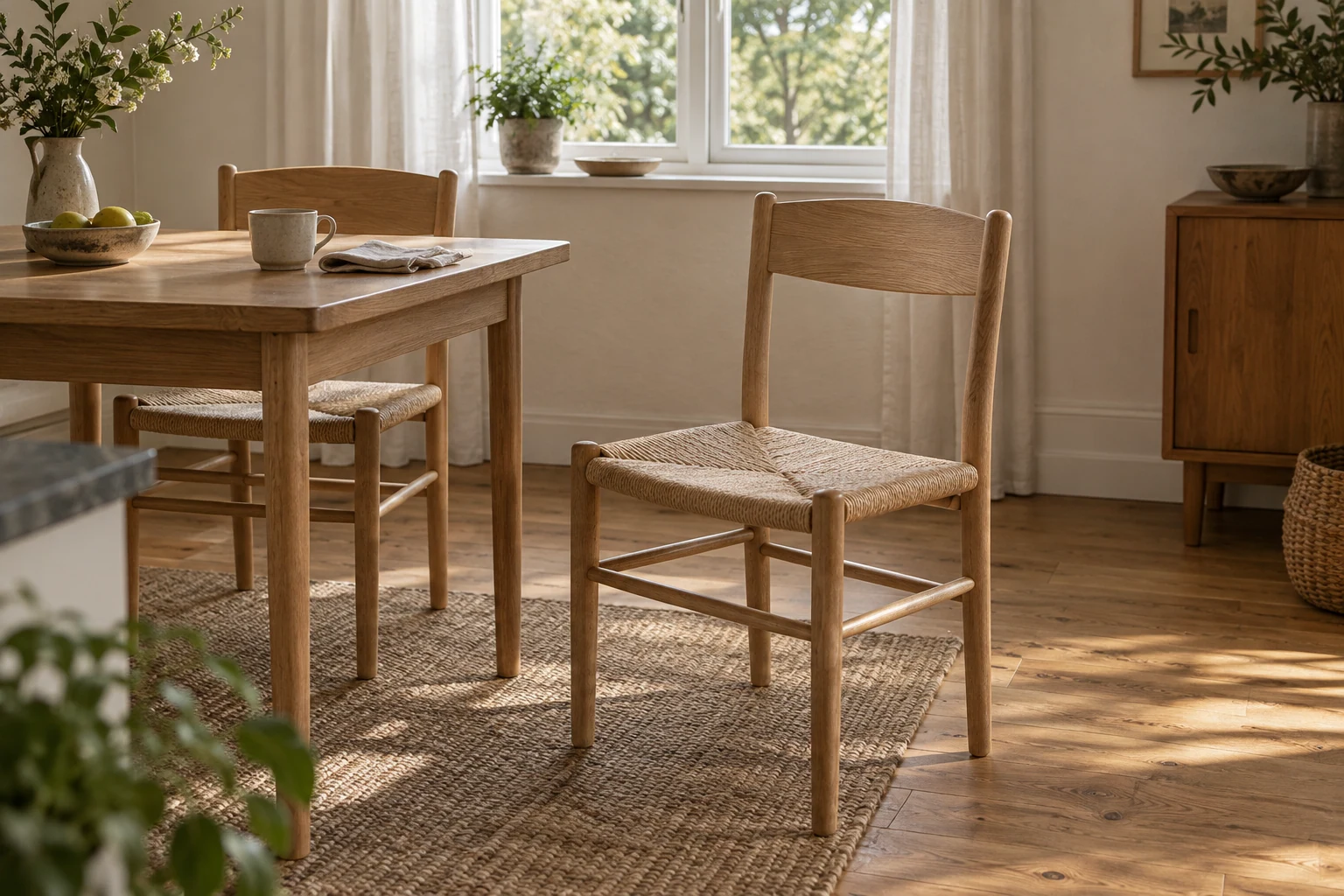
Which J39 seat are you buying?
The familiar J39 combines a straightforward wooden frame, a broad back board and a woven seat. Fredericia dates the design to 1947 and identifies its current paper-cord chair as model 3239. That is a useful starting point for a listing, but a photograph with a cushion on top leaves an important question unanswered.[1]
Fredericia also offers model 3339 with an upholstered seat, tracing that version to a Mogensen design from 1969. Its current construction uses structural webbing, light padding and a removable zipped canvas or leather cover. A padded J39 therefore should not automatically be dismissed as a later home conversion.[2]
A separate product, P3239, is a loose leather seat pad for the J39. It rests on an existing seat. This is different from the webbed construction of the upholstered chair: buying a cushion does not replace missing or failed paper cord.[3]
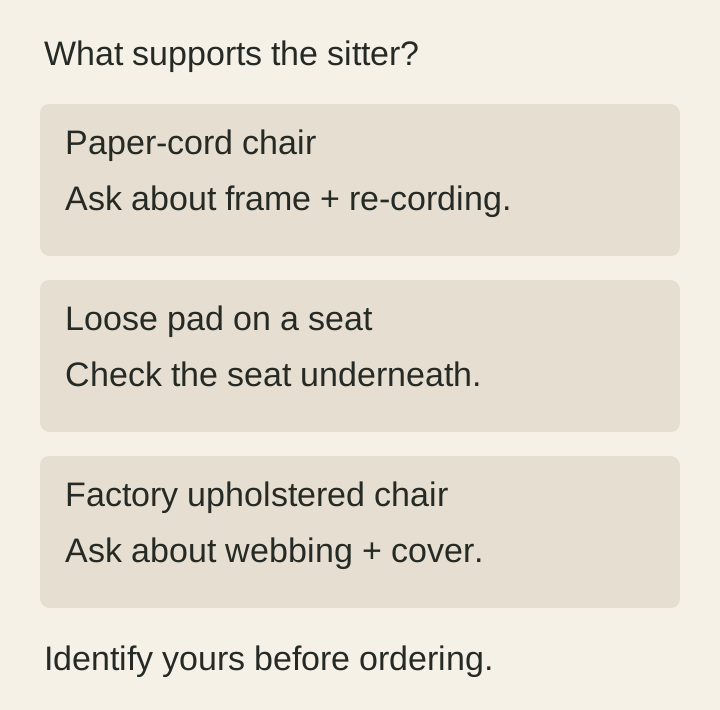
Ask the seller to lift a loose pad and show the seat from above and below. If upholstery is attached, ask what supports it and what records identify the version. Do not remove fixed upholstery simply to investigate. An improvised board, unknown covering or mixed assembly needs its own assessment, rather than a repair order based on the J39 name.
Choose it for a normal evening
The appeal is easy to understand: this is a chair you can use around a dining table and move to a desk when needed. But the curved back meets different people in different places. During a normal seated trial, notice whether it supports you comfortably or presses where you would rather have space.
Try reaching towards the table as well as sitting back. Check that your feet rest comfortably, the front rail does not press behind your legs, and your knees clear the underside of the table. A loose pad changes that relationship. Test the arrangement you intend to use, including the pad if it is part of the purchase.
If you are buying four or six, do not test only the best-looking chair. Compare the seats and frames together: a newly woven chair may feel different from a worn one, and apparently matching chairs can have different histories. A set can look coherent without every seat feeling identical.
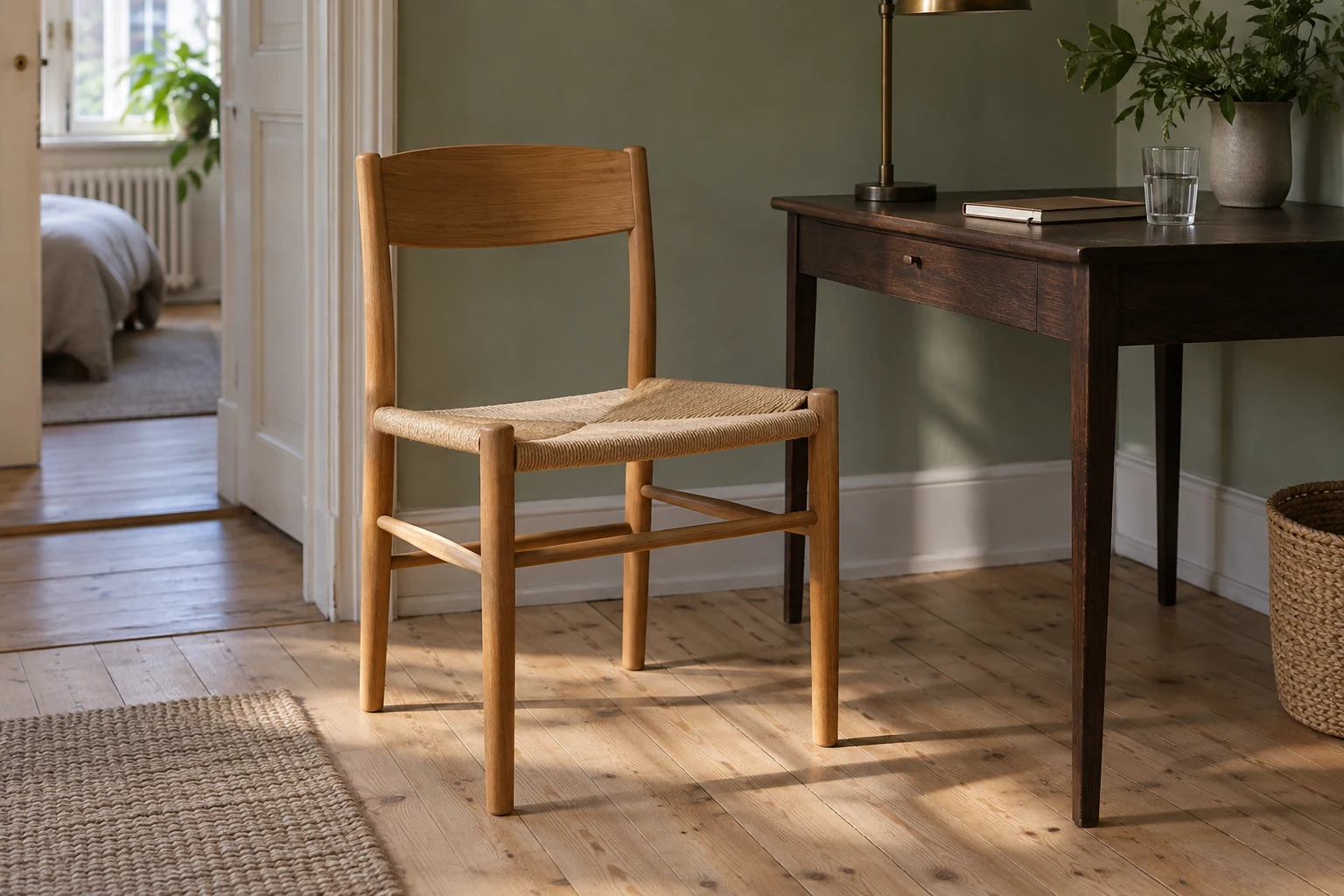
A finish called vintage is not a date
Fredericia’s current options include Beech vintage lacquer. Its page also groups Vintage Lacquered with colour variants introduced in 2023. This gives a concrete reason to separate the words in an advert: a current finish name can sound like a claim of age.[1]
If a listing says “vintage lacquer J39”, ask whether that describes the finish, the production period or both. Request any purchase record and clear photographs of marks in their actual position. Record an unconfirmed date as unconfirmed; neither a warm brown colour nor the 1947 design date establishes when that chair was made.
Choose a surface you like as it stands. The current range includes oiled, soap-treated, lacquered and painted wood, so a J39 is not automatically an oil-finished chair. On an older example, previous refinishing adds another question. Establish the present finish before deciding how to clean or renew it.[1]
Put frame work before a new seat
Look at the seat rails, stretchers, legs and the places where the broad back joins its supports. Ask about movement, splits and previous gluing. If the seller reports looseness, have that assessed before a sitting trial. A neat new seat can be attractive while still leaving an unresolved frame problem.
For a cord chair needing restoration, send the complete frame to the proposed restorer in photographs first. Ask whether joints need attention before weaving, what colour and material they propose, and whether the work can be quoted together. Agree what happens if hidden frame damage becomes apparent when the old seat is removed.
For the seat itself, use the woven-seat inspection Guide. It explains what photographs can show; the J39 decision here is which construction and whole-chair result you want.
For the factory upholstered version, ask a supplier to confirm replacement cover and webbing options for the identified chair. A removable cover on today’s model is not a promise that a current replacement fits every older seat. Keep the model evidence with the enquiry.
Compare the chair you will end up with
A sound cord chair with honest wear may need no immediate work. A project can still be worthwhile when you want a particular wood colour and the frame repair and weaving are understood. Compare both at the same point: chair collected, required repairs finished and the intended seat ready to use.
A message for the seller
Is the seat paper cord, a loose pad over an existing seat, or factory upholstery? Please show the seat underneath, the whole frame and any marks in place. What is known about its age, present finish, replaced parts and joint repairs? Please also measure the actual seat height and say whether every chair in the group feels consistent.