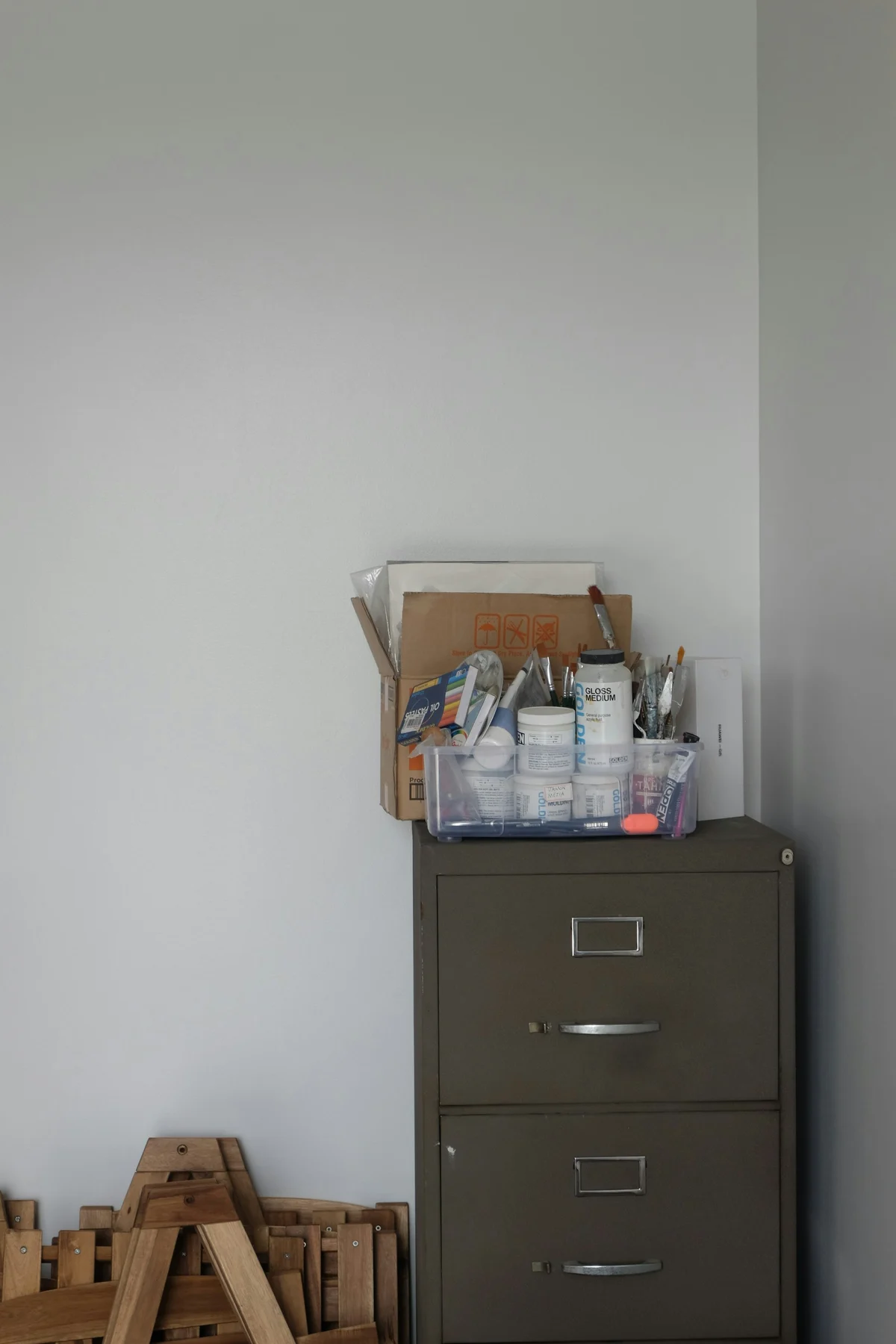
Start with the contents, not the number of drawers
Are you storing hanging folders, loose stationery, flat drawings or ring binders? A cabinet with many shallow drawers can be excellent for small materials yet unsuitable for upright files. A tall suspension-filing drawer may waste space if you only need envelopes and pens.
List the largest item and how you want to retrieve it. A ring binder that fits when laid flat may not be convenient in a deep drawer. Labels are useful, but the inside arrangement is what makes a cabinet usable every day.
A4 paper does not settle suspension-folder fit
Bisley’s filing range distinguishes A4 and foolscap cabinets and offers different internal arrangements. Those labels concern the filing system, not simply whether a sheet of paper fits inside. Identify the actual model and drawer before buying folders or replacement rails.[1]
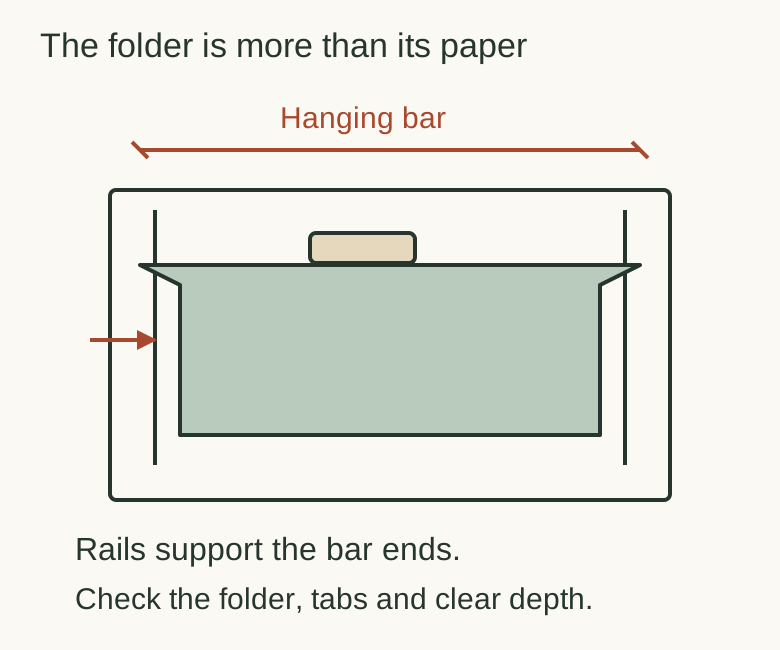
Measure your folder’s hanging bar from end to end, the positions where it rests on the rails and the space occupied by its tabs. Then compare the clear drawer height, depth and rail arrangement. Some systems allow different orientations or accessories; confirm that possibility for the exact cabinet.
| Check | Useful evidence |
|---|---|
| Hanging support | Both ends of the folder rest properly on the correct rails. |
| Full depth | The folder hangs without its bottom being folded or obstructed. |
| Tabs and contents | A representative filled file clears the opening and closes normally. |
| Included fittings | The necessary rails, dividers or inserts are present and identified. |
The easiest viewing check is a real folder carrying a modest sample of its usual contents. If buying remotely, ask for photographs with a ruler across the relevant rail positions and inside dimensions. Avoid guessing from the outside width.
Open one drawer at a time
Have the seller demonstrate normal drawer operation on a correctly positioned cabinet, following its instructions. Keep the other drawers closed. Watch for sticking, an uneven run, a missing stop or a damaged handle; do not remove drawers to investigate the mechanism during an ordinary viewing.
Bisley lists an anti-tilt mechanism on its current BS filing cabinets. That is a model-specific feature, not something to assume in every older Bisley or unmarked cabinet. Ask whether the exact cabinet has an interlock and whether it remains complete.[1]
Do not try to defeat an interlock or force a second drawer open. A missing or damaged retention component needs an identified repair, not a home-made substitute. Follow the maker’s loading and securing instructions, and ask a competent installer where the original information is unavailable.
Look inside the bottom drawer
Exterior paint chips may be acceptable in a working cabinet. Give more attention to bent drawer bodies, damaged runners, sharp damaged edges, corrosion around the base and any signs of water exposure inside. A fresh paint finish can change appearance without repairing the drawer below it.
Try the key with the seller present and confirm which drawers it is supposed to lock. A working lock is not evidence of fire protection or secure storage for valuables. If either property matters, obtain documentation for that exact model rather than relying on a heavy metal case.
Ask for the maker’s label and any model or key code that can appropriately be shared. A replacement-key service may exist, but identify the lock and check availability before treating a locked cabinet as usable storage.
Allow for the open drawer and the person using it
Mark the cabinet footprint, then the maximum drawer extension. Add the space you need to stand, look through folders and close it. Check the nearest door and walking route in that arrangement.
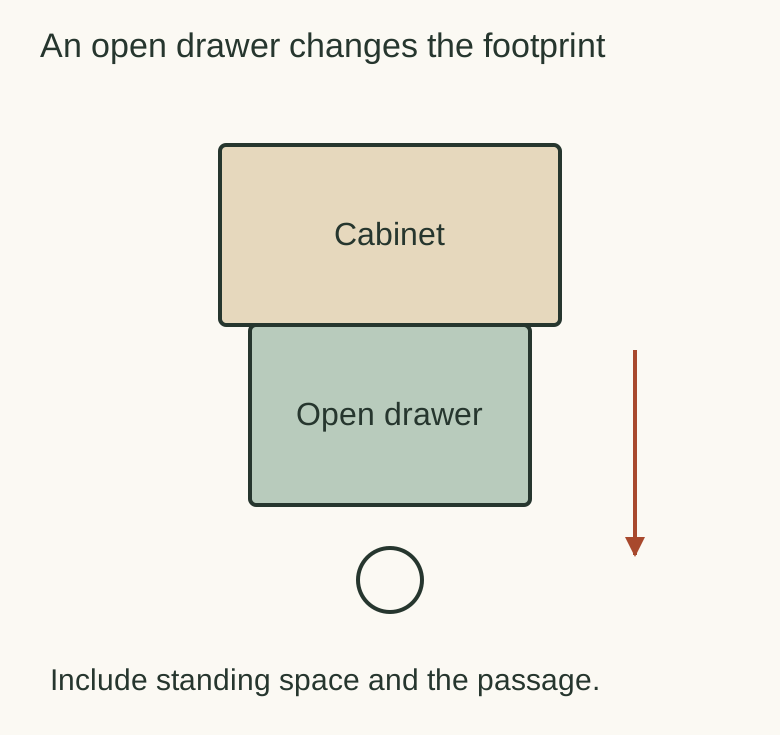
A cabinet tucked beneath a desk may prevent the top drawer opening or put its files beyond comfortable reach. Compare the handles and top clearance as well as the cabinet height. For collection, agree an empty-cabinet handling plan and use the identified transport procedure.
Ask about the filing system, not just the measurements
Message to the seller
I use [folder type and dimensions]. Could you identify the cabinet model and show the rails, clear drawer dimensions and normal operation? Please confirm included inserts, keys, stops and any interlock, plus damage or repairs to drawers and the base. I also need the closed depth and full drawer extension.
Choose the cabinet that takes your real files and works in your real room. If it needs an unavailable rail or has an unresolved drawer fault, the number of drawers is no longer the useful comparison.