Follow the turn
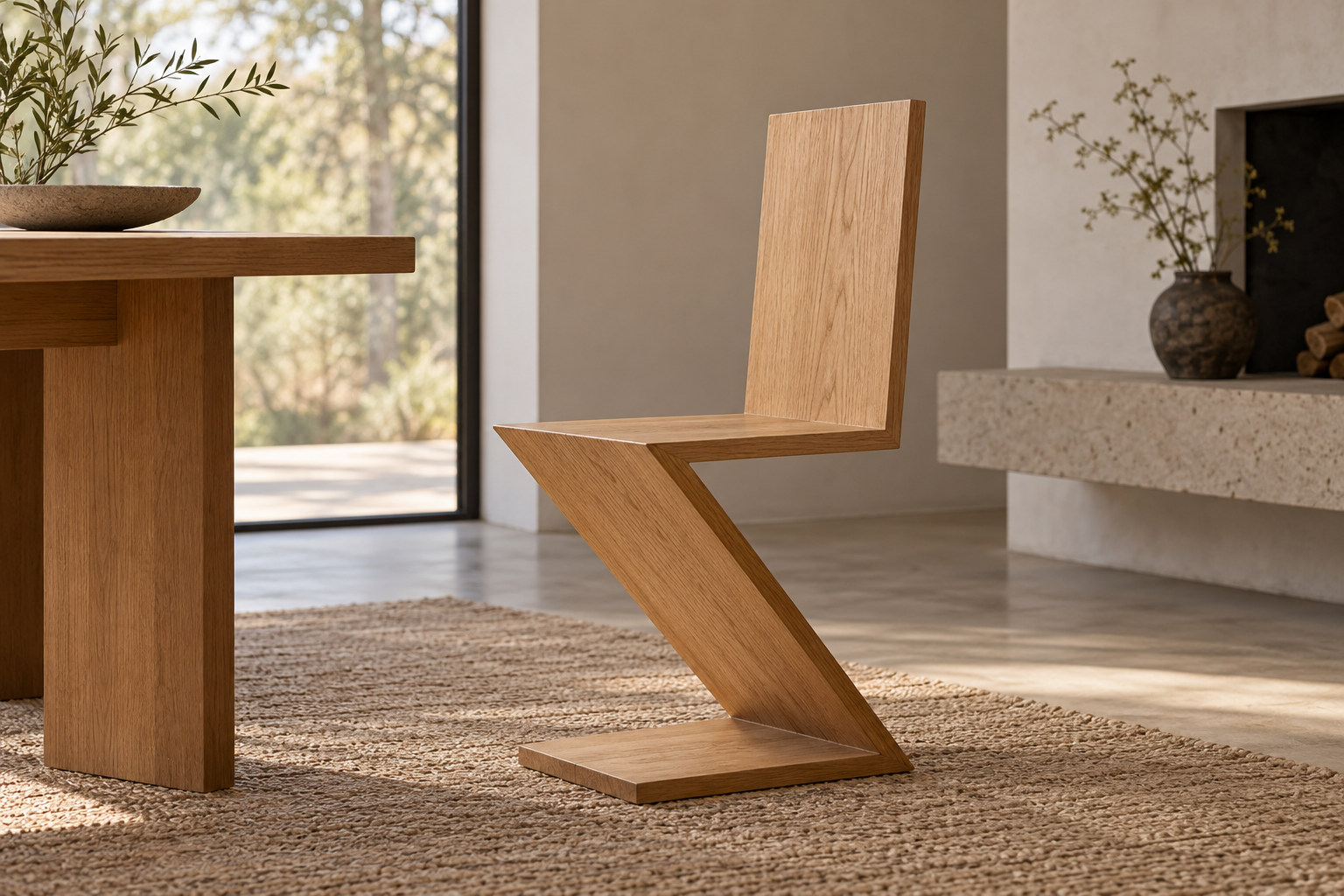
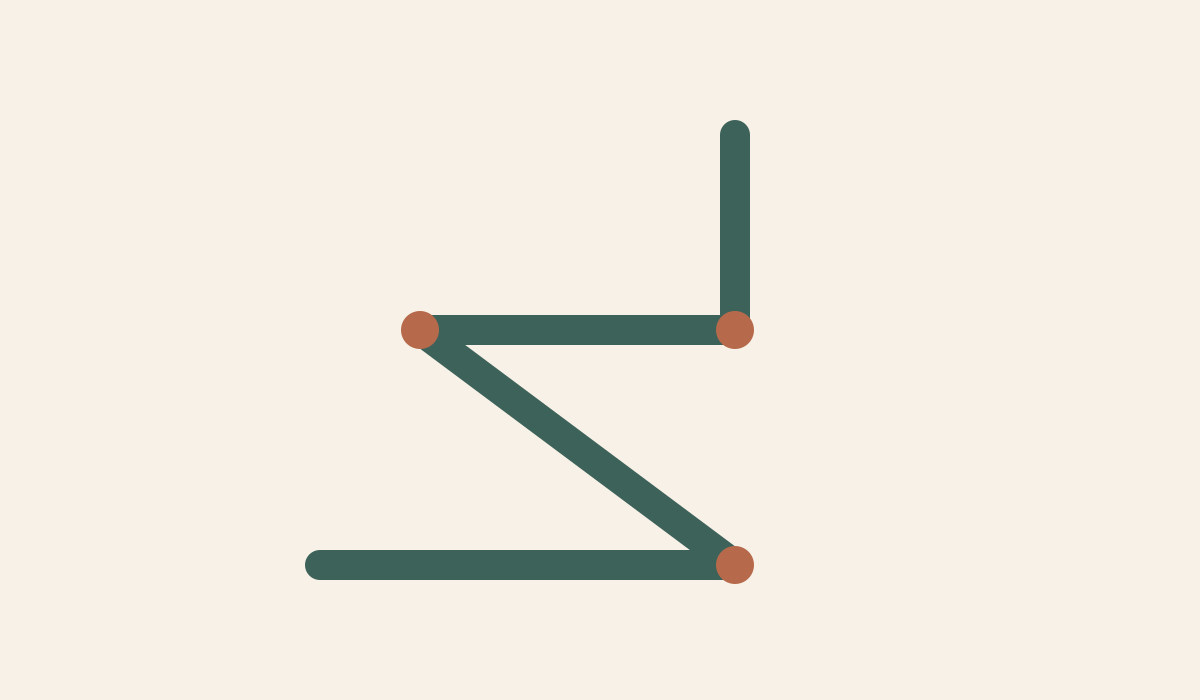
Zig-Zag makes a chair's load path part of its silhouette. Four wooden planes turn from the floor through a diagonal support to the seat and back. The outline is easy to remember because the usual collection of legs and rails has been compressed into a sequence of changes in direction.
MoMA dates its Zig-Zag Chair design to 1934 and records oak with brass fittings. Even that short material description complicates the impression of a chair made by simply folding a sheet.1
The difficult parts are the corners
A seat has to transfer the sitter's weight into its support. In this chair, the route turns at the junction with the diagonal and again where the diagonal reaches the base. Those small regions have work to do that a conventional frame distributes among more visible members.
Cassina's account of its later production draws attention to the joinery, including dovetail connections. The clean outline depends on decisions at the edges. A photograph from across a room can make those decisions seem almost absent; looking closely brings them back.3
It is useful to follow one junction before looking at the whole chair again. The strong graphic shape then becomes a construction with relationships between surfaces, edges and fittings.
One line took several attempts
Centraal Museum traces the design's development to 1932 and explains Rietveld's ambition for a chair made from a single sheet. Its exhibition history shows Zig-Zag as a developing family, with changes in proportion, arms and backs, rather than one idea that arrived complete.2
The dates describe that process from different positions. The early development and the familiar wooden model need not be forced into one year. Nor does the four-plane result prove that Rietveld achieved a chair literally made by folding one piece of material. The appearance of continuity and the method of joining are different parts of the story.
A small footprint in the room
The open side gives Zig-Zag a particular spatial presence. There is a broad seat above a diagonal plane, with an uninterrupted pocket of air beneath. Move around it and the diagonal alternately presents a wide face and a narrow edge. The object changes without a moving mechanism.
Later production adds its own timber, finish and workmanship to that outline. Those choices should be read as production history rather than used to date every surviving chair.3
The memorable zigzag is an invitation to look. The more revealing subject is what happens whenever its line turns a corner.