Design story

Utrecht: straight lines settle into a soft chair

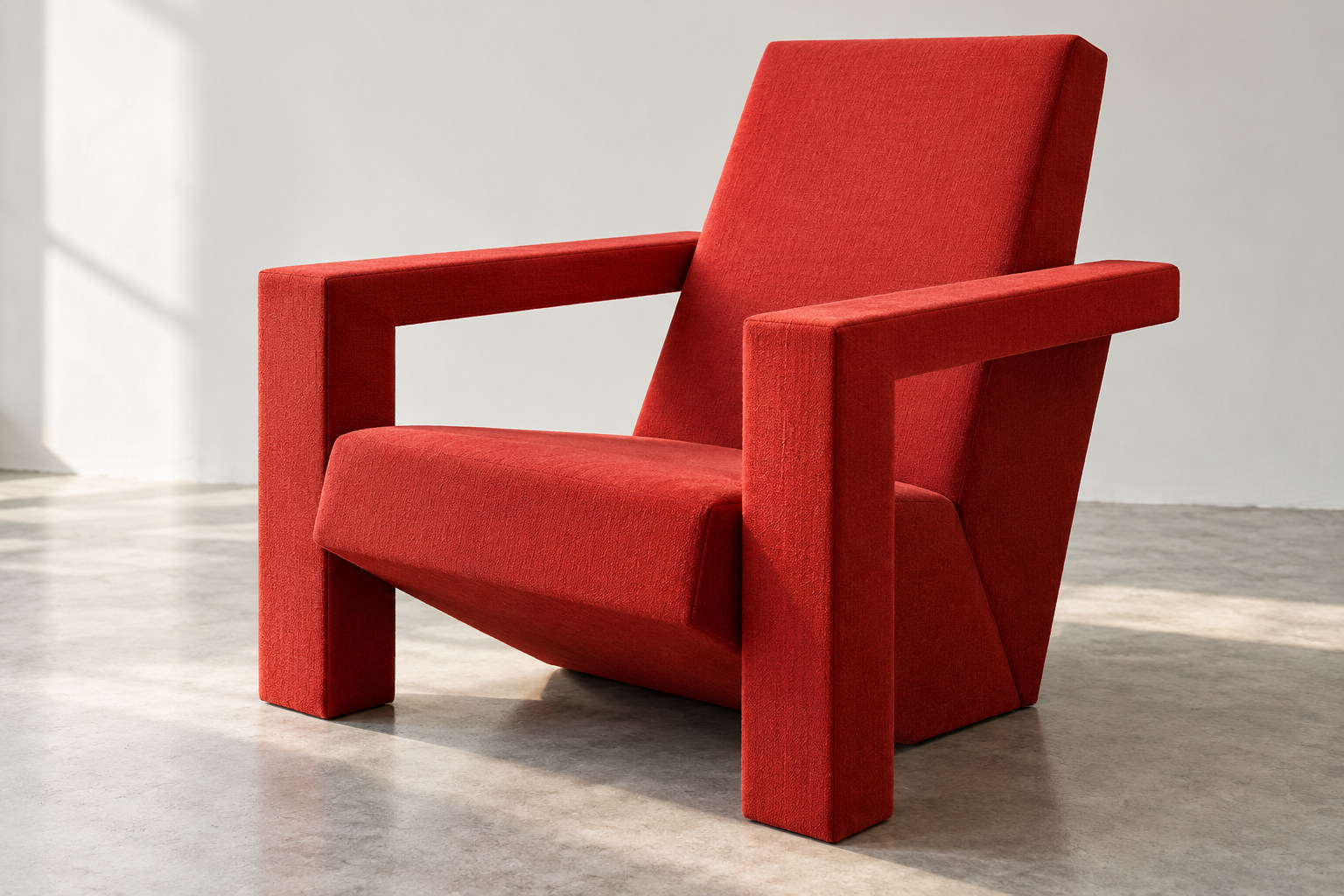
Utrecht makes a welcoming place from decidedly angular parts. Rietveld’s chair lets upholstery keep a clear outline while the seat and back make room for a person to settle in.

An angular red upholstered armchair with broad padded arms and an inclined back, shown from the front and side.
PatinaHall editorial reconstruction. It is not a documentary photograph. The view explores the Utrecht design’s distinct padded volumes and reclining space. It illustrates the composition, not the stitching, padding or dimensions of a documented historical example.
On this page
Key facts & takeaways

At a glance

Subject
Utrecht armchair
Entry
Design story
Last reviewed
23 October 2026
Designed
1935documented

Three things to remember

  1. The Utrecht armchair design dates to 1935.
  2. Its seat, back and arms remain distinct padded forms.
  3. Cassina’s 1988 production is a later chapter in the design.

An angle you can settle into

A chair can look decisive without looking unwelcoming. In Gerrit Rietveld’s Utrecht armchair, the arms, seat and back remain separate upholstered volumes. Each has a clear direction, yet their meeting makes a place for a person rather than a diagram. The Rietveld Foundation dates the design to 1935 and describes the right angle made by the front support and arm.1

Follow that angle upwards, then look at the inclined back. The two gestures do different things: one gives the chair its firm outline; the other opens a reclining space within it. Softness does not erase the composition. It makes the composition available to the body.

Padding with a distinct outline

Upholstery often disguises the parts beneath it. Utrecht keeps its padded parts legible. The broad arms frame the seat; the back rises between them without becoming one rounded cushion. Looking from the side is especially rewarding because the chair’s slopes become easier to separate.

This is a useful way to understand an angular interior object. Its appearance of firmness and its invitation to rest need not cancel one another. Rietveld could work with recognisable planes while giving them thickness, fabric and a domestic scale. The interesting move is the agreement between those qualities, rather than the defeat of one by another.
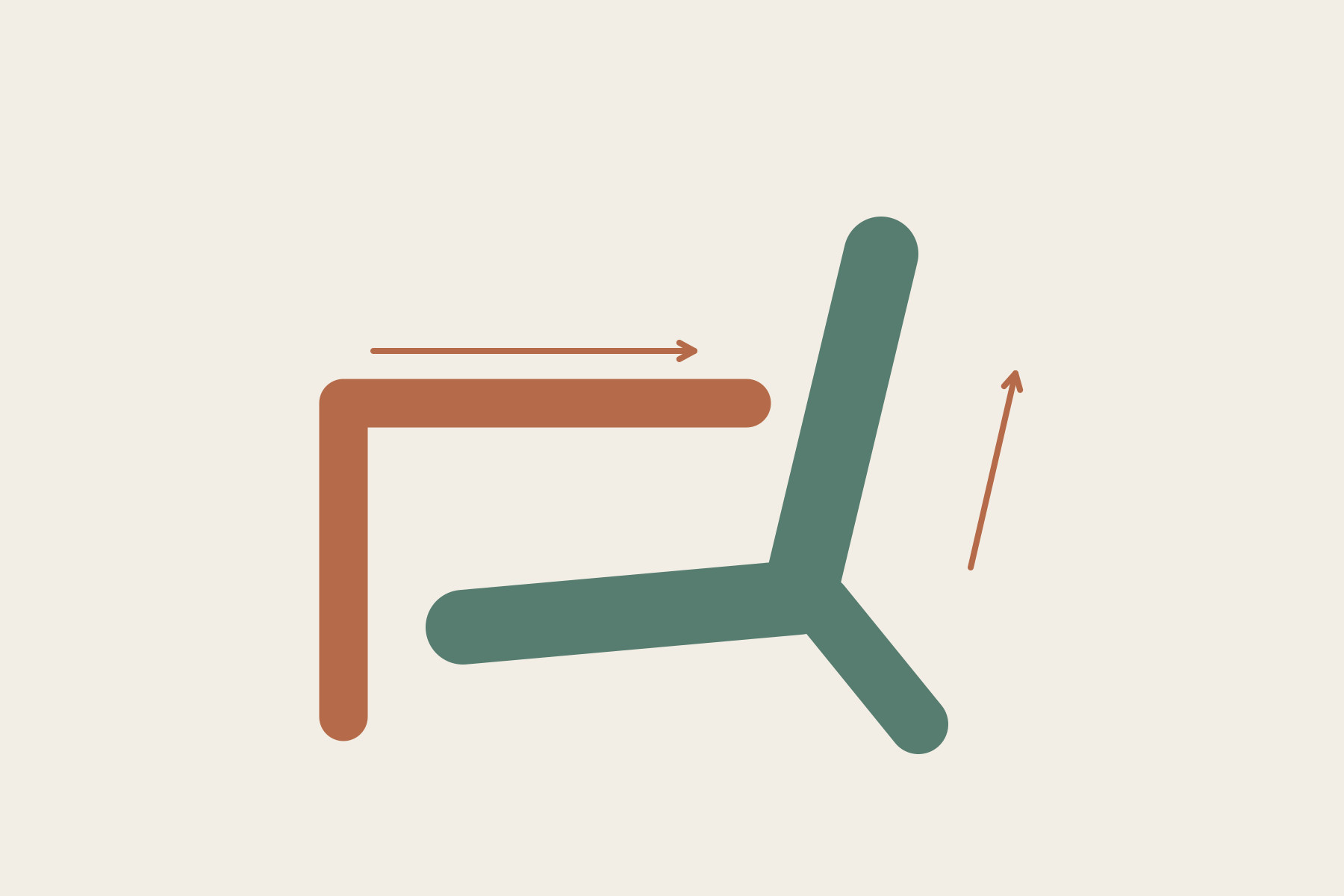
Two coloured angular paths separate the arm-support direction from the reclining seating direction.
Original PatinaHall schematic, not to scale. Separate coloured paths distinguish the arm and front support from the inclined seat and back. Their relationship explains the composition; the drawing does not specify an internal frame or padding section.

A design with another production chapter

Cassina’s record separates the 1935 design from its own production beginning in 1988.2 That gap is part of the story. A design can acquire a later manufacturing life while retaining an earlier spatial idea.

The distinction also makes looking more precise: a current fabric, seam or padding specification belongs to an edition, while the relationship between upright support, arm and reclining back helps explain the design. Utrecht offers a satisfying small discovery. Geometry need not stand at attention. Here it has found somewhere to sit.
Research notesEvidence, connections and limits

The foundation’s account describes the armchair’s geometry; Cassina distinguishes the 1935 design from its own 1988 production. Current padding and stitching do not specify every historical chair or the later sofa.

Evidence map

Connected subjects and evidence

Reviewed facts

  • Designed 1935documented

    The foundation’s account describes the armchair’s geometry; Cassina distinguishes the 1935 design from its own 1988 production. Current padding and stitching do not specify every historical chair or the later sofa.

    Reviewed 23 October 2026 by PatinaHall editorial.
    • Source 1Furniture: Utrecht armchair, 1935

Reviewed connections

  • Utrecht armchairdesigned byGerrit Rietvelddocumented

    The cited record explicitly identifies this designer for the repeatable design or coherent project family.

    Reviewed 23 October 2026 by PatinaHall editorial.
    • Source 1Furniture: Utrecht armchair, 1935
  • Utrecht armchairmanufactured byCassinadocumented

    This production relationship is scoped to the source record. Later manufacture, current specifications and the date of the original design remain distinct.

    Reviewed 23 October 2026 by PatinaHall editorial.
    • Source 2637 Utrecht: designed 1935, produced by Cassina 1988

Research trail

Sources and further reading

  1. Furniture: Utrecht armchair, 1935Rietveld FoundationAccessed 23 October 2026
  2. 637 Utrecht: designed 1935, produced by Cassina 1988CassinaAccessed 23 October 2026

Last reviewed 23 October 2026. Found an error or a stronger primary source? Contact PatinaHall.