Design story

Crate Chair: ordinary boards, a different bargain

An inexpensive board can be more than a substitute for a finer material. In Rietveld’s Crate Chair, its width, grain and straightforward connections become the furniture’s character. The chair’s story also leaves the workshop: selling it as a kit changed what a customer could receive and do.

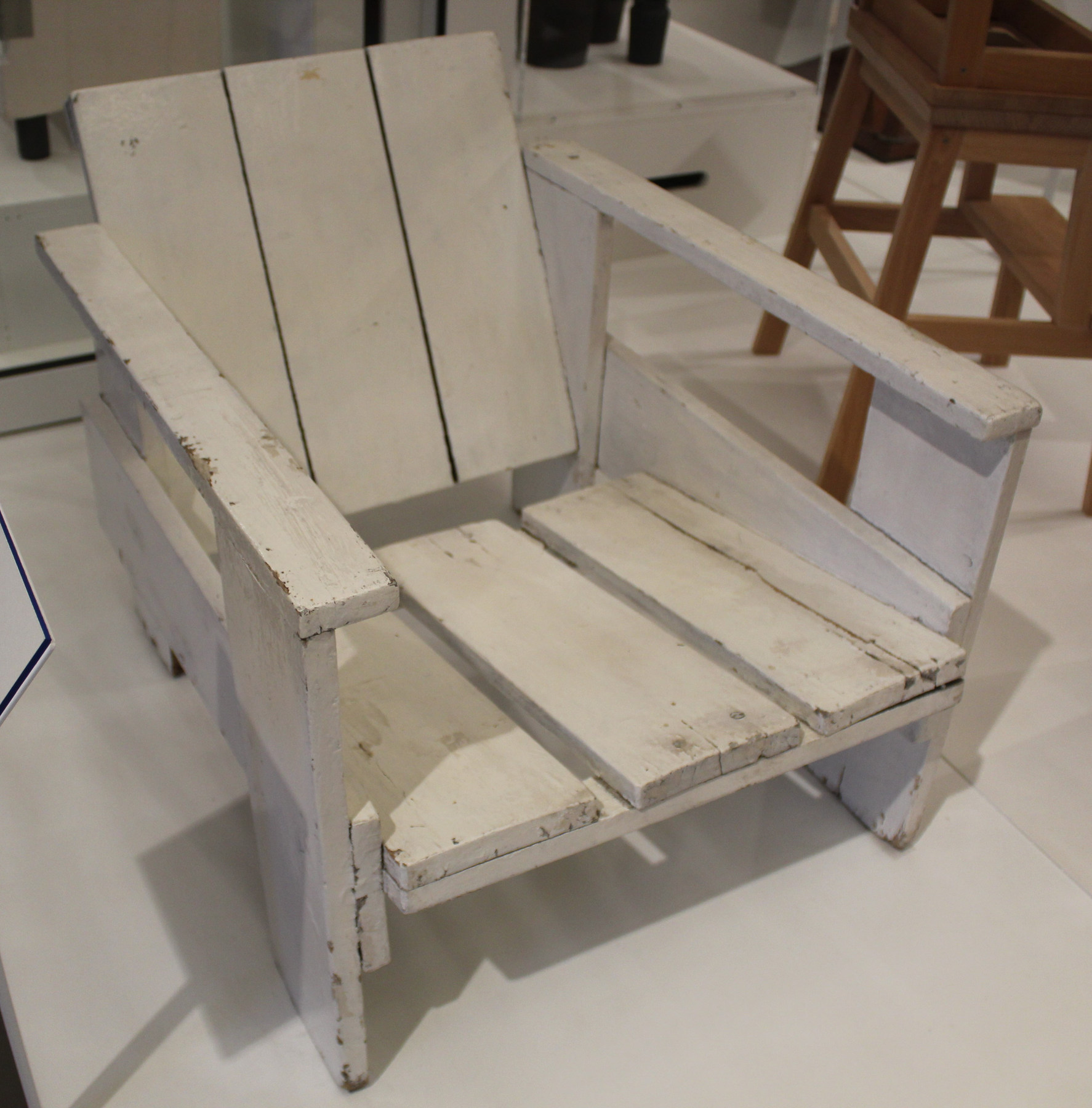
A white-painted wooden Crate Chair at the Victoria and Albert Museum, with broad boards and open sides.
Crate chair displayed at the Victoria and Albert Museum, W.30-1987. The broad boards remain distinct across the seat, back and arms. Photograph: 14GTR / Wikimedia Commons. CC0 1.0.
On this page
Key facts & takeaways

At a glance

Subject
Crate Chair
Entry
Design story
Last reviewed
23 October 2026
Designed
1934documented

Three things to remember

  1. Rietveld's first crate furniture dates from 1934.
  2. The chair was supplied assembled or as a kit.
  3. Metz & Co marketed the series as Weekend Furniture in 1935.

Begin with the boards

The Crate Chair asks a practical question before an aesthetic one: how much furniture can ordinary boards provide? Gerrit Rietveld answered with a low, open armchair whose broad pieces remain easy to distinguish. The material, assembly and way of selling the chair belonged to the same idea. Centraal Museum dates his first crate furniture to 1934 and records that he supplied it either assembled or as a kit.1

Look at the broad faces and the spaces between them. A board can support the body, define an edge or connect other pieces. Those jobs remain visible. The chair does not need a continuous upholstered volume to make its place in a room understandable. Its silhouette includes a considerable amount of the room behind it.

A rough surface could belong

Design Museum places Crate in the difficult economic circumstances of the early 1930s. It describes inexpensive timber with visible flaws and a deliberately straightforward construction. The unevenness of ordinary wood was compatible with the design, rather than something that had to disappear beneath an elaborate finish.2

That changes how the eye reads the object. Grain, a knot and the width of a board can remain part of its character. The interesting comparison is between the regular arrangement and the irregular material. Repeated pieces give the chair an order; the timber keeps that order from looking perfectly anonymous.
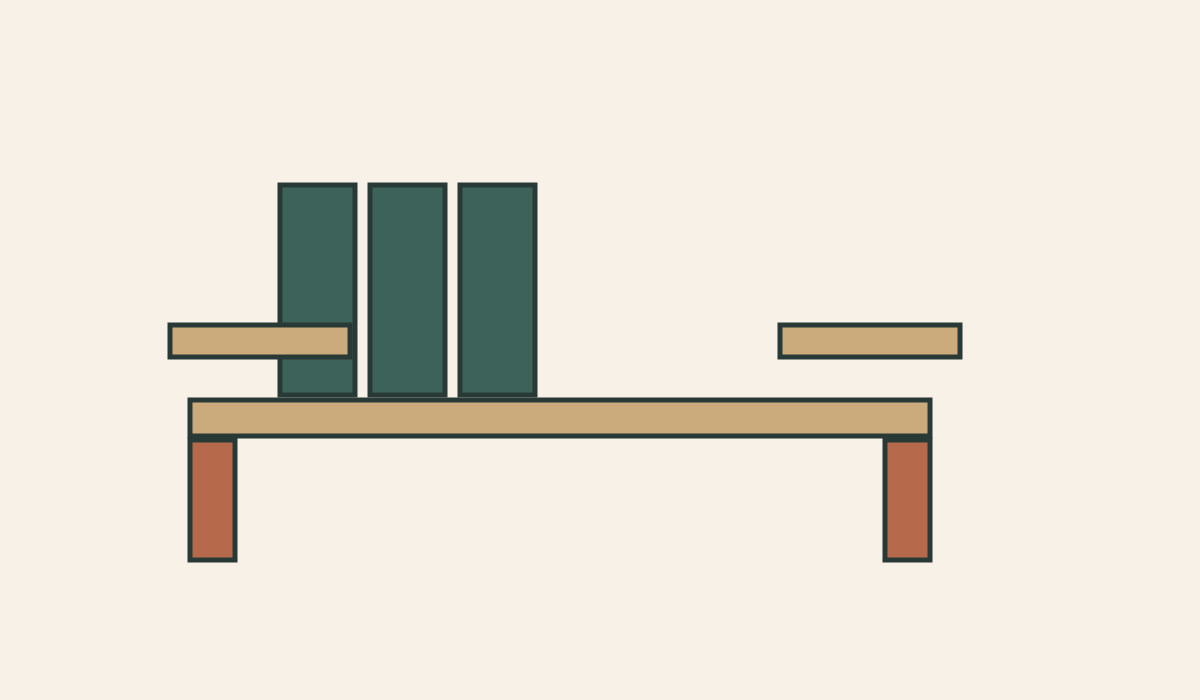
Simple coloured boards show a seat and back supported by an open frame.
Original PatinaHall schematic, not to scale. Broad boards retain distinct jobs: supporting the sitter, describing the back and connecting the sides. This is an explanatory arrangement, not a cutting list.

Furniture for the weekend

In 1935 Metz & Co introduced a series of crate furniture as Weekend Furniture. Centraal Museum connects it with affordable furnishings for holiday homes. The kit option also moved part of the work beyond the workshop: the buyer could receive components rather than a finished chair.1

A kit makes the relationship between design and assembly unusually plain. The maker must resolve which parts belong together before someone else can put them together. Simplicity is therefore a task for the designer as well as a possible convenience for the customer. The documentary record supports that specific arrangement; it does not establish a universal first in flat-pack furniture.

The idea outlives one edition

The later Rietveld Originals and HAY collaboration brought the Crate series back into production. HAY identifies the connection with Rietveld's ambition for affordable, well-designed furniture. That is a manufacturer's account of the relaunch, rather than evidence that its present products are identical to every earlier chair.3

The useful way back to the original is through its parts. Follow a board, notice the job it performs, and then look at the open chair again. A modest piece of timber has become both a working component and a line in the room.
Research notesEvidence, connections and limits

The sources establish the design and its sale as assembled furniture or a kit. They do not make it the first flat-pack chair, establish the previous use of every board or date an unreviewed example.

Evidence map

Connected subjects and evidence

Reviewed facts

  • Designed 1934documented

    The sources establish the design and its sale as assembled furniture or a kit. They do not make it the first flat-pack chair, establish the previous use of every board or date an unreviewed example.

    Reviewed 23 October 2026 by PatinaHall editorial.

Reviewed connections

  • Crate Chairdesigned byGerrit Rietvelddocumented

    The cited record identifies the designer of this design or coherent project family.

    Reviewed 23 October 2026 by PatinaHall editorial.
  • Crate Chairuses materialSprucedocumented

    The source identifies the timber used in the design; retail launch or a later studio name is not treated as proof of manufacture.

    Reviewed 23 October 2026 by PatinaHall editorial.

Research trail

Sources and further reading

  1. Kratstoel, object 12580Centraal Museum UtrechtAccessed 23 October 2026
  2. Chairs: 1930s, Crate 1934Design MuseumAccessed 23 October 2026
  3. Gerrit Thomas Rietveld and Rietveld Originals x HAYHAYAccessed 23 October 2026
  4. Crate chair, V&A W.30-1987, photograph by 14GTRWikimedia CommonsAccessed 23 October 2026

Last reviewed 23 October 2026. Found an error or a stronger primary source? Contact PatinaHall.