The useful part stays recognisable
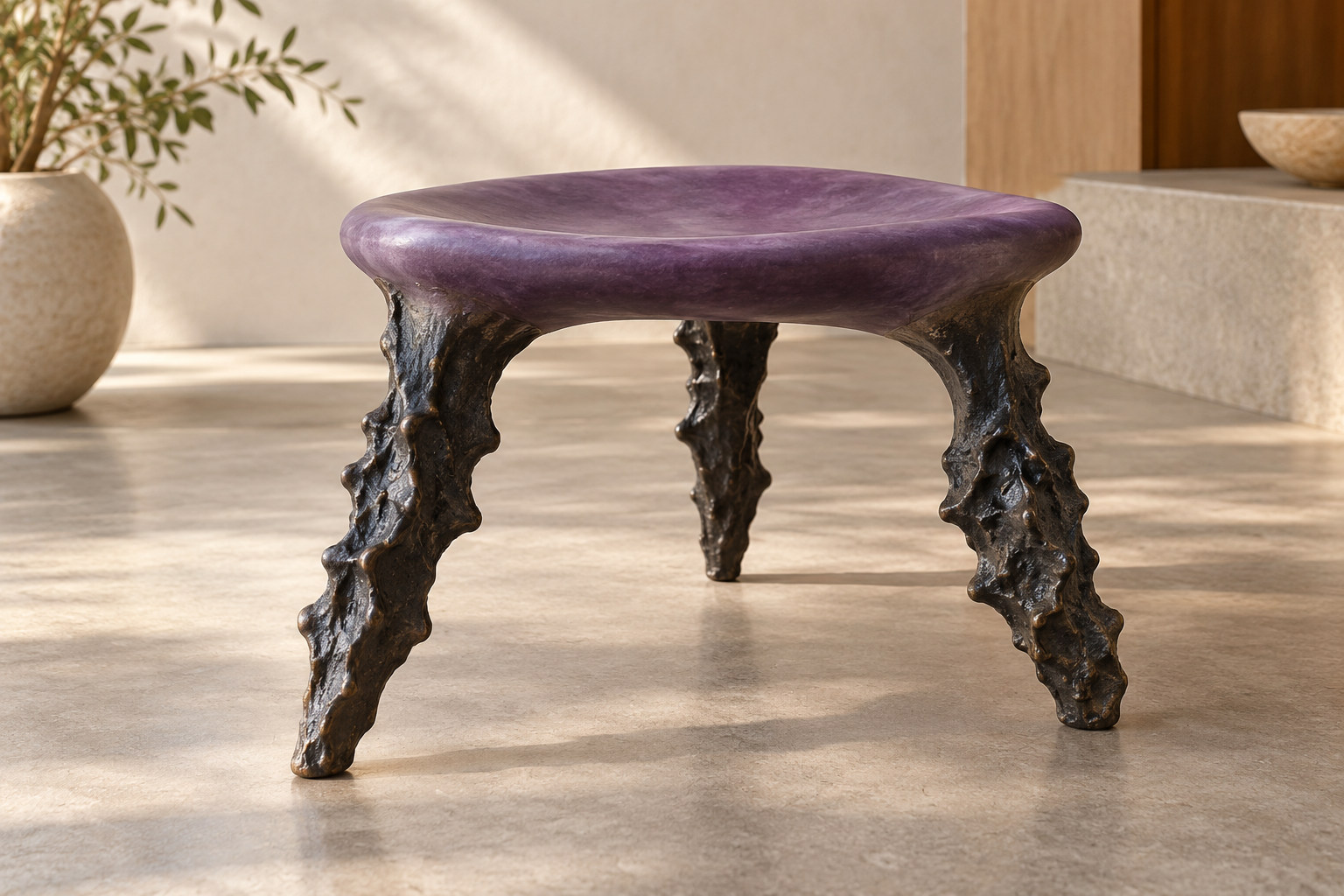
A seat has an ordinary job even when its supports look extraordinary. In the NGV’s Original gravity stool, the relatively even upper surface gives the eye a place to settle. Beneath it, the material becomes ridged and irregular. A familiar piece of furniture holds two different kinds of order together.
The museum identifies iron, polyurethane and pigment in its object. It dates the design to 2011 and this manufacture to 2016. Its 2017 acquisition is another event in the stool’s history, rather than an alternative design date.1
Those distinctions matter because the process allows differences between examples. One stool cannot stand in for every shape the tool might produce. The museum object gives the story an address without making the whole experiment uniform.
The drawing moves into the machine
Van der Wiel’s account begins with the mixture. He places iron-bearing plastic within a custom apparatus whose magnets influence the material as the forming parts move apart. The NGV’s teaching account describes the large frame and magnetic moulds through which the stool takes shape.12
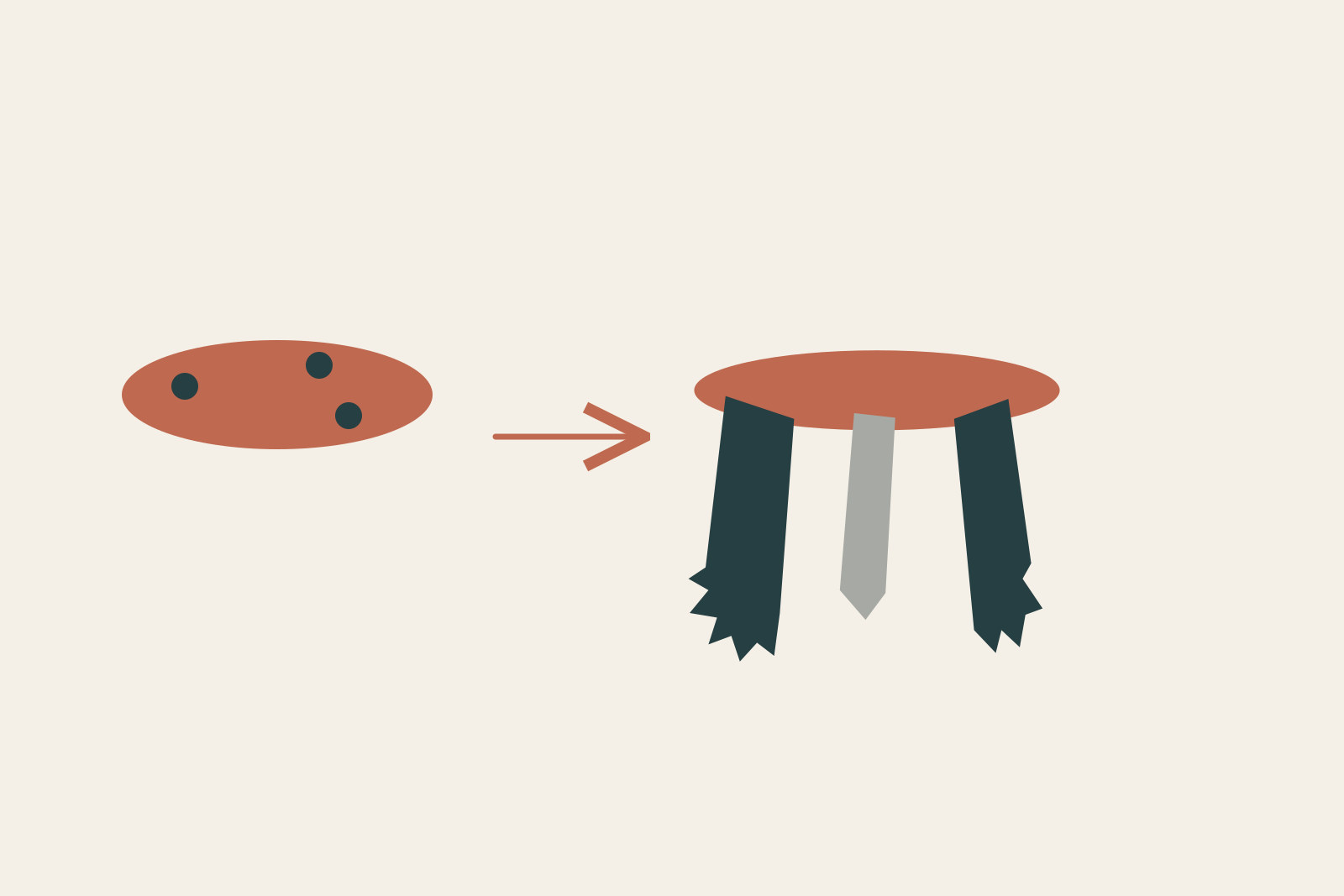
Here a design decision can take the form of a condition: where the material begins, where a magnet is placed, when two parts separate. Drawing the finished outline is only one possible way to determine a form. Building an apparatus offers another.
The distinction is especially easy to see in the relationship between seat and supports. Van der Wiel says he determines the seat shape and the places the legs should occupy. He steps back from prescribing every contour, rather than abandoning the furniture’s useful organisation.1
Variation has a framework
The studio calls the wider project Gravity Series and describes the opposing fields as helping determine its forms. The name points to a fascination with forces; magnetism and gravity remain different physical phenomena.3
What makes the result interesting is the arrangement of responsibility. The maker develops the mixture and apparatus. The material responds within that setup. The final object carries signs of both, so an irregular edge can belong to the process rather than to a drawn ornament.
The stool gives that experiment a human scale. It is small enough to read as something for a room, yet its surface makes the act of forming unusually present. A person can recognise the seat immediately and spend rather longer wondering about what supports it.
A tool can leave a signature
An ordinary mould tends to make repeated outlines easier. This tool makes controlled differences part of the work. Its family resemblance lies in a way of forming as much as in a silhouette.
Look again from the seat downwards. The familiar surface supplies the reason for the object; the supports reveal a different way of reaching it. Gravity Stool makes the conditions of making almost as memorable as the thing made.