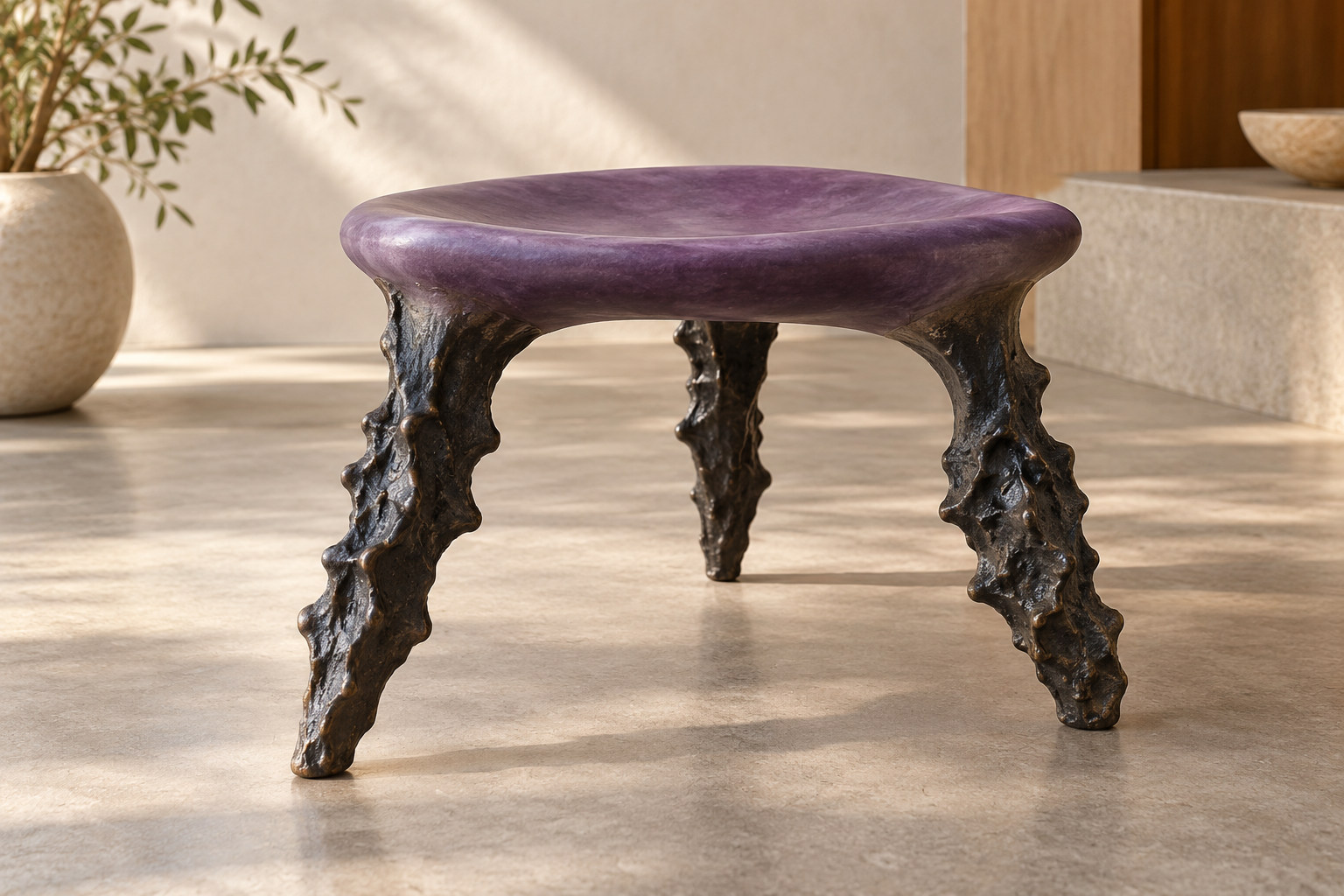
Design the conditions first
A designer can draw an outline and work towards it. Van der Wiel also asks what happens when a tool and a material are given a carefully chosen relationship. The conditions become a way of shaping what follows.
The studio describes a collaborative practice concerned with tools, new materials and experiments. Princessehof independently records his 2011 graduation from the Gerrit Rietveld Academy’s designLAB and the founding of his Amsterdam studio in the same year.15
That background supplies context for the method without making every result a version of the same object. A question about an invisible force can take several different material forms.
The stool gives an experiment a scale
The studio’s Gravity Series account describes a custom machine through which magnetic fields help determine shapes. In his NGV essay, van der Wiel explains that he still chooses such things as the seat shape and leg positions.24
The distinction is useful. Leaving room for a material’s response is not the same as leaving everything to chance. The designer decides what can vary and what the furniture must still provide.
An ordinary use gives the experiment a scale people can recognise. A stool lets a broad question about forming become something whose relationship with a body and a floor is immediately imaginable.
A question travels into another material
Waterbench belongs to the studio’s Tropic City work. In the NGV account, van der Wiel names Water bench 2017 while discussing objects that absorb and circulate water. That is the maker’s description of an experiment, not a verified claim about water treatment.34
Princessehof’s Dragonstone exhibition offers another material distinction. Its account describes clay mixed with metal powder and shaped in magnetic fields. The shared interest in forces does not make that ceramic mixture the same substance as a polyurethane stool.5
Following the question across those differences is more revealing than simply collecting unusual silhouettes. Each setting asks the practice to find an appropriate tool, material and kind of response.
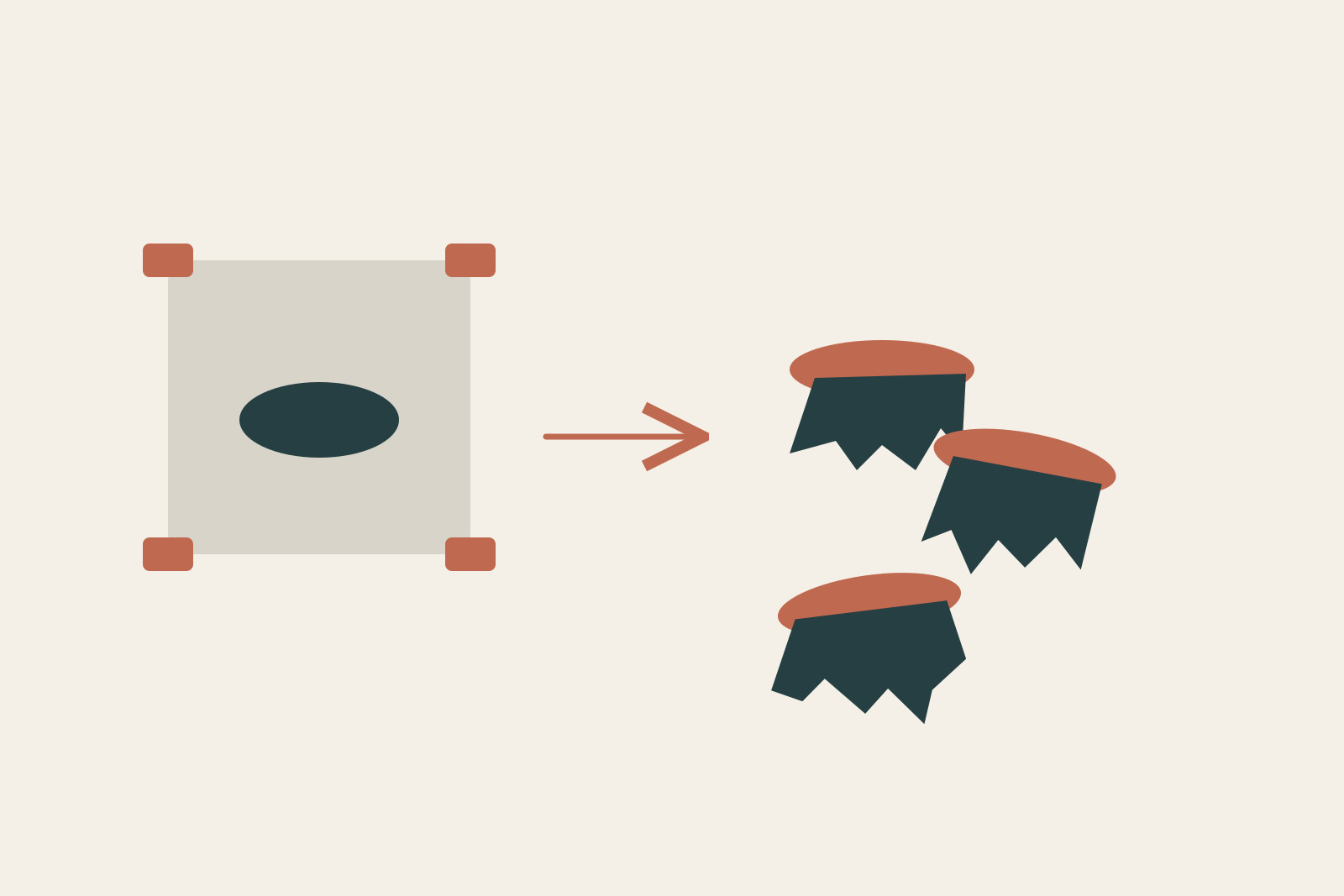
The experiment includes its framework
Van der Wiel’s approach makes a finished object feel connected to something beyond its outline. It asks the viewer to imagine the setup that let the material arrive at that form.
That framework is where much of the design work becomes visible: choosing the conditions, retaining a useful organisation and discovering which variations are worth keeping. The object can then carry the story of an experiment into an everyday room.