A line with somewhere to go
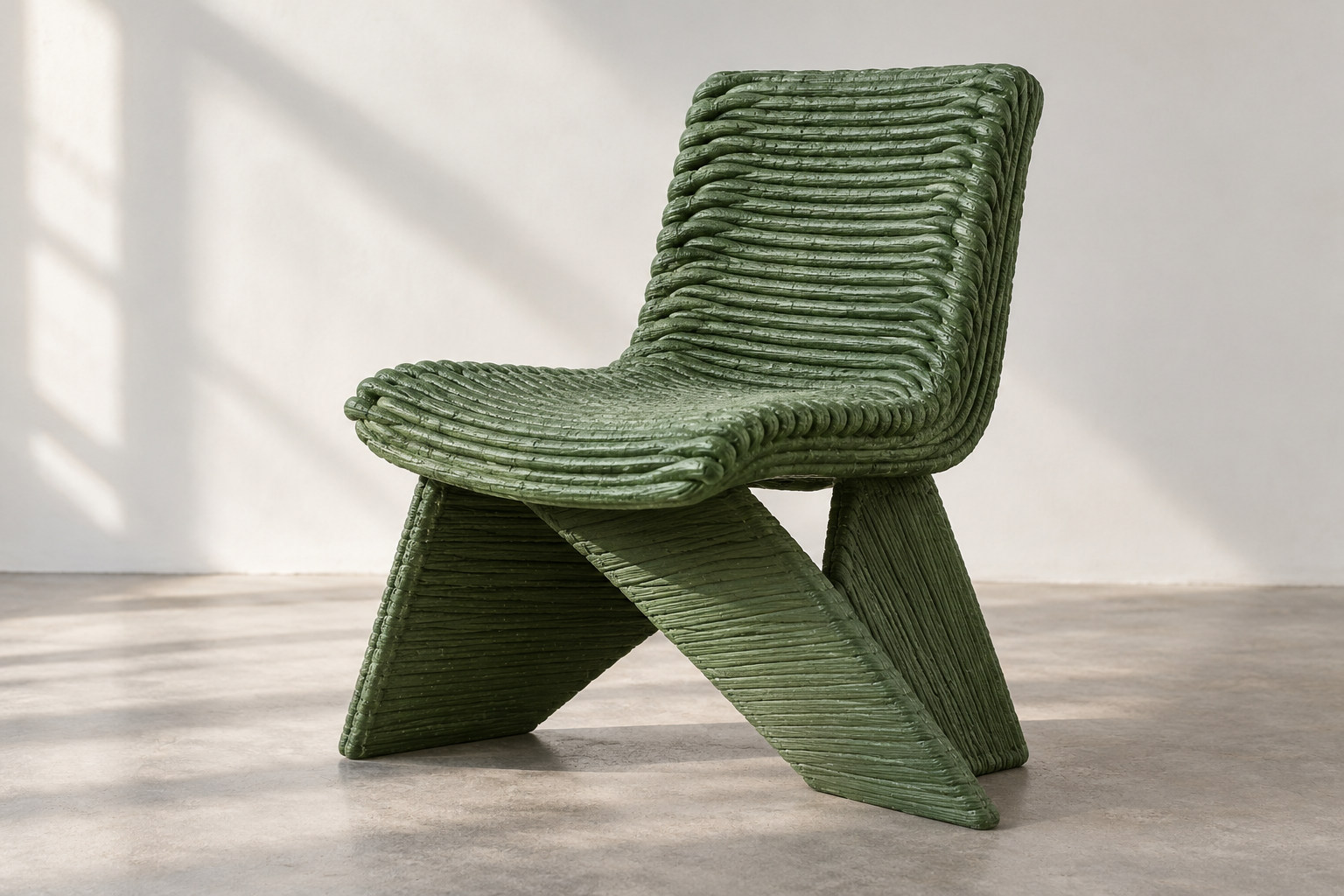
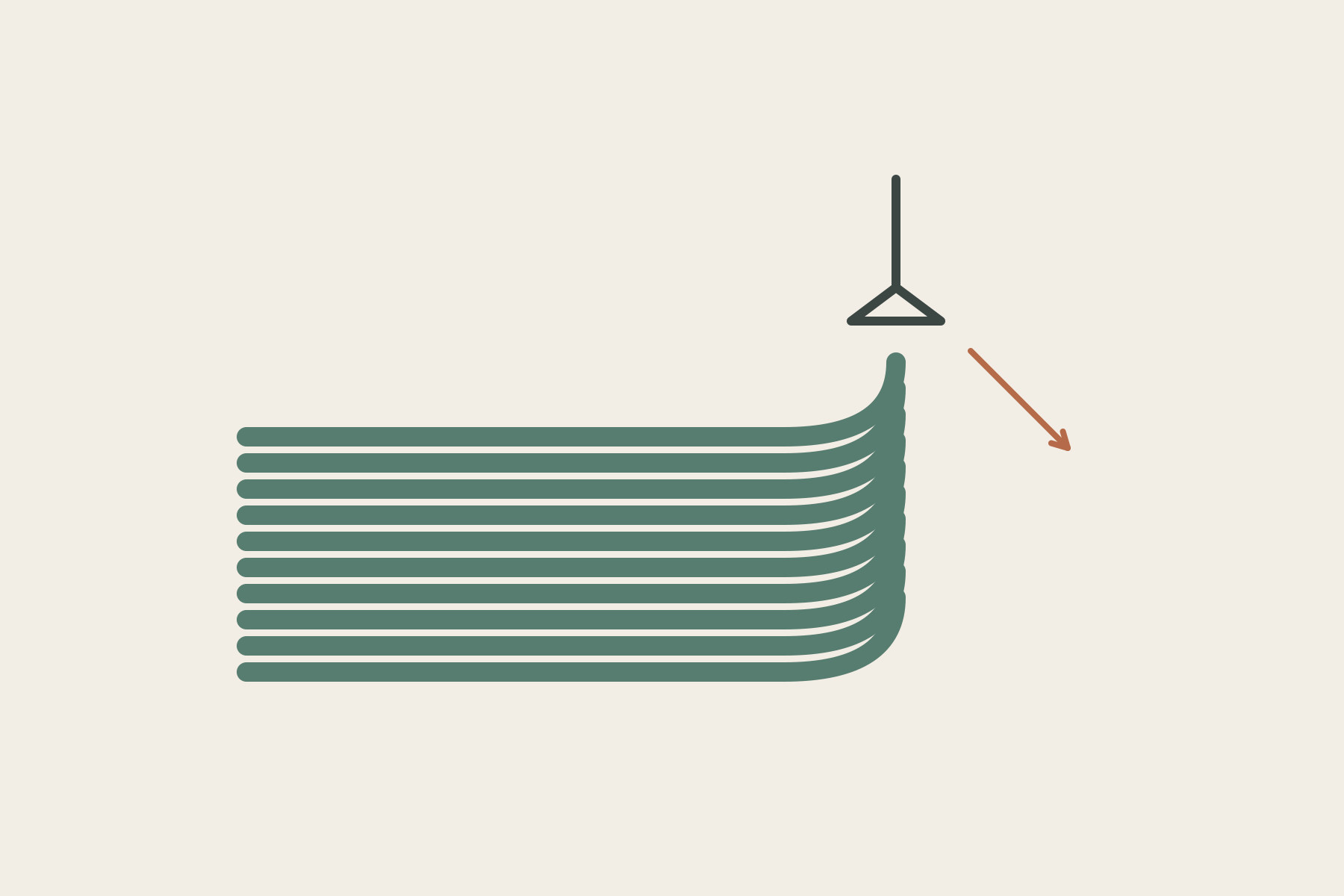
Some chairs hide how they were made beneath a smooth finish. Endless lets its making remain on the surface. A thick plastic line is deposited in layers, and the route stays visible in the chair’s ridges. The National Gallery of Victoria distinguishes Dirk Vander Kooij’s 2010 design from its own example, manufactured in 2016.1
The result gives a familiar object an unfamiliar rhythm. A chair still needs a seat, a back and support from the floor, but here those parts are read through the path of a material arriving gradually. The line is both a way of making and something to look at afterwards.
A robot becomes a drawing tool
The ifa collection identifies reused plastic in the project.2 NGV’s exhibition account describes its robotic production.3 Instead of expecting a robot to disappear behind an immaculate industrial surface, the chair lets the movement of production contribute to its appearance.
Look along the layers rather than across them. Changes of direction give the eye a route through the object, while the thickness of the deposited material makes the scale of the process apparent. It is closer to following a drawn line than reading a perfectly flat moulded shell. This remains an interpretation of the visible process, not a technical recipe for printing a chair.
An earlier material life stays in the story
NGV’s exhibition label identifies reclaimed refrigerator interiors as the source of the polycarbonate used in its account.3 Material that once belonged to another everyday object is made available for another kind of use.
That specific history is more revealing than an unmeasured promise about environmental benefit. It connects an ordinary appliance, a workshop machine and a place to sit. Endless makes that journey enjoyable to read: the plastic has changed jobs, and its new surface keeps a visible record of the work.