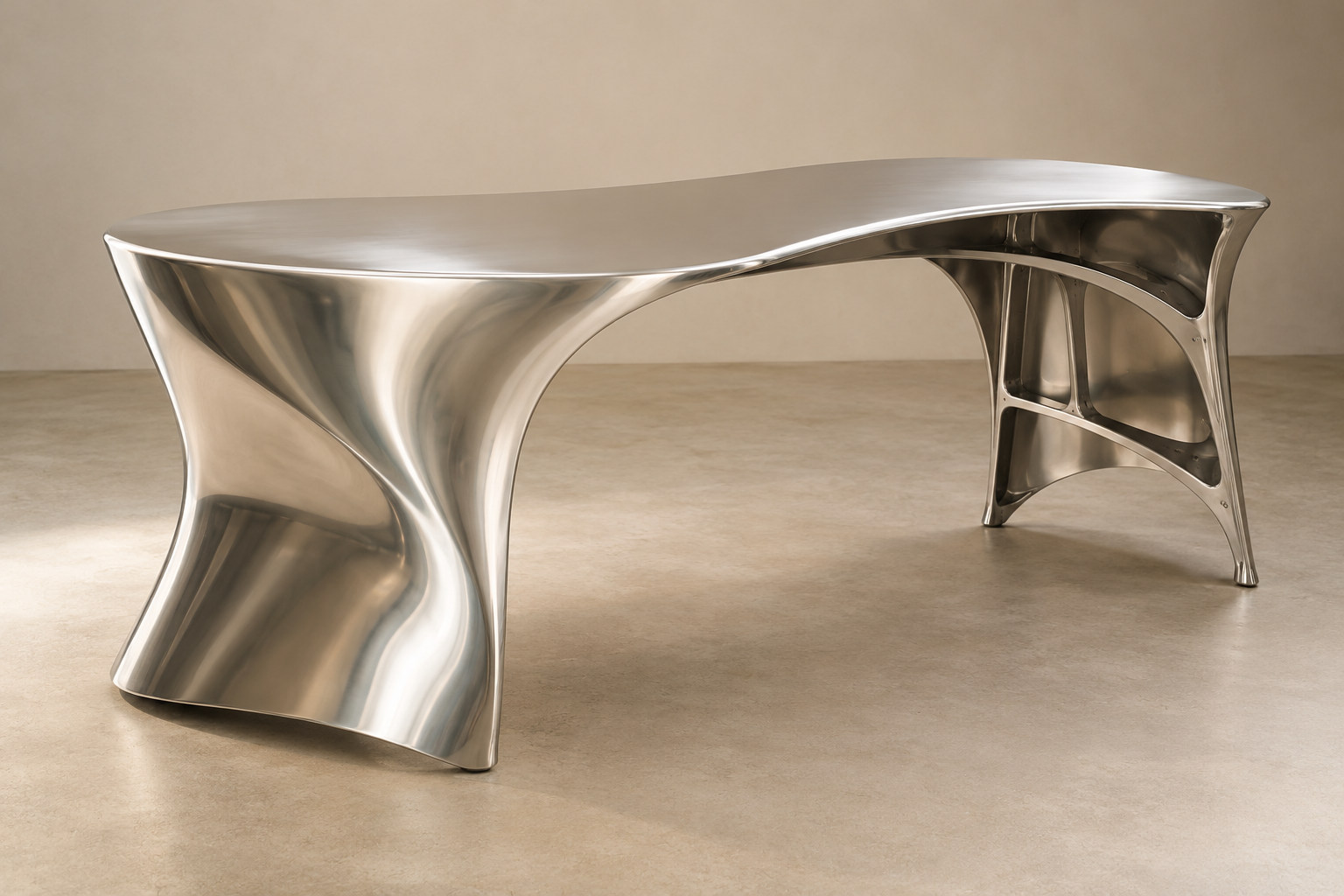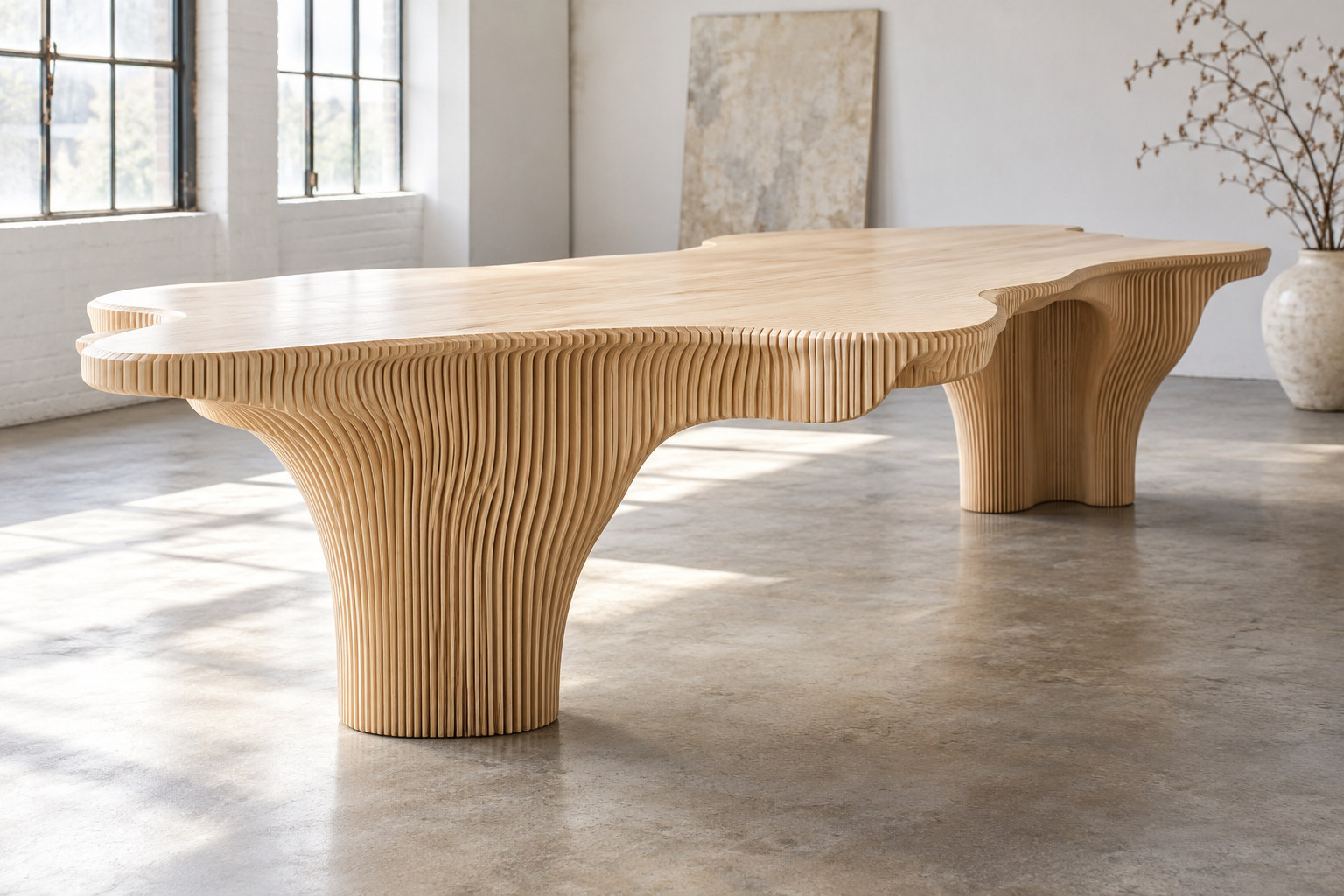
Two profiles begin a new form
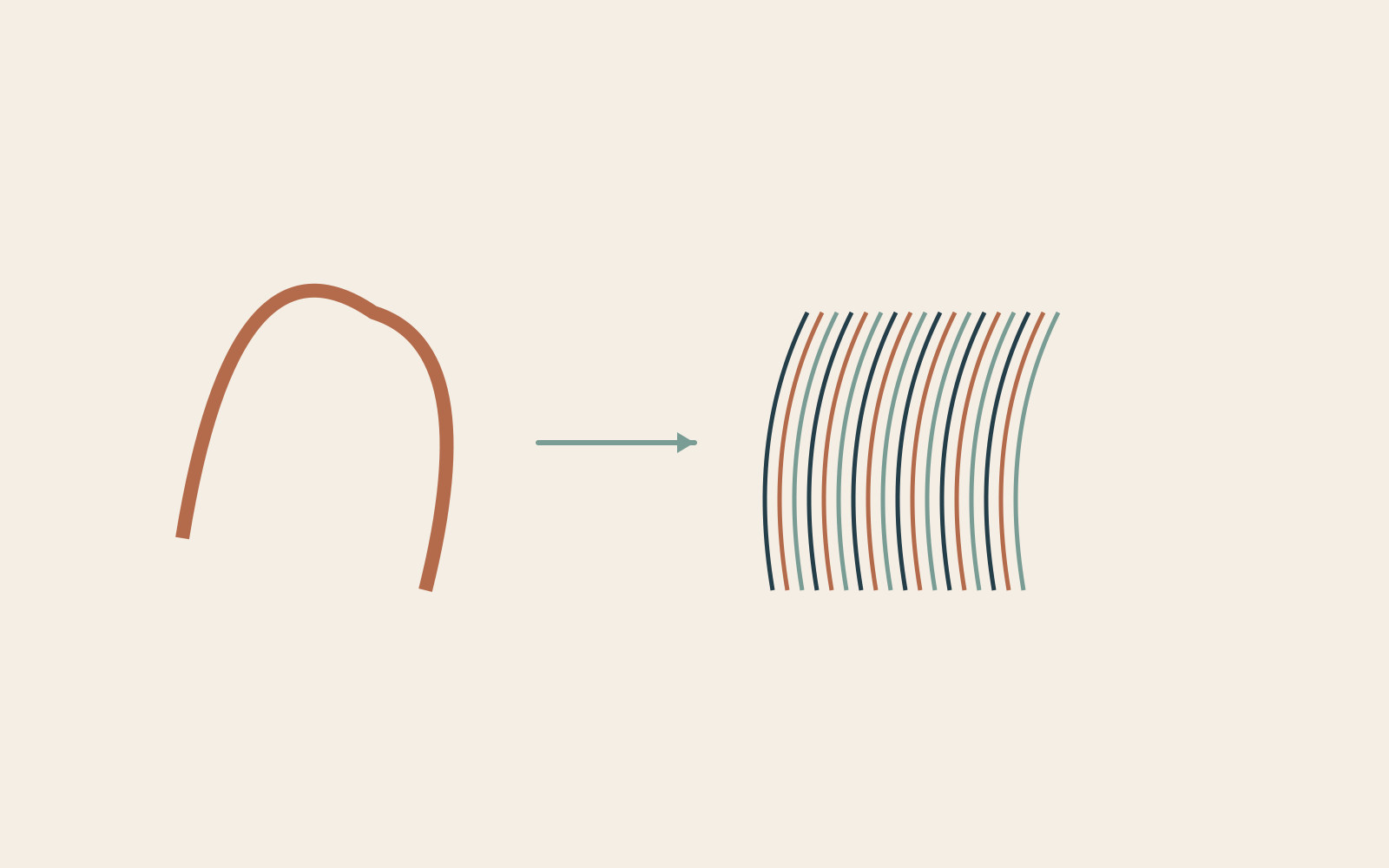
The point of departure is surprisingly recognisable. MoMA describes two historic furniture profiles entering a digital process that turns them into a new three-dimensional form.1 The result keeps the memory of elaborate older furniture while refusing to settle into one familiar outline.
That is why the table rewards a changing viewpoint. A curve that first seems like a decorated edge becomes part of a larger continuous body. The historical reference gives the eye something to recognise; the transformation keeps it moving.
Sections make the volume possible
The flowing shape is built through closely spaced vertical sections. MoMA describes computer-cut birch sections assembled with hand gluing, while Demakersvan identifies birch plywood and hand finishing in its project account.12
The fine repeated lines give an apparently fluid object a visible rhythm. Each section has a physical edge. Together they make a volume that would be difficult to understand from a single flat profile. Computer control does not remove the work of bringing those pieces together.
Precision can leave room for the hand
MoMA credits both Demakersvan and Jeroen Verhoeven, naming Demakersvan as manufacturer and dating the design to 2004.1 The studio’s account describes a limited edition, rather than ordinary mass production.2
Cinderella’s interest lies in that combination of means. Digital transformation makes the unusual geometry possible; assembly and finishing turn it into a tactile table. The process gives historic furniture a new life without merely copying an old shape.