Designer profile

Jeroen Verhoeven: giving collaboration a place in the work

An individual name on a museum label can sit within a much larger creative circle. Jeroen Verhoeven’s work makes that relationship interesting to look at: in one desk, the profiles of his collaborators become part of the form itself.

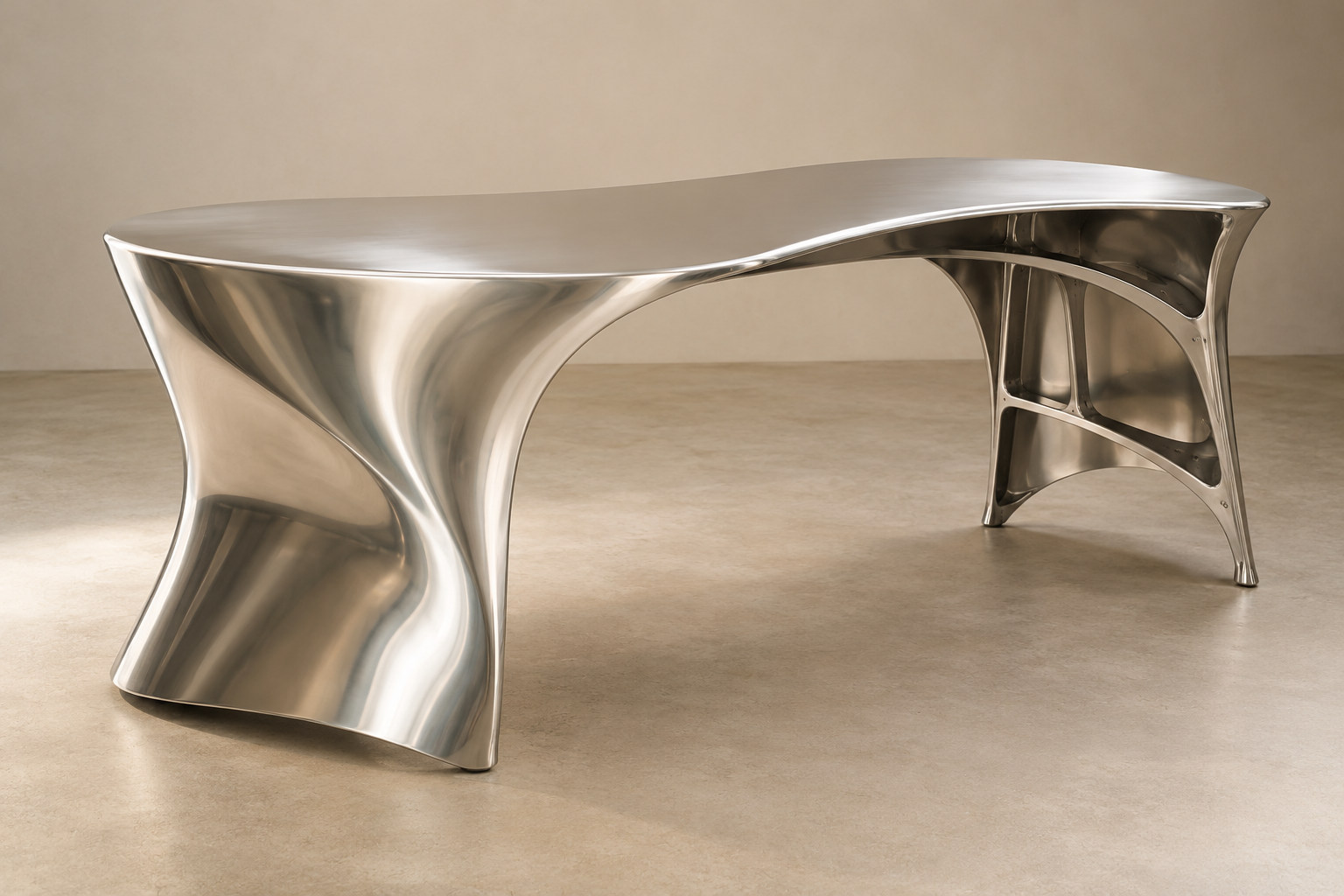
A flowing reflective desk-like surface meets a partly open framed end.
PatinaHall editorial reconstruction. It is not a documentary photograph. The smooth outside and open frame offer different ways into the making idea. This is an illustrative stainless-steel interpretation, not an exact desk, portrait contour or panel-count record.
On this page
Key facts & takeaways

At a glance

Subject
Jeroen Verhoeven
Entry
Designer profile
Last reviewed
25 October 2026

Three things to remember

  1. Individual, collective and collaborator credits describe different roles.
  2. Joep Verhoeven and Judith de Graauw are named in the Lectori Salutem accounts.
  3. The Verhoeven Twins practice describes collaboration across creative fields.

Giving collaborators a contour

Jeroen Verhoeven's Lectori Salutem desk gives a creative circle a physical place. Its account identifies the contours of Joep Verhoeven and Judith de Graauw within the form. People associated with the work become part of the lines through which the desk is seen.2

This is a distinctive response to a common feature of design: a project can carry one designer's name while growing within exchanges with other people. Here, a viewer can look for those people in the object.

The studio describes it as Jeroen's personal project. That makes the inclusion more revealing. Personal work can still acknowledge a creative relationship, giving the names around the designer a place within the result.2
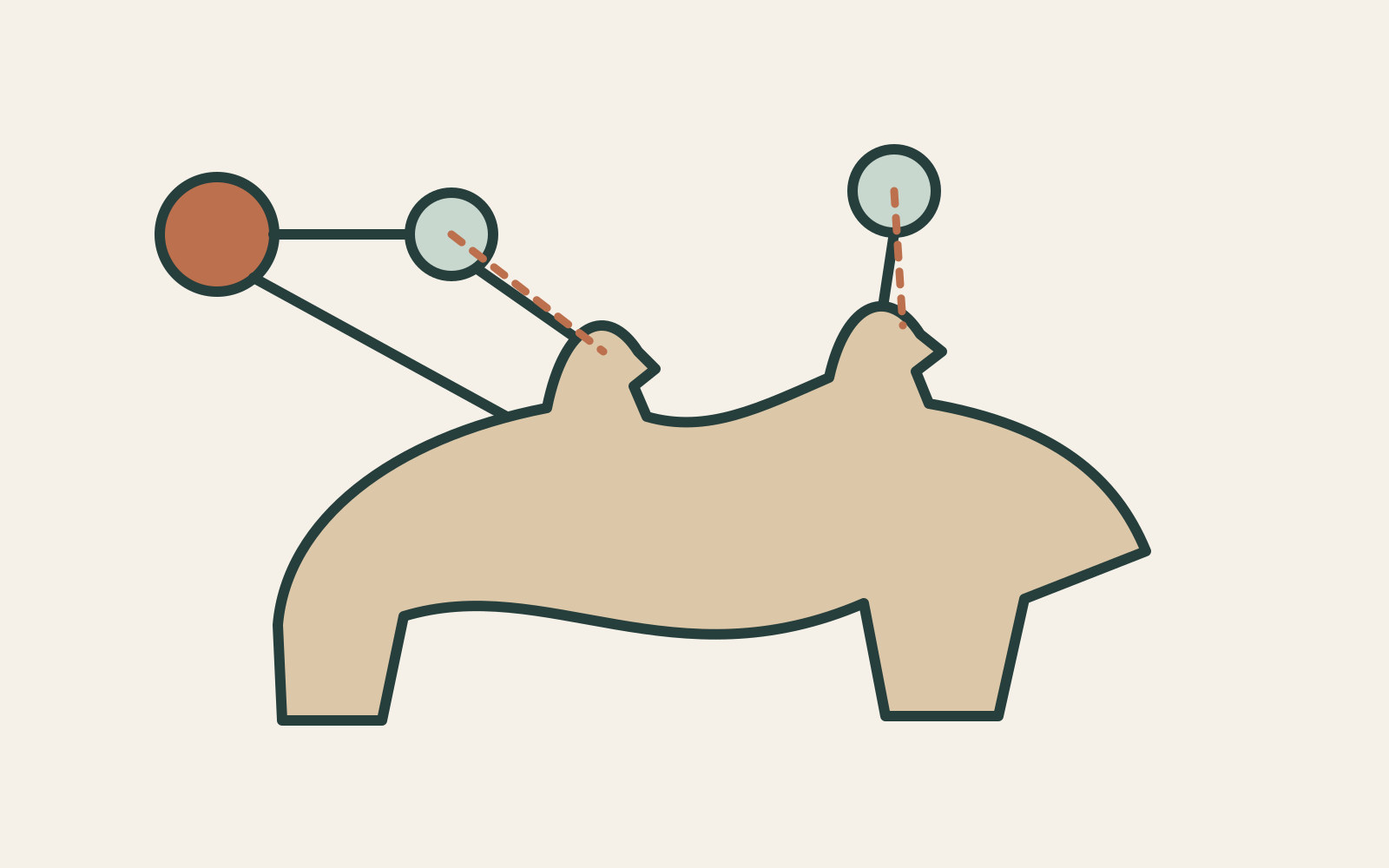
Two linked role symbols correspond to abstract profile-like curves within a flowing desk outline.
In the Lectori Salutem account, two creative partners are recalled within the desk’s curves. Original PatinaHall schematic, not to scale; the cues are illustrative, not portraits or an exact reproduction.

An individual within a larger practice

MoMA's record identifies Jeroen Verhoeven as Dutch and lists the Cinderella Table with both DeMakersVan and Jeroen's names. Even a concise museum entry can preserve more than one level of credit.1

The present Verhoeven Twins account describes a practice that works across fields and values collaboration among writers, filmmakers, artists and scientists. It also discusses both expressive studio projects and products intended for production.3

These roles open different possibilities. A personal project can make a particular relationship visible; a collective practice can gather several kinds of expertise around a new question. Keeping the names precise lets those contributions remain readable.

Collaboration meets the making process

The DeMakersVan account of Lectori Salutem also describes metal components shaped by a six-axis industrial robot. A highly personal outline is realised through an elaborate manufacturing process.4

That brings another kind of collaboration into view: an idea needs the tools and making knowledge through which it can become furniture. In the finished desk, flowing surfaces and a visible open structure give the eye different routes into that work.

Begin with a profile in the curves, then think about the people around a designer and the processes inside a workshop. Verhoeven's desk makes a creative relationship something that can occupy space.
Research notesEvidence, connections and limits

The historic Jeroen and DeMakersVan project credits are kept distinct from the present Verhoeven Twins practice. Depiction in a desk’s contours is not automatically a joint design credit, and a collective collection list does not prove acquisition of a particular desk.

Evidence map

Connected subjects and evidence

Reviewed connections

  • Cinderella Tabledesigned byJeroen Verhoevendocumented

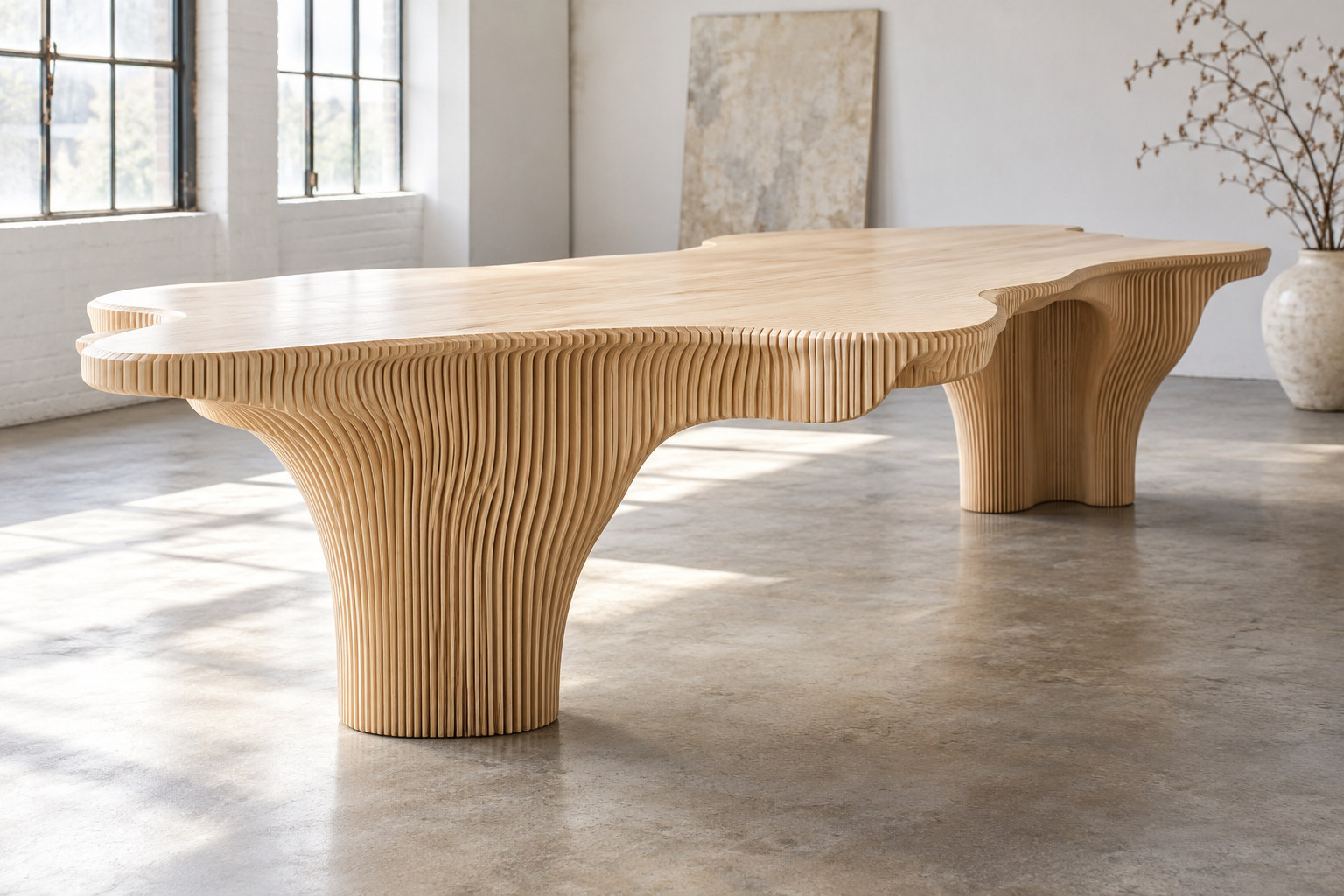
    MoMA credits Demakersvan and Jeroen Verhoeven and names Demakersvan as manufacturer. Computer-cut vertical birch sections and hand gluing belong to its account; the studio specifies birch plywood and hand finishing. A studio edition size does not establish a museum specimen’s edition number or a universal layer count.

    Reviewed 25 October 2026 by PatinaHall editorial.
    • Source 5Title; gallery explanation; Manufacturer;564.2006
    • Source 6Project explanation and inquiries line
  • Lectori Salutem deskdesigned byJeroen Verhoevendocumented

    The project accounts connect the desk to Jeroen Verhoeven and identify Joep Verhoeven and Judith de Graauw as the creative partners evoked by its contours. The later bronze-coated variant is recorded under Verhoeven Twins.

    Reviewed 25 October 2026 by PatinaHall editorial.
    • Source 4Main project account, robot process and Jeroen quotation
    • Source 2Project interpretation and frame description
    • Source 7Variant title; date; medium; edition and interpretation

Research trail

Sources and further reading

  1. MoMA: Jeroen VerhoevenThe Museum of Modern ArtAccessed 25 October 2026
  2. Verhoeven Twins, The Lectori Salutem DeskVerhoeven TwinsAccessed 25 October 2026
  3. Verhoeven Twins: About usVerhoeven TwinsAccessed 25 October 2026
  4. DeMakersVan, L.s. deskDeMakersVanAccessed 25 October 2026
  5. Cinderella Table: Title; gallery explanation; Manufacturer;564.2006moma.orgAccessed 25 October 2026
  6. Cinderella Table: Project explanation and inquiries linedemakersvan.comAccessed 25 October 2026
  7. Carpenters Workshop Gallery, Lectori Salutem Desk BronzeCarpenters Workshop GalleryAccessed 25 October 2026

Last reviewed 25 October 2026. Found an error or a stronger primary source? Contact PatinaHall.