Begin with what is missing
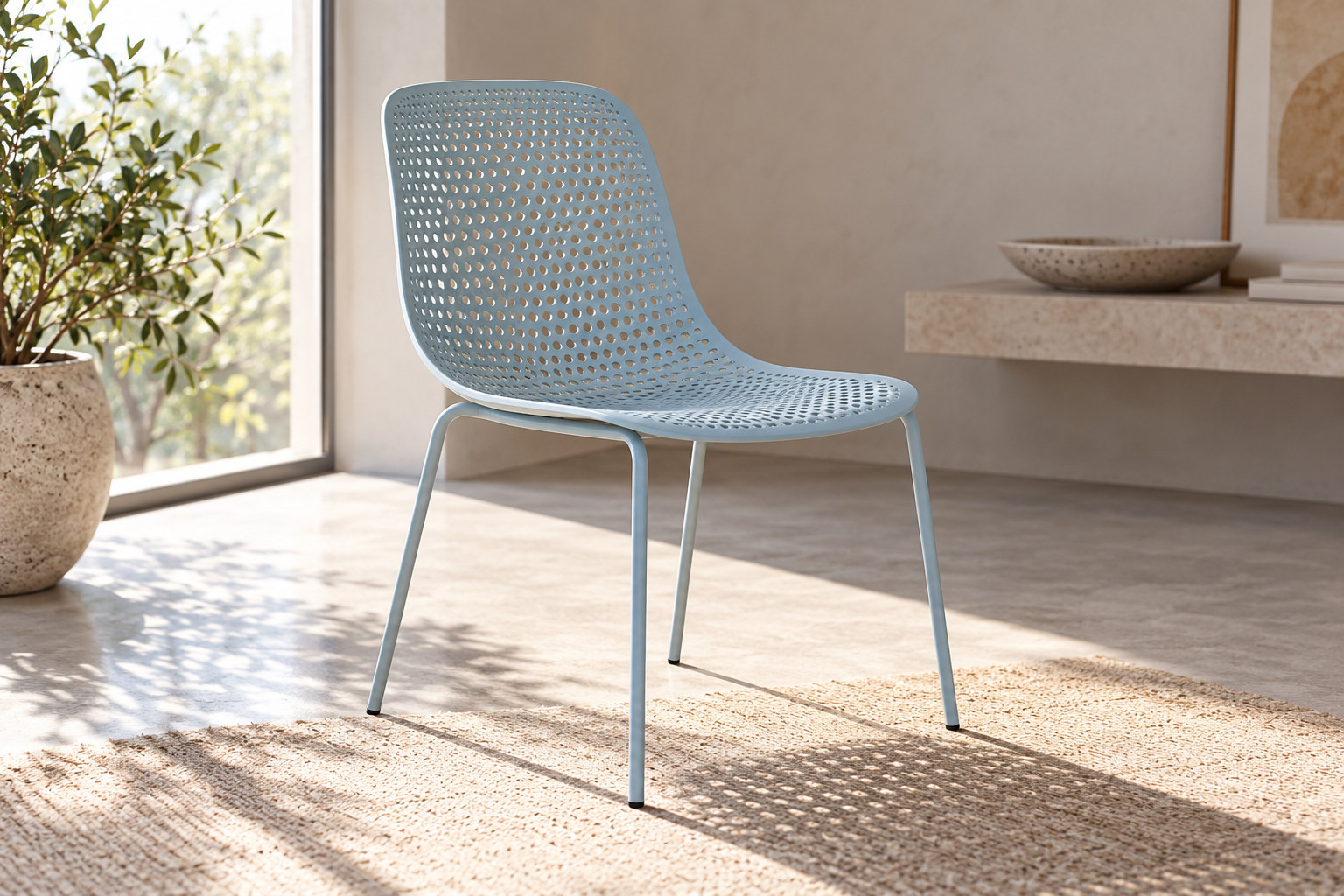
A plastic chair can present a large, continuous surface to the room. 13Eighty breaks that surface into a pattern of material and openings. The shell is still recognisable, but it no longer asks the eye to read plastic as one uninterrupted plane.
Scholten & Baijings’s work record dates the project to 2014–2017 and names HAY as client. It describes more than 1300 perforations and versions with and without arms on powder-coated steel frames.1
The holes are therefore an organising feature across the shell. Their repetition belongs to the chair’s character, rather than being a small accessory added after its overall form was decided.
A shell lets the room show through
The studio describes transparency and a play of light and shadow. Openings let the background participate in the surface, so a shell can keep its outline while appearing visually less continuous.1
The size differences matter as well. A repeated hole is a simple element, but varying it can make the pattern seem to move across the plastic. What looks uniform from a distance gains another rhythm when seen closely.
There are two surfaces to follow: the moulded shell itself and the changing field made by its perforations. Light can make the second one especially apparent, turning the gaps into a pattern of bright points or shadows.
The holes enter the development process
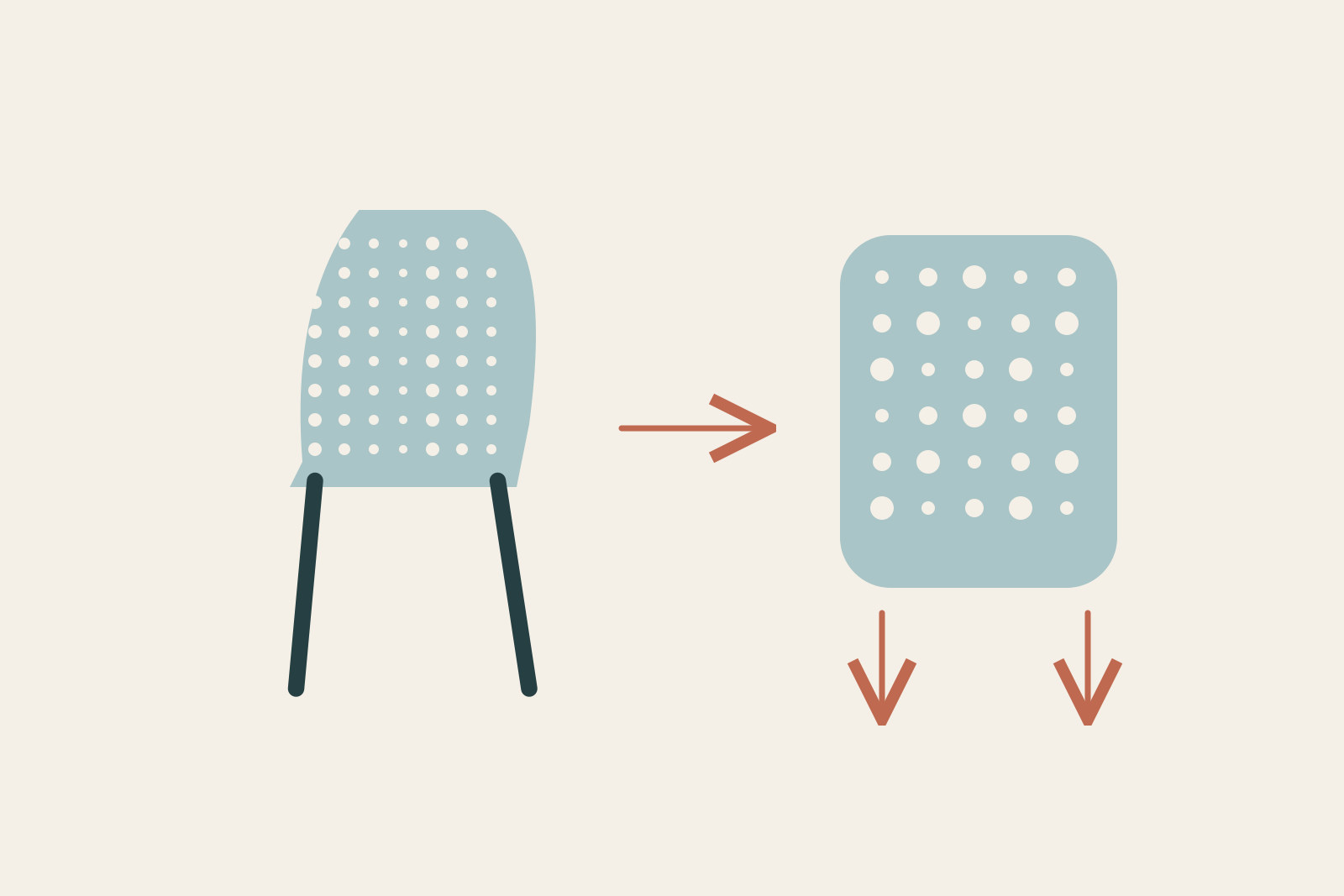
HAY’s account names both Stefan Scholten and Carole Baijings and describes two years of adjusting the holes. The aim, in the manufacturer’s telling, was to develop flexibility and comfort while keeping a durable chair.2
That account makes the perforation more than a graphic choice. Removing material also changes the question being asked of the shell. The development story links appearance with how the chair might meet a body.
A pattern has an everyday task
The studio gives the holes another role: allowing rainwater to drain when the chair is used outside. The same openings that make a visual texture also address what happens when water meets a seat.1
No single reading has to cancel the others. Look through the shell, follow its pattern, or imagine rain finding a route away. 13Eighty makes a lot of little absences add up to a clear design idea.